
- Release Year: 2018
- Platforms: Nintendo Switch, PlayStation 4, PlayStation 5, Windows
- Publisher: Arc System Works Asia Branch, FuRyu Corporation, H2 Interactive Co., Ltd., NIS America, Inc.
- Developer: FuRyu Corporation, Historia Inc.
- Genre: RPG
- Perspective: Third-person
- Game Mode: Single-player
- Gameplay: JRPG, Turn-based combat
- Setting: Contemporary, Fantasy
- Average Score: 66/100
Description
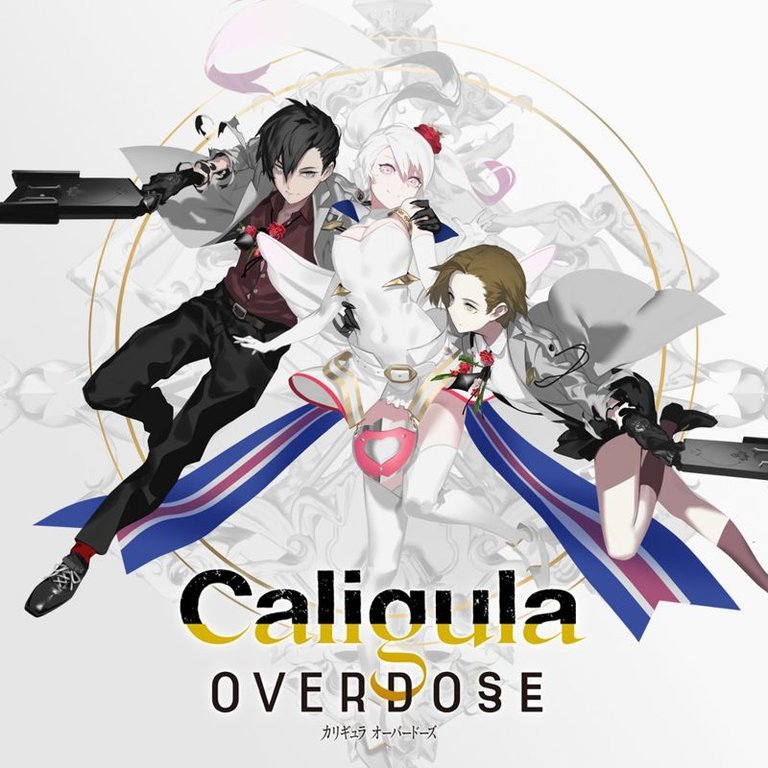
The Caligula Effect: Overdose is a Japanese-style RPG remake of the 2016 PS Vita game The Caligula Effect, set in a contemporary fantasy world with a school theme and anime/manga art style. Players engage in turn-based, 3rd-person combat through menu-based interfaces, with the Overdose version introducing an entirely new campaign playable as the villains, additional heroes and locations, reworked gameplay mechanics, and characters like μ, Shogo Satake, and the Ostinato Musicians.
Gameplay Videos
Where to Buy The Caligula Effect: Overdose
The Caligula Effect: Overdose Cracks & Fixes
The Caligula Effect: Overdose Mods
The Caligula Effect: Overdose Guides & Walkthroughs
The Caligula Effect: Overdose Reviews & Reception
opencritic.com (60/100): flawed, frustrating work… papered over the cracks just enough to make it worth putting up with.
destructoid.com : Overdose may not reinvent The Caligula Effect, but it manages the next best thing, by papering over its flaws enough to make it worth putting up with.
steambase.io (73/100): Mostly Positive
rpgamer.com : A Tale of Missed Potential
The Caligula Effect: Overdose Cheats & Codes
PC
Enter the three passwords at the corresponding Boss Gate to unlock the listed World Reward.
| Code | Effect |
|---|---|
| Ncyp cEHz sKYN | Unlocks Aichmophobia at Kishimai High (Main Building 1F) |
| ZpLk fFKm Hjrx | Unlocks Sleepless Habits at Kishimai High (Main Building 1F) |
| GxWX rEMh Wjus | Unlocks Bondage Obsession at Kishimai High (Main Building 1F) |
| rAMs mDUR Ssyr | Unlocks Phonophobia at Miyabi Hot Springs (Baking Soda Fountain 2F Front) |
| SxhA iCvS vZsT | Unlocks Labyrinthosis at Miyabi Hot Springs (Baking Soda Fountain 2F Front) |
| ShAj kEaC uVMc | Unlocks All-in Dilemma at Kishimai High (Kishimai Old Building Basement 1F) |
| cUwt sZEF fZvD | Unlocks Unusual Hair Collector at Kishimai High (Kishimai Old Building Basement 1F) |
| SeFK HycZ WgAD | Unlocks Eager Atonement at Papiko (Foodcourt 1F) |
| tSau pVSA MasE | Unlocks Nesciant at Papiko (Foodcourt 1F) |
| VpFi kMQA NnMs | Unlocks Narcolepsy at Papiko (Foodcourt 1F) |
| uJPz TiQv gZhH | Unlocks Actually… at Municipal City Library (Information Counter) |
| jFHv DrUB EiKs | Unlocks Trypophobia at Municipal City Library (Information Counter) |
| nViB ZwmE NhbH | Unlocks Line-line at Municipal City Library (Information Counter) |
| cEgT CcyD yEkH | Unlocks Nobody to Talk to at Sea Paraiso Park Area (Sun Temple 3F) |
| uGcq qTXf NbLC | Unlocks Polka-phobia at Sea Paraiso Park Area (Sun Temple 3F) |
| BhxC NehF Hzpe | Unlocks Peniaphobia at Sea Paraiso Aquarium Area (Restricted Area) |
| xEAs FgaP QmdR | Unlocks Pica Disorder at Sea Paraiso Aquarium Area (Restricted Area) |
| PrnA kJGg hDQp | Unlocks Sleeping Disorder at Sea Paraiso Aquarium Area (Restricted Area) |
| GpBw SjwP CqVr | Unlocks Anthropophobia at Landmark Tower (Middle Level 24F) |
| BkhY BiDq Vjtn | Unlocks Shapeshifter Conundrum at Landmark Tower (Upper Level 65F) |
| JneK JvAG GzAY | Unlocks Unrequited Love Taboo at Landmark Tower (Upper Level 65F) |
| nTBh Lrte vQBk | Unlocks My One and Only, Forever at Landmark Tower (Upper Level 65F) |
| NqbT kUcm gRcP | Unlocks Cold Feet Elope at Grand Guignol (Corridor of Lament, South) |
| mJPN qQJd WnGZ | Unlocks Speedster at Grand Guignol (Corridor of Lament, South) |
| AbrN Aysg Hteq | Unlocks Perfectionist at Grand Guignol (Corridor of Lament, South) |
| KphU xCJQ hDXe | Unlocks Wish or Nothing at Grand Guignol (Corridor of Lament, East) |
The Caligula Effect: Overdose: Review
Introduction
Imagine a world where the siren song of a virtual idol traps humanity in an eternal high school paradise, shielding them from real-world trauma—only for a rebel alliance to shatter the illusion with weapons forged from their darkest regrets. The Caligula Effect: Overdose remakes the 2016 PS Vita obscurity into a bolder JRPG vision, expanding its philosophical core on modern hardware. Born from the minds behind early Persona entries, this “next-generation juvenile RPG” grapples with escapism, identity, and the “Caligula effect”—that forbidden urge to confront the taboo. My thesis: Overdose is a cult-worthy gem of narrative ambition and tactical innovation, flawed by technical mediocrity and Persona-esque echoes, yet deserving rediscovery as a bold evolution that probes the psyche deeper than its Vita progenitor.
Development History & Context
The Caligula Effect emerged in 2016 from FuRyu Corporation and Aquria for PS Vita, a niche handheld amid JRPG giants like Persona 5. Directed by Takuya Yamanaka, with scenario by Tadashi Satomi (Persona 1-2 scribe) and character designs by Oguchi, it channeled Vocaloid culture—μ as a Hatsune Miku analog—into a “school” theme RPG. Composer Tsukasa Masuko (Megami Tensei alum) infused J-pop leitmotifs tied to psychology. Released June 23 in Japan (FuRyu), May 2017 worldwide (Atlus USA), it sold modestly (~38k first weeks Japan) but earned a Famitsu 30/40, critiqued for Vita-era limits like shallow dungeons and performance woes.
Overdose (2018 JP PS4 FuRyu; 2019 worldwide PS4/Switch/PC NIS America; 2023 PS5) shifted to Historia Inc., leveraging Unreal Engine 4 for “drastically upgraded visuals.” FuRyu’s “version plus” ethos doubled content: female protagonist option, new Go-Home Club allies (Ayana Amamoto, Eiji Biwasaka), Ostinato foes (Stork, Kuchinashi), a “Forbidden Musician Route” (play as double-agent “Lucid”), revamped UI, and streamlined mechanics. Publishers like NIS America liberated it from Vita obscurity into a multi-platform landscape post-Persona 5 boom, where high school sims ruled. Technological constraints? Vita’s portability birthed mobile-friendly loops, but PS4/Switch demanded ambition amid 2018’s Octopath Traveler polish—Overdose half-delivers, prioritizing story volume over sheen. In a Vocaloid-saturated era (Nico Nico Douga ties), it positioned as “philosophical RPG,” influencing niche trauma tales like its 2021 sequel.
Narrative & Thematic Deep Dive
At its heart, Overdose dissects escapism’s gilded cage: Mobius, μ’s VR utopia, loops 500+ high schoolers in bliss, comatose “Astral Syndrome” victims in reality. Protagonist (male/female, customizable regrets) awakens via Aria, forming Go-Home Club against μ’s Ostinato Musicians—composers scripting her mind-control anthems. Core plot mirrors Vita: eight Musician arcs purge traumas via Catharsis Effects (stakes impaling chests, blooming trauma-flowers like Torch Ginger for protagonist’s passion).
Overdose explodes this: New heroine alters dialogues (gender-locked scenes, e.g., Ayana’s male-fear collisions); Eiji/Ayana/Stork/Kuchinashi arcs weave arson, assaults, suicides—Eiji’s lawyer past blackmails Kouki into family murders, fueling Kuchinashi’s vengeance. Forbidden Route (Thorn’s temptation) lets you double-agent as Lucid, infiltrating Musicians for “truth”—fighting Laggards (half-awakened), unlocking 9 Musician episodes (e.g., Stork’s peeping regrets, Sweet-P’s idol lies). Endings multiply: True Heartbreak (Go-Home victory, reality return); Downer (betray Club, Thorn dooms world); Golden (full episodes, reconciled epilogues).
Themes? Grey morality: Club faces traumas head-on (Shogo’s suicide pact guilt, Kotono’s abandonment); Musicians cling to unsolvable pains (Mirei’s ugliness obsession, Shadow Knife’s bullying vigilante). Satomi’s taboo violations—incest hints, violence—probe “Caligula effect” repression. Dialogue shines philosophically (“Peter Pan Syndrome” for eternal youth), but clunky (stilted English, lip-sync absent). Characters: Dysfunctional gems—Shogo’s awkward chivalry, Eiji’s sheepish psychopathy. Expansive (500 NPCs via Causality Links) yet intimate, it commands “respect… like literature,” per critics, evolving Vita’s blueprint into empathetic duality.
Gameplay Mechanics & Systems
Dungeons demand dungeon-crawling purity: mazes (Kishimai High’s Bizarrchitecture, Sun Temple riddles) trigger random encounters—ambush for first strikes. Core: turn-based with Imaginary Chain—chain 3 actions/party member (attack, guard, skills), preview real-time execution via percentage-timed dodges/breaks. Risk Gauge builds to airborne juggles; Overdose Attacks (flashy finishers) cap combos. Recruit 500+ via Causality Links (social bonds unlock quests, allies)—streamlined from Vita (one quest/Affinity rise).
Flaws/innovations: Easy on Normal (Hard advised); repetitive loops (no hand-holding, unlike Persona). Overdose refines: Party-wipe game overs (not protag-only); Auto-battle; boss rematches; gender/Lucid swaps parties (Club+Musicians post-game). UI? Revamped menus, but Causality bloated (tedious fetches). Progression: Skills from Links/levels (cap 200 NG+), no grinding tax (full heals post-battle). Ambitious yet uneven—Chain’s strategy shines in Musician ambushes, but mazes grate.
| Mechanic | Strengths | Weaknesses |
|---|---|---|
| Imaginary Chain | Predictive choreography, real-time flair | RNG outcomes frustrate |
| Causality Link | Deep backstories, recruits | Superfluous quests, grindy |
| Catharsis Effect | Thematic weapons (BFG Shogo, drones Naruko) | Repetitive animations |
World-Building, Art & Sound
Mobius: contemporary fantasy school in Yokohama homage (Sea Paraiso=Sea Paradise, unfinished Landmark Tower). Gilded cage—free amenities, looped years—but Bizarrchitecture (video-game basements) underscores artifice. Atmosphere: Oppressive idyll, Digihead hordes enforce stasis.
Art: Anime/manga cel-shaded, Oguchi’s designs pop (Catharsis masks, flower motifs). But dated: Muddy textures, wooden animations (no lip-sync), repetitive assets (school corridors). Switch/PS5 ports chug (blurry handheld, inconsistent 30fps); PC shines.
Sound: Tsukasa Masuko’s J-pop mastery—leitmotifs (e.g., Suicide Prototype for Lucid) sung by μ/Reina Ueda, lyrics mirror psyches (Love Scope‘s voyeurism). Battles remix vocals over instrumentals; stellar VA (Shunsuke Takeuchi’s Shogo). Hook: Music is plot—M μ’s anthems brainwash. Flaw: Repetitive loops grate non-fans.
Elements coalesce: Sound elevates philosophical dread; visuals undermine immersion.
Reception & Legacy
Launch: Mixed. MobyScore 6.3/10 (#21k/27k); Metacritic PS4 64, Switch 60. Critics lauded story/combat (Digitally Downloaded 100%: “unapologetically smart”; Darkstation 90%: “meaningful whole”); panned tech/repetition (Destructoid 65%: “flawed”; RPG Site 50%: “let characters go home”). Japan: PS4 #1 week1 (20k sales). Players: 3.1/5 (niche appeal).
Evolved: Cult status via NIS ports; PS5 “baffling” (Hey Poor Player 70%) but “best version.” Influenced: Caligula Effect 2 (2021, toned trauma); anime (2018 Satelight, deviations like hibernation). Industry ripple: Trauma-JRPGs (Mary Skelter), Vocaloid integration. Legacy: Ambitious underdog, proving “great ideas… poor execution” (forums) yields sleepers.
Conclusion
The Caligula Effect: Overdose synthesizes Satomi’s psyche-probing prose, Chain’s tactical thrill, and Musician depth into a 20-30hr JRPG transcending Vita roots—yet stumbles on dated visuals, grind, J-pop fatigue. Not Persona‘s polish, but rawer: a “sleeper… cult-classic” (Phenixx 90%) for patient explorers craving taboo philosophy. Definitive verdict: Essential niche history—8/10 for innovators; skip if polish paramount. Play for the catharsis.