
- Release Year: 2023
- Platforms: PlayStation 5, Windows, Xbox Series
- Publisher: Focus Entertainment, SA
- Genre: Special edition
- Average Score: 66/100
Description
Atlas Fallen (Signature Edition) is a limited collector’s edition of the action-adventure game set in a shattered dystopian world of endless sands and ancient ruins, where humanity endures after the gods’ vanity led to their cataclysmic fall and the rise of the tyrannical Sun God. Players wield the powerful Gauntlet to manipulate sand into dynamic weapons and abilities, battling monstrous guardians, uncovering lost histories buried in the dunes, and fighting for liberation in this high-paced sandbox combat experience.
Atlas Fallen (Signature Edition) Cracks & Fixes
Atlas Fallen (Signature Edition) Guides & Walkthroughs
Atlas Fallen (Signature Edition) Reviews & Reception
metacritic.com (64/100): Mixed or Average
techradar.com : Atlas Fallen is a solid but uninspiring open-world fantasy RPG with brilliant movement and traversal but not much else.
gamesradar.com : If you were asked to imagine a truly average open-world action-adventure in 2023, you’d likely come up with something like Atlas Fallen.
Atlas Fallen (Signature Edition): Review
Introduction
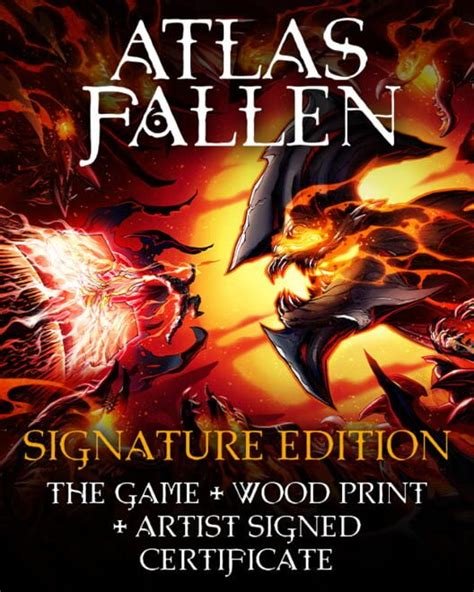
In a gaming landscape dominated by sprawling epics like Elden Ring and cinematic blockbusters such as God of War Ragnarök, Atlas Fallen (Signature Edition) emerges as a tantalizing collector’s artifact from Deck13 Interactive’s ambitious pivot away from Soulslikes. Limited to just 100 copies sold exclusively via Focus Entertainment’s website, this Signature Edition elevates the base action RPG with the Ruin Rising Pack DLC, a hand-signed certificate of authenticity, and exclusive wooden-framed artwork by senior concept artist Janine Bertet and art director James Lowe—complete with bespoke box art. It’s a love letter to dedicated fans, transforming a digital adventure into a tangible piece of gaming history. Yet, beneath the premium packaging lies a game of contrasts: exhilarating sand-surfing traversal and fluid combat clashing against repetitive quests and a forgettable narrative. My thesis? Atlas Fallen is a competent AA title that captures the thrill of liberation in a god-oppressed world but ultimately crumbles under its own sandy foundations, marking Deck13’s bold evolution while underscoring the challenges of open-world innovation in 2023.
Development History & Context
Deck13 Interactive, the Frankfurt-based studio behind the punishing The Surge duology and co-developer of the original Lords of the Fallen, unveiled Atlas Fallen at Gamescom 2022 as a departure from their Soulslike roots. Directed by Jan Klose and designed by Jérémy Hartvick, the game harnessed Deck13’s proprietary Fledge engine to craft a “super-powered” action RPG inspired by God of War (2018) and the Horizon series—emphasizing speed, fluidity, and momentum over deliberate, stamina-draining duels. Hartvick explicitly distanced it from Soulslikes, introducing three difficulty modes (with a hardcore “Veteran” tier for masochists) and staples like limb-targeting from The Surge.
Development spanned years, with Deck13 expanding to a Montreal branch amid a post-pandemic industry crunch. Technological constraints of next-gen consoles (PS5, Xbox Series X/S, PC) were navigated via Fledge’s optimization for vast sandy vistas and dynamic particle effects, though launch glitches and camera stutters plagued early builds—echoing AA struggles seen in contemporaries like Forspoken. Initially slated for May 2023, a delay to August 10 allowed polish, full German voice-overs, and preorder bonuses like the Ruin Rising Pack (cosmetics, essence stones). Focus Entertainment, publishers of niche hits like A Plague Tale, backed this as a “fresh” fantasy IP amid a 2023 market flooded by remakes and sequels.
The Signature Edition, released alongside, reflects collector culture’s resurgence, akin to limited-run editions of Vaporum or Aragami. Priced as a premium (physical/digital hybrid), its 100-unit run underscores Focus’s direct-to-consumer strategy, preserving ephemera like signed art in an era of digital ephemerality. Contextually, Atlas Fallen arrived in a “Fall deluge” of RPGs, positioning Deck13 as AA innovators challenging AAA behemoths without blockbuster budgets.
Narrative & Thematic Deep Dive
Atlas Fallen‘s lore, etched into its sandy ruins, paints a mythic tragedy: gods once protected humanity but succumbed to vanity, shattering the world in their wars. The Sun God Thelos emerged victorious, imposing a tyrannical rule demanding “Essence”—a magical resource mined by the oppressed “Unnamed” under a rigid caste system. Ruins whisper of a pre-fall golden age, with sands holding “memories” of heroes who stood among gods. Protagonist: a nameless scavenger, customizable at outset, who discovers the Gauntlet—a relic housing Nyaal’s rebellious spirit, enabling sand manipulation for rebellion.
The plot unfolds across five regions (e.g., Calardias Desert, Forbidden Lands), blending linear story beats with open-world side quests. You ally with NPCs like Lector (quest-giver in Shattered Keep), uncovering lore via golden journals, emblems, and skeletons—revealing knightly histories and divine betrayals. Key arcs: rising from weakness via Gauntlet upgrades, confronting Thelos’s guardians (Wraiths, colossal beasts), and forging alliances amid refugee tensions, touching on immigration and societal contribution.
Thematically, it’s a phoenix-from-ashes tale of defiance against divine corruption, echoing Dune‘s ecological tyranny and God of War‘s paternal regret. Sands symbolize buried truths—raised structures unveil secrets, mirroring humanity’s unearthed agency. Dialogue, however, falters: wooden, exposition-heavy lines (“The sand has memories…”) and generic voice acting undermine depth. Choices shape alliances but lack branching impact, rendering the narrative a serviceable scaffold for gameplay. Subtle motifs—like Essence as exploitable lifeblood—critique oppression, but predictable twists (e.g., Nyaal’s kinship reveal) evoke “soulless” clichés. In the Signature Edition, Ruin Rising DLC adds cosmetic lore ties, but the core story remains a sandy sketch—engaging in bursts, hollow overall.
Gameplay Mechanics & Systems
At its core, Atlas Fallen loops exploration, combat, and progression in a co-op-friendly (2-player drop-in) open world split into explorable regions. The Gauntlet is genius: summon three shape-shifting weapons (hammer for balance, spiked glove for heavies, whip for speed—equip two at once) from ambient sand. Combat thrives on momentum: hits build a bar unlocking specials (e.g., Shatter AoE at max), escalating damage dealt/received for risk-reward frenzy. Dodge (ground roll/air dash), parry (freeze foes on perfect timing), block, and idol heals (recharged via aggression) demand fluidity—airborne chains feel empowering, limb-targeting adds strategy (sever heads for vulnerability).
Traversal shines: sand-surf like snowboarding (blazing speed, leaning turns), double-jump, air-dash, and Raise (hoist buried platforms) enable verticality. Gliding dunes, chaining dashes over chasms—it’s joyous, rivaling Infamous‘ parkour. Progression: collect Shards/Catalysts for Gauntlet upgrades, Essence Stones (50+ active/passives like sand tornadoes, slows) for builds, idols for dyes/cosmetics. UI is clean—journal recaps mechanics, map icons flag secrets (vantage points, lore, treasures).
Flaws abound: repetitive fetch quests (e.g., “History of the Shattered Keep”—find 5 clues amid ambushes), unreliable camera/lock-on (multi-foe chaos), hitbox jank, and enemy variety (16 Wraith types, reused bosses). Co-op shines for shared progression but glitches sync issues. Signature Edition’s DLC bolsters cosmetics/essences, extending replay. Innovative yet flawed: momentum innovates, but button-mash creeps in; not Soulslike punishing, but “Veteran” mode satisfies.
World-Building, Art & Sound
The unnamed fantasy realm—barren deserts, eroded ruins, dunes concealing pre-fall relics—evokes a timeless dystopia. Five regions (e.g., Calardias’ vistas, Forbidden Lands’ vertical keeps) brim with secrets: puzzles (Raise platforms), treasures (Scout’s Armor rewards), beasts beneath sands. Atmosphere builds via environmental storytelling—skeletons clutch emblems, journals detail godly hubris—fostering wonder amid desolation.
Visuals impress: Fledge renders particle-heavy sands, dynamic raises, colossal bosses with scale. PS5 performance mode prioritizes 60fps fluidity; vistas stun at dusk. Yet, pop-in, texture glitches, and monotonous palettes (endless yellows) dilute immersion. Sound design elevates: scuffing sand, Gauntlet whooshes, FMOD-orchestrated combat crescendos (momentum swells music). OST (available on Bandcamp) blends epic fantasy with ethereal dunes; voice acting is flat, but German dub adds authenticity. Collectively, they immerse in liberation’s storm—Signature artwork enhances desk lore display.
Reception & Legacy
Launch reviews were mixed (Metacritic 64/100 PS5, 69% MobyGames): praise for traversal/combat (“fluid,” “satisfying snowball”), criticism for quests (“tedious fetches”), story (“generic”), tech woes (“stutters”). Famitsu: 29/40; OpenCritic: 6.8 (“34% recommend”). Steam: Mostly Positive (73%), lauding movement, decrying repetition. Sales were modest, buoyed by Game Pass/PS Plus.
Post-launch “Reign of Sand” (Aug 2024) revamped intro, added quests/areas/VO—mitigating gripes. Legacy: Deck13’s Soulslike exit influenced AA hybrids (Wo Long fluidity); sand mechanics inspired indies. As collector’s item, Signature Edition joins rarities like Moonlighter Signature, appreciating amid physical media revival. Influences future Deck13 (next Lords)? Marginally—solid foundation, unfulfilled promise. In history: mid-tier 2023 RPG, emblematic of AA ambition vs. execution.
Conclusion
Atlas Fallen (Signature Edition) is Deck13’s sandy manifesto: exhilarating traversal and momentum combat liberate a ruined world, bolstered by Gauntlet’s ingenuity and co-op flair. Yet, repetitive loops, narrative shallowness, and tech hiccups bury its potential beneath dunes of familiarity. The Signature Edition elevates it to artifact status—its exclusive art a historian’s treasure—but the game earns a middling 7/10: fun for action fans awaiting sales/updates, not pantheon material. In video game history, it stands as a transitional AA effort—innovative sparks amid open-world fatigue—reminding us why gods (and games) fall: unchecked vanity over polish. Worth unearthing for traversal alone, but don’t expect miracles from the sands.