
- Release Year: 2004
- Platforms: Windows
- Publisher: Noviy Disk, Sierra Entertainment, Inc., Vivendi Universal Games, Inc.
- Developer: Fluent Entertainment, Inc.
- Genre: Strategy, Tactics
- Perspective: Top-down
- Game Mode: Single-player
- Gameplay: Chess
- Setting: Middle East
- Average Score: 81/100
Description
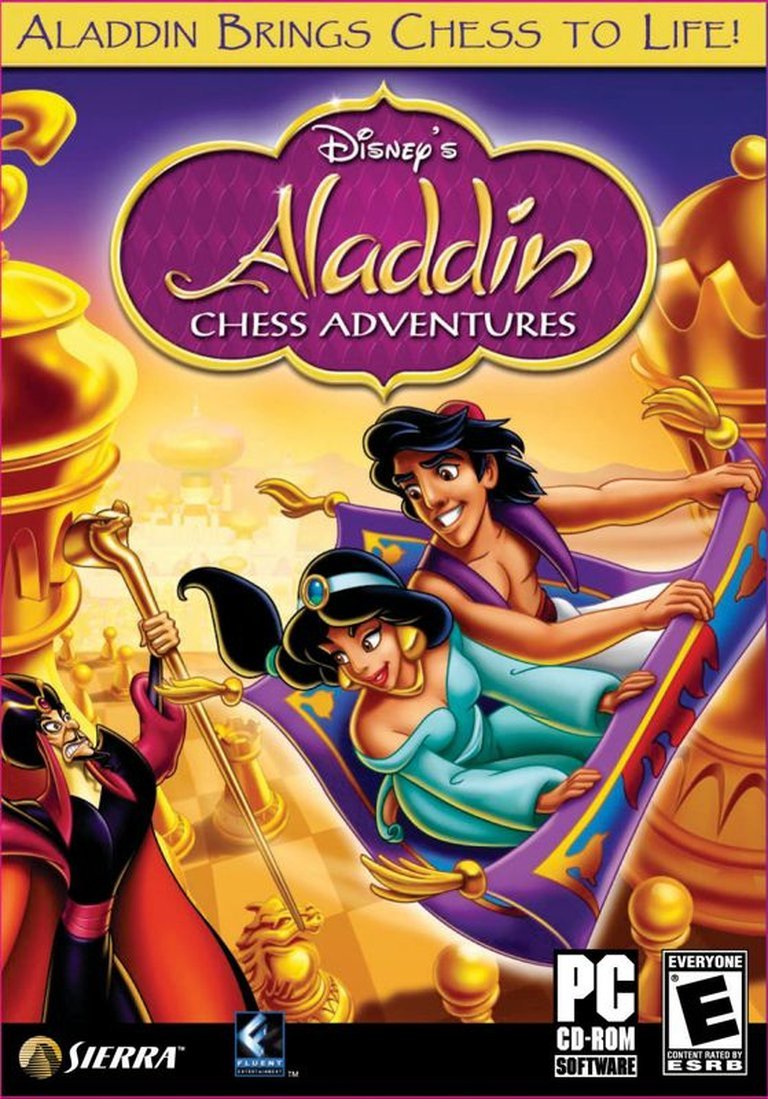
Disney’s Aladdin Chess Adventures is an educational puzzle game set in the magical Middle Eastern world of Disney’s Aladdin, where beginners learn chess rules and strategies through story-based quests alongside Aladdin, Jasmine, and Abu. Players explore iconic locations like Agrabah and the Cave of Wonders across eight worlds, gathering chess pieces, magic items, and gold by completing progressively challenging chess puzzles, mini-games, tutorials, and over 95 unique challenges.
Disney’s Aladdin Chess Adventures Cracks & Fixes
Disney’s Aladdin Chess Adventures: Review
Introduction
Imagine soaring on a magic carpet not to battle Jafar or woo Princess Jasmine, but to master the timeless strategy of chess—pawns clashing like street thieves in Agrabah, knights leaping like Abu over rooftops. Released in 2004, Disney’s Aladdin Chess Adventures daringly fuses the enchanting world of Disney’s 1992 animated classic with the intellectual rigor of chess, transforming a board game into an interactive odyssey for young minds. As a niche edutainment title targeted at children aged 6-12, it stands as a bold experiment in the early 2000s PC gaming landscape, where Disney-licensed fare often prioritized flash over substance. This review argues that while Aladdin Chess Adventures excels as an accessible gateway to chess fundamentals, wrapped in nostalgic Arabian Nights allure, its rigid puzzle structure and dated visuals limit its enduring appeal, cementing it as a forgotten gem in Disney’s vast video game legacy.
Development History & Context
Developed by the boutique studio Fluent Entertainment, Inc.—founded by industry veteran Donald W. Laabs, a former Mindscape product manager—the game emerged from a clear vision: democratize chess for beginners through Disney’s magical lens. Fluent, a small team punching above its weight, assembled a 115-person credit roll (81 developers, 34 thanks), including key talents like Executive Producer Stanley Biesiadecki, Creative Director Duncan Pond, Software Designer David L. Bringhurst, and Story Writer Chris Warden. The chess engine, a cornerstone, was adapted from David Kittinger’s WChess 2000, a reliable mid-2000s engine known for its tactical soundness in educational contexts, powering everything from tutorials to AI opponents.
Published by Sierra Entertainment (under Vivendi Universal Games) on October 5, 2004, for Windows PC, the title arrived amid a transitional era. PC gaming grappled with post-9/11 market shifts favoring consoles, while edutainment boomed with titles like Chessmaster series and Disney’s own ReadingQuest or MathQuest with Aladdin. Technological constraints included reliance on DirectX 9, Bink Video middleware for cutscenes, and isometric 3D visuals feasible on Pentium III-era hardware (recommended: 500 MHz CPU, 128 MB RAM, 16 MB VRAM). Sierra, then navigating Vivendi’s corporate turbulence, positioned it as family-friendly (ESRB Everyone), with a Russian localization by Noviy Disk as Disney’s Аладдин: Волшебные шахматы. In a landscape dominated by action-packed Disney platformers like the 1993 Genesis Aladdin, this puzzle-strategy hybrid was an outlier, prioritizing pedagogy over spectacle.
Narrative & Thematic Deep Dive
At its heart, Disney’s Aladdin Chess Adventures weaves a lightweight, story-driven framework around chess mastery, casting players as an unseen ally aiding Aladdin, Jasmine, and Abu against Agrabah’s perils. The plot unfolds as a quest narrative: navigate eight vibrant worlds (96 locations total), from bustling Agrabah markets to the foreboding Cave of Wonders and the ethereal City in a Bottle, thwarting “creatures and obstacles” via chess battles. Success builds your “chess army,” amasses gold, and unlocks magic items, mirroring Aladdin’s rags-to-riches arc.
Key Characters and Dialogue: Iconic figures shine cosmetically—Aladdin as a nimble hero-pawn, Jasmine offering royal counsel, Abu scampering as comic relief—but ties to the film are superficial, per IMDb’s plot summary calling them “mostly cosmetic.” Dialogue, penned by Warden, is kid-friendly puns and encouragement (“Checkmate Jafar’s schemes!”), folding chess lore into lore: pawns symbolize street rats advancing to queens, knights evoke Magic Carpet dashes. No deep canon callbacks to The Return of Jafar or series villains; Jafar lurks implied, but foes are generic chess opponents themed Arabian.
Themes Explored: Strategically, it champions patience and foresight, paralleling Aladdin’s cunning over brute force. Progression mirrors growth: early quests teach basics (pawn moves), escalating to advanced concepts (en passant, castling) amid rising stakes. Morally, it’s empowerment fantasy—outsmart odds like Aladdin vs. Sultan—instilling critical thinking. Yet, the narrative’s linearity feels scripted, lacking agency; puzzles dictate story beats, reducing themes to motivational wrappers for chess drills.
Gameplay Mechanics & Systems
Aladdin Chess Adventures deconstructs chess into digestible loops, blending adventure progression with pure tactical play. Core mode: isometric, top-down 3D boards where pieces are Disney-fied (Aladdin pawns, Genie bishops?). No prior knowledge required—tutorials interweave seamlessly, narrated by characters.
Core Loops:
– Adventure Mode: Story quests demand 95+ challenges across categories:
| Challenge Type | Description | Chess Focus |
|---|---|---|
| Puzzles | Position-specific setups (e.g., mate in 3 from Cave of Wonders trap). | Tactics like forks, pins. |
| Speed Trials | Timed matches against AI. | Quick decisions, clock management. |
| Mini-Games | Non-standard variants (e.g., capture-the-flag with magic items). | Fun rules twists for engagement. |
| Tutorials | Interactive lessons building to full games. | Rules from basics to endgames. |
- Progression: Victories recruit pieces (grow army), earn gold (buy artifacts boosting stats, e.g., speed buffs), collect items. Difficulty ramps organically—early Agrabah romps introduce movement, later worlds demand combinations.
Combat & AI: Standard chess vs. AI (WChess-based, scalable for kids) or PvP splitscreen. UI is intuitive: drag-drop moves, hints via Genie pop-ups, undo for learning. Flaws? Rigid puzzles lack replayability; no campaign branching. Innovates with “magic items” altering rules (e.g., teleport pawns), but AI predictability hampers depth post-tutorial.
UI/Controls: Clean, child-proof menus; save via scrolls (critical, per abandonware notes). Modern play requires tweaks (DirectPlay, dgVoodoo), but era-authentic simplicity shines.
World-Building, Art & Sound
The game’s Middle Eastern fantasy setting pulses with Aladdin homage, crafting immersive backdrops over sterile chessboards. Eight worlds span 96 locales: sun-baked Agrabah bazaars, torch-lit Cave of Wonders, misty City in a Bottle—each a 3D panorama framing matches, with isometric views enhancing tactical visibility.
Visual Direction: Lead Artist Nick Cattell and team (Shawn McCulley, Jan Sleeper) deliver colorful, low-poly 3D models—Aladdin pieces stylized whimsically, boards textured with rugs/mosaics. Concept art by Corie Geerders evokes film vibrancy, but 2004 tech yields blocky animations, aliasing on modern screens (fixable via wrappers). Atmosphere builds tension: dim lighting for puzzles, particle effects for captures.
Sound Design: Clockwork Productions’ score blends orchestral Arabian motifs (“A Whole New World” echoes) with playful chiptunes. Ursa Minor’s audio features character voices (Aladdin quips, Abu chatter), Bink cutscenes with full voiceover. SFX pop—pawn steps like footsteps, checkmates with triumphant fanfares—reinforcing whimsy. Collectively, they elevate chess from abstract to adventurous, though dated MIDI-esque tracks pale vs. contemporaries.
Reception & Legacy
Launch reception was ghostly: MobyGames logs one 5/5 player score, zero reviews; Metacritic/GamePressure nil; no IGN/IMDB critic blurbs. Commercial whispers suggest modest sales as budget edutainment, overshadowed by Kingdom Hearts II or The Incredibles. Sierra’s 2006 Vivendi absorption buried it further.
Evolution: Today, abandonware darling (MyAbandonware downloads thrive), fan-preserved on GOG wishlists. Influences sparse—paved themed chess like War Chess sequels—but pioneered Disney edutainment integration (cf. Activity Center: Aladdin). In chess programming, WChess nod nods to educational engines (Chessmaster). Legacy: Cult curiosity for Aladdin completists, nostalgic Windows relic; no remakes, but evokes 2000s family PC era.
Conclusion
Disney’s Aladdin Chess Adventures masterfully gamifies chess for novices, its 95 challenges and progressive quests a shrewd scaffold for strategic literacy, all swathed in Disney charm. Yet, puzzle rigidity, sparse narrative depth, and archaic tech cap its transcendence. Verdict: 8/10—a commendable historical footnote in edutainment and Disney gaming, ideal for parents seeking screen-smart fun, but unlikely to checkmate modern tastes. Dust off a retro rig; Agrabah awaits your king.