
- Release Year: 1999
- Platforms: Windows
- Publisher: Electronic Arts, Inc., Sold Out Sales & Marketing Ltd.
- Developer: Bullfrog Productions, Ltd.
- Genre: Strategy, Tactics
- Perspective: 1st-person Diagonal-down
- Game Mode: LAN, Online PVP, Single-player
- Gameplay: Business simulation, City building, construction simulation, Managerial, Real-time strategy (RTS)
- Setting: Fantasy
- Average Score: 92/100
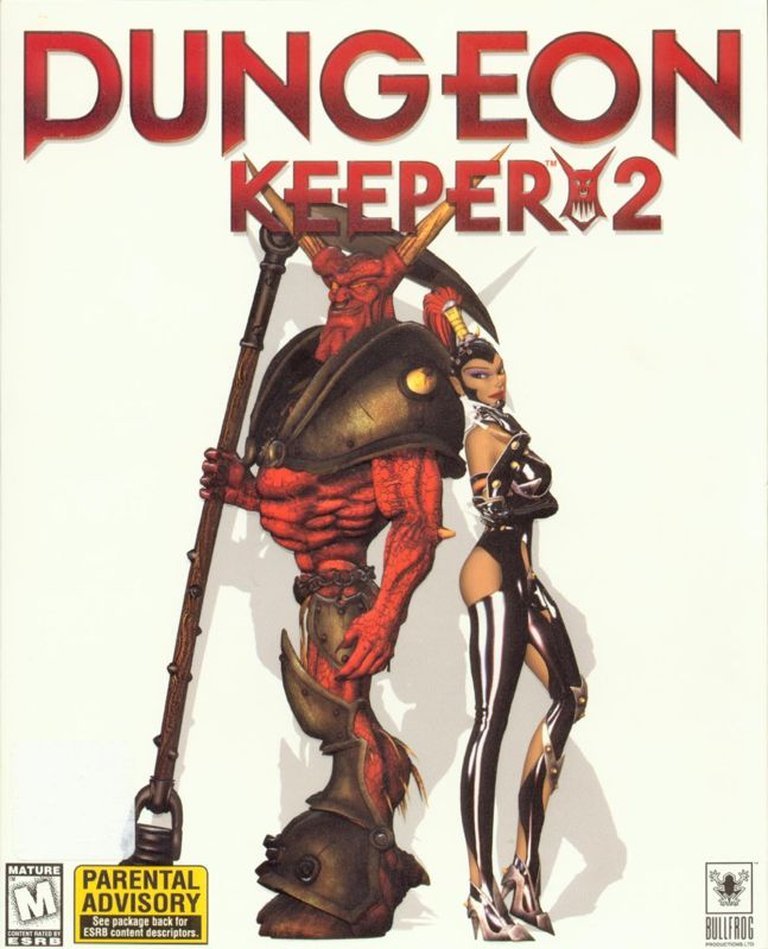
Description
Dungeon Keeper 2 is a fantasy god game where players embody an evil Dungeon Keeper, constructing and expanding 3D underground dungeons, recruiting monstrous creatures through portals, mining gold for salaries, and building specialized rooms to train, torture, and entertain them. Using mana-powered spells, traps, and direct possession of units, players conquer regions of the good-aligned overworld from the underworld, defeating heroes and bosses in a real-time strategy campaign, with additional skirmish, multiplayer, and sandbox ‘My Pet Dungeon’ modes featuring comedic narration.
Gameplay Videos
Where to Buy Dungeon Keeper 2
Dungeon Keeper 2 Free Download
Dungeon Keeper 2 Cracks & Fixes
Dungeon Keeper 2 Patches & Updates
Dungeon Keeper 2 Mods
Dungeon Keeper 2 Guides & Walkthroughs
Dungeon Keeper 2 Reviews & Reception
metacritic.com (89/100): Generally Favorable. Very good, sad how a game from 1999 can have more fun than a game made today.
gamespot.com : It’s impossible that you won’t find something to like about Dungeon Keeper 2.
ign.com (89/100): Bullfrogs devious sequel has all the strengths of the original… and a lot more.
imdb.com (100/100): It’s good to be bad.
Dungeon Keeper 2 Cheats & Codes
PC
Press [Ctrl] + [Alt] + C during gameplay (a creaking door sound confirms activation; no text box appears), then type one of the following codes:
| Code | Effect |
|---|---|
| do not fear the reaper | Skips/wins the current level |
| feel the power | Sets all creatures’ skills to 10 |
| fit the best | Unlocks all rooms and traps |
| ha ha thisaway ha ha thataway | Grants 100,000 mana (requires v1.51 patch) |
| i believe its magic | Unlocks all spells/magic |
| show me the money | Grants additional gold/money |
| this is my church | Unlocks all rooms |
| what are you looking at | Hides the map |
| now the rain has gone | Reveals the full map (use after ‘what are you looking at’ for arrow to hero gate) |
PC (Command Line)
Launch the game from command prompt or shortcut using: dk2.exe -level [code], replacing [code] with one of the following level names:
| Code | Effect |
|---|---|
| level1 | Loads level 1 |
| level2 | Loads level 2 |
| level3 | Loads level 3 |
| level4 | Loads level 4 |
| level5 | Loads level 5 |
| level6a | Loads level 6a |
| level6b | Loads level 6b |
| level7 | Loads level 7 |
| level8 | Loads level 8 |
| level9 | Loads level 9 |
| level10 | Loads level 10 |
| level11a | Loads level 11a |
| level11b | Loads level 11b |
| level11c | Loads level 11c |
| level12 | Loads level 12 |
| level13 | Loads level 13 |
| level14 | Loads level 14 |
| level15a | Loads level 15a |
| level15b | Loads level 15b |
| level16 | Loads level 16 |
| level17 | Loads level 17 |
| level18 | Loads level 18 |
| level19 | Loads level 19 |
| level20 | Loads level 20 |
| secret1 | Loads secret 1 |
| secret2 | Loads secret 2 |
| secret3 | Loads secret 3 |
| secret4 | Loads secret 4 |
| secret5 | Loads secret 5 |
PC
Press and hold Left Shift, then type one of the following:
| Code | Effect |
|---|---|
| FECKOFF | Displays programmer greetings (continues until Shift released) |
| SKEKSIS | Displays programmer greetings (continues until Shift released) |
PC (Command Line)
Launch the game using: dk2.exe -alex. During gameplay, press and hold both Shift keys, then type:
| Code | Effect |
|---|---|
| JLW | Displays programmer greetings |
Dungeon Keeper 2: Review
Introduction
Imagine inverting the heroic fantasy trope: instead of slaying dragons and rescuing princesses, you’re the dragon, building a labyrinthine hellhole to lure, torture, and slaughter those self-righteous adventurers. Dungeon Keeper 2 (1999), Bullfrog Productions’ sequel to the genre-defining 1997 original, delivers this sadistic power fantasy with gleeful abandon. As a landmark in “god games” and real-time strategy (RTS), it built on Peter Molyneux’s revolutionary vision of playing as the villain, introducing full 3D visuals and refined mechanics that made evil management intoxicatingly addictive. While it doesn’t radically overhaul its predecessor, DK2 polishes the formula to a brimstone gleam, blending city-building simulation, RTS combat, and possession-based action into a darkly comedic triumph that remains a high-water mark for dungeon sims.
Development History & Context
Bullfrog Productions, the British studio behind hits like Populous and Theme Park, entered Dungeon Keeper 2‘s development riding the success of the original, which had sold briskly and earned cult status for its subversive “be the bad guy” premise. Released in June 1999 for Windows by Electronic Arts, DK2 was helmed by producer Nick Goldsworthy, lead programmer Alex Peters, and designer Sean Cooper, with a team of around 50—including veterans from Dungeon Keeper and Populous: The Beginning. Peter Molyneux, the original’s visionary, had limited involvement, having shifted focus elsewhere at Bullfrog, but his ideas permeated the sequel.
The era’s technological constraints shaped DK2 profoundly. The late ’90s RTS boom (StarCraft, Age of Empires) demanded 3D acceleration via DirectX, moving from the first game’s 3D environments with 2D sprites to fully modeled units and free-rotating cameras. Bullfrog obsessed over a software renderer for low-end PCs alongside hardware-accelerated glory, iterating the UI over 10 times based on tester feedback to reduce micromanagement ambiguity. Audio pioneer Nick Laviers and composer Mark Knight crafted immersive effects—chopping cabbages for beheadings—while level designers David Armor and Shintaro Kanaoya emphasized streamlined dungeon upkeep.
The 1999 gaming landscape was RTS-saturated, with micromanagement-heavy clones like Command & Conquer dominating. DK2 stood out by hybridizing RTS with managerial sims (Dungeon Keeper‘s “Sim Dungeon” DNA), god-game possession, and irreverent humor. Patches (up to 1.7) added elite creatures and the Maiden of the Nest, extending longevity amid multiplayer focus. Cancellations of a PlayStation port and Dungeon Keeper 3 (teased in extras) marked Bullfrog’s waning independence under EA, but DK2 captured their innovative peak.
Narrative & Thematic Deep Dive
DK2‘s plot is a deliciously campy power grab in the saccharine Kingdom of Harmonia, ruled by bumbling King Reginald. Wizards invent Portal Gems to seal evil below ground, scattering 20 across realms guarded by “Lords of the Land.” Enter the Horned Reaper—”Horny,” a rampaging anti-hero summoned via talisman fragments from hidden levels—who recruits you to reclaim them, conquering underworld proxies to breach the overworld. The 20-level campaign unfolds on a 3D table-map, with branching sub-levels (e.g., siege vs. infiltration in “Siege”) and timed races for gems. Endgame pits you against Reginald in “Heartland,” teasing surface invasion.
Characters shine through the iconic Mentor (voiced by Richard Ridings), a booming, sarcastic advisor whose dialogue evolves from tutorial quips (“One of your imps does a great impression of you—he can even do the ears”) to threats (“Your nocturnal presence has prompted the following secret hint: GO TO BED!”). Creatures like whip-cracking Dark Mistresses (who self-torture), Bile Demons, and Warlocks embody chaotic evil with personalities—goblins scamper frantically, Salamanders ignite foes. Heroes mirror them (Wizard vs. Warlock), subverting D&D tropes: you’re not Diablo-esque hell-lord but a micromanaging overlord slapping minions into line.
Themes revel in schadenfreude and role-reversal. Evil is cartoonishly fun—jackpot discos in Casinos, chicken-slapping rage boosts—contrasting Harmonia’s twee names (Smilesville, Fluttershine). It skewers heroism (torture-converting knights) and power dynamics (pay minions or rebel). Fourth-wall breaks and Latin spell chants (“Expressus Americanus” for Create Gold) amplify satire, making DK2 a thematic evolution: less grim than DK1, more vibrant empire-builder celebrating “It’s good to be bad.”
Gameplay Mechanics & Systems
DK2‘s core loop—dig, build, attract, train, conquer—refines DK1‘s brilliance into a taut hybrid of RTS, sim, and god-game. Imps mine gold/gems (payday fuel), claim tiles, and reinforce walls (slowing enemy digs). Rooms dictate recruitment: Lairs/Hatcheries for basics, Library for spells, Workshop for traps/doors (Sentry shoots, Magic Doors retaliate). New additions like Casino (gamble for gold/morale) and Combat Pit (level 5-8 training) deepen management; Training Room caps at level 4, pushing real fights.
Combat blends indirect RTS with direct flair. Drop-stun (seconds-long vulnerability, skipped in Pits) enables ambushes; creatures follow strategies (Rambo-esque Black Knights charge, Dark Elves snipe). Possession lets you hijack units for FPS control—Warlock fireballs, Rogue stealth—blending genres, though clunky on low-end rigs. Mana (dungeon-size regen, boosted by vaults) funds upgraded spells (e.g., Super Create Imp spawns level-4 workers); gold pays salaries, averting rebellions.
Progression rewards micromanagement: torture converts foes (heal to prevent death), Temples summon via sacrifices, Graveyards spawn Vampires/Skeletons. UI shines—bottom panel tabs for building/spells, health “flowers” track XP—but demands manual mastery (slap for speed boosts). Flaws: Sharp learning curve (manual essential), repetitive campaigns (build-from-scratch often), AI cheesable (rushing Dungeon Hearts). Multiplayer/Skirmish (2-4 players, IPX/TCP) adds chaos; My Pet Dungeon sandbox lets heroes invade on-demand, with score goals. Patches enabled elite creatures via room layouts, fixing longevity gaps. Innovative yet flawed, it’s micromanagement heaven/hell.
| Core Systems | Strengths | Weaknesses |
|---|---|---|
| Building | Intuitive claiming, room synergies | Imp bottlenecks |
| Creatures | 20+ types, possession FPS hybrid | Salary rebellions, no direct orders |
| Combat | Stun-drop tactics, AI behaviors | Chaotic melees, possession jank |
| Resources | Dual gold/mana balance | Payday micromanagement |
| Modes | Sandbox freedom, MP variety | AI limitations, short campaigns |
World-Building, Art & Sound
DK2‘s underworld pulses with infernal vibrancy, shifting from DK1‘s beastly dens to humanoid citadels amid lava, water, and gem veins. Dungeons sprawl organically—bridges span chasms, traps line chokepoints—fostering emergent fortresses. Atmosphere thrives on details: imps drag corpses to prisons, Mistresses whip idle time away, graveyards fester with moans.
Full 3D visuals dazzle for 1999—rotatable cameras, dynamic lighting (DirectX glows), fluid animations (disco-dancing goblins post-jackpot). Textures pop (brimstone walls, fleshy lairs), though low-end software mode chugs. Sound design immerses: room ambiences (Casino slots, Library scribbles), meaty combat (cabbage-chops for decapitations), 3D-positional QSound/EAX audio. Mark Knight’s score swells ominously; Mentor’s gravelly baritone steals scenes. Collectively, they forge a tactile, humorous hellscape—evil feels alive, replayable, and wickedly atmospheric.
Reception & Legacy
Launched to acclaim (MobyScore 8.2/10, critics 87% avg.), DK2 earned raves from Computer and Video Games (100%: “If you only buy one game this year…”) and PC Gamer (89%: “Unholy Grail”). Praised: Stunning 3D (“gorgeous,” IGN 8.9/10), humor (“dark humor triumph,” CGW 4.5/5), AI (“impressive,” Edge 8/10). Critiques: Too similar to DK1 (“1.5,” some Germans), micromanagement (GameSpot 7.9/10), short campaign. Sold ~70k U.S. units by 2000; awards included CGW‘s Best Voice Acting.
Reputation endures as a classic (#490 Windows on MobyGames), reissued on GOG/Steam/Origin. Influence: Pioneered villain sims, inspiring War for the Overworld (2015 spiritual successor), Overlord, and management hybrids. Bullfrog’s closure (2001) and DK3 cancellation stung, but DK2 cemented the series’ cult status amid RTS fatigue.
Conclusion
Dungeon Keeper 2 masterfully refines its predecessor’s genius—3D splendor, humorous evil, possession innovation—into an exhaustive evil empire sim that’s as replayable as it is replayable. Minor flaws (repetition, curve) pale against its genre-bending joy. An essential artifact of ’90s Bullfrog brilliance, it earns a definitive 9.5/10 and a pantheon seat in gaming history: the ultimate “good to be bad” simulator. Fire up a sandbox, slap an imp, and revel in the depths.