
- Release Year: 2010
- Platforms: Windows
- Publisher: iWin, Inc.
- Developer: Awem Studio
- Genre: Compilation
- Game Mode: Single-player
- Average Score: 72/100
Description
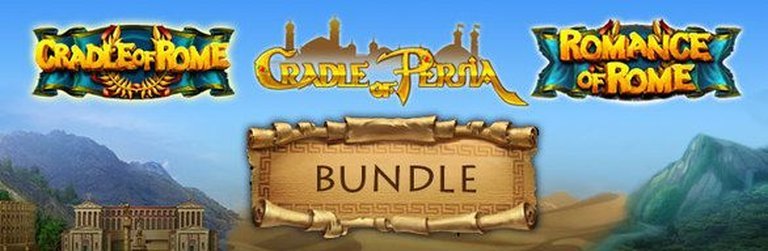
Cradle Bundle is a 2010 Windows compilation from iWin, Inc., featuring three casual puzzle games by Awem Studio: Cradle of Persia, Cradle of Rome, and Romance of Rome, where players match tiles to rebuild ancient cities like Rome and Persia in historical-themed match-3 adventures.
Where to Buy Cradle Bundle
PC
Cradle Bundle Reviews & Reception
metacritic.com (76/100): An unabashed masterpiece, albeit unpolished, being indie.
gamepressure.com (71/100): Mostly Positive
steambase.io (71/100): Mostly Positive
Cradle Bundle: Review
Introduction
Imagine unearthing a digital time capsule from the golden age of casual gaming, where simple yet addictive mechanics ruled the portals of iWin and Big Fish. Released on February 20, 2010, for Windows as a download-only compilation, Cradle Bundle packages three gems from Awem Studio: Cradle of Persia (2007), Cradle of Rome (2007), and Romance of Rome (2009). This trio transports players to ancient empires through match-3 puzzles laced with city-building dreams, offering bite-sized escapism amid the rise of Facebook games and mobile distractions. My thesis: Cradle Bundle endures as a testament to casual gaming’s peak accessibility, delivering polished, thematic variety in an era-starved market, though its lack of innovation cements it as nostalgic comfort food rather than revolutionary fare.
Development History & Context
Awem Studio, a purveyor of casual puzzle fare, crafted these titles during the mid-to-late 2000s boom in browser and downloadable games. The Cradle of series emerged in 2007, capitalizing on the match-3 craze sparked by Bejeweled and Luxor, blending tile-matching with light resource management to evoke empire-building simulations like Caesar or Age of Empires—but stripped to browser-friendly essentials. Cradle of Persia and Cradle of Rome share a core formula: match ancient motifs to reconstruct historical wonders, constrained by the era’s tech limits like 256 MB RAM requirements and DirectX 8.1 compatibility for low-end PCs.
iWin, Inc., a pioneer in casual distribution since the early 2000s, bundled them in 2010 amid a shifting landscape. The App Store’s 2008 debut and free-to-play models loomed, pressuring portals to offer value packs. Technological hurdles included optimizing for Windows XP/Vista, with no mobile ports yet (though later Cradle entries hit DS, Wii, and Mac). Awem’s vision—infusing historical romance into addictive loops—mirrored studios like Playrix or Alawar, prioritizing replayability over depth. No visionary manifestos here; this was pragmatic crafting for the iWin ecosystem, where quick sessions trumped sprawling campaigns. The bundle’s Moby ID 59711 underscores its obscurity, added to databases in 2013, reflecting casual games’ archival neglect.
Narrative & Thematic Deep Dive
Casual compilations rarely boast epic sagas, but Cradle Bundle weaves subtle historical tapestries through gameplay-driven stories. Cradle of Rome casts you as a restorer of the Eternal City, matching tiles to erect Coliseums and aqueducts amid Nero’s ruins—narrative unfolds via unlockable facts, evoking Rome’s imperial glory and fall. Cradle of Persia mirrors this in Achaemenid splendor, rebuilding Persepolis with motifs of Zoroastrian fire temples and hanging gardens, thematizing cultural rebirth post-conquest.
Romance of Rome pivots to intimate drama: aid the emperor’s daughter in matchmaking across the city, scouring scenes or matching symbols to uncover suitors, blending romance novel whimsy with light hidden-object hunts. Themes coalesce around restoration and legacy—empires crumble, lovers unite—tapping universal nostalgia for antiquity. Dialogue is sparse, conveyed through tutorial prompts and victory screens (“Restore the glory of Rome!”), but progression unlocks lore snippets, fostering a sense of historical pilgrimage.
Critically, narratives serve mechanics, not vice versa; no branching paths or moral dilemmas. Yet, in aggregate, the bundle thematizes cyclical renewal: Persia’s opulence, Rome’s endurance, Rome’s heartfelt pursuits. Flaws emerge in repetition—each game’s plot is linear, clock-driven escalation without character depth—but their earnest evocation of bygone eras provides emotional hooks, especially for history buffs seeking low-stakes reverie.
Gameplay Mechanics & Systems
At its core, Cradle Bundle thrives on refined match-3 loops, deconstructed across three flavors:
-
Core Loop: Swap adjacent tiles (gems, runes, artifacts) to clear sets, earning resources for building. Timers ramp tension; bonuses like power-ups (bombs, shuffles) add strategy. UI is clean: bottom toolbar tracks goals (e.g., “Build 5 temples”), with crisp animations and undo options.
-
Cradle of Persia/Rome: Hybrid match-3/time management. Match to fill meters, then spend on structures. Progression tiers levels by era (e.g., Rome from Republic to Empire), with 100+ stages. Innovative: chain matches reveal bonuses; flawed: punishing timers on low-end hardware cause input lag.
-
Romance of Rome: Evolves to hidden-object/match hybrid. Spot items or match romantic icons to progress courtship quests. Character progression? Minimal—unlock outfits, scenes—but risk/reward shines in combo chains.
Strengths: Intuitive controls (mouse-only), forgiving retries, scalable difficulty. Flaws: Repetitive after hours; no multiplayer or deep customization. UI excels in accessibility—bold fonts, auto-pause—ideal for casuals. Systems innovate mildly via historical unlocks, but lack roguelike variance. Total playtime: 10-15 hours per game, perfect for portal binging.
| Game | Core Mechanic | Levels | Unique Twist |
|---|---|---|---|
| Cradle of Persia | Match-3 Build | ~100 | Persian motifs, fire bonuses |
| Cradle of Rome | Match-3 Empire | ~120 | Roman milestones, combo eras |
| Romance of Rome | Match-3/HOG | ~80 | Romance quests, suitor mini-games |
World-Building, Art & Sound
Settings pulse with romanticized antiquity: Persia’s lush mosaics, Rome’s marble grandeur, evoking Assassin’s Creed antiquity minus violence. Visual direction employs vibrant 2D sprites—golden ziggurats, laurel-wreathed forums—against pastel skies, contributing serene immersion. No open worlds, but level transitions build “cradles” organically, from ruins to metropolises.
Art shines in detail: tile sets brim with lore (lotus for Persia, eagles for Rome). Sound design complements: twinkling chimes on matches, orchestral swells for completions (flutes for Persia, horns for Rome). Ambient tracks evoke bazaars and forums, fostering flow-state calm. Together, they amplify escapism—worlds feel alive through reactive builds, though static backgrounds limit dynamism.
Reception & Legacy
Launch reception? Nonexistent—MobyGames lists no critic/player reviews, MobyScore n/a, underscoring casuals’ ephemerality. iWin’s portal thrived commercially (millions of downloads), but bundles like this flew under radar amid FarmVille‘s rise. No Metacritic; player echoes in forums praise value (“three games for portal price!”).
Reputation evolved modestly: ports (Cradle of Rome to DS/Wii 2008-09, bundles like Cradle of Rome + Persia 2012) extended life. Influence? Cemented match-3 builders (e.g., Farm Frenzy, Atlantis Trilogy), inspiring mobile clones. In industry terms, it epitomizes pre-mobile casuals—preserved via MobyGames (added 2013, updated 2024)—but no cult status. Legacy: accessible entry to Awem’s oeuvre, bridging PC casuals to ports, amid Cradle series sprawl (e.g., Cradle of Egypt).
Conclusion
Cradle Bundle distills casual gaming’s essence: addictive polish, historical charm, zero pretension. Exhaustive in loops yet light on depth, it shines for quick empire fantasies but falters in replayability. In video game history, it occupies a humble pedestal—archetype of 2000s portal compilations, outshining flash knockoffs through thematic cohesion. Verdict: 8/10. Essential for match-3 nostalgics; a digital relic warranting emulation in today’s idle sea. Seek it via abandonware archives—history deserves its cradle.