
- Release Year: 2021
- Platforms: Nintendo Switch, PlayStation 4, Windows
- Publisher: Square Enix Co., Ltd., Square Enix, Inc., Square Enix Limited
- Developer: Cattle Call, Inc., Square Enix Co., Ltd.
- Genre: RPG
- Perspective: Diagonal-down
- Game Mode: Single-player
- Gameplay: JRPG, Turn-based
- Setting: Fantasy
- Average Score: 79/100
Description
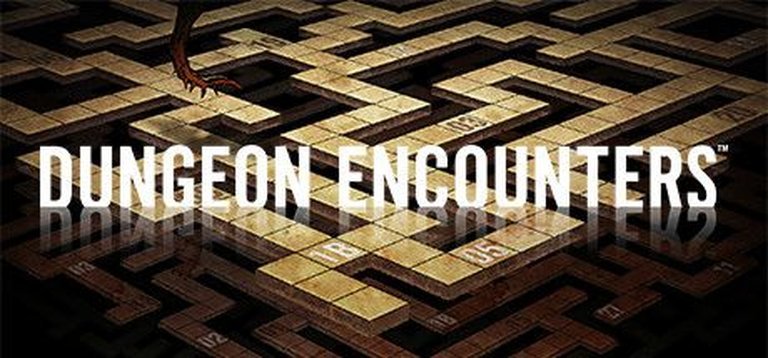
Dungeon Encounters is a minimalist fantasy JRPG from Square Enix and Cattle Call, directed by Hiroyuki Ito with music by Nobuo Uematsu, featuring turn-based combat in a vast, grid-based dungeon explored via diagonal-down 2D scrolling visuals and menu-driven interfaces. Players delve into strategic encounters and discoveries in a stripped-down presentation that belies its depth, offering surprises, shortcuts, and engaging Japanese-style RPG gameplay.
Gameplay Videos
Where to Buy Dungeon Encounters
PC
Dungeon Encounters Free Download
Dungeon Encounters Mods
Dungeon Encounters Guides & Walkthroughs
Dungeon Encounters Reviews & Reception
opencritic.com (77/100): Dungeon Encounters is a masterstroke of game design, character and narrative.
nintendolife.com : Dungeon Encounters is a masterstroke of game design, character and narrative – it’s storytelling in the way only games can be.
metacritic.com (81/100): Dungeon Encounters is a hardcore experience, that some will dismiss as overly simple. More fool them.
reddit.com : The only RPG I’ve ever played where I felt awfully trapped, with genuine tension and dread.
Dungeon Encounters: Review
Introduction
Imagine descending into a vast, shadowy labyrinth where every grid square pulses with latent danger, every hexadecimal code a whispered threat or boon, and your party’s survival hinges not on cinematic spectacle but on the raw calculus of strategy and caution. Dungeon Encounters, released in 2021 by Square Enix and Cattle Call, strips the JRPG genre to its skeletal core, challenging players to confront the fundamentals of dungeon crawling without the crutches of lavish narratives or eye candy. Born from the minds of Final Fantasy legends Hiroyuki Ito—the inventor of the Active Time Battle (ATB) system—and Nobuo Uematsu, alongside producer Hiroaki Kato, this is no nostalgic throwback but a provocative thesis: the essence of RPG mastery lies in emergent tension, player ingenuity, and the thrill of vulnerability. In an era of bloated open-world epics, Dungeon Encounters asserts that true depth emerges from deliberate restraint, proving itself a masterclass in minimalist design that redefines what makes a dungeon crawler enduring.
Development History & Context
Square Enix’s Dungeon Encounters emerged from a boutique collaboration between the publisher’s internal teams and Cattle Call, Inc., a studio known for competent but unflashy RPG support roles. Directed by Hiroyuki Ito—whose last full directorial effort was Final Fantasy XII in 2006—this marked his return after 14 years, channeling his ATB legacy into a “skeleton” RPG framework. Ito envisioned the dungeon as akin to Tokyo’s labyrinthine subway system: intricate yet conquerable through strategic connections, inspired by staring at 3D metro maps. Producer Hiroaki Kato emphasized survival-driven gameplay over story, contrasting Final Fantasy‘s lore-heavy progression.
Developed using Unity, the game sidestepped modern tech bloat for deliberate austerity—no procedural generation, no ray-tracing, just fixed 100-floor grids demanding player notation. Released amid 2021’s post-pandemic glut of spectacle-driven titles like Final Fantasy XIV expansions and Metroid Dread, it launched quietly on October 14 for Windows (Steam), followed by Nintendo Switch and PlayStation 4. Square Enix’s minimal marketing— a Tokyo Game Show trailer—mirrored its ethos, positioning it as an experimental IP rather than a blockbuster. Priced at $29.99, it tested whether pedigree (Uematsu’s classical remixes, Ryoma Itoh’s character art) could sell “miserly budget” brilliance in a landscape favoring AAA excess.
Narrative & Thematic Deep Dive
At first glance, Dungeon Encounters boasts an “excuse plot”: a colossal labyrinth erupts near a village, spawning fiends; the kingdom fails, so locals form an Academy to train ragtag adventurers. A single post-credits textbox resolves the thralldom of final recruit Everethe. Yet this sparsity is thematic genius, inverting JRPG verbosity. Narrative emerges through absence, player actions scripting emergent tales—rescuing petrified allies, abandoning parties, or reclaiming devoured comrades from regurgitating foes. Flavor text bios transform interchangeable units into a “ragtag bunch of misfits”: amnesiac Sesspare seeks memories; isekai kid McAllie dons a VR headset; Jorath’s dog Jufren honors a dead brother; dragon Valtoro fulfills a mad girl’s promise.
Themes probe RPG ontology: minimalism exposes “craft of game design,” per RPGFan, forcing imagination to fill blanks. Vulnerability reigns—petrification demands abandonment, wipes trigger rescue expeditions from scratch, echoing Dark Souls-esque risk. Puzzles like Math Riddles (factorials, atomic numbers, Super Bowl scores) and Map Riddles demand lateral thinking, rewarding pattern recognition over exposition. Eldritch undertones culminate in void-like floors 90-99, where droning ambiance evokes cosmic horror. Dialogue? Nonexistent beyond logs and bios, yet this “stylistic suck” births player-driven catharsis: regret redeems via depth-plunges, loss fosters bonds. It’s storytelling as systems, celebrating JRPG innovations like ATB while critiquing bloat.
Gameplay Mechanics & Systems
Core loop: Assemble four from 20+ recruits at Floor 0’s Academy hub, explore grid floors via diagonal-down 2D scrolling, trigger hex events (white: items/shrines/skills/merchants; black: battles). No minimap—players graph paper-note addresses (e.g., 98.69.31 hides Perfect Camouflage), earning Proficiency Points (PP) for exploration to equip gear/skills. Permadeath looms: wipes scatter parties as “wanderers” (trackable via menu), petrified statues demand Gorgon Shrines, consumed allies regurgitate from kin. Game Over hits if Academy empties; retry retains levels in New Game+.
Combat refines Ito’s classic ATB (default Wait mode eases entry): real-time turns via gauges, foes’ visible for preemption. Triple stats—HP, PD (Physical Defense), MD (Magic Defense)—demand sequencing: deplete PD/MD before HP damage. Fixed-damage (swords/spears/bows/Malio) vs. random (blunts/guns/Malaflux) adds reliability vs. burst. Dual-wield weapons/magic, OHKOs (consumption/banishment/petrification), equipment breakage, and statuses (Cavy: miss-prone guinea pigs) enforce tension. Anti-frustration: Event/Battle Logs, Two-Way Teleporters every 9th floor, Abandon Party escape, Address Blade (damage = floorYX product).
Innovations shine: navigation skills (Teleport, Ascension/Descension, Fiend Shuffle) open sandbox post-floor 30; Riddle rewards (e.g., Cutlery Set OHKO); Valtoro’s dragon-only gear. Flaws? Tedious charting (eShopper Reviews gripes), late-game grind, squawky music repetition. UI? Polished menus, legible handheld grids, but PC port bugs dragged Metacritic to 60. Loops addict via escalation—early floors approachable, depths Nintendo Hard with Black Hole insta-wipes—culminating in 40-50 hour marathons blending Etrian Odyssey mapping, Wizardry peril, and FF ATB purity.
World-Building, Art & Sound
The labyrinth evolves atmospherically: grassy Fields (10-19), desert mazes (20-29), volcanic halls (30-39), hellish voids (90+). Ambient SFX—wind, drips, droning—crafts “nothing is scarier” dread sans music overworld. Floor textures (sumptuous grids, sunlight filters) and particle flourishes (grass sway) belie minimalism, evoking retro hand-drawn maps.
Visuals: 3D models traverse 2D-scrolling grids; battles static portraits vs. black voids. Hex codes replace icons, portraits (stylish, varied: jaguar-man, Totoro-cat Sir Cat) spark imagination. Ryoma Itoh’s designs—from robot drones to sword-dogs—infuse personality.
Uematsu’s soundtrack remixes classics (“Flight of the Bumblebee” guitar riffs), energetic for battles but repetitive/squawky per critics. Ambient mastery amplifies isolation, turning skeletal presentation into immersive “eldritch location,” where scale feels vast via traversal grind.
Reception & Legacy
Critically, acclaim for Switch/PS4 (Metacritic 81/82) hailed “masterstroke” design (Nintendo Life 8/10), “gripping strategic adventure” (Destructoid 8.5/10), Edge’s 9/10 praising “delicious meat on old bones.” MobyGames 76% averaged 10 reviews; lower PC scores (60) cited ports. Dissent: eShopper Reviews (5/10) tedium, Games Machine (6/10) “rusty mechanics.”
Commercially niche—3 MobyGames collectors—its quiet launch underscored Square Enix’s indifference, yet cult status grew via word-of-mouth. Influences Voice of Cards minimalism; echoes Wizardry/Etrian Odyssey while proving ATB viability. Legacy: Bold RPG reductio ad absurdum, influencing “mechanics-first” experiments, cementing Ito/Uematsu as innovators beyond FF. Not universal, but for genre historians, a vital artifact exposing JRPG soul.
Conclusion
Dungeon Encounters distills JRPG to existential purity: 100 floors of grid-bound peril where strategy trumps spectacle, imagination births narrative, and caution yields triumph. Ito’s ATB endures, Uematsu’s motifs thrill, yet its genius lies in enforced humility—trapped in weakness, players forge legend. Flaws like charting tedium and repetition temper its brilliance, but for 40+ hours of emergent mastery, it’s unparalleled. In video game history, it claims a paramount niche: the minimalist manifesto proving less yields more, a timeless rebuke to excess and eternal beacon for purists. Score: 9/10—Essential for JRPG scholars, catnip for dungeon delvers.