
- Release Year: 2022
- Platforms: Windows
- Genre: Strategy, Tactics
- Perspective: Diagonal-down
- Game Mode: Single-player
- Gameplay: Tower defense
- Setting: Fantasy
Description
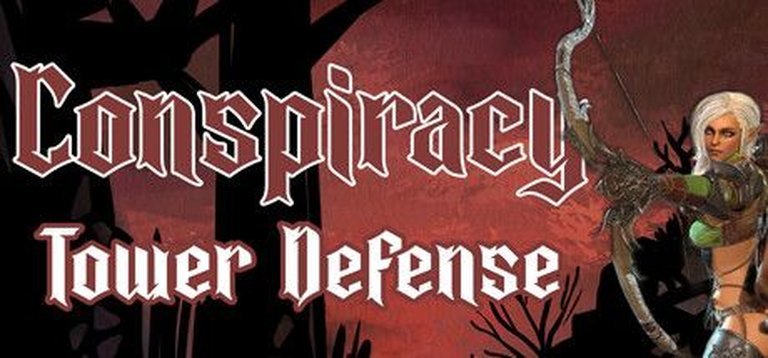
Conspiracy: Tower Defense is a real-time strategy game set in a fantasy world, where players engage in classic tower defense gameplay from a diagonal-down perspective, strategically placing and upgrading towers to fend off waves of enemies using a point-and-select interface.
Conspiracy: Tower Defense: Review
Introduction
In an era where tower defense games have evolved from humble Warcraft III mods into sprawling, narrative-driven spectacles like Kingdom Rush or competitive esports staples like Bloons TD Battles, Conspiracy: Tower Defense (later rebranded as Conspiracy TD) emerges as a gritty, unpretentious indie contender. Released initially in Early Access on December 24, 2022, and fully launched on November 1, 2024, for Windows via Steam, this fantasy-flavored strategy title from solo developer Arc51 harkens back to the genre’s roots: pure, punishing wave-based survival without the bells and whistles of modern excess. Its hook lies in a deceptive simplicity that balloons into mechanical depth, challenging players to orchestrate symphony-like defenses against relentless monster hordes. Yet, as a historian of the genre, I see its true legacy potential not in innovation but in dogged persistence—a reminder that tower defense thrives on iteration. My thesis: Conspiracy TD is a masterful underdog, redeeming the genre’s formulaic pitfalls through layered progression and scalability, earning its place as an essential pick for purists despite its obscurity.
Development History & Context
Arc51, a small indie outfit (likely a one-person or micro-team operation given the hands-on Steam updates), birthed Conspiracy TD amid the post-pandemic indie boom on Steam, where tower defense remains a reliable evergreen. Entering Early Access in late 2022, the game arrived during a renaissance for the genre, following trailblazers like Plants vs. Zombies (2009) that popularized accessible, theme-driven defenses, and contemporaries such as Forest Tower Defense (2022) or Dice Tower Defense (2017). Arc51’s vision, gleaned from exhaustive Steam blurbs, emphasizes raw tactical purity: “build units to destroy incoming waves of monsters or…not succeed trying.” This tongue-in-cheek fatalism underscores a developer unafraid of failure states, contrasting the hand-holding of mobile hits like Bloons TD.
Technological constraints shaped its DNA. Powered by Unreal Engine, it offers dual maps—HighQ for robust GPUs with lush landscapes, flowers, and dynamic lighting, and LowQ for integrated graphics via simplified boxes and circles—ensuring accessibility on 2010s-era hardware (minimum: Dual Core 3.0 GHz, GTX 1030; recommended: i5-3470, GTX 1660). The 2022 Early Access launch coincided with Steam’s leniency toward unfinished titles, allowing Arc51 to iterate: levels expanded from 25 to 32, units from 14 to 40+, and skills from “in progress” to a 60-point system. Multiplayer, a lobby-based co-op with scalable difficulty, entered “test mode” amid visual placeholders (e.g., disabled projectile trails), reflecting bootstrapped development sans big-budget polish.
The gaming landscape? Tower defense had matured from Desktop Tower Defense‘s (2007) grid-based browser simplicity and RTS hybrids like Wintermaul (early 2000s Warcraft III mod) into 3D spectacles (Defense Grid: The Awakening, 2008) and PvP arenas. Conspiracy TD rejects this bloat, opting for diagonal-down, real-time pacing in a fantasy setting—echoing PixelJunk Monsters (2008) but with PC-first optimization. Arc51’s solo ethos mirrors pioneers like Paul Preece, prioritizing depth over hype in a Steam sea flooded with 300k+ games.
Narrative & Thematic Deep Dive
Conspiracy TD wears its narrative lightly, if at all—a deliberate choice in a genre often criticized for plotlessness. Lacking cutscenes or voiced lore (no credits list writers or voice actors on MobyGames), its “story” unfolds through progression: players defend abstract fantasy realms from escalating monster waves, evoking a shadowy cabal of beasts besieging humanoid strongholds. The title Conspiracy: Tower Defense tantalizingly nods to paranoia—themes of hidden threats, betrayal (enemies occasionally counterattack towers), and fragile alliances (utility towers shield allies)—but delivers no explicit Illuminati-style kudzu plot. Instead, themes emerge organically: hubris in overextension (unlimited multiplayer builds tempt abuse), adaptation amid chaos (specializations counter enemy types), and the illusion of control (higher difficulties mandate defensive upgrades).
Characters? Absent as named entities; towers personify archetypes—archers (burning spreadable arrows, ice slows, poison DoT), rockets, witches—evolving from level 10 specializations into specialized killers. Dialogue is nil, but UI tooltips and ability names (meteors, cataclysm, curses) whisper a mythic undercurrent: players as godlike architects thwarting an eldritch uprising. This minimalism critiques bloated narratives in peers like Roblox’s Tower Defense Simulator (TDS), with its multiverse-spanning God Cube sagas of Umbra, Narrator, and Lord Exo. Conspiracy TD inverts this: no retconned events or fan-theorized Void Bringers; just emergent drama from failing waves. Thematically, it’s existential tower defense—monsters as conspiratorial entropy, your builds as defiant order—resonating in an age of real-world uncertainty.
Gameplay Mechanics & Systems
At its core, Conspiracy TD refines the tower defense loop into a ballet of risk-reward. Non-maze design (linear paths, per Steam) forces chokepoint mastery across 32 levels (10-20 mins each, 15-25 waves). Enemies follow fixed routes but retaliate against towers, introducing vulnerability absent in passive peers—necessitating utility towers for regen, shields, and protection. Five unit types shine:
- Single Target: Precision snipers for bosses.
- Multi Target: Crowd-clearers like splash archers.
- AoE: Cataclysmic blasters for hordes.
- Multi Purpose: Versatile hybrids.
- Utility: Shields, heals—mandatory on high difficulties.
Progression is exhaustive: towers upgrade 5 times base + specializations (e.g., archer paths: burning spreads fire, ice freezes packs, poison stacks). Unlock offensive perks (range boosts, type-specific damage) via global points; 60 skills/talents (gained per level) enable meta-builds. Abilities—meteors, ice rocks, curses—cooldown via unit spam, adding burst agency (disabled for multiplayer clients to curb exploits).
UI is point-and-select crisp: radial menus for upgrades, scalable lobby for 2+ players (no local/LAN, color-blind friendly caveats). Difficulties (5 regular + dynamic challenge) multiply points for leaderboards, punishing greed. Flaws? Early-game sparsity (few towers) gates depth; multiplayer “test mode” risks desyncs. Brilliance: scalability—solo feels intimate, co-op chaotic; physics-based projectiles (rockets trail in HighQ) reward positioning. Compared to Orcs Must Die!, it’s less actiony but surgically deep, flaws like mandatory defenses forging tense, replayable loops.
| Mechanic | Strengths | Weaknesses |
|---|---|---|
| Core Loop | Reactive defenses, enemy counterplay | Linear paths limit creativity |
| Progression | 40+ units, branching specs | Slow unlock ramp |
| Multiplayer | Scalable difficulty | Visual bugs, no limits |
| Abilities | Thematic burst (cataclysm) | Cooldown exploits possible |
| Optimization | HighQ/LowQ toggle | FPS dips with max flora |
World-Building, Art & Sound
Fantasy setting evokes misty forests and besieged glades—HighQ map’s verdant hills, customizable foliage/flowers (options warn of FPS hits), and evolving battlefields build immersion. LowQ’s geometric austerity prioritizes playability, a pragmatic duality echoing Desktop TD‘s minimalism. Visuals scale LOD (details <4 simplify meshes; <2 static retro-style), supporting 2048MB RAM rigs. Atmosphere? Diagonal-down perspective amplifies scale—hordes swarm like conspiratorial swarms, towers gleam with arcane glows.
Sound design, inferred from Unreal roots, likely features punchy impacts (poison hisses, meteor booms) and escalating tension OST—fantasy staples sans specifics (no soundtrack credits). These elements coalesce: HighQ’s lush dioramas heighten stakes, making wave 25 breaches visceral; LowQ strips to essentials, emphasizing mechanics. Contribution? Immersive without distraction—art elevates “build or bust” ethos, sound punctuates triumphs/failures.
Reception & Legacy
Launch reception? Meteoric obscurity. MobyGames lists no score/reviews; Metacritic/OpenCritic: zero critics; Steam: 2 positive user reviews post-2024 full release (lauding depth). No Kotaku deep-dive, no esports ripple—yet. Early Access (2022) flew under radars amid 309k+ MobyGames titles; full launch aligns with 2024 TD surge (Minimalist Tower Defense).
Reputation evolved from “testbed” (lobby caveats) to polished gem—32 levels, 40 units signal commitment. Influence? Subtle: reinforces indie TD viability (cf. ReShape TD), prioritizing optimization/multiplayer. No TDS-like fandom (Roblox lore irrelevant), but global scores hint competitive longevity. In history: a footnote like Fieldrunners, potentially cult classic for purists.
Conclusion
Conspiracy: Tower Defense (TD) distills tower defense to its punishing essence—layered builds, retaliatory foes, scalable chaos—transcending indie constraints via Unreal polish and relentless iteration. Arc51 crafts not revolution, but refinement: 40+ units, branching paths, and co-op ambition redeem sparse narrative, embedding themes of fragile order. Lacking fanfare, it endures as genre historian’s delight—echoing Wintermaul‘s ingenuity sans hype.
Verdict: 8.5/10 – Essential for TD veterans; a stealth masterwork cementing indies’ genre guardianship. Play it; defend history.