
- Release Year: 2014
- Platforms: Windows
- Publisher: Games Farm, s.r.o.
- Developer: Games Farm, s.r.o.
- Genre: Role-playing (RPG)
- Perspective: Diagonal-down
- Game Mode: Single-player
- Gameplay: Action RPG
- Setting: Fantasy
- Average Score: 74/100
Description
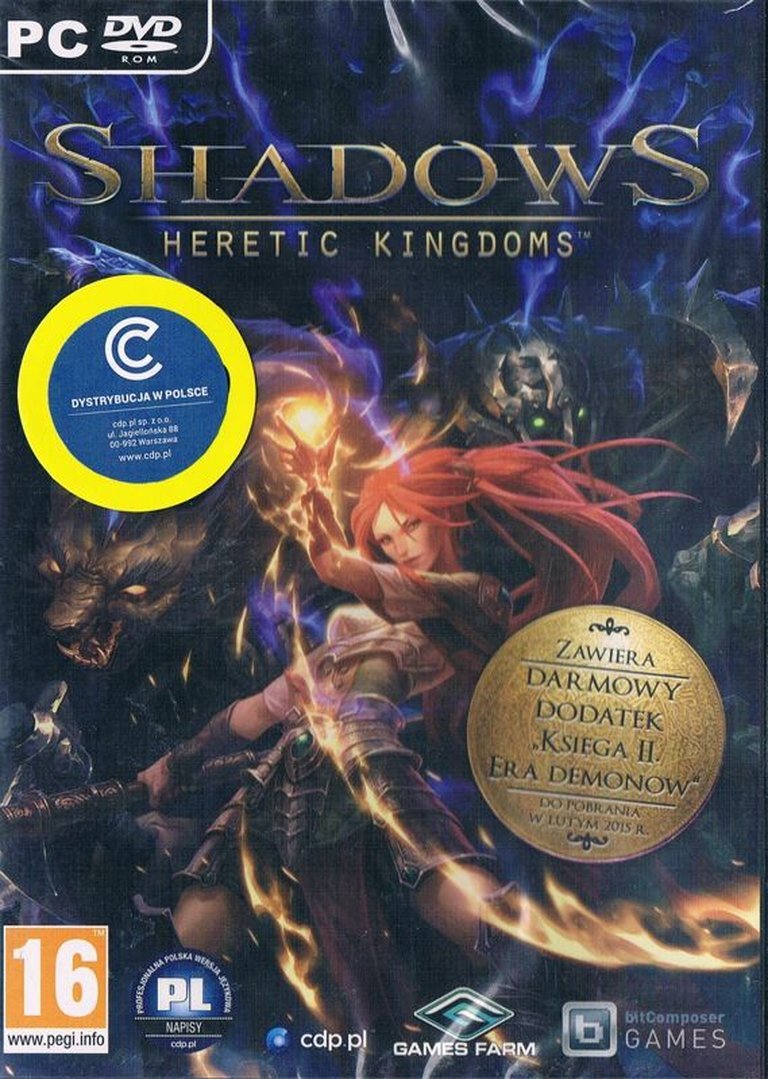
Shadows: Heretic Kingdoms is an action RPG sequel to Heretic Kingdoms: The Inquisition, set twenty years later in a dark fantasy world where four members of the secret Penta Nera order have been murdered, their souls enslaved by Devourer demons. As the special Devourer summoned by the surviving member for revenge, players switch between up to fifteen consumed souls to embody different creatures, battling fantasy foes with melee attacks and spells across the mortal and shadow realms while completing quests that determine whether to save or doom the world.
Gameplay Videos
Where to Buy Shadows: Heretic Kingdoms
Shadows: Heretic Kingdoms Cracks & Fixes
Shadows: Heretic Kingdoms Mods
Shadows: Heretic Kingdoms Guides & Walkthroughs
Shadows: Heretic Kingdoms Reviews & Reception
metacritic.com (74/100): I welcome the slow paced combat which puts soul balancing and character exchange before abilities. The surprisingly deep story also is a breath of fresh air. But not all is well, especially in the engine department.
gamespot.com : Though Heretic Kingdoms’ numerous quirks, undercooked features, and surprise cliffhanger reveal the project to be an episodic work-in-progress, rather than a standalone, self-contained game, it boasts enough intrigue to convince you to overlook its obvious faults.
rpgfan.com : I really wanted to like Shadows: Heretic Kingdoms a lot more than I actually did.
indiegamereviewer.com : the game excels largely due to the fact that it takes advantage of its premise by creating a fun, satisfying combat system around it.
Shadows: Heretic Kingdoms: Review
Introduction
In the shadowed annals of action RPGs, few titles dare to subvert the genre’s sacred cows—lone heroes grinding through endless hordes—like Shadows: Heretic Kingdoms. Released in 2014 as a direct sequel to the long-forgotten 2004 cult classic Heretic Kingdoms: The Inquisition (also known as Kult: Heretic Kingdoms), this isometric hack-and-slash plunges players into the role of a soul-devouring demon, puppeteering an ensemble of resurrected warriors across dual realms. Amid a crowded field dominated by Diablo III‘s polished excess, Shadows emerges as a gritty, ambitious underdog: a dark fantasy epic that trades rote loot-chasing for strategic soul-swapping and moral ambiguity. My thesis? While its innovative puppet system and richly lore-drenched world elevate it beyond mere Diablo clones, technical clunkiness, incomplete launch state, and sluggish combat prevent it from claiming throne-room status—yet cement its place as a flawed gem ripe for rediscovery via modern ports like GOG.
Development History & Context
Shadows: Heretic Kingdoms was birthed by Slovakian studio Games Farm, s.r.o. (formerly 3D People), a small team navigating the indie trenches of early 2010s Eastern European game dev. Publisher bitComposer Games (later handling Kalypso Media Digital releases) backed the project, with series creator Chris Bateman—lead designer and writer on the 2004 original—returning as lead scriptwriter and design consultant. Bateman envisioned a “dark sword and sorcery” universe akin to Robert E. Howard’s Conan or Michael Moorcock’s Elric, infused with pulp horror and interdimensional horror, diverging sharply from Tolkien-esque high fantasy. The Dreamworld from Kult evolved into the corrupted Shadow Realm, now a demon-infested hellscape called Shattered Heaven bleeding into reality.
Launched via Steam Early Access in mid-2014, Shadows grappled with scope creep: initial plans ballooned with added characters, maps, and mechanics, prompting a mid-development pivot to episodic “Books.” Book I (Devourer of Souls) shipped November 20, 2014, at €29.99 (with Book II promised free for owners), while Early Access backers scored the prequel Kult gratis. Tech-wise, it leveraged the OGRE 3D engine for visuals, Irrklang for audio, and Lua scripting—solid open-source choices for a budget title in an era of Unity/Unreal dominance. Constraints abounded: the 2014 landscape brimmed with ARPGs (Path of Exile, Torchlight II), demanding differentiation amid post-Diablo III fatigue. Games Farm’s July 2014 dev diary emphasized replayability (60-90 hours across three main puppets), but bugs, crashes, and unpolished Early Access feedback forced patches. Tom Baker (Fourth Doctor) even voiced intros, nodding to niche appeal. Ultimately, this was a passion project from a decimated series (the original flopped commercially despite cult praise), arriving when crowdfunded indies like Exanima hinted at ARPG innovation potential.
Narrative & Thematic Deep Dive
Shadows unfolds 20 years post-Kult, in a fractured Heretic Kingdoms: a power vacuum post-Theocracy has ignited tensions among humans of Corwenth, wolf-folk Taymurians, and Sura Wastes ogres. Enter the Penta Nera, a secret order that toppled tyrants but imploded in power lust. Four members slain, their souls enslaved by lesser Devourers—demons puppeteering corpses for soul-harvesting. The fifth, a vengeful “Hooded Man,” summons you: a supreme Devourer capable of multi-soul consumption, tasked with thwarting (or embracing) apocalypse.
The plot splits into personal arcs for three core puppets—Kalig (stoic human tank haunted by betrayal), Jasker (agile Taymurian archer reclaiming heritage), Evia (exiled princess-mage wielding fire sorcery)—each unlocked at Chapter I’s start, weaving replayable threads into the Hooded Man’s conspiracy. Fifteen puppets total emerge: zombie bruisers, lupine berserkers, crocodilian shamans, even giant wasps, their “memories” bantering with your demonic inner voice. Dialogue crackles with caustic wit—the Devourer mocks puppets’ mortal frailties (“Foolish flesh-bag!”)—but falters in campy delivery and lore dumps. Themes probe identity (puppets retain egos, resisting enslavement), free will vs. predestination (save/doom the world?), and heresy (Inquisition echoes, Oracle’s flight). Moral choices branch subtly, like allying factions, but culminate in Book I’s cliffhanger: Devourers’ “terrible agenda” unveiled, teasing Book II (Age of Demons). Multi-layered storytelling shines—shadow realm reveals hidden lore—but vagueness (unexplained Oracle/Order of the Veil) alienates newcomers, rewarding Kult vets with prequel ties. Fully voiced (strong accents, Tom Baker cameos), it’s a brooding pulp saga of corruption, where heroism is illusory.
Gameplay Mechanics & Systems
Core loop: isometric real-time ARPG traversal, combat, soul-harvesting, progression. Click-to-move/attack basics evoke Diablo, but innovate via puppet-swapping (hotkeys for up to 3 active + Devourer) and realm-phasing (mortal/Shadow). Devourer form accesses neon-shrouded mirrors—bypass bridges, farm weaker phantoms—while puppets handle physical threats. Soul Essence (from kills) fuels heals/resurrections; Devourer death = game over, enforcing swaps.
Combat: Strategic depth via synergies—stun with Ironclad Zombie’s shockwave, poison-pin with archer, AOE-fireball via mage—but execution clunks. Controls feel “sluggish/floaty” (per RPGFan/GameSpot): delayed inputs, unresponsive targeting, static whittling. Action bars (4 slots/basic attack) draw from deep trees, but no mana bar streamlines to Essence management. Pacing favors tactics over twitch (heal/swap mid-fight), yet lacks intensity.
Progression/UI: Shared XP levels all puppets; craft/equip independently (210 slots generous, but loot mundane—repetitive rares). Skill trees lack respec (patched later?), crafting underwhelms (inferior recipes). Questlog robust, but UI artifacts/menus laggy. Exploration puzzles realm-swaps; hubs like Realm of Souls enable swaps.
Flaws: Long loads (even party swaps), bugs (skill unmapping, quest blocks), repetition post-midgame. Innovations—puppet variety avoids “lone hero” staleness—shine, but demand polish absent at launch.
World-Building, Art & Sound
Heretic Kingdoms pulse with history: scarred forests, desert wastes, crypts evoke Moorcockian grimdark. Dual realms amplify immersion—mortal’s tangible decay (wolf-folk camps, ogre ruins) contrasts Shadow’s ethereal horror (Shattered Heaven leaks). Atmosphere: oppressive, unforgiving, with lore tomes/NPCs fleshing factions (Taymurians, Inquisition remnants).
Art: OGRE delivers stylized isometric vistas—detailed, colorful yet grim (neon shadows pop). Grainy cutscenes/menus disappoint; environments flat (minimal Y-axis), but locales distinct (Broken Spear Pass deadly).
Sound: Stellar Irrklang score: orchestral fantasy with Arabic influences, mood-matching swells. VO immersive (puppet bickering, demonic snarls), SFX crunchy (soul-crunching satisfying, if lagged). Elevates moody tone, masking combat woes.
Reception & Legacy
Launch critics averaged 74% (Metacritic/MobyGames): Digital Chumps (90%) hailed puppet/realm mechanics; CalmDownTom/Hooked Gamers (80%) praised story/replay; RPGFan/GameSpot/Softpedia (70%) lamented clunky clicks/incompleteness. Germans mixed (GameStar 66%, 4Players 74%). Player score: 3/5 (sparse), Steam users lauded innovation, griped loads/controls. Commercially modest—niche sales, Early Access buzz—but scope creep delayed Book II, morphing into 2018’s Shadows: Awakening (remake/sequel, Steam positive).
Reputation evolved: from “rough ARPG” to cult curiosity, influencing puppet-swarm hybrids (Divinity: Original Sin 2 parties, Last Epoch swaps). Preserved Heretic Kingdoms lore, inspiring Bateman’s indie pursuits. GOG/Steam discounts (€8.99) aid rediscovery; patches fixed bugs, but core sluggishness lingers. No industry shaker, yet a footnote in ARPG experimentation amid PoE‘s rise.
Conclusion
Shadows: Heretic Kingdoms masterfully twists ARPG conventions—puppets/realm duality foster emergent tactics, lore-soaked world captivates—yet stumbles on unresponsive combat, bugs, and truncated Book I. Games Farm’s vision outpaces execution, but in 2025 hindsight, it’s a valiant sequel rescuing a forgotten saga. Verdict: 7.5/10—essential for ARPG historians, recommended for patient fans seeking fresh shadows over Diablo‘s light. Play for the souls, forgive the strings. Its legacy endures in Awakening, whispering heresy to genre faithful.