
- Release Year: 2002
- Platforms: Windows
- Publisher: HPS Simulations
- Developer: HPS Simulations
- Genre: Simulation, Strategy, Tactics
- Perspective: Top-down
- Game Mode: Hotseat, LAN, Single-player
- Gameplay: Hexagonal map, Turn-based combat
- Setting: Historical events, World War II
Description
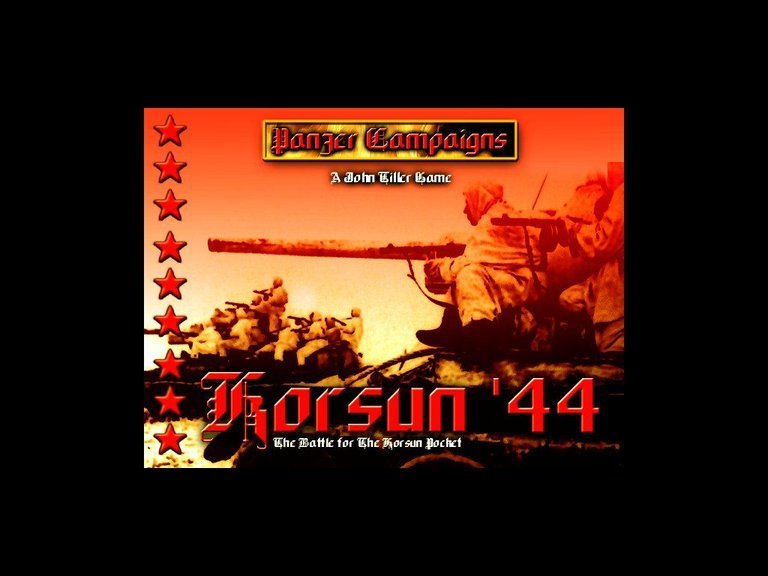
Panzer Campaigns VI: Korsun ’44 is a highly detailed strategic wargame from John Tiller and HPS Simulations, simulating the World War II Korsun Pocket battle where Soviet forces from two fronts encircled and trapped around 60,000 German soldiers along the Dnepr River. Featuring a massive 200×180 km hex-map, over 2,800 units, and more than 25 scenarios including historical and ‘what-if’ variants, this top-down tactics simulation demands deep knowledge, patience, and strategic mastery, making it unsuitable for casual gamers.
Panzer Campaigns VI: Korsun ’44 Cracks & Fixes
Panzer Campaigns VI: Korsun ’44 Patches & Updates
Panzer Campaigns VI: Korsun ’44 Mods
Panzer Campaigns VI: Korsun ’44 Reviews & Reception
forum.wargameds.com : I think it’s one of the better Panzer Campaigns titles.
combatsim.com : masterfully simulates these massive battles of encirclement.
Panzer Campaigns VI: Korsun ’44: Review
Introduction
Imagine commanding the shattered remnants of six German divisions—some 56,000 troops—trapped in the snow-swept Korsun Pocket along the Dnepr River in early 1944, as Soviet fronts converge like a vice forged in Zhukov’s unyielding will. Panzer Campaigns VI: Korsun ’44 thrusts players into this harrowing WWII encirclement, the sixth entry in John Tiller’s uncompromising Panzer Campaigns series from HPS Simulations. Released in 2002, it epitomizes the golden age of digital wargaming: a hex-grid colossus demanding strategic mastery, historical immersion, and endless patience. Far from casual fare, this is grognard catnip—a simulation where every battalion, every mud-choked kilometer matters. My thesis: Korsun ’44 stands as a monumental achievement in operational wargaming, refining Tiller’s engine into a fluid ballet of encirclement and breakout, though its micromanagement depths alienate all but the devoted, cementing its legacy as a niche masterpiece that prioritizes authenticity over accessibility.
Development History & Context
HPS Simulations, under publisher Scott Hamilton, unleashed Korsun ’44 in 2002 as the latest evolution of John Tiller’s Panzer Campaigns saga, following Bulge ’44 (2001) and preceding Kursk ’43 (2002). Tiller, the visionary developer and lead designer alongside Gregory Smith and Jim Dunnam, drew from extensive research into the Korsun-Cherkassy Pocket, a lesser-sung Soviet offensive that nearly annihilated Army Group South’s hinge. The game’s DNA traces to Tiller’s earlier works like Smolensk ’41 (1999), building on hex-based systems inspired by board wargames such as Jim Dunnigan’s Panzergruppe Guderian.
Technological constraints of the early 2000s Windows era shaped its no-frills design: CD-ROM distribution, mouse-driven interface, and 2D/3D hex maps optimized for low-spec PCs. Amid a gaming landscape dominated by real-time RTS like Warcraft III and emerging MMOs, Korsun targeted hardcore wargamers via specialist outlets, eschewing mainstream hype. Credits highlight a tight-knit team—Glenn Saunders on playtesting and scenarios, Michael Avanzini on maps, Mark Adams on unit graphics, and Warren Jones’ evocative cover art—reflecting HPS’s bootstrapped ethos. The 200×180 km map (40,000 sq km), 2,800+ units at battalion scale (1 km hexes, 2-hour turns), and 26 scenarios (including a 240-turn campaign) pushed engine limits, with optional rules (21 total) for historical tweaks. Post-release patches from HPS/Tiller iterated on balance, UI, and AI, ensuring longevity into the modern era via Wargame Design Studio updates. In context, it bridged TalonSoft’s Campaign series and emerging titles like Panzer Corps, prioritizing depth over flash in a post-Close Combat wargame renaissance.
Narrative & Thematic Deep Dive
Korsun ’44 eschews scripted plots, voiced characters, or dialogue for pure historical simulation, its “narrative” emerging from orders-of-battle (OOB), designer notes, and scenario briefings drawn from David Glantz’s scholarship. The core theme is encirclement’s terror: Soviets (1st/2nd Ukrainian Fronts) pinching off 60,000 Germans at Korsun, evoking Stalingrad’s desperation but with mud, snow, and breakout drama. Scenarios span preludes like Kanev airborne (four variants) and Kirovograd (two), culminating in 20 pocket battles, blending historical fidelity with “what-if” divergences—e.g., reinforced German relief columns or Soviet overextension.
No protagonists beyond abstract HQs (e.g., Manstein’s Army Group South), but themes resonate deeply: command friction via radius limits, supply starvation in explicit dumps or virtual trucks, and morale collapse under fatigue/disruption. Assaults mirror “trapped rats with teeth”—Germans breakout fiercely despite odds, Soviets grind with numbers. Designer notes detail unit ratings (e.g., Soviet T-34 mobility vs. German Panzer IVs), bibliographies cite Glantz/House, and campaign logs track encirclement’s ebb (partial Soviet success, 30,000 Germans escape). Play evokes Zhukov’s hinge-threat calculus, thematic tension in fluid 1944 tech (longer-range guns, better radios) yielding dynamic maneuvers absent in Barbarossa-era titles. Critically, it humanizes attrition: a disrupted battalion’s rout isn’t pixels but echoed desperation, rewarding historical knowledge while punishing ahistorical blunders.
Gameplay Mechanics & Systems
At its hexed heart, Korsun ’44 is turn-based operational mastery, deconstructing WWII maneuver warfare into granular loops: select, move/fire/assault, resolve, repeat. Core cycle: Movement (right-click adjacent or drag-drop, cautious of AI pathing/FoW pitfalls), toggling travel/rail for speed (vulnerable) or fortify (entrench to trenches). Fire (direct 1-2 hexes, indirect/artillery to 25+ hexes via spotters) costs 1/3 movement, factoring terrain, fatigue, morale, supply—disrupting (50% fire penalty) or breaking foes. Assaults demand prep: soften with fire, coordinate stacks, risk attacker vulnerability.
Innovations shine: C&C propagation (units rally/supply via chained HQs to corps/army), forcing historical echelons; Supply variants (abstract hex values to truck-simulated convoys); 21 optional rules (e.g., PBEM phasing: rigid move/fire/assault for smaller files ~15-200KB). Filters visualize ranges, commands, reachables; divisional coloring tames 2,800 units. UI excels—unit/hex panels detail strength (men/guns/vehicles), morale/fatigue; double-click stacks, Ctrl for fire mode. Multiplayer (hotseat, LAN, TCP/IP, PBEM) thrives with AI defensive fire, though AI solo play challenges via surprises.
Flaws: Micromanagement overload (800+ counters/turn), no quick AI skip (pre-Kursk ’43 fix), minutiae like 2-AA-gun units bloat stacks (mitigated by ALT mods reducing to battalion-scale). Progression? None—pure simulation, victories via VP/kills. Balance lopsided historically (Soviet numerical edge), tuned by kill ratios. Exhaustive yet elegant: mud/snow hampers exploitation, air/naval strikes add layers, yielding fluid 1944 engagements vs. static early-war titles.
Subsystems Breakdown
| Mechanic | Strengths | Weaknesses |
|---|---|---|
| Combat Resolution | Terrain/morale interplay; disruption cascade realistic | Tedious small losses (e.g., 537 vs. 442 men: 3 kills, 10 fatigue) |
| UI/Navigation | Filters, zoom (2D/3D), OOB screens intuitive | Modal dialogs, no pinnable minimap |
| Multiplayer/PBEM | Small files, optional phasing | Rule negotiation essential |
| Scenarios | 26 total (small-medium to mega-campaign) | Newbies overwhelmed by density |
World-Building, Art & Sound
The Ukraine winterscape—Dnepr bends, ravines, 40,000 sq km—immerses via accurate 2D maps (terrain-coded: forests, mud, rails), 3D views functional but “useless/aesthetically poor.” Atmosphere builds through weather (snow/mud halves moves, 1-hex visibility in storms), evoking pocket peril. Unit art improved from series’ “atrocious-mediocre” (stock decent; Volcano Williams’ pack elevates), counters/icons (e.g., T-34s, Panzers) informative.
Sound design is sparse but evocative: Thomas Hook’s music understated, effects punchy (tank tracks, artillery whooshes, rail choo-choos). No bombast—focus on tactical rhythm, fatigue whines, rout panic. Collectively, elements forge grim verisimilitude: a “barren” rear (abstracted non-combat) underscores front’s frenzy, trenches ossify lines, air interdiction scatters columns. For grognards, it’s world-building as simulation—historical OOBs, Glantz-sourced notes breathe life into hexes.
Reception & Legacy
Launch reception polarized: Computer Gaming World slammed it (30%, 1.5/5) as “micromanagement burial” (“I’ll wake you when 800 counters move”), MobyGames averages 30% critics/2.4/5 players (sparse votes). Contrasting, Combatsim’s Peter Pawelek hailed it “masterful,” praising UI/mechanics/multiplayer (2002 “worthy addition”). Specialist nods (Wargamer, StrategyPage) lauded accuracy, though UI niggles persisted.
Commercially niche (CD-ROM, no mainstream push), legacy endures via patches, WDS Gold reissues (ALT scenarios streamline units), vibrant PBEM scenes (TheBlitz.club). Influenced Panzer Corps, Decisive Campaigns; series’ 22+ titles (e.g., Mius ’43 freebie) popularized battalion-scale hex wargames. Forums (2024-25) affirm aging well: “fluid,” “maneuver-heavy,” tops for Eastern Front fans, despite unit bloat. Evolved reputation: from “grognard-only” to enduring sim, with mods/community sustaining play.
Conclusion
Panzer Campaigns VI: Korsun ’44 distills the Korsun Pocket’s fury into a tour de force of wargame design—accurate, deep, unforgiving. Tiller’s mechanics capture encirclement’s chaos, UI empowers command, multiplayer elevates it beyond solo AI. Yet micromanagement and scale daunt casuals, echoing CGW’s yawn. In video game history, it claims a vital niche: pinnacle of 2000s PC wargaming, influencing operational sims while honoring overlooked WWII theaters. Verdict: Essential for strategists (9/10 grognards, 4/10 mainstream)—buy for PBEM eternity, start smaller if new. A timeless pocket of excellence amid digital obscurity.