
- Release Year: 2013
- Platforms: Blacknut, Windows
- Publisher: Kalypso Media Digital Ltd., Kalypso Media GmbH
- Developer: Noumena Studios GmbH
- Genre: Role-playing (RPG)
- Perspective: Behind view
- Game Mode: Single-player
- Gameplay: Action RPG, Crafting, Hack and Slash, Moral choices
- Setting: Fantasy
- Average Score: 64/100
Description
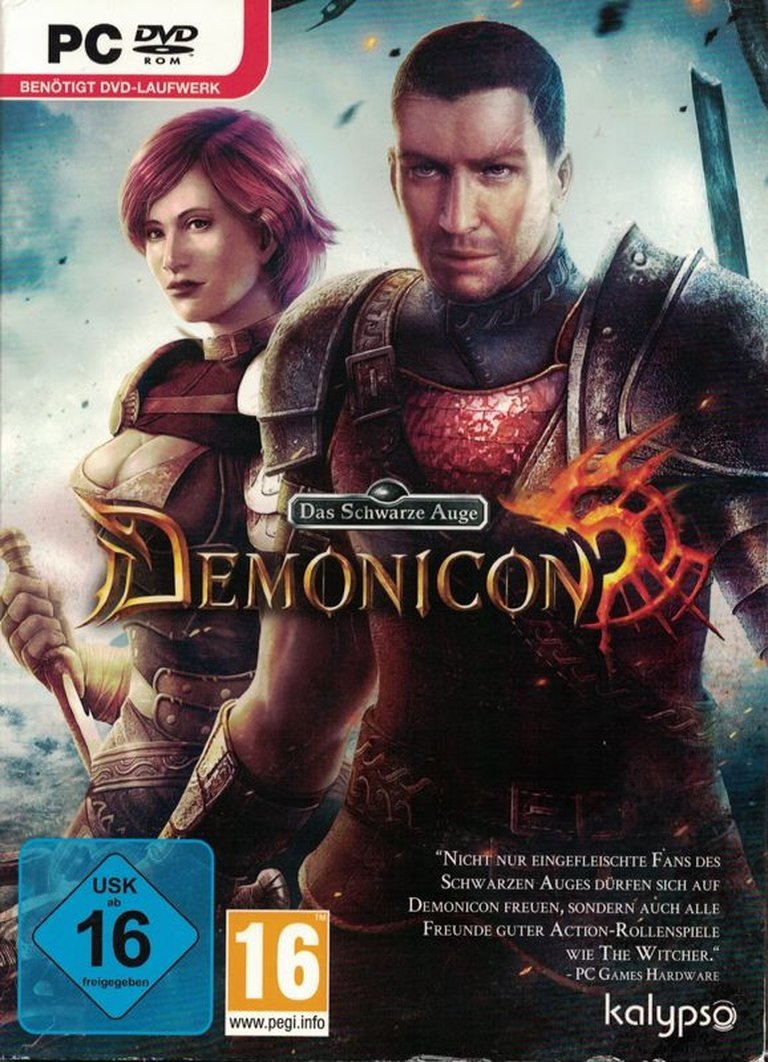
Demonicon is an action RPG set in the darker Shadow Lands of the Dark Eye fantasy universe, where players control Cairon on a perilous quest to find his sister Calandra after she flees a forced marriage, confronting sinister evil forces through hack-and-slash combat, moral decisions, dialogue-driven quests, and a skill-based progression system without classes or levels.
Gameplay Videos
Where to Buy Demonicon
Demonicon Cracks & Fixes
Demonicon Guides & Walkthroughs
Demonicon Reviews & Reception
metacritic.com (61/100): Mixed or Average
steambase.io (67/100): Mixed
Demonicon: Review
Introduction
In the grim, demon-haunted Shadowlands of The Dark Eye universe—a sprawling tabletop RPG legacy rivaling Dungeons & Dragons in Europe—Demonicon dares to plunge players into moral abyss, where sibling love twists into taboo temptation and demonic pacts shatter souls. Released in 2013 by Kalypso Media, this action RPG promised a gritty departure from the high-fantasy romps of prior Dark Eye titles like Drakensang, embracing the lore’s darkest corners: necromancy, cannibalism, and incestuous bonds forged by infernal “gifts.” Yet, as Cairon hunts his sister Calandra through plague-ravaged Warunk and beyond, Demonicon reveals itself as a tantalizing what-if—a narrative powerhouse shackled by technical mediocrity. My thesis: Demonicon endures as a cult curio for Dark Eye historians, its brooding tale a bold evolution of pen-and-paper horror, but its clunky combat and dated visuals relegate it to budget-bin obscurity rather than pantheon status.
Development History & Context
Demonicon‘s tumultuous genesis mirrors the Shadowlands’ chaos. Initially helmed by Silver Style Studios for the short-lived publisher TGC, development stalled when TGC entered administration in summer 2010. Kalypso Media swooped in, acquiring the IP and absorbing 17 Silver Style developers to birth Noumena Studios—their third in-house team, ballooning to 45-50 strong. This rescue mission refocused the project from early hack-and-slash prototypes into a third-person action RPG, powered by Trinigy’s Vision Engine 8 (Havok’s iteration, with PhysX physics, FMOD audio, and FaceFX facial tech). Console ports for Xbox 360 and PS3 were planned but vaporized post-PC launch, likely due to budget constraints and Kalypso’s pivot to safer bets like Tropico.
The 2013 landscape was unforgiving: The Witcher 2 and Dark Souls redefined ARPGs with fluid combat and immersive worlds, while Dark Eye contemporaries like Chains of Satinav (2012) leaned into point-and-click adventures. Noumena’s vision—lead writer Daniel Heßler’s “grey” morality in a post-Borbarad wasteland—honored the tabletop’s 1984 roots by Ulrich Kiesow, emphasizing credible cruelty over Tolkien tropes. Yet, tech limits shone through: Vision Engine’s aging visuals couldn’t compete with CryEngine or Unreal, and a small team’s Scrum sprints (e.g., level designer Martin Tilo Schmitz’s Warunk districts) prioritized story over polish. Interviews reveal unyielding ambition—adult themes like incest tied to lore without compromise—but QA woes and Kalypso’s post-launch silence (Noumena rebranded to Skilltree, shuttered by 2016 after Crookz) sealed its fate as a near-miss.
Narrative & Thematic Deep Dive
Demonicon‘s plot is a labyrinthine descent into Dark Eye heresy, weaving tabletop canon into a brother-sister odyssey of predestined doom. Two decades pre-story, mage-lord Borbarad’s fall birthed the Shadowlands; his prophetess Azaril pacted with demon Zhulgaroth for seven “Awakened” infants, gifted infernal powers but cursed to slaughter each other until one becomes the controllable “First Paladin.” “Father” (Rago, per novels) steals two—son Cairon and Seghal’s daughter Calandra—raising them incognito in Warunk amid plague and Rondrian zealots.
Cairon’s arc ignites when Calandra flees a forced marriage to Rondrian Falk, vanishing into Moloch Mountain. Blood-mingling awakens their gifts, unlocking magic and forbidden desire (incest as demonic lure, not titillation). Moral forks abound: spare a cannibal kidnapper (freeing prisoners but risking his return) or kill him (dooming captives via sealed cells)? Side with guard captain Fergolosh or smuggler Parel, tipping Warunk’s power balance? Falk’s coup unravels Azaril’s web—revealed as his mother—culminating in sibling sacrifices against Zhulgaroth’s sphere-invasion. Canon: Cairon martyrs; player choice yields two endings, plus church sacraments (e.g., permit marriage?).
Themes probe Dark Eye‘s moral ambiguity: no good/evil binary, just survival’s “grey” toll. Borbaradianism vs. Rondra’s honor; demonic temptation mirroring player agency. Characters shine variably—Calandra’s portal-gift betrayal stings, Cassio’s sacrificial duel haunts—but dialogue falters: stiff, encyclopedic lines (e.g., lore-dumps via “Tales and Legends” talent) evoke RTL2 soaps, per critics. Voice acting (Kerry Shale, Robert Missler) elevates, with German-localized authenticity for DSA fans. Pacing surges post-prologue: early confusion yields revelations, clocking 25+ hours with side quests. Flaws? Abrupt finale, underdeveloped NPCs—but its taboo intimacy cements Demonicon as Dark Eye‘s boldest narrative gut-punch.
Key Characters
- Cairon: Protagonist vessel—brawler-mage hybrid, player’s moral mirror.
- Calandra: Tragic foil; love-curse drives schism, her apprenticeship a double-agent masterstroke.
- Azaril: Puppet-mistress villain; seals her hubris.
- Zhulgaroth: Cosmic manipulator; gifts as Faustian chains.
- Father/Rago: Enigmatic guardian; lore linchpin.
Gameplay Mechanics & Systems
Demonicon‘s classless loop—quest, kill, spend—adapts Dark Eye pen-and-paper sans dice: adventure points (AP) from foes/quests upgrade five combat attributes (Strength for damage, Agility for crits/parries, etc.) and four adventure talents (Charisma for persuasion/bargain; Sleight for lockpicking/blacksmithing). No levels; direct investment yields hybrid builds. Combat trees (blades, slashing, parry, dodge) chain stamina-draining moves (e.g., roundhouse AoE); four spell lines (Ice Lance freezes, Fire bursts, Disease poisons, Demonic Aura buffs) scale via gift points from casting.
Hack-and-slash core demands combo chains for bonuses: mouse/keyboard or controller inputs trigger rolls, specials amid enemy hordes (undead, demons, spiders). Talents unlock dialogues/paths—persuade necromancer surrender?—with consequences (faction allegiance alters assaults). Crafting: Herblore gathers for potions/poison blades; blacksmith upgrades gear. UI? Clunky radial menus, finicky camera, auto-save woes frustrate.
Innovations: Moral choices ripple (cartel vs. guards shifts Warunk); talent thresholds gate success sans RNG. Flaws abound: early combat monotonous (“wild clicking,” per GameStar), boss AI dumb, spells underwhelming (four trees, linear upgrades). Improves mid-game with moves/spells, but lacks depth vs. Witcher. 25-hour campaign + sides offers value, minimal replay sans New Game+.
Core Systems Breakdown
| System | Strengths | Weaknesses |
|---|---|---|
| Progression | Flexible AP/gift spend; talent synergies. | Overabundant points max everything late-game. |
| Combat | Combo bonuses; dodge-roll fluidity. | Repetitive; poor enemy variety/AI. |
| Quests | Branching morals; lore integration. | Linear hubs; rushed finale. |
| UI/Controls | Console parity. | Stiff animations; camera jank. |
World-Building, Art & Sound
Confined chapters—Warunk’s districts (market, upper city, academy ruins), Moloch Mountain, Talonmoor pits, birth monastery—evoke oppressive Shadowlands: necromancer scars (skull facades), plague slums, demon-spawned fire/ice fiends. Atmosphere thrives: fog-shrouded moors, barricade sieges vs. Heshthot demons. Exploration yields lore (almanac, books) tying to Dark Eye canon (Borbarad’s crown shards).
Visuals? Dated Vision fare: muddy textures, stiff FaceFX faces, low-poly models scream 2000s. Shadows/day-night cycles impress sporadically, but sterile hubs lack life (underpopulated, per users). Sound excels: FMOD-orchestrated epic score (Two Steps from Hell vibes), Kerry Shale’s gravelly Cairon, ambient howls/chants immerse. German VO shines for authenticity; English solid but accents jar.
Elements synergize for “moorish” dread—post-prologue fog-of-war lifts to reveal cruelty—making Demonicon a atmospheric diorama of DSA‘s horror underbelly.
Reception & Legacy
Launch Metacritic 61/100 (12 critics); MobyGames 64% (8 ratings), player 3.5/5 (6). German press kinder (GameStar 73%: “story accelerates”); English harsher (4Players 39%: “primitive murks”; GameWatcher 60%: “sub-par, rushed end”). Praises: narrative twists, Dark Eye lore, value (26 hours). Pans: combat tedium, graphics/animations, polish (Steam 67% mixed, 1K reviews).
Commercially modest—Steam/GOG $4-10 sales—yet Blacknut streaming (2025) nods cult appeal. Reputation evolved: DSA fans cherish canon events (Zhulgaroth pact); historians note bold themes amid 2013’s maturity push (The Witcher 3 loomed). Influence? Nil on blockbusters, but inspired Blackguards (2014 turn-based pivot). Noumena’s demise underscores indie ARPG perils; Demonicon lingers as Dark Eye‘s grim footnote, outsold by Memoria.
Conclusion
Demonicon synthesizes Dark Eye‘s richest lore into a sibling saga of demonic seduction and sacrificial heroism, bolstered by branching morals and talent-driven agency. Yet, its ambitions drown in archaic tech, button-mash combat, and unpolished execution— a “fun adventure lacking polish” (Hooked Gamers). In video game history, it claims niche reverence: a historian’s artifact for DSA completists, emblematic of 2013’s ARPG growing pains, but no essential revival. Verdict: Recommended for lore hounds at deep discount (7/10)—play for the shadows, forgive the light.