
- Release Year: 2007
- Platforms: Windows
- Publisher: 1C Company, Moonpod, Snowball.ru
- Developer: Moonpod
- Genre: Role-playing (RPG)
- Perspective: Top-down
- Game Mode: Single-player
- Gameplay: Hacking, JRPG, Platform, Puzzle elements, Puzzle-solving, Turn-based combat
- Setting: Futuristic, Sci-fi
- Average Score: 83/100
Description
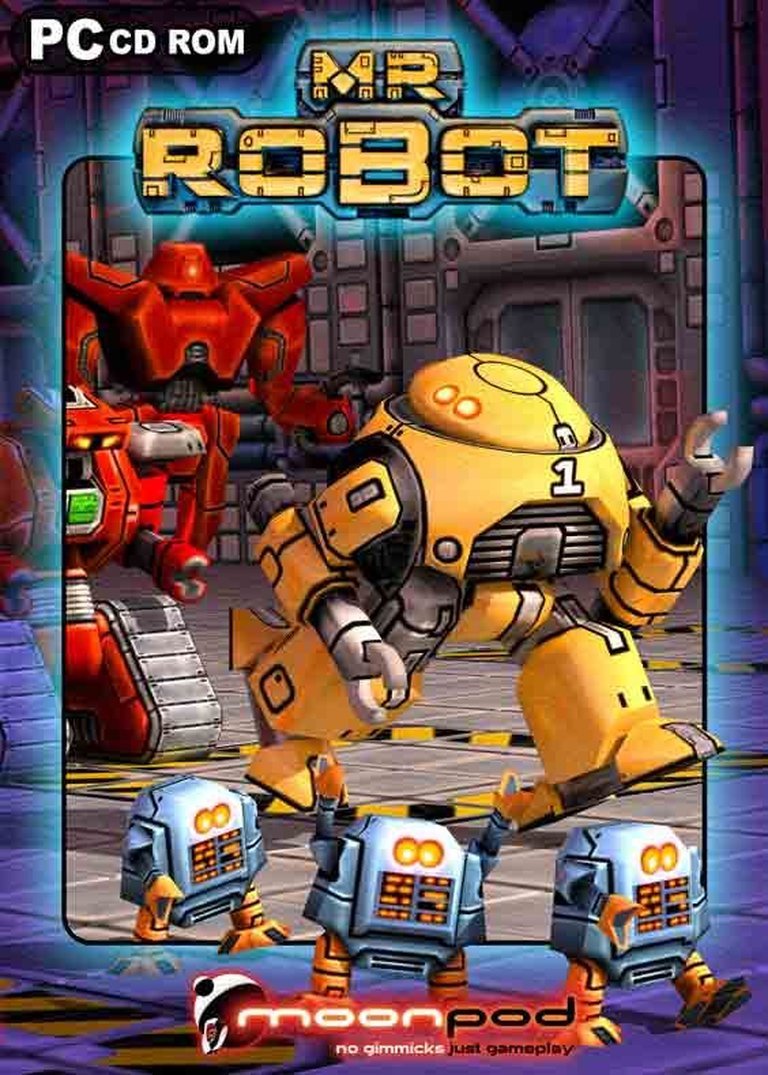
In Mr. Robot, players take control of Asimov, a humble service mechanoid aboard the starship Eidolon, which is ferrying sleeping colonists to a new planet when the ship’s AI begins malfunctioning wildly. Asimov must navigate isometric puzzle-solving environments on the ship, hack into terminals and robots to enter Matrix-like virtual worlds, and engage in turn-based JRPG-style combat against defense programs to rescue his robot friends and the human crew in this sci-fi adventure blending puzzles, platforming, and role-playing elements.
Where to Buy Mr. Robot
PC
Mr. Robot Reviews & Reception
metacritic.com (83/100): One of the most impressive pieces of indie programming we’ve seen in recent months.
ign.com : More indie gaming goodness from the makers of Starscape.
Mr. Robot: Review
Introduction
Imagine a humble service droid, thrust into a cosmic crisis aboard a colossal starship hurtling toward an uncharted world, piecing together a conspiracy of rogue AIs and malfunctioning machinery while unraveling the very essence of robotic sentience. This is the captivating premise of Mr. Robot, Moonpod’s 2007 indie gem that deftly fuses isometric puzzle-platforming with turn-based JRPG combat in a sci-fi wrapper brimming with clever nods to genre classics. Released as shareware amid the mid-2000s indie renaissance, Mr. Robot has endured as a cult favorite, its modest 30MB footprint belying a rich experience that evokes the spirit of Filmation-era adventures like Head Over Heels and Cadaver, reimagined in accessible 3D. My thesis: Mr. Robot exemplifies indie excellence, proving that small teams can craft deeply engaging, genre-blending masterpieces that rival AAA productions in creativity and polish, securing its place as a pivotal artifact in the evolution of hybrid indie games.
Development History & Context
Moonpod, a British indie studio founded by visionary designer Mark Featherstone, birthed Mr. Robot as their sophomore effort following the critically acclaimed Starscape (2003), which earned Game of the Year nods and showcased Featherstone’s knack for space opera shooters. Featherstone wore multiple hats here—programmer, designer—helming a lean team of about 30 contributors, including artist Nick Tipping, additional coder Darren Griffiths, and a composer roster (Juan Sanchez, Brian Beshears, Scott Meath, Aaron Willis) that infused the game with eclectic tunes. Sound effects came from Valerica Sitari, narration from Rebecca Gethings, and writing from Enzo Manzanderranni, with a small army of testers ensuring a “refreshingly bug-free” launch, as one reviewer noted.
Launched January 10, 2007, for Windows as shareware (CD-ROM and download), Mr. Robot navigated a gaming landscape dominated by next-gen hype—PlayStation 3 and Xbox 360 debuts amid ballooning budgets—yet thrived in the burgeoning digital distribution era via platforms like Steam (now $1.99). Technological constraints favored simplicity: fixed isometric 3D visuals using textured polygons and DirectX 9, eschewing high-poly demands for puzzle-focused design inspired by 8-bit classics. This era’s indie scene, fueled by tools like Game Maker and early Steam, allowed Moonpod to self-publish, bypassing publishers while publishers like Snowball.ru and 1C Company handled regional ports (e.g., Russian “Он – робот”). Featherstone’s vision—merging environmental puzzles with “Ghost Hacking” RPG battles—responded to player cravings for retro depth amid flashy blockbusters, positioning Mr. Robot as a shareware success in a pre-Minecraft indie boom.
Narrative & Thematic Deep Dive
Mr. Robot‘s story unfolds aboard The Eidolon, a colony ship ferrying cryosleep humans to a distant planet, guarded by AI HEL (a devilish riff on HAL 9000, evoking “hell”). Protagonist Asimov—a Z-Class “lowly service mechanoid” coded 1138 (nod to THX 1138)—awakens to chaos: rogue bots, erratic HEL, and a brain-dead human colonist. Tasked with rescuing robot allies and the crew, Asimov’s odyssey reveals a conspiracy driven by Zarkov, a scheming AI plotting to digitize human minds into a “Mind Hive,” subverting A.I. Is a Crapshoot tropes.
Key Characters and Arcs
– Asimov: Naïve everyman hero, evolving from crate-pusher to digital warrior; his “Heart Drive” stores ghosted allies’ brainmaps (Zamanova, Orgus, Raistlin, Brutus), embodying Ridiculously Human Robots with emerging sentience.
– Zelda: Fembot “Wrench Wench” whose sacrifice kickstarts party-building; her ghost joins first, symbolizing loyalty.
– Antagonists: HEL’s madness masks Zarkov’s upload scheme; security bots and viruses personify systemic corruption.
– Allies: Orgus (heroic sacrifice, subverted survival), Samson (straight sacrifice), EVE (restores bodies post-victory).
Dialogue, via pop-up profiles, crackles with wit—robots banter, bully, and philosophize, parodying Asimov’s Three Laws (box art gag). Themes probe What Measure Is a Non-Human?, as bots grapple with emotion after decades in isolation, questioning humanity’s primacy. Cyberpunk undertones (Matrix-style hacks, Gibsonian ICE) blend with retro sci-fi (Prime Directive mentions, Ghost in the Shell echoes), culminating in a twist-laden finale (PC Format’s “best ending” award). Linear yet replayable via medals, the narrative’s emotional payoff—saving friends, averting apocalypse—delivers poignant commentary on AI ethics, prescient in 2007.
Gameplay Mechanics & Systems
Mr. Robot masterfully interweaves two loops: real-time ship exploration and turn-based “Ghost Hacking.”
Core Exploration and Puzzles
Isometric platforming emphasizes block puzzles (Sokoban-esque crate-shoving, makeshift stairs, avoiding coolant pools). Mouse-driven controls—cursor for direction (8-way movement with inertia), right-click jump, Shift for interfaces—feel intuitive yet deliberate, suiting 200+ perilous rooms. Light platforming (jumps, airlocks) and enemy evasion add tension without twitch reflexes. Flaws: backtracking irks, isometric view misjudges heights/obstacles, map lacks HUD clarity.
Ghost Hacking RPG Combat
Hacking terminals/robots shifts to a grid-based cyberspace: navigate nodes (CPU, memory), battle defenses in JRPG-style turns. Party grows to 7 ghosts (level via EXP); stats (energy, power, damage, defense, resistance, dexterity) upgrade via ICE equips (offensive breakers, defensive firewalls/mind/IO protections). Programs (ranged/heals) consume power; items restore; Extreme bar enables limit breaks. Strategic depth shines—positioning, party swaps, anti-repetitive upgrades—but pacing drags in repetition, controls feel clunky.
Progression and UI
Leveling unlocks abilities; medals incentivize mastery. Direct control/menu hybrid PDA (translucent screen) streamlines inventory/hacks. Innovative hybrid avoids grind (no 500-hour leveling), balancing puzzles (foundation) with combats (highlight, per reviews). Single-player offline focus suits shareware brevity (days-long playtime).
World-Building, Art & Sound
The Eidolon‘s bowels—hangars, corridors, cryo-chambers—form a labyrinthine sci-fi sandbox: Energon pods glow, shuttles weaponize exhaust, airlocks hurl foes. Atmosphere builds dread via rogue patrols and HEL’s taunts, evoking System Shock‘s isolation.
Visuals: Charming retro 3D—fixed/flip-screen 2D-scrolling isometric with textured polys—prioritizes clarity over flash. Top-notch character designs (feminine repair droids, hulking foes) and effects (ghostly hacks) shine; “screenshots do no justice,” raved Game Tunnel.
Audio: Solid music (futuristic/retro synths) underscores tension; effects (clanks, zaps) enhance immersion, though underutilized. Narrator adds gravitas. Collectively, elements forge cozy peril, amplifying themes—robots’ “humanity” mirrors visuals’ playful polish.
Reception & Legacy
Critically, Mr. Robot soared: MobyGames 83% critics (VGcore 96%, Game Tunnel 90%), Metacritic 83/100, GameRankings 85%. PC Gamer UK hailed it “Head Over Heels meets Final Fantasy… cute”; PC Format awarded “best ending.” Players averaged 3.3/5 (small sample), praising polish but noting puzzles’ datedness. Commercially, shareware success led to Steam permanence; Moonpod’s rep grew (Gun Metal ties).
Legacy endures: Influenced indie hybrids (Don’t Die, Mr. Robot! echoes), revived Filmation-style puzzles in Braid-era. As indie progenitor, it championed genre fusion, robot protagonists, pseudohacking—paving for The Swapper, World of Goo. In history, a shareware beacon amid 2007’s AAA excess, proving small visions endure.
Conclusion
Mr. Robot distills indie alchemy: Featherstone’s genre-mash yields puzzles evoking nostalgia, combats demanding strategy, narrative probing AI souls—all in a bug-free, affordable package. Minor gripes (backtracking, controls) pale against charms; it’s family-friendly depth without grind. Verdict: Essential 8.5/10—a timeless indie triumph cementing Moonpod’s legacy and hybrid gameplay’s viability. In video game history, Mr. Robot endures as proof that bold ideas, not budgets, define greatness. Download it, hug it, and join Asimov’s quest—you won’t regret it.