
- Release Year: 1999
- Platforms: Macintosh, Windows
- Publisher: VQ International AB
- Developer: Resco Learning
- Genre: Action, Adventure
- Perspective: 3rd-person
- Game Mode: Single-player
- Gameplay: Arcade, Horse riding
- Setting: Contemporary
Description
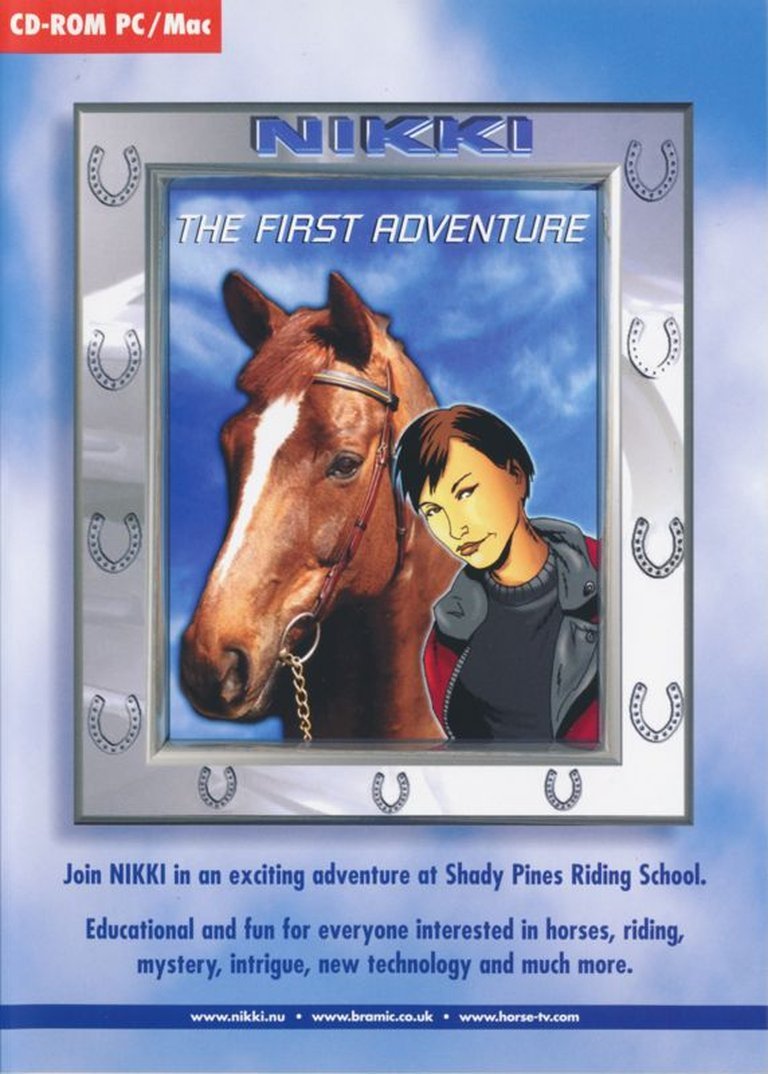
Nikki: The First Adventure is an adventure game with action elements set at Shady Pines, a private riding stable and school near a small Swedish village surrounded by forests and meadows. Players control Nikki, who poses as a student to investigate mysterious events at the school owned by Carl and Anna, solving puzzles through classic adventure gameplay, mini action challenges, daily horse care tasks like feeding and cleaning, and an in-depth horse encyclopedia with tests.
Gameplay Videos
Nikki: The First Adventure Free Download
Nikki: The First Adventure: Review
Introduction
Imagine a rainy night shattered by the screech of tires and glowing eyes in the darkness—a car crash that propels a young girl into a world of whispering stables, hidden secrets, and noble steeds. This is the gripping prelude to Nikki: The First Adventure (1999), a Swedish edutainment gem that blends point-and-click mystery with hands-on horse care, long overshadowed by flashier contemporaries like The Longest Journey. Released amid the late-90s boom in educational gaming, it introduces Nikki, a plucky protagonist whose name would echo in unrelated modern franchises, as she uncovers eerie happenings at Shady Pines Riding School. My thesis: Nikki is a pioneering hybrid of adventure storytelling and interactive learning, flawed by its era’s tech limits but enduring as a testament to how games could nurture curiosity about real-world skills like animal husbandry, all wrapped in a detective tale that feels surprisingly mature for its USK 6 rating.
Development History & Context
Developed by Resco Learning (with contributions from Involve Learning AB) and published by VQ International AB, Nikki: The First Adventure emerged from Sweden’s niche edutainment scene in 1999 for Windows CD-ROM, followed by a 2001 Macintosh port distributed in the UK by Equestrian Vision. Project leads Wiveka Lundh and Jenny Ekdahl, alongside concept creators Magnus Seter and Pia Svensson, envisioned a game that merged narrative-driven adventure with equine education, drawing on fact-checkers like Jessica Bergström and horse experts such as Anders Hallgren from ICA Handlarnas AB. Illustrations by Peter Bergting (known for atmospheric fantasy art) and Kjell Eriksson lent a hand-painted charm, while Tim Öhlund handled production.
The late 90s were a golden age for edutainment: Where in the World Is Carmen Sandiego? dominated geography, and The Oregon Trail taught history through hardship. CD-ROMs enabled richer media—encyclopedias, quizzes, full-motion video—without internet dependency. Nikki fit this mold, targeting young players (likely 8-12) amid Sweden’s equestrian culture, where riding schools dot rural landscapes. Technological constraints shaped it: 2D pre-rendered backgrounds, simple Direct Control interface (keyboard/mouse), and no voice acting beyond potential Swedish localization. Credits boast 95 names, including sound from Pre & Post Studios AB, reflecting a collaborative effort akin to Funcom’s The Longest Journey (some shared credits). Budget likely modest, prioritizing education over polish—horse encyclopedia and tests consulted real experts, positioning it as “edutainment with adventure flair” in a market shifting toward 3D spectacles like Half-Life.
Narrative & Thematic Deep Dive
At its core, Nikki unfolds a detective/mystery in contemporary Sweden, where player-controlled Nikki arrives at Shady Pines—a idyllic riding stable owned by the affable Carl and his partner Anna, nestled near a forested village amid meadows. The hook: a cryptic car crash cutscene (rain-lashed roads, shadowy eyes—perhaps a deer or omen?), implying personal trauma as Nikki “wakes up” en route. Posing as a student amid “mysterious things” (vandalism? Sabotage? Whispers of a mangled car in the barn, per fan recollections), she infiltrates via point-and-click sleuthing: eavesdropping on tense Carl-Anna chats, hacking laptops for student files (e.g., instructor Sophie), and uncovering clues like horse paintings and feeding-room shocks.
Characters shine through sparse but evocative dialogue: Carl’s gruff warmth, Anna’s concern, student Sally’s mischief, and Sophie’s stern guidance. Nikki’s “digitalized speech” (text bubbles) empowers agency, her bunny shoes and youthful curiosity symbolizing innocence thrust into intrigue. Plot beats escalate—eavesdropping yields motives, personal files reveal suspects, surprise encounters in stables build paranoia. Themes probe responsibility: daily horse tasks (feeding per plans, cleaning) mirror life’s duties, while encyclopedia/tests instill empathy for animals. Undercurrents of loss (crash’s shadow) and community (school bonds) add depth, subverting kid-game tropes. No grand fantasy, but a grounded whodunit emphasizing observation—e.g., mismatched equipment hints at foul play. Pacing falters in edutainment detours, yet the mystery’s resolution (spoiler-free: ties to school rivalries) delivers catharsis, blending edification with emotional stakes.
Gameplay Mechanics & Systems
Nikki deconstructs classic point-and-click adventure (à la Maniac Mansion) with arcade action sprinkles, all in third-person “Other” perspective via Direct Control. Core loop: Explore Shady Pines (stables, house, outdoor meadows), interact (chat Carl, open doors), collect clues (cell phone calls, laptop dossiers), solve puzzles (horse equipment tests via matching interfaces). UI is intuitive—an “iBook menu” hubs encyclopedia, tasks, inventory—though clunky by modern standards (pixel-hunting on static screens).
Innovations shine in edutainment: Horse Encyclopedia details breeds/care, quizzed via multiple-choice (e.g., “Get ready for horse knowledge test”). Daily Tasks simulate routines—feeding via drag-and-drop plans, cleaning mini-games—fostering progression (unlock rides post-tests). Mini Action Challenges elevate: Driving school dodges obstacles; horse riding scores jumps/timing in arcade sequences (instructions overlay: accelerate, balance); feeding-room “surprises” trigger quick-time events. Combat? Absent—tension via stealth (eavesdropping without detection).
Flaws abound: Tests feel rote (pass/fail loops), riding simplistic (score-based, no persistence), progression linear (pretend-student arc gates areas). No save-scumming issues (1-player offline), but repetition (daily chores) risks tedium. Strengths: Forgiving for kids, rewarding curiosity—high test scores unlock lore. Overall, a balanced hybrid: 60% puzzle-solving, 40% arcade/education, pioneering “gamified learning” before Animal Crossing‘s chores.
World-Building, Art & Sound
Shady Pines evokes cozy menace: Forests/meadows frame stables as a microcosm—barn shadows hide wrecks, indoor murals (horse paints) whisper history. Atmosphere builds via progression: Day cycles for tasks, night for crashes/mysteries, fostering immersion in rural Sweden (authentic via experts).
Visuals: Stunning 2D hand-drawn art by Bergting/Eriksson—expressive characters (Nikki’s wide eyes, Sally’s sly grin), detailed environs (stable hay, laptop screens). Pre-rendered screens pop with color (meadows’ greens, test interfaces’ clarity), bunny shoes adding whimsy. Limitations: Static cams limit dynamism, low-res CD-ROM era (640×480?).
Sound: Sparse details suggest ambient Swedish folk (hooves clop, wind howls), no full OST noted. SFX enhance—riding gallops, test chimes, crash thunder. Dialogue text-only (Swedish/English?), with “digitalized Nikki speech” implying beeps or simple synth. Collectively, elements craft a tactile, lived-in feel: Art invites exploration, sound underscores solitude, elevating edutainment to evocative world.
Reception & Legacy
Launch reception? Nonexistent—MobyGames lists zero critic/player reviews, no Metacritic aggregate. Commercial: Sweden/UK retail (CD-ROM, USK 6), modest sales inferred (5 Moby collectors). No patches, scant promos; obscurity stems from edutainment ghettoization amid 3D boom.
Reputation evolved via preservation: Archive.org hosts ISO (2023 upload), AdventureGameDB screenshots fuel nostalgia. Reddit queries (e.g., “creepy horse game”) highlight cult intrigue—car crash’s “dark vibe” lingers. Influence: Prefigures Stardew Valley-esque chores, horse sims (Star Stable), educational adventures (Pajama Sam). Credits link to The Longest Journey, hinting Swedish talent pipelines. No direct ties to modern Nikki series (Love Nikki, Infinity Nikki—Chinese gacha epics), but name evokes shared protagonist archetype. In history: A footnote in edutainment’s shift from drills to narratives, preserved digitally amid abandonware revival.
Conclusion
Nikki: The First Adventure endures not as masterpiece, but vital artifact—a 1999 bridge between Myst-like puzzles and modern sims, teaching horse care through mystery without condescension. Exhaustive in education (encyclopedias, tests), engaging in sleuthing (crashes to stables), it falters in polish/replayability yet captivates with Swedish charm. Verdict: 8/10—essential for historians, delightful rediscovery for cozy gamers. Seek Archive.org; its place? A quiet pioneer, proving games could intrigue and instruct, forever galloping in obscurity’s meadows.