
- Release Year: 2006
- Platforms: Windows
- Developer: Matt Aldrige
- Genre: Action
- Perspective: Side view
- Game Mode: Single-player
- Gameplay: Side-scrolling
- Setting: Fantasy
- Average Score: 80/100
Description
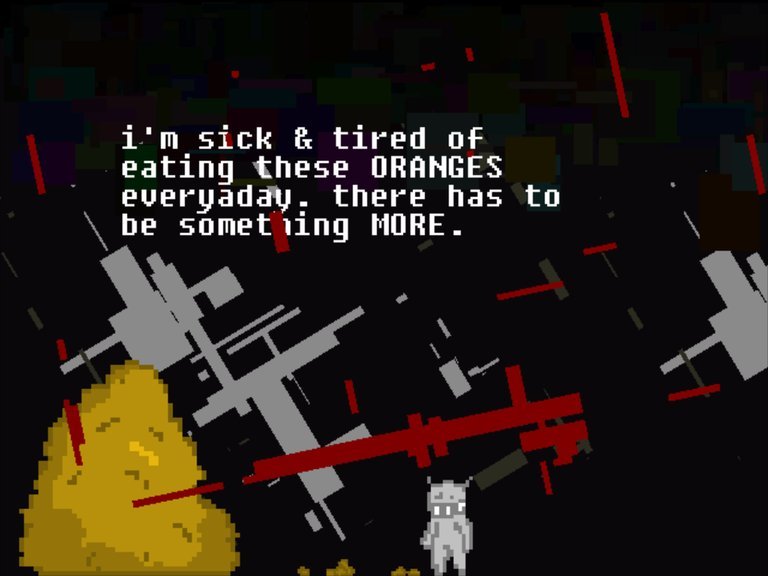
La La Land 3 is an experimental side-scrolling action game in a surreal fantasy setting, where players control a dog-like character named biggt who ventures out from his cave, weary of endlessly eating oranges, into a haunting world that explores themes of actions and consequences through abstract gameplay, deliberately rough aesthetics, and a thought-provoking narrative hidden beneath familiar mechanics.
La La Land 3 Reviews & Reception
retro-replay.com : La La Land 3 delivers a hauntingly surreal journey that pushes the boundaries of interactive storytelling.
La La Land 3: Review
Introduction
Imagine a game so defiantly unpolished that its jagged edges cut through the veneer of mainstream gaming expectations, forcing you to question every pixel, every sound, every leap into the void. La La Land 3, released in 2006, stands as the pivotal third chapter in Matt Aldrige’s audacious pentalogy of experimental freeware titles—a series that predates the indie boom yet anticipates its ethos of raw, uncompromised artistry. As a dog-like wanderer named biggt tires of his monotonous orange feasts and ventures into the unknown, players are thrust into a surreal side-scrolling odyssey that blends familiar mechanics with abstract alienation. This review posits that La La Land 3 is not merely a curiosity but a foundational artifact of experimental game design: a deliberate rejection of convention that rewards perceptive players with profound meditations on consequence, isolation, and the illusion of progress, cementing its place as an unsung pioneer in the freeware avant-garde.
Development History & Context
Developed single-handedly by Matt Aldrige—known online as TheAnemic—La La Land 3 emerged from the fertile DIY soil of mid-2000s indie gaming, a time when tools like GameMaker democratized creation for bedroom coders. Aldrige, credited on just five other titles per MobyGames, crafted this as freeware/public domain software, distributable via downloads and hosted on sites like Auntie Pixelante’s archive. Released in 2006 alongside siblings La La Land, La La Land 2, 4, and 5, it formed a rapid-fire pentalogy that shared recurring characters and a fable-like ethos, culminating in a 2010 Macintosh compilation.
The era’s technological constraints were paradoxically liberating: GameMaker’s drag-and-drop simplicity allowed Aldrige to prioritize conceptual purity over polish, eschewing bloated engines for a lean, keyboard-driven side-scroller. This was the dawn of Flash and browser games’ explosion, amid a console-dominated landscape (Wii Sports and Gears of War launched that year), where freeware experiments like those from the TIGSource forums flew under radar. Aldrige’s vision—abstracting player-game communication to evoke unease—mirrored contemporaries like Cave Story (2004) but pushed further into surrealism, unburdened by commercial pressures. No publisher, no budget: just a solo dev hurling “least effort” aesthetics as a philosophical gauntlet, challenging players to pierce the deliberate chaos in a pre-Steam indie wilderness.
Narrative & Thematic Deep Dive
At its core, La La Land 3 unfolds a twisted fable sans words, cutscenes, or hand-holding: biggt, the series’ recurring dog-like protagonist, dwells in a cave sustained by endless oranges—a ritual of complacent monotony. Weary of this cycle, he exits into a side-scrolling unknown, unraveling a haunting meditation on actions and their consequences. The plot, pieced from environmental fragments, is subliminal and interpretive: vines whisper warnings, shattered reflections hint at alternate fates, shadowy figures lurk as echoes of poor choices. biggt’s quest for “more” spirals into surreal vignettes—pulsing trees, breathing walls, floating symbols—culminating in an abrupt, evocative finale that defies linearity.
Characters are archetypal yet enigmatic. biggt embodies restless curiosity, his simplistic silhouette shuddering with implied fatigue; no dialogue humanizes him, forcing empathy through posture and peril. Recurring series cast (implied from context) haunts peripherally, suggesting a shared dreamscape of fated souls. Dialogue is absent, replaced by abstract cues—audio drones as inner monologues, visual motifs as moral riddles—rendering communication “deliberately opaque,” per MobyGames.
Thematically, it probes existential rupture: oranges symbolize stagnant comfort, the cave a womb-like trap. Venturing out invokes free will’s peril—every jump risks consequence, mirroring real-world breaks from routine. Morals emerge subtly: isolation’s allure, ritual’s false security, discovery’s cost. This fable-like structure, blending surrealism with player agency, anticipates narrative experiments like Kentucky Route Zero (echoed in Metacritic relations), demanding “breaking through the surface” to uncover hinted profundities. Multiple playthroughs reveal layered readings, from psychological allegory to anti-consumerist parable, making its brevity (a single sitting) deceptively dense.
Gameplay Mechanics & Systems
La La Land 3 inaugurates side-scrolling in the series, a direct-control action loop that masquerades familiarity to subvert it. Core mechanics—jumping, crouching, movement via keyboard—feel raw: no momentum physics, scant animations, environments that pulse mockingly. This “thrown-together” facade belies innovation: puzzles demand experimentation over instruction, like sequencing switches, luring shadows, or feeding items to alter reality. No UI clutters the screen—no HUD, health bars, or tutorials—abstracting feedback to environmental/audio cues (e.g., dissonant swells signal peril).
Combat, if any, is implicit: evasion trumps aggression, consequences rippling from “attacks” on the surreal world. Progression lacks levels or stats; biggt evolves narratively through discovery, rewarding intuition with hidden paths. Flaws abound—disorienting ambiguity frustrates, controls feel unresponsive by design—yet this fosters emergent depth: replayability uncovers overlooked interactions, turning frustration into epiphany.
The loop excels in haunting minimalism: navigate caves, solve via trial-error, interpret fallout. Innovative systems like reactive symbols (drifting shapes altering on touch) prefigure procedural storytelling. UI’s absence is genius—pure immersion, though era constraints (GameMaker limits) amplify roughness. Overall, it’s a masterclass in subverted platforming, where failure enlightens more than triumph.
World-Building, Art & Sound
The fantasy setting—a dreamlike expanse of caves, vistas, and voids—pulses with otherworldly life, its lo-fi art a deliberate assault on polish. Jagged textures, stark contrasts (muted earth tones exploding into neon), silhouetted flora, and geometric drifts craft a “half-remembered dream.” biggt’s outline model exaggerates mood via sparse frames, while breathing backgrounds and camera unease heighten disorientation. Visuals contribute atmospheric immersion, every pixel pregnant with meaning, shifting focus from fidelity to interpretation.
Sound design is the haunting backbone: distant echoes, unsettling drones, crescendos sync with actions, evoking unease without music. No voice acting; abstract soundscape guides subliminally, amplifying surrealism—orange crunches yield to cavernous howls. Together, elements forge cohesion: art’s chaos mirrors narrative flux, sound underscores consequence, creating an oppressive yet mesmerizing world. In 2006’s graphical arms race, this anti-spectacle prioritizes emotional resonance, influencing lo-fi indies like Night in the Woods.
Reception & Legacy
Launch reception was ghostly: no critic reviews on MobyGames/Metacritic, just 3 player ratings averaging 4.0/5—praise for its bold abstraction amid obscurity. Freeware status limited visibility; collected by one player, it languished outside niche forums. Commercially null (public domain), yet culturally, it endures via abandonware sites (MyAbandonware) and archives.
Reputation evolved from footnote to cult relic: 2009 MobyGames entry (by Sciere) sparked preservation, 2023 updates affirm relevance. Influences ripple—foreshadowing abstract indies (Pony Island, 1000xRESIST per Metacritic)—in GameMaker’s lineage (Hyper Light Drifter). The pentalogy’s Macintosh bundle and Kotaku nods cement its role in experimental history, inspiring fable-driven shorts amid AAA dominance. Its legacy: proof solo visions can haunt eternally.
Conclusion
La La Land 3 distills experimental gaming to essence: a short, side-scrolling surrealist gut-punch where biggt’s orange rebellion unveils actions’ inexorable chains. Aldrige’s solo triumph—raw art, abstract mechanics, thematic depth—defies 2006’s gloss, demanding players forsake convention for revelation. Flaws (opacity, brevity) are features, birthing replayable wonder. Verdict: Essential artifact—9/10 for pioneers, niche treasure in video game history’s fringes. Download it; let biggt’s cave linger.