
- Release Year: 2010
- Platforms: Windows
- Publisher: magnussoft Deutschland GmbH
- Developer: magnussoft Deutschland GmbH
- Genre: Puzzle
- Perspective: Side view
- Game Mode: Single-player
- Gameplay: Hidden object, Mini-games
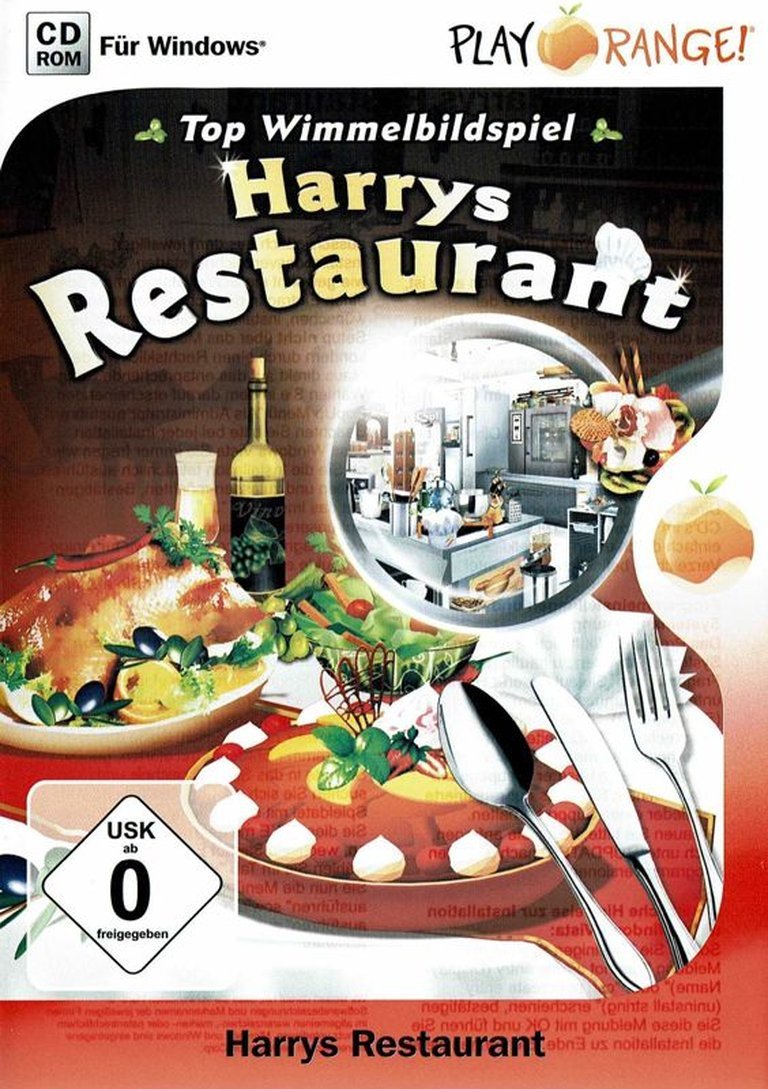
Description
Harrys Restaurant is a hidden object puzzle game released in 2010 for Windows, where players help protagonist Harry achieve his dream of opening his own restaurant by repairing rooms and equipment through searching cluttered scenes for hidden items, solving mini-games, and tackling various puzzles in a side-view, fixed/flip-screen perspective.
Harry’s Restaurant: Review
Introduction
In the bustling landscape of early 2010s casual gaming, where hidden object adventures and bite-sized puzzles reigned supreme on CD-ROMs and early digital storefronts, Harry’s Restaurant emerges as a quaint, under-the-radar artifact—a side-scrolling puzzle quest that embodies the era’s obsession with entrepreneurial daydreams. Developed and published by the German studio magnussoft Deutschland GmbH, this 2010 Windows title tasks players with aiding the titular Harry in transforming rundown spaces into a thriving eatery through a blend of hidden object hunts, mini-games, and brain-teasers. Though it languishes in obscurity today, with zero critic reviews across major aggregators like MobyGames and Metacritic, Harry’s Restaurant represents the unpretentious charm of budget casualware, offering simple satisfaction for puzzle enthusiasts. My thesis: While lacking innovation or depth, Harry’s Restaurant exemplifies the accessible, formulaic fun of mid-aughts hidden object games, carving a modest niche in the “restaurant sim-lite” genre amid a sea of flashier contemporaries.
Development History & Context
magnussoft Deutschland GmbH, a modest German developer and publisher known for localizing and creating low-to-mid-budget titles, helmed Harry’s Restaurant as both creator and distributor. Released on October 15, 2010, exclusively for Windows via CD-ROM, the game arrived during a golden age for casual PC gaming. This was the heyday of “match-3” and hidden object hybrids, fueled by platforms like Big Fish Games and the rise of browser-based sims. Technological constraints were minimal—standard 2D graphics on fixed/flip-screen perspectives suited aging PCs—allowing small teams to produce quickly without AAA overheads.
At the helm was Maik Heinzig, serving as Project Lead and originator of the Idea & Concept. A prolific figure credited on 68 other MobyGames entries, Heinzig’s vision likely drew from the casual market’s appetite for aspirational themes, akin to time-management hits like Restaurant Rush (2008) or browser sims such as Burger Restaurant (2007). Programming fell to Thomas Walther and Matthias Feind (the latter with 40 credits), who crafted efficient puzzle engines under Windows’ stable ecosystem. Graphics were handled by a trio of artists—Chie Kimoto (35 credits), Jeanette Tutzschky, and Galina Lavrentieva—delivering hand-drawn, side-view scenes that evoke cozy European bistros. Titan Computer provided the music, rounding out a lean team of seven.
The 2010 gaming landscape was dominated by console blockbusters (Red Dead Redemption, Mass Effect 2), but PC casuals thrived on all-ages appeal (USK Rating: 0, no age restriction). magnussoft’s output, including puzzle-adventures like Das Rätsel um Gallien and Das Herz von Afrika, positioned Harry’s Restaurant as a commercial venture in a saturated German market, where hidden object games offered quick development cycles and broad accessibility. No patches or sequels followed, underscoring its status as a one-off budget title.
Narrative & Thematic Deep Dive
Harry’s Restaurant eschews sprawling epics for a minimalist, player-driven plot centered on entrepreneurial grit. The core storyline follows Harry, an ambitious everyman (implied protagonist via the title), on his “way to his own restaurant.” Players act as his unseen aide, “fixing the rooms and equipment” through puzzle-solving—a linear progression from dilapidated spaces to a fully operational eatery. No branching paths or moral dilemmas here; it’s a straightforward ladder of achievement, with each solved screen unlocking upgrades.
Characters are sparse, fitting the puzzle genre’s focus on mechanics over drama. Harry himself is the lone focal point, likely appearing in static side-view illustrations as a cheerful restaurateur—motivated by dreams of success amid economic mundanity. No voiced dialogue or deep backstories; interactions manifest via contextual prompts like “Find the tools to repair the oven!” This mirrors narrative design principles from the era: concise, gameplay-serving exposition that avoids overwhelming casual players.
Themes revolve around perseverance and manifestation. Helping Harry “build” his dream taps into universal fantasies of self-made prosperity, echoing real-time sims like Restaurant Story (2010, iOS). Subtle undertones of resourcefulness emerge—scavenging hidden items symbolizes bootstrapping a business—while the all-ages rating ensures family-friendly optimism. Critically, the narrative lacks the “Holy Trinity” depth (plot-character-lore) seen in modern titles like Hades; it’s modular lore at best, embedded in object lists (e.g., kitchen utensils hinting at culinary heritage). Yet, this simplicity fosters emotional investment through accomplishment, aligning story beats with puzzle resolutions for a cohesive, if shallow, arc.
Gameplay Mechanics & Systems
At its heart, Harry’s Restaurant is a hidden object game with layered systems, viewed from a side-view, fixed/flip-screen perspective—evoking classic point-and-click adventures but streamlined for speed.
Core Gameplay Loop:
1. Enter a cluttered scene (e.g., a broken kitchen or dining room).
2. Scan for hidden objects in lists (e.g., “wrench, spatula, lightbulb”) amid visually busy 2D art.
3. Solve mini-games/puzzles unlocked by finds—perhaps jigsaws for room layouts, pattern-matching for equipment repairs, or simple logic teasers.
4. Apply solutions to “fix” areas, progressing Harry’s restaurant empire.
Progression is gated by success, with no explicit character stats but implied upgrades (larger rooms, better tools). UI is utilitarian: inventory bars for collected items, hint buttons (likely timed or limited), and a progress map flipping between screens. Innovation shines in hybridity—hidden objects feed directly into mini-games, creating fluid loops absent in purer sims like Panic Restaurant (1992, NES).
Flaws abound: Repetition risks fatigue without procedural generation, and flip-screen navigation may frustrate on larger “restaurants.” No multiplayer or persistence, unlike Restaurant Story‘s social features. Strengths lie in accessibility—touch-friendly logic suits casual sessions, with all-ages puzzles emphasizing cognition over reflexes. Overall, mechanics deconstruct the “restaurant rush” formula into digestible bites, prioritizing zen-like discovery.
World-Building, Art & Sound
The game’s world is a cozy, aspirational restaurant microcosm—side-view vignettes of kitchens, dining halls, and storage rooms evolving from shabby to chic. Fixed/flip-screen visuals constrain scope but enhance focus, with environmental storytelling via evolving clutter: initial chaos (piles of dishes) yields polished ambiances post-puzzle.
Art Direction: The trio of Kimoto, Tutzschky, and Lavrentieva deliver hand-crafted 2D assets—vibrant, cartoonish illustrations blending Germanic coziness (wooden beams, checkered floors) with universal diner tropes. Cluttered scenes brim with personality: utensils dangle whimsically, posters hint at menu themes. Fixed perspectives create intimate “flip-book” progression, building immersion through transformation.
Sound Design: Titan Computer’s score likely features jaunty, looping chiptunes—upbeat accordions or clinking cutlery evoking a bustling bistro. SFX (puzzle chimes, repair hammers) reinforce tactile feedback, fostering a light-hearted atmosphere. Together, these elements craft a homely, stress-free vibe, amplifying themes of creation; visuals “cook up” satisfaction, while audio provides rhythmic punctuation, making sessions feel rewarding without sensory overload.
Reception & Legacy
Launch reception was a non-event: No MobyScore, Metacritic TBD, zero player or critic reviews on MobyGames (despite 622k+ total reviews database-wide). Collected by just one MobyGames user, it bombed commercially in visibility, overshadowed by flashier casuals like Restaurant Rush. German-market focus (magnussoft, USK rating) limited global reach, with no patches, ports, or ad blurb preservation.
Yet, its reputation endures as a preservation curiosity. Added to MobyGames in 2018 by Rainer S., it ties into a niche “restaurant puzzle” lineage—influencing none directly but paralleling Falafel Restaurant (2020) or Beach Restaurant (2018/2022). Team credits link to Heinzig/Feind/Kimoto’s broader oeuvre (e.g., The Legend of Maya), subtly propagating casual puzzle DNA. In historiography, it exemplifies 2010s CD-ROM ephemera—forgotten amid free-to-play shifts—but merits archival nods for all-ages purity. No industry ripple, but a footnote in hidden object evolution.
Conclusion
Harry’s Restaurant is a relic of casual gaming’s unheralded underbelly: competently crafted by a nimble German team, it delivers puzzle satisfaction through Harry’s humble odyssey without pretense or pitfalls. Its sparse narrative, hybrid mechanics, and cozy aesthetics coalesce into fleeting fun, though repetition and obscurity cap its ambitions. In video game history, it occupies a peripheral perch—a testament to budget ingenuity amid 2010’s casual boom, ideal for historians but skippable for modern players. Verdict: 6.5/10—A niche preservation piece for puzzle completists, evoking nostalgia for CD-ROM simplicity, but no timeless classic. Seek it out for completism; otherwise, it remains Harry’s quiet corner table.