
- Release Year: 2024
- Platforms: Windows
- Publisher: Farlight Games Pte. Ltd.
- Developer: Neutron Star Studio
- Genre: Simulation
- Perspective: Side view
- Game Mode: Single-player
- Gameplay: Business simulation, Combat, Crafting, Managerial, Open World, Survival
- Setting: Post-apocalyptic
- Average Score: 89/100
Description
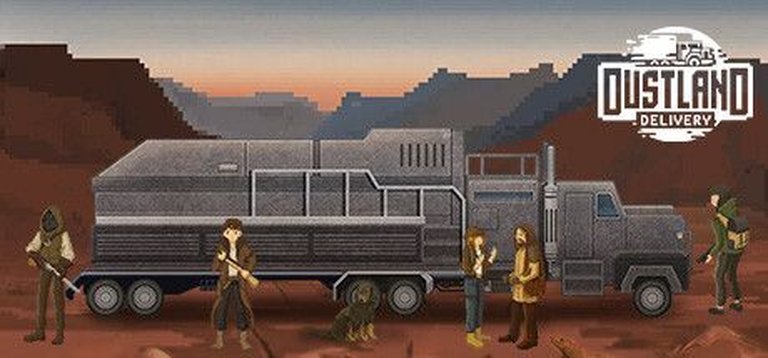
Dustland Delivery is a post-apocalyptic 2D side-scrolling simulation game where players manage a truck-based delivery business in a zombie-infested wasteland caused by a recent bioweapon plague. Involving survival mechanics, crafting, combat, resource management, and open-world exploration, players navigate ruined landscapes, deliver goods, and uncover lore about government experiments and infections while building their enterprise.
Gameplay Videos
Where to Buy Dustland Delivery
PC
Dustland Delivery Free Download
Dustland Delivery Mods
Dustland Delivery Guides & Walkthroughs
Dustland Delivery Reviews & Reception
gameindustry.com : that particular mix works surprisingly well.
steambase.io (89/100): Very Positive
pcgamer.com : I’m digging the wasteland vibes and loving my mobile base.
steamcommunity.com : The package in its entirety is quite fun
Dustland Delivery: Review
Introduction
In a gaming landscape saturated with yet another zombie shooter or resource-hoarding survival crafter, Dustland Delivery roars onto the scene like a souped-up big rig barreling through a sandstorm—unassuming at first glance, but packed with enough layered systems and emergent chaos to redefine what a “business simulator” can be. Released in full on November 5, 2024, after a vibrant Early Access period starting July 11, this title from Neutron Star Studio has quietly amassed a “Very Positive” Steam rating of 88-89% from over 1,000 reviews, proving its mettle as an underdog gem. As a historian of indie evolutions and genre mash-ups, I see Dustland Delivery as the spiritual successor to pixelated pioneers like Taipan! and the gritty overland treks of The Oregon Trail, fused with the crew management tension of FTL: Faster Than Light and the factional intrigue of classic Fallout. My thesis: This is no mere trucker sim dressed in post-apocalyptic rags; it’s a masterful sandbox where commerce is combat, risk is currency, and every trade route carved through the wastes etches your legend into gaming history.
Development History & Context
Neutron Star Studio, a Chinese developer with a penchant for ambitious genre blends, first teased the DNA of Dustland Delivery in 2022 under the regional title Wasteland Express, exclusive to China. This prototype laid the groundwork for its global rebrand and Steam Early Access debut in 2024, published by Lilith Games (with Farlight Games Pte. Ltd. handling some regional duties). Built on Unity—a workhorse engine ideal for 2D pixel art and rapid iteration—the game navigated the technological constraints of indie development admirably: modest system requirements (2.0 GHz CPU, 4 GB RAM minimum) ensure broad accessibility, even on Steam Deck (rated “Playable”), while supporting gamepads, keyboard, and mouse.
The creators’ vision crystallized in a post-pandemic gaming boom, where players craved simulations mirroring real-world precarity—supply chain disruptions, fuel shortages, labor shortages—all amplified in a Mad Max-meets-Fallout wasteland. Launched amid a flood of polished AAA open-world RPGs like Stalker 2: Heart of Chernobyl, Dustland Delivery carved a niche in the indie explosion of “post-apocalyptic business sims,” echoing titles like Papers, Please in its economic survivalism but with vehicular freedom. Early Access was a masterstroke: weekly updates addressed balance (e.g., resource crafting tweaks noted in MobyGames reviews), introduced maps like Twilight Valley, and culminated in the 1.0 release with 119 Steam Achievements and Workshop support. Priced at $7.99 (often discounted 20%), it democratized deep strategy, thriving in an era where Steam’s algorithm favors “Very Positive” hidden gems over blockbuster hype. Constraints like irregular pixel UI were iterated on, transforming potential flaws into charming retro authenticity.
Narrative & Thematic Deep Dive
At its core, Dustland Delivery weaves a tapestry of survival-through-commerce in a fractured world ravaged by a bioweapon “infection”—zombie plague, per scattered lore logs. The main storyline kicks off with your landowner inheritance: scour the wastes, claim your plot, and erect a gleaming metropolis amid ruins, staffed by your ragtag crew. Three quest-driven scenarios (plus tutorial) propel this arc, expanding via DLC like Sheol (April 2025), which unearths subterranean cities, ruins expeditions, and a finale questline with 20 sides.
Characters shine as the narrative’s pulse: recruitable truckers boast quirky occupations (singer, martial artist, farmer, even clowns or undead), perks (e.g., skill synergies), and flaws (negative traits affecting mood/stress). Dialogue crackles with dark humor—sharpshooters flirting unsuccessfully at bars, blacksmiths fixating on “abandoned trains,” or crews debating mutants over campfires. Factions (six major powers in a web of alliances/rivalries) add intrigue: ally with Taranis’ mayor (a plague survivor), exploit nuclear silo logs hinting at foreign bioweapon attacks, or incite wars for profit. Steam discussions unearth lore gems: rusted robot facilities with multi-generational experiments (brain simulations on captives), implying decades since apocalypse; “goo” containers unleashing hordes, tied to pre-collapse government hubris.
Themes probe capitalism’s apocalypse-proof resilience: trade as salvation (buy fruit from fertile hubs, sell to industrial scars), but shadowed by exploitation (crew needs: hunger, fatigue, virus exposure). Freedom reigns—warrior for justice, ruthless merchant, or bandit lord—mirroring Fallout‘s moral ambiguity. Emergent stories emerge from randomness: a failed flirt sparking crew tension, or rescuing NPCs mid-bandit raid. Inconsistencies (recent vs. ancient apocalypse) add lived-in grit, rewarding lore hunters with a tapestry of human folly, rebuilding, and the grind where “no risk, no reward” is gospel.
Gameplay Mechanics & Systems
Dustland Delivery‘s core loop is a hypnotic risk-reward engine: pilot your customizable big rig across a vast 2D scrolling overworld (side-view perspective), balancing truck vitals (fuel, tires, coolant, speed) against crew meters (hunger, thirst, stress, fatigue). Trade dominates—buy low (e.g., cheap produce in agrarian towns), sell high (scarce in factories), but oversaturate markets and prices tank, demanding multi-stop routes. Exploration yields ?-marked events, side quests, and facilities: bars for recruitment/quests/faction rep, libraries for research (books unlock skills/perks), inns for safe rest, repair shops for mods (extra trailers, weapons, armor vs. infected swarms).
Crew progression is RPG-deep: level via XP from all activities, assign roles (fighters, crafters), train animal companions. Character creation lets you spec protagonists (e.g., sharpshooter), with synergies shining in skill checks (group averages for events). Combat? Preparation-first: simple turn-based rounds (attack/retreat clicks), auto-resolved if overmatched, but losses nuke your run (save often: auto/quick/manual). Innovations abound—hunting/fishing/cooking mini-games for sustenance, outpost management (level defenses or raiders strike), even takeover bids for production hubs. Truck as “mobile base” innovates vehicular combat: swap cargo for crew slots in bandit hells.
Flaws persist: opaque UI (pixelated, trial-and-error heavy—no robust tutorial), crafting/resource imbalance (per MobyGames), tedious city-staffing (level recruits on-truck before dropping). Yet, sandbox liberty—no “right” path—fuels addiction: weather storms force camps, random encounters (armored convoys, undead raids) inject peril. DLC Sheol bolsters with subways/terrains. Challenging (intermediate difficulty: survive easy, thrive hard), but methodical play yields empires.
Sub-Sections:
Core Gameplay Loops
- Trading Empire: Map knowledge key; dynamic economies evolve with your dumps.
- Survival Management: Constant monitoring, camp activities mitigate risks.
- Expansion: Claim land, staff cities for passive income/production.
Combat & Progression
Prep > execution; XP floods from trades/exploration, books gate upgrades.
UI & Innovations/Flaws
Irregular pixel menus demand learning; deep systems (faction sim, weather) shine, but demand patience.
World-Building, Art & Sound
The Dustlands breathe desolation: pixel-art vistas of rusted silos, fertile oases amid irradiated badlands, underground Sheol ruins. Atmosphere grips via gritty humanity—snarky street NPCs, faction banners fluttering in storms. Visual direction evokes 2D Fallout (washed-out palettes, side-scrolling travel), with truck customizations (mods gleaming amid decay) personalizing your ironclad wanderer. Sound design amplifies: engine rumbles underscore perilous drives, eerie wind howls signal infected zones, quirky crew chatter (e.g., mutant debates) injects levity. No bombast—just ambient wastes tension, camp crackles, bandit gunfire snaps—immersing you in a world where every sand-swept mile feels earned, fostering paranoia and wonder.
Reception & Legacy
Launch reception exploded: Steam’s 88-94% positive (1,076+ reviews), PC Gamer/PCGamesN hailed its “unique Steam strategy,” Ars Technica its “Oregon Trail grit.” MobyGames notes “unscored” but promising; GameIndustry.com praises value despite opacity. Commercial? Budget darling at $8, 21 concurrent peaks, Workshop/DLC (Sheol) sustain momentum. Early Access critiques (balance, tutorials) evolved via dev responsiveness—weekly patches fixed crafting, added content.
Legacy blooms: influences Fallout-lite indies, business sims like Farm Manager World, vehicular RPGs. As a genre innovator, it proves pixel sims can rival AAA depth cheaply, inspiring “survival business” wave. Evolving rep: from EA curiosity to 2025 “greatest RPG you haven’t played” (PCGamesN).
Conclusion
Dustland Delivery masterfully alchemizes trading sims, survival RPGs, and strategy into a wasteland odyssey where your truck’s roar drowns out the undead moans—a testament to indie’s power. Exhaustive systems, emergent tales, and boundless replayability eclipse flaws like UI opacity, cementing its value. Verdict: An essential 9/10, etching Neutron Star Studio into history as post-apoc profiteers extraordinaire—grab it, rig up, and conquer the Dustlands. Your empire awaits.