
- Release Year: 1997
- Platforms: Macintosh, Windows
- Publisher: Jordan Freeman Group, LLC, Knowledge Adventure, Inc.
- Developer: Van Duyne Engineering
- Genre: Educational, Typing
- Perspective: 2D
- Game Mode: Single-player
- Gameplay: Arcade games, Competition, Mini-games, Typing practice
- Setting: Sports
- Average Score: 84/100
Description
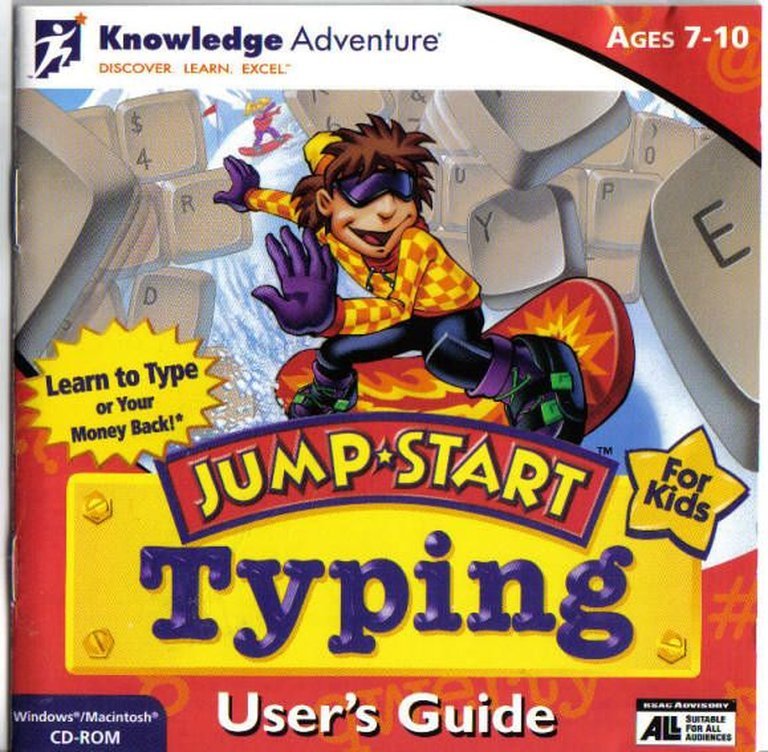
JumpStart Typing is an educational game set in the Sparks Sports competition at Sparks Stadium, where players team up with Robot Boy Botley to rescue Coach Qwerty, locked up by Polly. By mastering typing skills through various sports-themed arcade games in different arenas, kids earn medals and power cards to unlock the Trophy Room and free the coach, blending fun competition with effective typing practice for ages 7-10.
Gameplay Videos
JumpStart Typing Free Download
JumpStart Typing Patches & Updates
JumpStart Typing Reviews & Reception
vgbees.com : JumpStart Typing was an unironically cool part of education.
superkids.com (87/100): A solid learn-to-type program, hidden by a fun user interface.
JumpStart Typing: Review
Introduction
Picture a dimly lit school computer lab in 1997, the hum of CRT monitors filling the air as clusters of fidgety third-graders hunch over chunky keyboards, fingers flying not in frustration but in feverish competition. This was the world JumpStart Typing conquered—a humble CD-ROM title that transformed the drudgery of touch-typing drills into an intergalactic sports spectacle. Released amid the edutainment explosion of the late ’90s, this Knowledge Adventure gem for ages 7-10 built on the JumpStart series’ legacy of blending education with adventure, following hits like JumpStart Adventures 3rd Grade: Mystery Mountain. As a cornerstone of classroom computing, it equipped a generation with keyboard fluency just as the internet beckoned. My thesis: JumpStart Typing exemplifies edutainment at its peak, ingeniously masking rigorous typing pedagogy in arcade thrills, while its narrative charm and replayable challenges secured its status as a nostalgic touchstone that outpaces many modern “gamified” learning apps in sheer engagement.
Development History & Context
Knowledge Adventure, the powerhouse behind the JumpStart franchise, unleashed Typing in October 1997 for Windows and Macintosh amid a booming edutainment market fueled by affordable CD-ROM drives and parental demand for “fun learning.” The studio had merged with Davidson & Associates earlier that decade, enabling cross-facility innovation; JumpStart Typing marked the first JumpStart product fully produced at Davidson’s Torrance center, led by executive producer Mike Albanese (later VP at KA Glendale) and producer Michele Lichtenstein. Dubbed “more JumpStart than JumpStart” internally, it shattered doubts about decentralized development.
Development fell to Van Duyne Engineering, under director Phil Van Duyne, with lead programmer Eddie Rohwedder architecting the system and Ray Cooper helming art and animation. A sprawling 105-person credit list (89 developers, 16 thanks) reflects the era’s collaborative ethos, drawing talent from prior JumpStart titles like 1st Grade and Preschool. Technological constraints loomed large: Windows 95/98 demanded 486DX/2-66 CPUs, 16MB RAM, and 2X CD-ROMs, prioritizing lightweight 640x480x256 SVGA graphics over 3D flair. Input was keyboard/mouse-only, single-player, aligning with school lab setups.
The 1997 gaming landscape was bifurcated—AAA console epics like Final Fantasy VII dazzled on PlayStation, while PC edutainment thrived via titles like The Oregon Trail or Math Blaster. JumpStart Typing slotted into the latter, capitalizing on the JumpStart series’ momentum (previous: 4th Grade – Haunted Island; next: Spanish). Publishers like Knowledge Adventure targeted the RSAC “All” rating for broad appeal, bundling education with arcade hooks to combat “edutainment fatigue.” Re-releases in bundles like the 2000 Back-to-School Essentials Kit (with school supplies) and 2010’s Typing Mastery underscore its evergreen classroom utility, even as XP patches later preserved it on archive.org.
Narrative & Thematic Deep Dive
JumpStart Typing‘s plot is a masterclass in kid-friendly stakes, unfolding at Sparks Stadium during the “Keyboard Olympics”—a galactic showdown between the home Sparks Team and the dastardly Galaxy Gladiators. Professor Sparks, the stadium’s visionary builder, hires Coach Qwerty to mold champions, but drama erupts when Qwerty benches his own daughter, Polly Sparks, for sloppy practice. In a fit of tween rebellion, Polly seals him in the Trophy Room. Enter Botley, the plucky robot sidekick from JumpStart 3rd Grade, who guilts Polly with reminders of her dad’s trophy obsession. Her power cards—neon relics needing recharge—demand player intervention: coach the team via typing tests to hit WPM goals and liberate Qwerty.
Characters shine with archetypal charm. Polly Sparks embodies spunky defiance, evolving from antagonist to ally, her voice grunts (noted for lip-sync quirks) adding personality. Botley, utility belt in tow, serves as affable guide, deploying the toolbar for navigation. Coach Qwerty is the stern mentor, forgiving Polly post-rescue with the gem: “If it takes locking me in the Trophy Room to get you practicing, so be it.” Professor Sparks provides pomp at the Closing Ceremony, awarding you the trophy after Botley’s white lie frames Qwerty’s absence as “mysterious.” Cameos like Ms. Winkle in the crowd nod to series lore.
Dialogue crackles with motivational zing—”Unleash your untapped typing talent as keyboard athletes!”—weaving themes of perseverance, teamwork, and growth. Polly’s arc critiques parental pressure while affirming practice’s rewards; strength mechanics (depleting in games, restored via drills) mirror real typing fatigue. Subtly, it champions proper posture/home-row ethics via Technique-O-Tron “vintage” films, blending humor with hygiene. The narrative culminates in redemption, post-game replayability ensuring the Olympics endure—a thematic triumph masking 7 power-card benchmarks.
Gameplay Mechanics & Systems
At its core, JumpStart Typing loops around diagnostic-to-drill progression: a pre-game WPM test sets adaptive goals (stronger typists face tougher targets), fueling power-card recharges via Keyboard Training Center’s Test-O-Matic. Lessons progress from basics (home-row ASDF JKL;) to full sentences (“A cliff snuffs from an official buffet”), tracking speed/accuracy per letter, hand, and finger. Free-type mode offers sandbox practice; printable reports gamify parental oversight.
Mini-games elevate drills into sports arenas, each a reactive typing gauntlet with strength-bar limits (restock via tests). No traditional combat, but “battles” rage via accuracy under pressure:
- Roller Racing: Skateboarder dodges Track Tricksters; type obstacle letters to swerve—button-mashable for pros, punishing for newbies.
- Keyboard Kick Stadium: Foosball frenzy; type letters to activate player rows, score 10 goals while defending. Dynamic combos demand precision.
- Trailblazer Snowboard Course: Guide 50 boarders down slopes; mistype and wipe out—endurance test of speed.
- Cliffhanger: Scale Mount Keys, typing ledge letters while evading Wall Crawler slime—strategic pathing via grip choice.
- Fans’ Stadium: Non-medal flip-cards into animations; pure pattern-matching fun.
UI excels: Botley’s belt icons toggle areas; intuitive mouse/keyboard nav suits labs. Flaws? Early games yield to brute force; no multiplayer despite LAN potential. Innovations like adaptive goals and strength economy brilliantly loop education into compulsion, predating modern QTEs while enforcing touch-typing purity—no peeking at keys.
World-Building, Art & Sound
Sparks Stadium pulses as a vibrant hub: neon arenas evoke ReBoot-meets-Cyberchase futurism, with galactic crowds cheering amid roller tracks, snowy peaks, and foosball pitches. The Training Center’s industrial vibe—locked Trophy Room, clunky Technique-O-Tron—grounds the whimsy, Technique videos parodying 1950s reels (keyboards in fedoras!) injecting meta-humor.
Art direction, led by Ray Cooper’s team (Janis Eto, Joanna Field, Carol Carpenter), delivers crisp 256-color 2D animation: fluid skaters, slimy crawlers, medal ceremonies. Sports motifs amplify immersion, transforming keys into athletic tools. Sound design complements: upbeat electronica scores victories, Polly’s grunts and Botley’s chirps add life (despite sync gripes), SFX like crashes/cracks heighten tension. Voice acting fosters emotional buy-in, Polly’s arc audible in her apologetic plea. Collectively, these craft an aspirational atmosphere where typing feels heroic, elevating edutainment beyond pixelated flashcards.
Reception & Legacy
Launch reception skewed positive: MobyGames aggregates 81% critics (SuperKids 90%: “fun and effective for sports-loving kids”; Review Corner 83%: adventure mode motivates via power cards; All Game Guide 70%: solid education, lackluster games for non-sticklers). Players averaged 3.4/5 (no text reviews), praising replayability but noting beginner hurdles. Discovery Education lauded practice value for fast-paced fans.
Commercially, it thrived in schools—bundled in kits, it infiltrated labs, spawning nostalgic essays (e.g., VGBees’ “Final Frontier,” likening it to speedrunning). Reputation evolved from “drill sergeant” to retro icon, preserved via archive.org ISOs/XP patches. Influence ripples: Pioneered gamified typing (pre-Typing of the Dead), inspiring JumpStart spinoffs (Spelling, Music) and classroom staples. In a touch-screen era, it reminds of keyboard primacy, cited academically (MobyGames: 1,000+ citations).
Conclusion
JumpStart Typing masterfully fuses narrative redemption, arcade urgency, and adaptive pedagogy into a 1997 triumph that outshines flashier peers. Its stadium saga, innovative loops, and vivid world not only taught typing but ignited classroom rivalries, proving edutainment’s power when “fun” trumps filler. Flaws like mashability fade against its hooks. Verdict: An essential artifact of PC history—8.5/10, eternally typing its way into the Hall of Fame for making mundane mastery magical. Fire up an emulator; your inner keyboard Olympian awaits.