
- Release Year: 2018
- Platforms: Nintendo Switch, PlayStation 4, Windows
- Publisher: Koei Tecmo America Corp., Koei Tecmo Europe Ltd., Koei Tecmo Games Co., Ltd.
- Developer: Koei Tecmo Games Co., Ltd.
- Genre: Role-playing (RPG)
- Perspective: Third-person
- Game Mode: Single-player
- Gameplay: Alchemy, Crafting, Exploration, Item synthesis, Turn-based combat
- Setting: Fantasy
- Average Score: 60/100
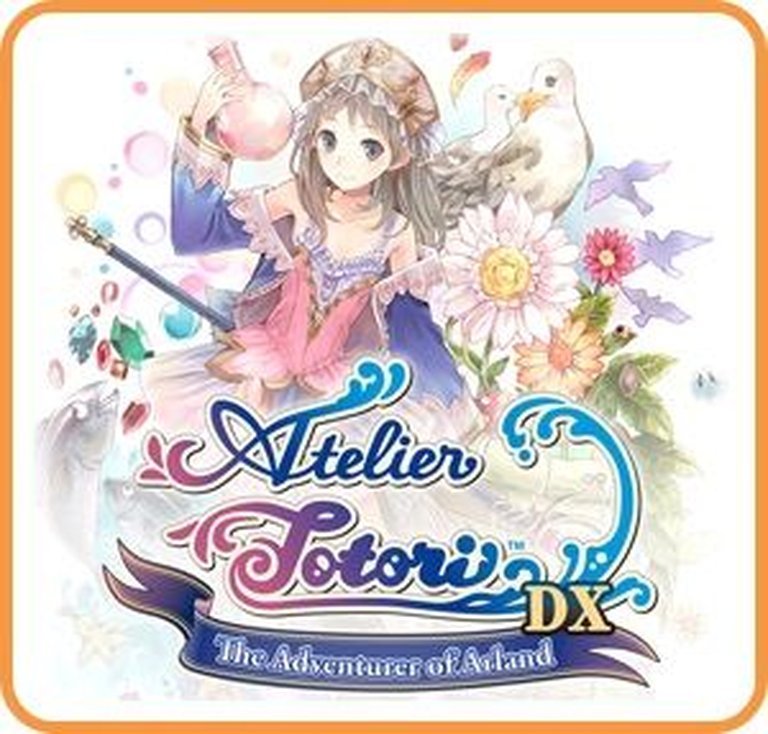
Description
Atelier Totori: The Adventurer of Arland DX is a turn-based fantasy RPG and enhanced remaster of the second Atelier Arland series entry, featuring anime/manga art and a female protagonist, Totori. Set in the enchanting land of Arland, it offers improved combat, better time management, and a comforting world filled with delightful characters, building on the alchemy-focused adventures from Atelier Rorona with zen-like grinding and progression.
Gameplay Videos
Where to Buy Atelier Totori: The Adventurer of Arland DX
PC
Atelier Totori: The Adventurer of Arland DX Cracks & Fixes
Atelier Totori: The Adventurer of Arland DX Guides & Walkthroughs
Atelier Totori: The Adventurer of Arland DX Reviews & Reception
metacritic.com : the result is less positive and the game ends up feeling less interesting than it wants to be.
gametips.gg : More Freedom For Better and Worse.
saveorquit.com : the pacing here is so much smoother than that of Rorona.
backloggd.com : I played and had an enjoyable time with Atelier Totori DX.
opencritic.com (60/100): puts more emphasis on combat and exploration, with mixed results.
Atelier Totori: The Adventurer of Arland DX Cheats & Codes
Nintendo Switch (Atmosphere / EdiZon / SXOS)
Enter codes using Atmosphere / EdiZon / SXOS cheat tools. Title ID: 01009BC00C6F6000, Build ID: 4fd4bfe66c5353d4.
| Code | Effect |
|---|---|
| 04000000 00BBC880 00000063 | 99 x Audras Tail C Available infinite |
| 04000000 00BBC864 00000063 | 99 x Fest A Available infinite |
| 04000000 00BBC878 00000063 | 99 x Forgotten Bone D Available infinite |
| 04000000 00BBC874 00000063 | 99 x Globe Sphere E Available infinite |
| 04000000 00BBC858 00000063 | 99 x Magic Grass Available Infinite |
| 04000000 00BBC85C 00000063 | 99 x Magic Grass B Aromatic Available Infinite |
| 04000000 00BBC884 00000063 | 99 x Original Gem S Available infinite |
| 04000000 00BBC87C 00000063 | 99 x Puniball E Available infinite |
| 04000000 00BBC870 00000063 | 99 x Serenity Flower E Available infinite |
| 04000000 00BBC868 00000063 | 99 xMandra Root E Available infinite |
| 04000000 00BBC86C 00000063 | 99 xPhlogiston E Available infinite |
| 04000000 00BB7968 0098967F | Infinite Money |
Atelier Totori: The Adventurer of Arland DX: Review
Introduction
Imagine a JRPG where the epic quest to save the world takes a backseat to a daughter’s heartfelt search for her missing mother, blending cozy alchemy crafting with the thrill of exploration in a vibrant fantasy realm. Atelier Totori: The Adventurer of Arland DX (2018), the enhanced remaster of Gust’s 2010 PlayStation 3 title and its 2012 Vita expansion Plus, stands as the pivotal second chapter in the beloved Arland trilogy. Building on Atelier Rorona‘s foundation, it introduces a young alchemist-turned-adventurer, Totooria “Totori” Helmold, whose journey of self-discovery and family ties captivates with its intimate scale amid sprawling wildernesses. As a professional game journalist and historian, I argue that Totori DX masterfully evolves the Atelier series’ signature “slice-of-life JRPG” formula, trading rigid deadlines for liberating open-ended progression, while deepening themes of maturity and resilience—cementing its legacy as a cozy yet profound gem in JRPG history.
Development History & Context
Gust Co. Ltd., a Koei Tecmo subsidiary renowned for the long-running Atelier series since 1997’s Atelier Marie, developed Totori during the PS3 era’s technological zenith. Released June 24, 2010, in Japan (September 2011 internationally via NIS America), it followed Rorona‘s modest success (over 100,000 units sold), aiming to refine alchemy-focused gameplay amid a JRPG landscape dominated by sprawling epics like Final Fantasy XIII and Persona 4. Director Yoshito Watanabe and artist Mel Kishida envisioned a “coming-of-age adventure,” shifting from Rorona‘s atelier-bound constraints to world-spanning exploration, reflecting Gust’s pivot toward player agency post-Mana Khemia 2.
Powered by Sony’s PhyreEngine, the original faced PS3 hardware limits: modest 720p visuals, simplified turn-based combat to accommodate synthesis depth, and a calendar system taxing loading times. The 2012 Plus Vita port added DLC characters (Ceci, Cordelia, Iksel), new dungeons like Orthogalaxen, costumes (nurse/swimsuit for Totori), and touchpad map navigation—expanding playtime with post-game challenges. The 2018 DX remaster for PS4, Switch, and PC (Steam App ID 936180) integrated all DLC, introduced field dashing and battle fast-forward, and targeted 1080p/60fps, though PC versions retain quirks like controller-required stutters (fixable via vJoy/Special K) and widescreen hacks via hex-editing.
Koei Tecmo’s global push aligned with the trilogy’s bundling in Atelier Arland series Deluxe Pack, capitalizing on niche JRPG revival amid Persona 5‘s boom. Sales hit 144,261 in Japan for the original, with DX boosting accessibility via $13-40 pricing. Constraints like 64-bit requirements and DirectX 11 underscore its bridge from PS3-era tech to modern ports, influencing Gust’s later engines (e.g., KTGL in Dusk series).
Narrative & Thematic Deep Dive
Plot Overview and Structure
Set five years after Rorona (or eight per wiki variances, reconciled in Meruru), Totori unfolds over 3-7 in-game years in Arland’s evolving republic. Protagonist Totori, Rorona’s optimistic pupil from coastal Alanya village, seeks adventurer certification to trace her famed mother Gisela, missing two years prior. Initial hurdles—raising 100,000 cole with childhood friend Gino, gaining sister Ceci’s blessing—launch a non-linear odyssey: rank up via quests, synthesize for points, explore biomes, and uncover Gisela’s fate amid sea monsters (Flauschtraut) and frontier villages.
The “true ending” reveals Gisela’s survival (spoiled in Meruru), emphasizing perseverance. Multiple endings (Gino, Melvia, etc.) hinge on bonds and tasks, rewarding replayability. Time skips frame acts: Year 3 license renewal yields Gisela clues; Year 5 ship-building confronts family grief; Year 7 finale varies by rank/relationships.
Character Analysis
Totori (voiced by Kaori Nazuka) evolves from meek klutz to resilient leader, her alchemy bridging personal growth and plot. Returning Rorona allies shine: Rorona (Mai Kadowaki) as chaotic mentor (pie-obsessed synthesis gags); Sterk (Jurouta Kosugi) as stern knight grappling post-monarchy irrelevance; Cordelia (Eri Kitamura) as tsundere guild admin. Newcomers enrich dynamics:
- Gino Knab (Yuko Sanpei): Enthusiastic rival-turned-ally, embodies youthful zeal.
- Melvia Siebel (Ryoko Shintani): Buff guardian, contrasts Gino’s naivety with pragmatic mundanity.
- Mimi (Yuka Iguchi): Noble tsundere, her clingy rivalry hints yuri undertones, humanizing privilege.
- Marc (Susumu Chiba): Eccentric scientist, sparks alchemy-vs-science debates.
- Family (Ceci/Asami Imai, Guid/Kenji Hamada, Gisela/Yukari Hishizu): Anchor themes; Ceci’s protectiveness vs. Guid’s quiet grief highlight maturity’s scars.
Dialogue sparkles with humor—Sterk’s scary face tropes, Rorona’s hunger fiascos—yet delves deep: Totori confronts repressed trauma (Gisela’s “death”), learning assertiveness from Mimi, purpose from Marc/Sterk.
Themes: Maturity, Family, and Freedom
Totori thematizes adulthood’s bittersweet forge: Totori’s license symbolizes independence amid loss, echoing Arland’s monarchy-to-republic shift. Alchemy represents self-mastery; exploration, confronting the mundane (Melvia’s jadedness). Family bonds probe grief’s silence (Guid), overprotection (Ceci), legacy (Gisela). Subtle critiques of judgment (Sterk’s visage) and fate (Piana’s stowaway arc) culminate in empowerment: Totori defeats demons her mother tied with, affirming inherited strength with personal twists. Non-linear events personalize journeys, mirroring life’s unpredictability.
Gameplay Mechanics & Systems
Core Loops: Alchemy, Adventuring, Ranking
Totori DX‘s genius lies in intertwined loops. Alchemy—series hallmark—expands Rorona‘s panel system: recipes grade by difficulty (Totori’s level dictates success), traits/qualities from ingredients yield bombs, potions, gear. Effects (e.g., pricey bombs) enable combat/exploration customization; Chim homunculus aids gathering. UI shines: rotatable panels, trait explanations (improved in DX).
Adventuring emphasizes freedom: visible enemies on area maps (biomes like forests, seas) allow ambushes/evasions. Time costs (days per travel/gather/fight) demand planning; DX dash/fast-forward eases tedium. License Rank Up gates progress: quests (synthesis/battles/exploration) earn points for ranks, unlocking areas/recipes. Three-year renewal auto-ends failure, but high ranks extend to five/seven years.
Combat and Progression
Turn-based battles (PhyreEngine simplicity) prioritize items over skills: speed dictates order, blocks/skills/items/bombs dominate. Party (Totori + allies like Mimi/Melvia) levels separately; limited movesets shine via alchemy versatility (e.g., debuff grenades). Flaws: repetitive, undercooked vs. modern JRPGs; bosses demand prep.
UI/Progression: Intuitive menus, Steam Cloud saves. PC tweaks (Atelier Sync Fix for AA/AF, widescreen hex-edits) address 16:9 limits. Dual levels (adventurer/combat, alchemist/synthesis) reward balance.
Innovations/Flaws: Looser time vs. Rorona empowers experimentation but risks aimlessness; DX QoL (dash, FF) mitigates grinding.
| Mechanic | Strengths | Weaknesses |
|---|---|---|
| Alchemy | Deep customization, trait synergies | Steep curve for traits |
| Exploration | Visible foes, biome variety | Time sinks without QoL |
| Combat | Item-driven strategy | Repetitive, shallow skills |
| Ranking | Flexible progression | Opaque point tracking |
World-Building, Art & Sound
Arland’s republic thrives post-Rorona: Alanya’s cozy village contrasts untamed wilds (Orthogalaxen dungeon), seas, snowy frontiers. Non-linear unlocks foster discovery; events tie to calendar/bonds, building lived-in immersion.
Visuals: Mel Kishida’s anime art pops—Totori’s expressive sprites, detailed fields. PS3-era cel-shading holds (upscaled 1080p DX), but dated textures/aliasing persist; Switch portable charm shines. Costumes (swimsuits) add fanservice.
Sound: Ken Nakagawa/Kazuki Yanagawa’s OST (62 tracks, Pilgrimage OP by Mineko Yamamoto, Dia ED by mao) evokes whimsy—zen grinding tunes, epic boss swells. Partial English/Japanese VO (Nazuka’s emotive Totori) enhances charm; SFX/BGM sliders.
Elements coalesce into “comforting zen”: alchemy’s tactile joy, exploration’s wonder, amplifying cozy escape.
Reception & Legacy
Original PS3: Metacritic 74/100, Famitsu praise; 53k first-week Japan sales (144k total). Vita Plus: 79/100, 29/40 Famitsu. DX: MobyGames 72% critics (90% highs like BonusStage: “vastly better than first”; lows like Switch Player 30%: “weakest trilogy entry”). Steam: 80% Very Positive (348 reviews), lauding story/characters, critiquing repetition/performance.
Evolved reputation: Arland trilogy staple, influencing Gust’s freedom-focused designs (Meruru‘s kingdom-building). DX democratized access, boosting series to 20+ titles; inspired Ryza‘s action shifts. Cult status for character-driven JRPGs; memes (Australian R18+ “high impact violence”) highlight charm.
Conclusion
Atelier Totori: The Adventurer of Arland DX refines Rorona‘s blueprint into a liberating odyssey of growth, where alchemy’s creativity meets adventuring’s risks in Arland’s enchanting tapestry. Exhaustive synthesis, thematic depth, and cozy vibes outweigh dated combat/UI, earning a definitive 8.5/10. Essential for JRPG fans seeking intimate tales over bombast, it secures Arland’s trilogy as a historical milestone—proof Gust’s “everyday alchemy” endures, inviting replays for every ending and bond. Play it after Rorona DX for full emotional payoff; its legacy? A heartfelt reminder: true adventures bloom from personal quests.