
- Release Year: 2011
- Platforms: Linux, Macintosh, Windows
- Publisher: Transhuman Design
- Developer: Transhuman Design
- Genre: Action, Strategy, Tactics
- Perspective: Side view
- Game Mode: Online PVP, Single-player
- Gameplay: Building, Combat, Mining
- Setting: Fantasy
- Average Score: 83/100
Description
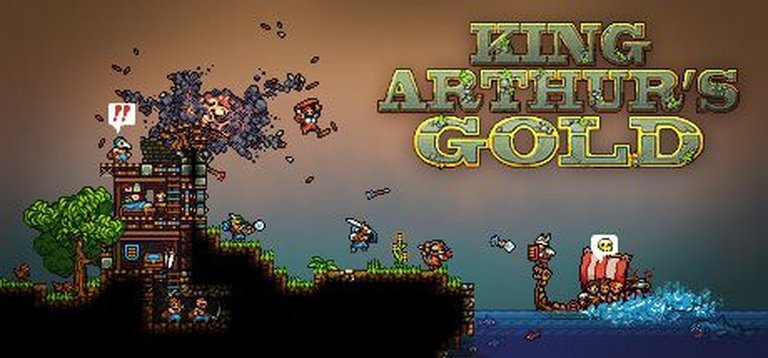
King Arthur’s Gold is a side-scrolling 2D multiplayer action-strategy game set in a fantasy world, where Red and Blue teams compete in PvP combat by mining resources, building structures like walls, doors, traps, and tunnels, and fighting with three classes: the melee-focused Knight wielding swords, shields, and bombs; the ranged Archer who shoots arrows and climbs; and the Builder who gathers materials and constructs defenses. Players can switch classes at outposts or bases to adapt strategies in modes such as Time Deathmatch, Stock Deathmatch, Zombie Survival, or Capture the Flag.
Gameplay Videos
Where to Buy King Arthur’s Gold
PC
King Arthur’s Gold Free Download
King Arthur’s Gold Mods
King Arthur’s Gold Guides & Walkthroughs
King Arthur’s Gold Reviews & Reception
metacritic.com (81/100): a great multiplayer game that stands out from the crowd
steambase.io (84/100): Very Positive
hookedgamers.com : insanely ridiculous action
gamepressure.com (84/100): Very Positive
King Arthur’s Gold: Review
Introduction
Imagine a pixelated medieval battlefield where a ramshackle boat packed with berserk knights crashes into an enemy tower, sending chunks of stone plummeting into a lake teeming with rideable sharks—pure, unadulterated chaos born from player ingenuity. King Arthur’s Gold (KAG), released in 2011 by indie studio Transhuman Design, captures this essence in a side-scrolling 2D multiplayer war game that fuses resource mining, freeform castle-building, and frantic PvP combat. Drawing from the chaotic spirit of Worms, the construction freedom of Minecraft, and the pixel-art action of Metal Slug, KAG eschews magic for gritty, physics-driven sieges between Red and Blue teams. As a game historian, I see it as a pivotal indie title that democratized emergent multiplayer madness, proving small teams could craft deep strategy from simple tools. My thesis: King Arthur’s Gold endures as a cult masterpiece of collaborative destruction, where victory hinges not on solo heroics but on symphony-like teamwork, cementing its legacy amid the early 2010s indie boom.
Development History & Context
Transhuman Design, a remote Polish-based collective founded informally around Michal Marcinkowski’s 2001 hit Soldat—a 2D multiplayer shooter that influenced titles like N and The Showdown Effect—birthed KAG on April 18, 2011. Marcinkowski, the solo visionary behind much of the initial code, engine, sounds, and design, coded the first alpha in his bedroom just three days later, self-funding and self-marketing in an era when indie success stories like Minecraft (2011) were reshaping distribution via platforms like Desura. Joined by pixel artist Max Cahill (aka Geti), musician David Pencil, and supporters like Ryan Rawdon and Lucas Grzegorczyk, the team leveraged the Irrlicht 3D engine (despite 2D visuals), IrrKlang audio middleware, and SDL for cross-platform support (Windows/Linux 2011, Mac 2013).
The 2010s gaming landscape was ripe for KAG: Minecraft‘s block-building exploded in popularity, voxel shooters like Ace of Spades (2011) blended destruction with multiplayer, and free-to-play models (e.g., Team Fortress 2) emphasized community-driven longevity. Technological constraints favored lightweight 2D physics—verlet-based collapses and bitfield water simulation were prototyped in days—allowing 32-player lobbies on modest hardware. Early alphas spread virally via PC Gamer, Kotaku, and Rock Paper Shotgun, winning awards like IndieDB’s CEO’s Silver Spoon (2011) and Pixel Heaven’s Best Independent Game (2013). A “silent beta” in May 2011 evolved into a Minecraft-style paid model ($9.99, price rising with updates), with a full Steam release on November 5, 2013. Post-launch, focus shifted to AngelScript modding, community content, and bug fixes; as of 2019 builds, volunteers drove minor additions amid ongoing tweaks. This bootstrapped journey from bedroom prototype to 470,000+ Steam sales exemplifies indie resilience against AAA dominance.
Narrative & Thematic Deep Dive
KAG’s “narrative” is deliberately threadbare, embodying an eternal, ahistorical war: “Nobody remembers why the war started, but the battle is ferocious and never-ending,” per the official wiki. No Arthurian legend beyond the title—teams clash in fantasy-medieval arenas without quests or lore dumps, prioritizing sandbox emergence over scripted tales. Multiplayer modes like Capture the Flag (CTF: steal enemy flags from tents), Team Deathmatch (TDM: deplete tickets), Take the Halls (THH: conquer halls with tech trees), War (resource-scarce deathmatch), and Zombie Fortress (survive undead hordes) frame players as faceless grunts in perpetual strife.
Singleplayer offers scant counterpoint: Tutorials (Basics, CTF, THH) use signposts for mechanics; Sandbox/Challenge modes mirror multiplayer; a brief “Save the Princess” campaign pits solo heroes against purple-clad necromancer Sedgwick in purple-themed undead fights. Characters lack depth—no voiced dialogue, backstories, or arcs—defined solely by classes: Knight (melee demolitionist), Archer (mobile sniper), Builder (fortress engineer). Themes emerge organically: cooperative fragility, where solo knights fall but builder-knight-archer trinities topple empires; destructive impermanence, as physics crumbles even grandest castles; absurd heroism, from shark-riding to “Knight Towers” (shield ladders scaling walls). Critics like Rock Paper Shotgun evoked WWI tunneling dread amid comedy, underscoring tension between strategy and slapstick. In an era of cinematic blockbusters (The Last of Us, 2013), KAG’s anti-narrative thrives on player-forged epics, thematizing war’s futility through endless rebuilds.
Gameplay Mechanics & Systems
KAG’s core loop—mine, build, siege, repeat—deconstructs into elegant, class-synergistic systems on randomly generated or custom 2D maps. Players harvest wood/stone/gold, switching classes at tents/outposts: Knights wield swords/shields/bombs/kegs for CQC and demo (shield-up blocks arrows, enables ladders); Archers fire normal/fire/water/bomb arrows (burn/douse/stun/explode), grappling trees/walls for mobility; Builders place 20+ blocks (walls, traps, ladders), erect workshops (spawning catapults, ballistae), dig tunnels, or unleash siege beasts.
Modes amplify loops:
– CTF: Prep phase stockpiles resources; breach tents via boats, bomb-jumps, or escalades.
– TDM/Stock DM: 2-minute knight/archer frenzies or no-respawn bloodbaths.
– THH/War: Tech progression, hall captures, gold hunts.
– Zombie Fortress: Co-op survival vs. spawning undead/NPCs.
– Sandbox/Challenges: Free-build or timed feats (e.g., race endpoints).
UI is minimalist: Cycle classes (E), inventory hotkeys, chat for cheats/mods. Physics shine—collapsible terrain, dynamic water/fire, day/night cycles, interactive wildlife (tame bison, drown foes). Flaws: Steep curve punishes newbies (skill-based PvP), occasional desyncs, griefing (team-harm). Innovations like moddable AngelScript (new classes/modes, e.g., Shiprekt top-down naval) and heads (60+ cosmetics) extend replayability. Combat demands prediction—parabolic arrows, shield timings—yielding “simple to learn, deep to master” depth, per Games Finder.
| Core Systems | Strengths | Weaknesses |
|---|---|---|
| Classes | Synergy (e.g., archer-knight pierce) | No solo viability |
| Building/Destruction | Freeform physics chaos | Resource grind |
| Modes | Variety (32-player THH strategy vs. TDM frenzy) | Singleplayer AI aimbot |
| Controls/UI | Precise, intuitive | Cluttered late-game maps |
World-Building, Art & Sound
KAG’s world is a destructible canvas: Vast side-scrolling maps with lakes, forests, caves spawn procedural terrain, evolving via player scars—crumbled towers, flooded tunnels. Atmosphere pulses with emergent peril: Night spawns zombies, portals belch undead, animals (sharks, bison) add whimsy/hazard. No overarching lore, but “living” ecosystems (burnable trees, drownable foes) foster immersion.
Visuals channel 16-bit SNES (King Arthur’s World homage) via Max Cahill’s crisp pixels: Expressive sprites (emotive deaths), vibrant palettes (red/blue contrasts), fluid animations (post-3333 builds refined sync). Dynamic effects—cascading rubble, splashing water, fire spreads—elevate via particles, though lacks strong stylistic imprint (per Everyeye.it).
Sound design, via David Pencil and IrrKlang, amplifies frenzy: Clinking pickaxes evoke Birdsong-esque tension (RPS), meaty sword clashes, explosive booms, jaunty medieval chiptunes. No voice, but emotes/chat fuel camaraderie. Collectively, they forge a tactile, hilarious siege simulator—physics “earthquakes” from collapses heighten stakes, pixels evoke nostalgia amid modernity.
Reception & Legacy
Launched to 84% MobyGames critics (90% Indie Game Reviewer: “must-have for team combat”), 81% Metacritic, and Steam’s 84% Very Positive (5,207 reviews), KAG sold 470k+ copies by 2023. Early praise (Hooked Gamers 90%: “best multiplayer of 2013”; Jeuxvideo.com 85%: “fun en barres”) lauded chaos/teamplay; critiques hit bugs, weak singleplayer (4Players 78%: “no BattleBlock Theater visuals”). Community fixes evolved rep—updates quelled glitches, mods exploded (zombies, roleplay).
Influence ripples: Pioneered 2D build-‘n-bash (Teeworlds, Fortnite building echoes), modding ethos inspired Terraria/Don’t Starve. Soldat lineage birthed niche multiplayer darlings; as “build’n kill” (Gamepressure), it bridged RTS (Age of Empires) and platformers. Cult status persists—active 2025 servers, events like world cups—affirming indie multiplayer’s viability pre-Among Us boom.
Conclusion
King Arthur’s Gold masterfully distills multiplayer war into pixelated poetry: From bedroom alpha to mod-fueled evergreen, its physics-driven sieges, class harmony, and absurd emergent tales transcend flaws like dated singleplayer or entry barriers. In video game history, it claims a throne as the quintessential indie co-op destroyer—a testament to Transhuman Design’s vision amid 2010s disruption. Verdict: Essential for strategy fans; an 8.5/10 timeless gem deserving rediscovery. Dive in, build a boat, and raze a tower—history awaits your chaos.