
- Release Year: 2024
- Platforms: Windows
- Publisher: Broccoli Games
- Developer: Broccoli Games
- Genre: Simulation
- Perspective: Diagonal-down
- Game Mode: Single-player
- Gameplay: Business simulation, Managerial
- Average Score: 70/100
Description
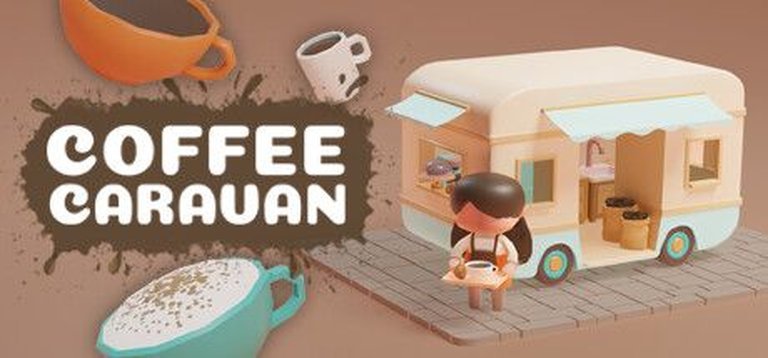
Coffee Caravan is a cozy roguelite simulation where players manage a mobile coffee caravan, brewing and experimenting with delicious recipes, serving quirky customers, upgrading appliances, and expanding their business during procedurally generated road trips across whimsical landscapes.
Gameplay Videos
Where to Buy Coffee Caravan
PC
Coffee Caravan Mods
Coffee Caravan Guides & Walkthroughs
Coffee Caravan Reviews & Reception
opencritic.com (70/100): If you like roguelite games with simple gameplay, Coffee Caravan is a good addition to the genre.
expertgamereviews.com : Coffee Caravan is a charming addition to the simulation genre, bringing together the cozy vibes of a cafe sim with the strategic depth of rogue-lite gameplay.
ladiesgamers.com : It’s an inspired twist, and it’s not the only cosier take on the path-based rogue-lite; … Does it work? Honestly, it does, and pretty well.
Coffee Caravan: Review
Introduction
Imagine the aroma of freshly ground beans wafting through a pastel-hued caravan as you navigate a winding, procedurally generated road trip, balancing the rush of impatient customers with the zen of perfect brews—this is the hypnotic pull of Coffee Caravan, a 2024 indie darling that transforms cafe management into a roguelite road odyssey. Released mere months ago by the tiny Broccoli Games team, it has already brewed a “Very Positive” storm on Steam with 92% approval from over 1,200 reviews, carving a niche in the cozy gaming renaissance. As a game historian, I see echoes of Slay the Spire‘s strategic mapping fused with Overcooked‘s frantic efficiency, but distilled into bite-sized, stress-free sips. My thesis: Coffee Caravan is a masterful minimalist hybrid that elevates everyday barista tasks into addictive progression, proving that small-team indies can redefine roguelite comfort food in an era bloated with AAA excess.
Development History & Context
Broccoli Games, a two-person outfit comprising developers Ondra and Alenka, birthed Coffee Caravan as their Steam debut, leveraging Unity’s accessible engine to punch above its weight. Launched on May 20, 2024, for Windows (with macOS support and Steam Deck verification), the game emerged amid a cozy sim explosion—think Stardew Valley successors like Critter Café and PlateUp!—where players crave low-stakes escapism post-pandemic. The duo’s vision was clear from Steam’s ad blurb: a “delightful exploration of the world of coffee” via mobile business-building, inspired by real-world pop-up vans but gamified with roguelite proceduralism to ensure replayability.
Technological constraints were minimal thanks to Unity’s efficiency, allowing smooth controller support, 23 achievements, and multilingual localization (14 languages). Yet, the 2024 landscape was saturated; roguelites like Slay the Spire (2019) dominated deckbuilders, while management sims (Dave the Diver, 2023) emphasized rhythm over chaos. Broccoli sidestepped this by hybridizing: no permadeath frustration, just permanent unlocks softening roguelite resets. Priced at $11.99, it targeted impulse buys, bundling with titles like The Chef’s Shift for value. Community feedback via Steam forums highlights the devs’ responsiveness—acknowledging limitations like bus redesign needs—foreshadowing updates with seasonal recipes, cementing its grassroots evolution.
Narrative & Thematic Deep Dive
Coffee Caravan eschews verbose storytelling for emergent narrative, a deliberate minimalist choice amplifying its zen themes. There’s no overwrought plot; you’re a customizable barista (voxel-styled avatar with basic tweaks for attachment) embarking on endless road trips in your expanding caravan. Each “world”—Coffee, Tea, Ice Cream—unfolds as a procedural map akin to Slay the Spire‘s branching paths, dotted with customer nodes, shops, treasures, and events. Dialogue is sparse: customers grunt preferences via icons (e.g., mocha demands), with idle chatter or patience meters conveying personality—puppies for puppacinos, professors for pour-overs.
Thematically, it’s a meditation on perseverance and flow state, blending Eastern zen (matcha rituals, balanced brewing) with Western hustle (mobile entrepreneurship). Failures reset runs but retain upgrades, symbolizing real barista growth: “Stress isn’t the enemy as inefficiency,” as one review poetically notes. Subtle lore emerges via unlocks—14+ recipes per world, from espresso finickiness to bubble tea flair—exploring coffee’s cultural tree (espresso machines evoking Italian cafes, affogato fusing worlds). Characters lack depth but shine in archetypes: grumpy modifiers test patience, boss customers embody “taste perfectionism.” No dialogue trees, yet the rhythm crafts a silent symphony of satisfaction, themes of mindful efficiency resonating in a distracted age, where short 20-40 minute runs mirror life’s fleeting joys.
Gameplay Mechanics & Systems
At its core, Coffee Caravan loops through setup-serve-upgrade-explore, a roguelite cafe sim deconstructing barista multitasking with surgical precision.
Core Loops and Serving Rhythm
Pre-level: Arrange your caravan (expanding post-map) with appliances (grinder, brewer, sink), tables, and props. Direct control (mouse/keyboard/controller) demands ergonomic layouts—pro tip: side table by door for cup staging. Open shop, select daily recipe (premium for profit, basic for volume), and juggle orders. Grind beans, boil water, brew, serve—mirroring real steps—but with patience meters ticking for seated/waiting customers. Impatience ends runs, forcing money loss but upgrade retention.
Subtle genius: difficulty modifiers (espresso mode’s finickiness) and events (“10% less patience”) ramp chaos gradually. Worlds specialize—Coffee (brewing balance), Tea (steeping subtleties), Ice Cream (mixing/freezing)—each with 14 recipes unlocking via shops.
Progression and Roguelite Backbone
Procedural maps offer choice: easy nodes for basics, hard for rewards, bosses as finales. Permanent unlocks (appliances like auto-grinders, dishwashers; decorations boosting stats) create meta-progression, mitigating roguelite sting—unlike Slay the Spire‘s full resets. Finances demand wisdom: splurge on tools or hoard for recipes? Blessings/curses add variability, fostering experimentation.
UI, Innovations, and Flaws
UI is exemplary: clean, icon-driven queue prioritizes orders; optional labels aid distraction-free play. Achievements track counters (e.g., serve X mochas), with 6-hour 100% feasibility (no missables, cozy/normal modes). Innovations shine in hybrid scalability—short bursts suit casuals, depth rewards optimization (8-customer queues via buffs). Flaws? Repetition post-optimal strategy; no multiplayer or savable layouts (devs noted for QoL); time pressure stresses some despite “relaxing” intent. Yet, Steam Deck perfection and one-handed play (praised for petting cats) elevate accessibility.
World-Building, Art & Sound
The world is a procedural pastoral dreamscape: endless roads through gradient skies, caravan as dollhouse hub amid voxel meadows. Pastel palette (browns, beiges, blush pinks/teals) evokes neighborhood cafes, with golden light streaming windows for immersion. Minimalist 3D (fixed/flip-screen perspective) prioritizes function—appliances distinguishable, characters rounded blobs with charm (Human Fall Flat meets Overcooked).
Atmosphere thrives on coziness: steaming pouches, clinking cups provide ASMR feedback. Jazzy OST (mellow piano/bass) loops soothingly—players often swap for personal tunes, underscoring subtlety. Sound design amplifies tactility: grinding whirs, impatience dings build tension without overload. Collectively, elements forge serene escapism, where visuals whet appetites and audio induces flow, transforming pixelated pours into sensory bliss.
Reception & Legacy
Launch reception split hairs: MobyGames critics averaged 65% (70% SomHráč.sk: “pleasant indie roguelite”; 60% LadiesGamers: “zen art of coffee, not for all”), praising niche fusion but noting visual minimalism. Steam users adored it—94% recent positives—hailing “cozy GOTY” vibes, one-handed play, burnout cure. Forums reveal passion: devs thanked fans for countering negativity, promising tweaks.
Commercially modest (indie $10-12 price, bundles boost), its legacy blooms in cozy roguelites: influences Caravan SandWitch et al., but carves blueprint for bite-sized hybrids (PlateUp! management + Slay paths, minus chaos). Post-2024 updates (seasonals) ensure evolution; 5-10 hour core with infinite replay positions it as gateway for sim skeptics. In history, it’s a footnote-yet-seminal: Broccoli’s first proves duos can brew blockbusters in sim/rogue crossovers.
Conclusion
Coffee Caravan masterfully brews cafe sim intimacy with roguelite spice, its permanent progression and rhythmic serving loops delivering zen mastery in 20-minute jolts—flaws like repetition paling against cozy triumph. For indies, it’s a testament to minimalism’s might; in gaming canon, a 2024 milestone for accessible hybrids, eternally pouring calm amid chaos. Verdict: Essential for cozy enthusiasts; 9/10—a latte worth savoring repeatedly.