
- Release Year: 2011
- Platforms: Windows
- Publisher: S.A.D. Software Vertriebs- und Produktions GmbH
- Genre: Compilation
- Average Score: 60/100
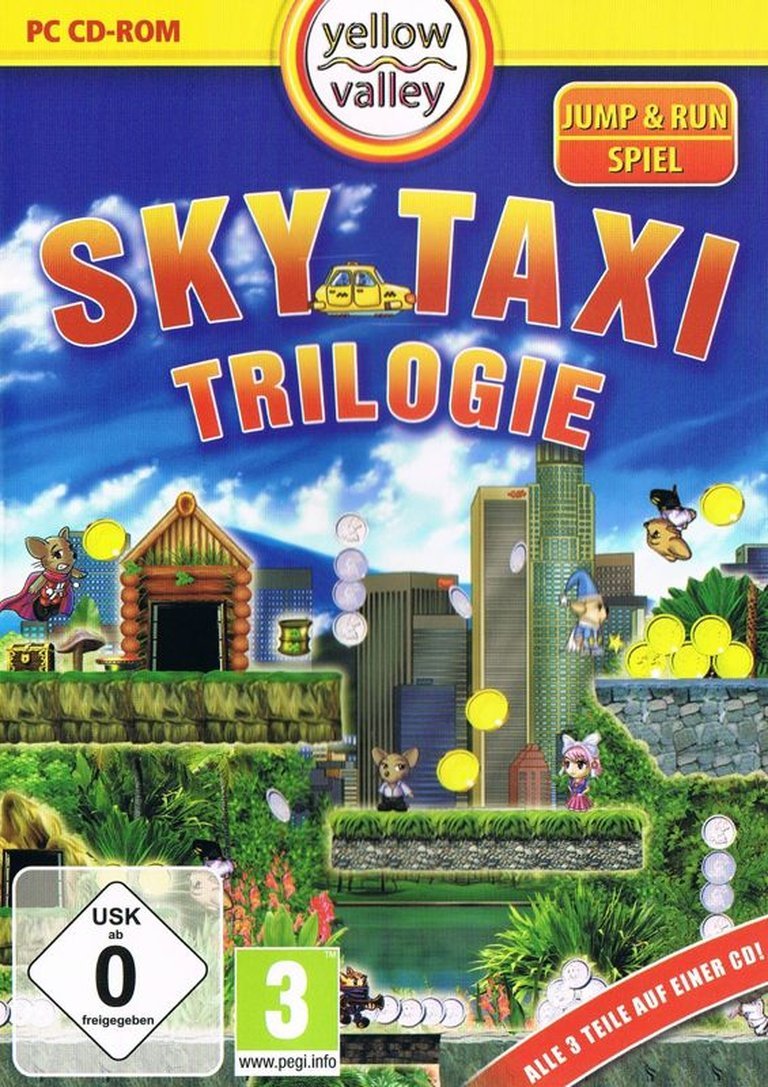
Description
Sky Taxi: Trilogie is a 2011 Windows retail compilation featuring the first three entries in the Sky Taxi series—Sky Taxi (2009), Sky Taxi 2: Storm 2012 (2010), and Sky Taxi 3: The Movie (2010)—where players control Mich, a courageous taxi-driving mouse transformed into a special agent, navigating 2D side-scrolling platform levels in a fantastical world to defeat enemies, uncover secrets, and battle bosses like the gangster Mr. Big Man across numerous challenging stages.
Sky Taxi: Trilogie Reviews & Reception
gamezebo.com : There is a certain charm here, and it’s worth exploring.
gamearchives.net (60/100): delivers a tightly crafted, addictive platforming experience that punches above its shareware weight
Sky Taxi: Trilogie: Review
Introduction
In an era dominated by sprawling open-world epics and hyper-realistic blockbusters, Sky Taxi: Trilogie emerges as a delightful time capsule—a 2011 retail compilation that bundles three bite-sized 2D platformers from the obscure Russian indie studio Sky Bros. Featuring Sky Taxi (2009), Sky Taxi 2: Storm 2012 (2010), and Sky Taxi 3: The Movie (2010), this CD-ROM collection harks back to the golden age of side-scrolling arcade action, where a plucky mouse named Mich bounces through hundreds of levels to save fairies, battle pollution-spewing robots, and thwart a gangster’s world domination plot. Amid the casual gaming explosion of the late 2000s, fueled by shareware portals like Big Fish Games, Trilogie distills pure, unpretentious platforming joy into an accessible package. My thesis: While technically unpolished and narratively simplistic, this trilogy stands as a testament to indie resilience, offering addictive, family-friendly gameplay loops that preserve the essence of 16-bit classics like Super Mario Bros. and Sonic the Hedgehog, earning it a cherished spot among retro enthusiasts despite its commercial obscurity.
Development History & Context
Sky Bros, a diminutive Russian outfit founded in the late 2000s, operated in the shadows of a gaming landscape transformed by digital distribution. The 2008 financial crash had shifted priorities toward affordable, quick-play titles, with platforms like Steam and Big Fish Games flooding markets with shareware gems. Sky Taxi: Trilogie, released May 20, 2011, for Windows by German publisher S.A.D. Software Vertriebs- und Produktions GmbH, capitalized on this by compiling the first three entries in a burgeoning series. The core team was lean: brothers Alexander and Michael Makovsky handled design and programming across all titles, while producers Artem Yershov and Artem Bochkarev managed oversight, embodying a familial, iterative approach rather than ambitious reinvention.
Technological constraints defined the era—games ran on 800 MHz CPUs with 256 MB RAM, using Adobe Flash, Photoshop, 3ds Max, and FlashDevelop for crisp 2D visuals at a mere 95 MB file size. Sky Taxi (2009) kicked off as a fairy-rescuing romp with taxi-driving flair, evolving in Storm 2012 to eco-themed robot-smashing amid “insane weather,” and peaking in The Movie (December 8, 2010) as a cinematic agent thriller against Mr. Big Man. Sky Bros drew loose inspiration from Crazy Taxi‘s vehicular chaos but pivoted to pure platforming, blending fantasy with real-world locales like stormy skies and neon Vegas. Published as shareware, the games thrived in bundles (e.g., GameFools’ collections with later sequels like Top Secret and GMO Armageddon), reflecting Eastern European indies’ export strategy to Western casual audiences. The Trilogie CD-ROM, PEGI-rated 3 for all-ages appeal, was a savvy retail pivot amid piracy and downloads, underscoring Sky Bros’ vision: serialized, low-spec adventures fostering loyalty in a post-crash, bite-sized gaming boom.
Narrative & Thematic Deep Dive
The Sky Taxi trilogy’s storytelling is a masterclass in minimalist whimsy, prioritizing action over depth while threading a cohesive anthropomorphic saga through Mich the mouse’s escalating heroism. Across roughly 500+ levels (180 in the original, 275 in Storm 2012, 115 in The Movie), narratives unfold via comic-strip cutscenes, pop-up text, and environmental cues, evoking B-movie serials.
Plot Across the Trilogy
Sky Taxi launches Mich, a Resque Squad rookie, on a quest from the Fairy Queen to liberate fairies from alien abductors in golden cages, traversing clouds, training missions, and boss arenas like Master Snake. Sky Taxi 2: Storm 2012 escalates to presidential orders: cleanse global pollution via rogue robots, hopping through weather-ravaged worlds with eco-commentary on environmental decay. Sky Taxi 3: The Movie transforms Mich into a special agent chasing gangster Mr. Big Man across 115 globe-trotting levels (urban sprawls to fantastical realms), punctuated by 11 Super Boss fights every 10 levels. Progression is linear yet replayable, with backtracking via the titular Sky Taxi world map unlocking secrets.
Characters and Dialogue
Mich anchors the series: a red-capped, expressive rodent whose animations radiate pluck—jumping with determination, taunting foes with sparse quips like implied rodent jabs from villains. Antagonists evolve from bats and aliens (1), to robotic polluters (2), to cartoon goons and hulking bosses (3), all archetypal and stompable. Dialogue is terse—text prompts during cutscenes or taunts (“You’ll never catch me, rodent!”)—favoring pace over exposition, with “Hi Mich” NPCs adding quirky filler.
Underlying Themes
Recurring motifs of underdog empowerment shine: Mich’s taxi roots symbolize everyday resourcefulness against cosmic threats (aliens), corporate greed (pollution), and organized crime (Big Man). Themes of curiosity (secret mini-games yielding rare items for stat boosts) and transformation (power-ups granting flight or shields) underscore resilience, mirroring post-recession optimism. Eco-allegories in Storm 2012 critique industrialization, while The Movie‘s B-movie flair satirizes ambition. Flaws persist—awkward English in comics, logical leaps (TV shows amid rescues)—but the light touch ensures family accessibility, rewarding veterans with callbacks like evasion mechanics honed from cab-driving days.
Gameplay Mechanics & Systems
Sky Taxi: Trilogie excels in distilling platforming to a hypnotic core loop: run, double-jump, stomp enemies, collect bonuses, repeat—across hundreds of levels demanding full clears. Keyboard controls (arrows for movement, down for actions) are responsive, with mouse/joystick options; avoid mouse for precision pitfalls.
Core Gameplay Loops
Levels blend exploration and extermination: stomp foes (one-hit kills, or hazards for armored ones), gather fruits/coins/keys for health/score/exchanges, rescue entities (fairies, implied in sequels). Power-ups (speed boosts, invincibility sodas, jetpacks) enable combos; vending machines and hides add strategy. Mini-games in “Show” tents or secrets (fairies, rare items) disrupt linearity, boosting stats (speed, jump height) or fame for crowd aid. Bosses (10 in 1, escalating in sequels) demand pattern-dodging and weakness exploitation.
Combat and Character Progression
Stomp-centric combat echoes Mario, with environmental kills and temporary evolutions. Progression is collectible-driven: 25 rare items unlock abilities/backtrack access; score multipliers persist, but no deep RPG trees—pure carrot incentives.
UI and Innovative/Flawed Systems
HUD tracks health, fairies/items, score intuitively; tutorials onboard seamlessly. Innovations like branching secrets and taxi fast-travel shine, but flaws abound: fruit-count bugs (e.g., capping at 16/20), limited saves in shareware mode, repetitive enemy AI. Still, the loop’s flow—methodical scouting to frantic chains—hooks for hours, flaws forgiven in arcade purity.
World-Building, Art & Sound
The trilogy conjures a cartoonish multiverse fusing fantasy whimsy with warped reality, from alien-cloud realms (1) and stormy eco-zones (2) to Vegas casinos and polluted skies (3). Parallax scrolling layers depth: hazardous foregrounds, bustling midgrounds, vast backdrops evoking scale.
Visual Direction
2D sprites boast 16-bit charm—fluid Mich animations, exaggerated foes (balloon goons, giant fish)—crafted in Photoshop/3ds Max. Popping palettes (neons, stormy blues) enhance mood; secrets (hidden castles) expand lore. Repetition suits pace, but low-fi fits low-spec ethos.
Sound Design
Chiptune-orchestral scores upbeat action with boss swells; punchy SFX (boings, squishes) satisfy. Sparse text/voices prioritize immersion via feedback, no albums but triumphant jingles reinforce joy. Collectively, elements craft nostalgic accessibility, polluted contrasts thematizing hope.
Reception & Legacy
Launched to crickets—no MobyGames/Metacritic scores, zero critic reviews—Trilogie epitomized casual obscurity, thriving via bundles (GameFools, Purple Hills) and shareware downloads. Gamezebo’s Sky Taxi review (60/100) praised addictive secrets despite story flaws; itch.io echoes praise for designs, gripes bugs. Modest sales via Big Fish, but player loyalty spawned sequels (4: Top Secret, GMO Armageddon).
Reputation evolved warmly among retro collectors, forums linking to Crazy Taxi twists. Legacy: preserved platforming amid 3D dominance, influencing mobile micros (Taxi Sim) and indies (Celeste) via tight controls. Sky Bros faded post-series, but Trilogie symbolizes shareware’s indie lifeline, archiving arcade DNA.
Conclusion
Sky Taxi: Trilogie bundles three unassuming triumphs: nostalgic platforming, whimsical heroism, charming flaws. Mich’s odyssey—fairies to gangsters—delivers 500+ levels of hop-bop bliss, marred only by polish gaps. In history, it carves a niche as casual-era artifact, bridging 16-bit purity to indie dawn. Verdict: Hidden gem for platformer faithful—8/10, a taxi ride through gaming’s unsung highways. Dust off that old PC; the skies await.