
- Release Year: 2010
- Platforms: Macintosh, Windows
- Publisher: Big Fish Games, Inc
- Developer: ERS G-Studio
- Genre: Adventure
- Perspective: 1st-person
- Game Mode: Single-player
- Gameplay: Hidden object, Puzzle elements
- Setting: Horror
- Average Score: 69/100
Description
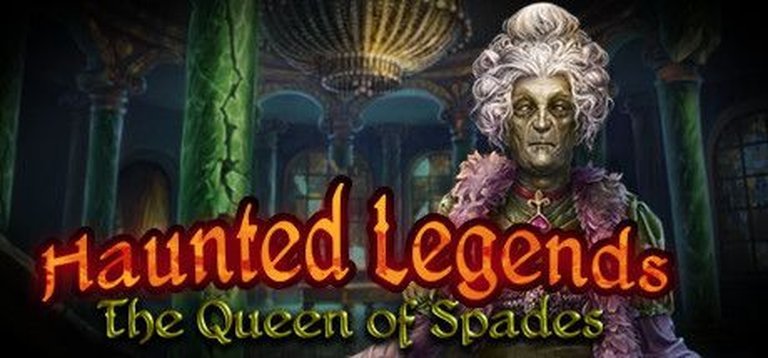
Haunted Legends: The Queen of Spades (Collector’s Edition) is a first-person hidden object puzzle adventure game set in a chilling horror narrative, where players investigate supernatural mysteries tied to the enigmatic Queen of Spades. Developed by ERS G-Studio and published by Big Fish Games, it features point-and-click gameplay, challenging puzzles, intricate hidden object scenes, and collectible cards across eerie locations, complete with a bonus chapter in this special edition released in 2010 for Windows and 2011 for Macintosh.
Gameplay Videos
Where to Buy Haunted Legends: The Queen of Spades (Collector’s Edition)
PC
Haunted Legends: The Queen of Spades (Collector’s Edition) Guides & Walkthroughs
Haunted Legends: The Queen of Spades (Collector’s Edition): Review
Introduction
In the shadowed corridors of a cursed mansion, where a magical deck of 52 enchanted cards holds the key to unraveling an ancient curse, Haunted Legends: The Queen of Spades (Collector’s Edition) emerges as a quintessential artifact of the early 2010s hidden object puzzle adventure (HOPA) boom. Released in 2010 by developer ERS G-Studio and publisher Big Fish Games, this game invites players to step into the shoes of a detective aiding Captain Gerard Froussard in the search for the vanished Lieutenant Pierre Disparu. Amidst gnomes, dwarves, and a malevolent Countess, it weaves a tale of supernatural intrigue that hooked casual gamers craving bite-sized thrills. As a historian of the genre, I argue that while Queen of Spades exemplifies the polished formula that dominated Big Fish’s empire—blending eerie atmospheres, intricate puzzles, and collectathon elements—it also reveals the era’s limitations, making it a nostalgic relic rather than a timeless classic.
Development History & Context
ERS G-Studio, a Ukrainian outfit specializing in casual adventures for Big Fish Games, crafted Queen of Spades during the zenith of the HOPA explosion around 2010. Big Fish, the undisputed king of downloadable casual games, had transformed hidden object scenes into a lucrative pipeline, releasing titles weekly to feed a voracious audience of stay-at-home parents and office-break players. The Collector’s Edition model—$19.99 versus $6.99 standard—became standard, bundling extras like bonus chapters, strategy guides, wallpapers, and screensavers to justify the premium.
Technological constraints of the Flash-to-native-engine transition era shaped its design: point-and-click interfaces optimized for mouse-only input on low-spec Windows XP/Vista machines (1.4 GHz CPU, 1 GB RAM). No voice acting, limited animations, and scene-based loading via the Big Fish Game Manager reflected bandwidth limitations and anti-piracy measures. The creators’ vision, inferred from series continuity (Haunted Legends), centered on folklore-infused horror—here, a Queen of Spades curse inspired by card-game mysticism—aiming for replayability via randomized puzzles and 52 collectible cards.
The 2010 landscape was saturated: competitors like Artogon and Elephant Games churned out similar fare, but Big Fish’s marketing dominance (forums, walkthroughs) ensured visibility. Ported to Steam in 2016 by AMAX Interactive amid Big Fish’s acquisition by Aristocrat, it bridged casual portals to mainstream PC, though long load times (criticized in reviews) stemmed from outdated DRM. This context positions Queen of Spades as a product of Big Fish’s assembly-line efficiency, prioritizing volume over innovation.
Narrative & Thematic Deep Dive
The plot unfolds across eight chapters plus a bonus, chronicling your investigation into Lieutenant Pierre’s disappearance amid a young lady’s vanishing. You arrive at a fog-shrouded mansion gate, discovering a poisoned vial and a note hinting at the Countess’s curse—a supernatural force tied to a magical deck where the Queen of Spades reigns supreme. Early chapters build dread: free a chain-clogged gate, oil a rusty hacksaw, ignite lamps to reveal clues, and confront an “Evil Dwarf” (a recurring gnome antagonist). Pierre dangles from a window, succumbing to the curse, prompting delves into sheds, wells, and stables.
Key characters include the spectral Countess, whose life-extending machine (powered by hearts, coils, and vacuum hoses) embodies hubris; the meddlesome Evil Dwarf, a comic-relief foe challenging you to a final card game; and victims like the dead man in the study, whose shirt-pocket code (“Spade, Heart, Diamond…”) unlocks bags. Dialogue is sparse—mostly diary entries and notes—delivering exposition via environmental storytelling: inscriptions on fountains warn of curses, schematics detail carriage repairs.
Themes delve into greed and immortality: the Countess’s card-based sorcery corrupts suitors, mirroring folklore like the Queen of Spades as death’s harbinger. Collectible cards symbolize fate’s gamble, culminating in assembling machine parts (mechanical arm, head, magic ball) for a fake-mirror showdown. Subtle horror permeates—cobweb-choked attics, gas-filled rooms requiring masks, rowing whirlpool-dodging boats—exploring isolation and inevitable doom. Pacing falters in mid-game fetch-quests (e.g., cheese for crows, acid alchemy), but the diary’s evolving lore ties loose ends, revealing Pierre’s fate and the Countess’s vanity. Flaws include underdeveloped side characters and repetitive “Evil Dwarf” encounters, yet the narrative’s cohesion elevates it beyond rote HOPA slogs.
Gameplay Mechanics & Systems
Core loops revolve around point-and-click exploration, hidden object games (HOGs), and mini-puzzles, with inventory at screen bottom (arrows for scrolling). HOGs are standard: lists of 10-15 items in cluttered scenes, some interactive (fill cup with hot water, open boxes). Misclicks summon a “bunch of cards” cursor penalty, adding tension without frustration. Hints recharge slowly (faster in Casual mode), circling items with cards—effective but limited outside HOGs.
Puzzles shine in variety: slider tracks for diamonds, gear-matching on stoves (randomized paths like D-B-C-A…), thimble shell games, tile-swapping for spades, boat-rowing (left/right mouse steering), and alchemy (mixing gems/puffs into acid). Skip timers (60 seconds) prevent blocks, but random solutions (e.g., key-tile puzzles) frustrate without guides. Collect 52 cards (@-marked in walkthroughs) for the finale; missing them prompts backtracking or cardless play.
UI is clean—sparkles denote interactables (Expert mode hides them), diary tracks clues—but lacks minimaps/fast-travel, leading to pixel-hunting. Inventory puzzles (repair oar: blade+handle+strap) feel tactile. Flaws: Big Fish loader’s interminable times fragment sessions; no penalties for skips dilute challenge; card collection yields no reward beyond access. Innovations like procedural puzzles and multi-stage HOGs (nested items) prefigure genre evolution, but dated navigation (edge-arrow scene changes) exposes 2010 constraints.
World-Building, Art & Sound
The Eastern European-inspired setting—a decrepit mansion, overgrown gardens, foggy town—evokes Gothic isolation. Locations layer depth: mansion foyers with falling chandeliers, wine cellars teeming mice, attics hiding baby carriages; exteriors feature wells, gazebos, stables. Magical cards infuse whimsy amid horror, with the Countess’s lab as climax.
Visuals, hand-painted in vibrant yet moody palettes (crimson hearts, shadowy spades), impress for 2010: detailed HOGs avoid blandness, animations like chandelier crashes add dynamism. Collector’s extras (wallpapers/screensavers) extend appeal. Sparkles guide without hand-holding.
Sound design leans ambient: creaking doors, dripping water, ominous stings—no full score or VO, just subtle effects enhancing tension. Music swells in puzzles, but repetition grates. Combined, elements craft immersive dread—torch-lit paths, gas-rag suction—bolstering horror narrative without overwhelming casual play.
Reception & Legacy
Launch reception was muted: MobyGames’ sole 3/5 review praises puzzles (“challenging without being horrible”) but slams loads, absent minimaps/hints, unrewarded cards—”decent enough, short bonus chapter.” Steam (2016) fares better: 9 reviews yield 78/100 player score (7 positive), lauding atmosphere but noting dated tech. Big Fish forums buzzed with walkthrough requests, signaling engagement.
Commercially, it thrived in Big Fish’s ecosystem—part of the Haunted Legends series (e.g., Bronze Horseman, Undertaker)—bundled in collections ($32+). Legacy endures as HOPA archetype: influenced procedural elements in later ERS titles, but faded amid free-to-play shifts. Repackaged on Steam/GOG, it preserves casual history, inspiring indie revivals. No industry-shaking impact, yet a benchmark for Big Fish’s formula—proof positive of the genre’s addictive, ephemeral charm.
Conclusion
Haunted Legends: The Queen of Spades (Collector’s Edition) distills 2010 HOPA essence: compelling curse-driven plot, diverse puzzles/HOGs, and atmospheric world-building marred by tech relics like glacial loads and sparse hints. As historian, I place it firmly in Big Fish’s golden archive—a solid 7.5/10 for genre fans, evoking nostalgia for mouse-bound mysteries. Its card-collecting gamble pays off in replay value, cementing a modest but enduring spot in casual gaming history. Recommended for HOPA completists; modern players, temper expectations.