
- Release Year: 2019
- Platforms: Luna, Nintendo Switch, PlayStation 4, Windows Apps, Windows, Xbox Cloud Gaming, Xbox One
- Publisher: DANGEN Entertainment KK
- Developer: Moonsprout Games
- Genre: Action, Role-playing (RPG)
- Perspective: 3rd-person (Other)
- Game Mode: Single-player
- Gameplay: 2D scrolling, Platforming, Puzzles, Turn-based combat
- Setting: Fantasy
- Average Score: 89/100
Description
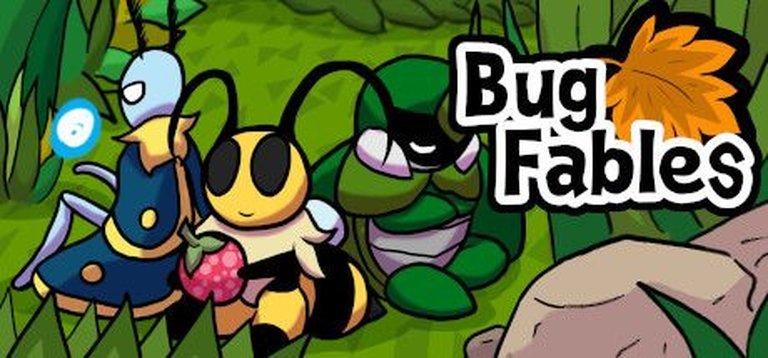
Bug Fables: The Everlasting Sapling is a fantasy action RPG set in a vibrant 2D world populated by anthropomorphic insects, where players control a team of bug heroes on a quest to uncover the legendary Everlasting Sapling, featuring turn-based combat, real-time elements, puzzles, and exploration across diverse landscapes.
Gameplay Videos
Where to Buy Bug Fables: The Everlasting Sapling
Bug Fables: The Everlasting Sapling Mods
Bug Fables: The Everlasting Sapling Guides & Walkthroughs
Bug Fables: The Everlasting Sapling Reviews & Reception
metacritic.com (85/100): I had a blast with this game, and I highly recommend it to all kinds of players.
opencritic.com (85/100): Bug Fables: The Everlasting Sapling is a beautiful and engrossing journey, filled with fun combat that never loses its edge.
Bug Fables: The Everlasting Sapling Cheats & Codes
PC
Enter these phrases as a file name when creating a new save file.
| Code | Effect |
|---|---|
| PUSHROCK | All enemies/characters look like Tanjerin, save for 3D models. Tanjerin/Tangybug look like Kabbu. Cerise is not affected. |
| RUIGEE | Cannot obtain Exploration Points. Medals requiring MP use 1 MP. Rank up at Eetl with 30 berries. No stats gained at Ranks 21, 24, 27. |
| TUFFBUGS | Combined effects of FRAMEONE, HARDEST, RUIGEE, MOREFARM. |
| MYSTERY? | Medals are displayed as ?’s until obtained, and are obtained in a set random order, with altered cost/sale prices. |
| HARDEST | Permanent Hard Mode. Enemies have 15% more HP, and deal 1 more damage (2 starting Ch. 2), and have 1 more defense (starting Ch. 3). |
| MOREFARM | The Exploration Points needed to rank up increases by 5. With RUIGEE on, ranking up cost is +5%. |
| FRAMEONE | You can only Super Block. |
Nintendo Switch
Enter these phrases as a file name when creating a new save file.
| Code | Effect |
|---|---|
| PUSHROCK | All enemies/characters look like Tanjerin, save for 3D models. Tanjerin/Tangybug look like Kabbu. Cerise is not affected. |
| RUIGEE | Cannot obtain Exploration Points. Medals requiring MP use 1 MP. Rank up at Eetl with 30 berries. No stats gained at Ranks 21, 24, 27. |
| TUFFBUGS | Combined effects of FRAMEONE, HARDEST, RUIGEE, MOREFARM. |
| MYSTERY? | Medals are displayed as ?’s until obtained, and are obtained in a set random order, with altered cost/sale prices. |
| HARDEST | Permanent Hard Mode. Enemies have 15% more HP, and deal 1 more damage (2 starting Ch. 2), and have 1 more defense (starting Ch. 3). |
| MOREFARM | The Exploration Points needed to rank up increases by 5. With RUIGEE on, ranking up cost is +5%. |
| FRAMEONE | You can only Super Block. |
PlayStation 4
Enter these phrases as a file name when creating a new save file.
| Code | Effect |
|---|---|
| PUSHROCK | All enemies/characters look like Tanjerin, save for 3D models. Tanjerin/Tangybug look like Kabbu. Cerise is not affected. |
| RUIGEE | Cannot obtain Exploration Points. Medals requiring MP use 1 MP. Rank up at Eetl with 30 berries. No stats gained at Ranks 21, 24, 27. |
| TUFFBUGS | Combined effects of FRAMEONE, HARDEST, RUIGEE, MOREFARM. |
| MYSTERY? | Medals are displayed as ?’s until obtained, and are obtained in a set random order, with altered cost/sale prices. |
| HARDEST | Permanent Hard Mode. Enemies have 15% more HP, and deal 1 more damage (2 starting Ch. 2), and have 1 more defense (starting Ch. 3). |
| MOREFARM | The Exploration Points needed to rank up increases by 5. With RUIGEE on, ranking up cost is +5%. |
| FRAMEONE | You can only Super Block. |
Bug Fables: The Everlasting Sapling: Review
Introduction
In a gaming landscape starved for the whimsical charm and tactical depth of Nintendo’s early Paper Mario titles, Bug Fables: The Everlasting Sapling emerges like a meticulously crafted artifact from a forgotten roach ruin—polished, intricate, and brimming with life. Developed by the tiny but tenacious Moonsprout Games, this indie RPG doesn’t just homage the N64 and GameCube classics; it resurrects their spirit in a vibrant bug-sized world, where three plucky explorers chase immortality amid kingdom intrigue and ancient mysteries. As a game historian, I’ve witnessed countless spiritual successors falter under nostalgia’s weight, but Bug Fables transcends imitation. My thesis: This is the definitive evolution of the Paper Mario formula, blending airtight gameplay loops, richly layered storytelling, and exhaustive content into a 40+ hour masterpiece that cements its place as a modern RPG benchmark.
Development History & Context
Moonsprout Games, a two-person powerhouse from Panama and Brazil, birthed Bug Fables from humble origins. José Fernando Gracia (“Genow”), the writer, designer, and puzzle architect, and Márcio Cleiton Jr. (“Mar”), the programmer, artist, and modeler, first bonded in 2010 over Pokémon Nuzlocke comics on a forum. Their friendship spawned scrapped prototypes—a witch adventure, a lone bee explorer, even “Project Dream Divers”—before crystallizing into this bug-themed epic in late 2015. Initially titled Paper Bugs, it was rebranded in January 2018 alongside a successful Indiegogo campaign that raised $24,690 (123% of its $20,000 goal) from 627 backers, funding a demo and full development.
Built in Unity, the game navigated indie constraints masterfully: a lean team of 26 credits (including collaborators like composer Tristan Alric and sound designer Stefan Moser) outsourced art (Giancarlos Soto’s backgrounds, Poppy de Raad’s UI) and localization via Dangen Entertainment, founded by ex-Capcom’s Ben Judd. Dangen handled publishing, console ports (Switch, PS4, Xbox One in May 2020; Luna in 2021), and merchandising, turning a passion project into a multi-platform hit.
Released amid 2019’s indie RPG boom—Disco Elysium, The Outer Worlds—Bug Fables filled a void left by Nintendo’s Paper Mario pivot post-The Thousand-Year Door (2004) toward gimmickry (Sticker Star, Color Splash). Influences like Persona 5, Golden Sun, Tales of Zestiria, and Xenoblade Chronicles infused depth, but the core vision was pure: recapture Paper Mario‘s “fun, simple, attractive” formula without straying into bloat. Chaotic development—Genow juggled university—yielded a demo in 2016 (v0.1, later scrapped for v0.2), Tumblr updates, and patches like 1.1 (2020, adding content). Physical Limited Run editions (2021) and vinyl soundtracks (2022) underscored its endurance in a post-Undertale era craving heartfelt RPGs.
Narrative & Thematic Deep Dive
Bug Fables‘ plot unfolds across seven chapters in Bugaria—a post-human backyard microcosm of uplifted insects (ants central, bees west, termites south, wasps north)—where feral beasts roam beyond a protective crystal. Queen Elizant II’s Explorers’ Association funds hunts for five artifacts unlocking the Everlasting Sapling, a roach relic promising eternal life. Enter Team Snakemouth: Vi (greedy, immature bee fleeing her hive’s “weakling” stigma), Kabbu (chivalrous northern beetle haunted by survivor guilt from a centipede massacre), and Leif (amnesiac moth wielding ice magic, revealed as Roach-engineered cordyceps inheriting a dead explorer’s memories).
The tale begins in Snakemouth Den, a flooded roach ruin, escalating through Golden Hills, Lost Sands factories, Wild Swamplands, and Wasp assaults on the Ant Kingdom. Rival teams (Zasp’s squad, diva Mothiva), betrayals (Wasp King Hoaxe, a crown-possessed pauper wielding fire), and alliances (Termite subs, deposed Wasp Queen Vanessa II) culminate in Giant’s Lair (an abandoned house). Elizant II’s arc—from insecure regent craving her stasis-bound mother’s revival to resolute destroyer of the withered Sapling—mirrors themes of legacy vs. growth. Hoaxe’s transformation into a tree embodies corrupted ambition; Leif’s fungal rebirth probes identity.
Dialogue sparkles with banter: Vi’s sass (“I’m not greedy, I’m motivated!”), Kabbu’s nobility, Leif’s deadpan wit (“This is… adorable”). Party chatter (Enter key) contextualizes lore—roach cataclysms, ladybug stigma, kingdom tensions—while subquests flesh out arcs (Vi reconciling with her sister, Kabbu’s centipede vengeance). Themes of found family, immortality’s folly, and post-apocalyptic uplift elevate beyond comedy; Roach labs and Dead Landers evoke A Bug’s Life meets Fallout, with emotional beats like Elizant II’s growth landing poignantly. It’s silly yet profound, rivaling Thousand-Year Door‘s wit without filler.
Gameplay Mechanics & Systems
At its core, Bug Fables refines Paper Mario‘s loops: explore interactive 2.5D worlds, solve field puzzles with trio skills (Vi’s Beemerang grabs/activates, Kabbu’s horn slices/smashes, Leif’s ice freezes/platforms), ambush visible enemies for turn-based combat. Low HP/TP/MP numbers (never triple-digits) ensure tactile stakes; EP from battles ranks up the team, choosing +3 HP/TP/MP or perks (e.g., inventory boosts).
Combat innovates brilliantly: Frontliner gets damage buffs; “Turn Relay” sacrifices attacks for multi-turn utility (heal, barrier, revive). Action Commands—hold/release, sequences, reticle aligns—boost power/block damage, demanding rhythm without frustration. Shared TP fuels multis (Vi’s multi-hits ground fliers for Kabbu pierces/Leif freezes); MP equips 100+ medals (stat tweaks, spy skips, theft-proof). Spy cards profile foes; cooking refines berries (e.g., Succulent + Mystery = Hustle Berry). Post-1.1 updates added superbosses, superboss cards.
Flaws? Vi’s Beemerang feels imprecise in puzzles (flat art confuses depth); no bulk-buying irks inventory management. UI shines: clean menus, fast-travel mines, spy/deckbuilding minis (Termacade cards, B.O.S.S. Mode). 50+ hours of chapters, 150+ quests (fetch-to-plays), secrets (Crystal Berries, Lore Books) reward obsessives. Hard Mode ups ante; it’s accessible yet deep, evolving via skills/medals.
| Core Systems | Strengths | Innovations |
|---|---|---|
| Combat | Timing mastery, low numbers | Relay, frontliner swaps |
| Progression | EP choices, medals | 100+ equippable perks |
| Exploration | Field skills, backtracking | Mines fast-travel, party chatter |
| Side Content | Quests, recipes, cards | Playable Chompy plant |
World-Building, Art & Sound
Bugaria pulses with invention: sandbox deserts, pipe-lakes, honey factories, rubber prisons—human relics twisted into bug lore (roach tech, giants’ trash). Kingdoms clash culturally (wasp militarism, termite isolationism); optional dialogue unveils roach uplift, feral threats. Atmosphere shifts seamlessly: grassy outskirts to foggy Forsaken Lands, evoking wonder via secrets (hidden villages, superboss lairs).
Art apes Paper Mario‘s pop-up 2D-in-3D: flat, expressive sprites (Fuutes/Sergio Leon designs) in vibrant dioramas. Pleasant simplicity aids readability, though boomerang puzzles frustrate. Soundtrack (Tristan Alric) charms—peppy battles, bouncy towns, moody ruins (Bandcamp release)—with satisfying effects (Stefan Moser): rubbery action commands, chatter IDs speakers. Voice-like grunts enhance immersion; it’s cohesive, evoking cozy RPG towns while amplifying epic boss swells.
Reception & Legacy
Launched to acclaim (MobyScore 7.9/10, Metacritic PC 86, Switch 85, PS4 79; OpenCritic 100% recommend), critics hailed it as “Paper Mario done right” (Nintendo Life 8/10: “surefire winner”; RPGFan 90%: “bee-lieve how good”; Game Hoard 100%: “pushes mechanical design forward”). Players adore (Steam 97% Overwhelmingly Positive, 5k+ reviews); minor gripes: platforming clunk, pacing slogs.
Commercially, it thrived sans crowdfunding sequel needs—physicals (Limited Run #105, Collector’s Editions), collabs (Abomi Nation), updates. Legacy: Revived demand for classic Paper Mario (Origami King nods it); influenced indies (Eastward, party RPGs). As first Moonsprout title, it proves small teams rival giants, eyeing sequels/DLC. Evolved rep: Cult hit to essential, archived in MobyGames/Wikipedia.
Conclusion
Bug Fables: The Everlasting Sapling masterfully synthesizes Paper Mario‘s DNA with original flair—deeper combat, lore-rich world, endless content—delivering joy, challenge, and heart. Minor control quirks pale against its triumphs: a trio whose arcs resonate, Bugaria’s lived-in wonder, systems begging mastery. In video game history, it stands as the indie RPG pinnacle, the spiritual successor Nintendo forgot, eternally verdant amid gimmick graveyards. Score: 9.5/10—Buy it, explore it, love it. Moonsprout didn’t just make a game; they sprouted a legend.