
- Release Year: 2014
- Platforms: Windows
- Publisher: 1C-777 Ltd., 1C Company
- Developer: 1C Game Studios, 777 Studios
- Genre: Action, Simulation
- Perspective: 1st-person, 3rd-person
- Game Mode: Online Co-op, Online PVP, Single-player
- Gameplay: Aircraft modification, Aviation, Flight, Realistic Physics, Tank, Vehicular combat
- Setting: Historical events, World War II
- Average Score: 74/100
- VR Support: Yes
Description
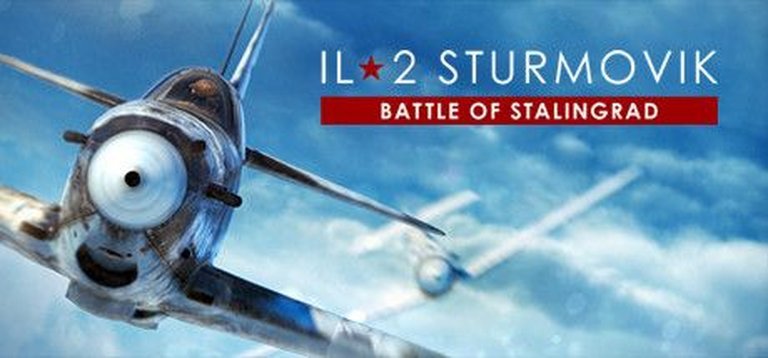
IL-2 Sturmovik: Battle of Stalingrad is a highly realistic flight simulation installment in the longstanding IL-2 Sturmovik series, set during the pivotal World War II Battle of Stalingrad with emphasis on Operation Jupiter, allowing players to pilot meticulously recreated aircraft from original blueprints in intense aerial combats, tank battles, and cooperative multiplayer scenarios featuring advanced physics, VR support, historical upgrades, and custom Quick Mission modes.
Gameplay Videos
Where to Buy IL-2 Sturmovik: Battle of Stalingrad
PC
IL-2 Sturmovik: Battle of Stalingrad Mods
IL-2 Sturmovik: Battle of Stalingrad Guides & Walkthroughs
IL-2 Sturmovik: Battle of Stalingrad Reviews & Reception
metacritic.com (74/100): Battle of Stalingrad is an hardcore flight simulator during WWII, visually stunning and able to push the genre to new levels of realism and fidelity.
aerosociety.com : The reboot of the IL-2 WW2 flight simulation series sees the franchise return to its roots on the Eastern Front.
flyawaysimulation.com : This brings a whole new level of quality in the overall presentation and style of the series.
gamegrin.com : Graphically the game is undeniably impressive.
beforeyoubuy.games : Highly realistic action flight simulation with immersive VR and multiplayer, but steep learning curve.
IL-2 Sturmovik: Battle of Stalingrad: Review
Introduction
Imagine the frozen skies over Stalingrad in late 1942: howling winds whip across vast snow-swept steppes, tracers streak through the murk as Yak-1s tangle with Bf 109s, and the distant thunder of artillery echoes from the ruined city below. This visceral chaos isn’t from a grainy WWII documentary—it’s the heart-pounding reality of IL-2 Sturmovik: Battle of Stalingrad, the 2014 reboot that thrust the legendary IL-2 Sturmovik series into the modern era. Born from the ashes of Maddox Games’ groundbreaking 2001 original, which redefined WWII combat flight simulation with its dynamic campaigns and modding scene, Battle of Stalingrad inherits a storied legacy of over a decade’s worth of add-ons, from Forgotten Battles to 1946. Developed by 1C Game Studios (a fusion of 1C Company and 777 Studios), it marks the dawn of the “Great Battles” third generation, leveraging the Dagor Engine (evolved from Rise of Flight) for unprecedented realism. My thesis: While its punishing authenticity and innovative systems cement it as a cornerstone of flight sim history, Battle of Stalingrad shines brightest for hardcore enthusiasts, demanding joystick mastery and patience amid a steep curve and content grind, yet laying the foundation for an ever-expanding WWII sim empire.
Development History & Context
The IL-2 Sturmovik franchise emerged in 2001 from Russian developer Maddox Games (branded 1C:Maddox), captivating players with its Eastern Front focus and intricate flight models amid a gaming landscape dominated by arcade flyers like Secret Weapons Over Normandy. By 2006’s IL-2 Sturmovik: 1946, the series had ballooned to over 300 aircraft via expansions, but Maddox’s 2011 departure after the troubled Cliffs of Dover left a void. Enter 1C Game Studios in 2012—a partnership between publisher 1C Company and 777 Studios, creators of the acclaimed WWI sim Rise of Flight (2009). Announced in December 2012, Battle of Stalingrad entered early access on November 19, 2013, as a premium alpha, full release hitting Steam October 22, 2014.
Technological constraints of the era shaped its ambition: built on the DirectX 9-based Dagor Engine (later upgraded to “Digital Warfare” with DX11 support), it prioritized physics over eye-candy, modeling aircraft from original blueprints amid 2010s hardware limits (e.g., GTX 660 recommended). The 2013-2014 landscape featured rising sims like DCS World and free-to-play War Thunder, but Battle of Stalingrad differentiated via hyper-realism—expanded battlefields (358×230 km Stalingrad map), VR readiness, and co-op tank piloting. Creators’ vision: Revive the series’ Eastern Front roots with procedural campaigns, achievement-unlocked historical mods (e.g., gun pods, armor), and player-hosted multiplayer servers. Post-launch, it evolved into the modular “Great Battles” ecosystem, spawning 50+ DLCs by 2025, proving its forward-thinking hybrid model blending buy-to-own with expansions.
Narrative & Thematic Deep Dive
Battle of Stalingrad eschews Hollywood scripting for immersive historical reenactment, framing players as anonymous pilots amid the Eastern Front’s brutal turning point: Operation Uranus (November 1942) to the German 6th Army’s February 1943 surrender. No named protagonists or voiced dialogue exist—narrative emerges dynamically via 20+ campaign chapters spanning five phases (Operation Jupiter, airlifts, Winter Storm relief), with procedurally generated missions tied to real events like bomber interdictions over the Volga or Sturmovik ground attacks on Paulus’s encircled forces.
Themes of *Grim Attrition and Moral Ambiguity* dominate: Players toggle Axis/Soviet sides, embodying the war’s dehumanizing toll—fuel-starved He 111s braving Yak swarms symbolize Luftwaffe desperation, while IL-2s strafing columns evoke Soviet resilience. Briefings deliver terse, map-marked objectives (“Intercept enemy bombers at waypoint Alpha”), laced with historical flavor (e.g., Stalingrad’s smoke plumes). Progression unlocks era-accurate “field modifications” via XP, mirroring wartime improvisation—headrest armor after surviving gunnery duels reinforces survival’s narrative weight.
Critically, the lack of persona-driven story (unlike Cliffs of Dover‘s squadrons) creates detachment; missions feel like vignettes in a grinder, underscoring themes of expendability in total war. No overt moralizing—players bomb trains or dogfight indifferently—invites reflection on history’s grayness. Quick Missions and single ops add replayable “what-ifs,” like night U-2VS recon, deepening immersion without scripted rails. Ultimately, the “plot” is player-forged history, rewarding tactical nous over cinematic beats.
Gameplay Mechanics & Systems
At its core, Battle of Stalingrad deconstructs WWII dogfighting into unforgiving loops: Takeoff → Navigate/Engage → Survive/RTB → Unlock. Ten meticulously recreated flyables (e.g., Yak-1 ser.69, Bf 109 G-2, IL-2 mod.1942) demand Complex Engine Management (CEM)—manual prop pitch, mixture, radiators—or simplified aids for noobs. Physics shine: compressibility at high speeds warps Messerschmitts, torque yaws lumbering Ju 87s, wind shear challenges LaGG-3 landings. Damage modeling is granular—strut hits cause asymmetric drag, coolant leaks force limp-home nursing—elevating loops beyond arcade zaps.
Combat blends energy fighting (boom-zigzags) with ground attack: Pe-2 dive-bombing flak nests or Hs 129 tank-busting, with co-op letting one pilot while a buddy mans turrets. Progression innovates via achievements unlocking 100+ historical mods (e.g., Yak-1B gondolas), gated by campaign performance—grind fuels replay but irks casuals. UI is spartan: intuitive Quick Mission builder (weather, foes, fuel) contrasts campaign’s opaque generator, lacking robust tutorials (a frequent flaw).
Flaws abound: Steep curve (90+ keybinds, joystick mandatory), AI wingmen prone to suicidal charges, multiplayer (32-player servers) plagued by spawn-camping. VR adds cockpit intimacy but glitches persist. Strengths: Mission Editor (post-launch) enables custom epics; tank crew previews foreshadow Tank Crew DLC. Loops reward mastery—veterans thrive in duels, noobs bail via aids—but grindy unlocks and repetitive SP drag pacing.
| Core Systems | Innovative Strengths | Notable Flaws |
|---|---|---|
| Flight Physics | Blueprint-accurate aerodynamics; inertia feels weighty | Axis pitch “wander” bugs early builds |
| Damage Model | Progressive failures (e.g., spar snaps under G) | Overly fiery explosions |
| Progression | Historical mods via XP | SP grind for MP access |
| Multiplayer | Custom servers, co-op gunnery | 32-player cap; NPC kill-steals |
| UI/Accessibility | Quick Mission flexibility | Noob-hostile tutorials; always-online DRM |
World-Building, Art & Sound
The 358×230 km Stalingrad theater—Volga ice, ruined Volgograd, steppe villages—immerses via painstaking research: truck convoys snake supply lines, flak dots ridges, Stalingrad’s fireballs loom. Atmosphere excels: Dynamic weather (blizzards ground flights), day-night cycles with searchlights, smoke pall realism evoke siege desperation. Art direction prioritizes fidelity—cockpits gleam with rivets, snow tires carve tracks—DX9 visuals hold up (post-DX11 glow), though distant planes haze oddly.
Sound design is masterful: Bf 109 Merlin snarls authentically, IL-2’s unsync’d radials shudder, bullets thunk viscerally. Crew chatter (“Bandits 3 o’clock!”), wind howl, and explosion rumbles build tension, amplifying solitude over vast maps. Elements synergize: Nursing a smoking He 111 through flak storms, Volga glinting below, captures war’s claustrophobic scale—intimate cockpits amid epic vistas. Drawbacks: Repetitive ground textures blur airfields; no clickable pits limit interaction. Collectively, they forge an oppressive, believable front, elevating sim to atmospheric triumph.
Reception & Legacy
Launch critics averaged 74% (MobyGames: 83% Gameplay.nl high, 60% Sector low), lauding physics (“new realism standard”) but slamming campaigns (“grind-heavy, unoriginal”), tutorials (“nonexistent”), and SP (“toothless”). User scores mirror: Steam “Mostly Positive” (9k+ reviews praise VR/multiplayer; bash DLC reliance, bugs). Metacritic’s 74/100 notes early-access jank, but post-patches (e.g., 3.001 Kuban) boosted repute.
Commercially modest yet enduring—$12.49 base now, bundled in sales—its legacy endures as Great Battles progenitor. Spawned 50+ DLCs (Moscow 2016, Normandy 2022, Flying Circus WWI), cross-module careers, Tank Crew (2020). Influenced genre: DCS emulates modularity; War Thunder apes physics. Community thrives—forums birth campaigns (PWCG), servers host 100+ players. Evolved rep: From “incomplete alpha” to “1946 successor,” per vets. Industry ripple: Proved live-service sims viable, prioritizing post-launch depth amid 2010s microtransaction wars.
Conclusion
IL-2 Sturmovik: Battle of Stalingrad masterfully resurrects a franchise icon, blending Rise of Flight‘s precision with IL-2’s grit into a realism pinnacle—stunning physics, modular evolution, multiplayer dogfights amid Stalingrad’s hellscape. Yet, its SP grind, tutorial void, and DLC hunger temper accessibility, favoring aces over arcade pilots. As Great Battles bedrock—fueling a decade of expansions, VR immersion, and community campaigns—it secures an indispensable niche in sim history: 8.5/10. Essential for WWII aviation obsessives; newcomers, grab sales bundles and a stick. A frozen triumph that soars eternally.