
- Release Year: 2016
- Platforms: Android, iPad, iPhone, Linux, Macintosh, Nintendo Switch, PlayStation 4, Stadia, Windows Apps, Windows, Xbox One
- Publisher: Super Rare Games Limited, Team17 Digital Limited
- Developer: Team17 Digital Limited
- Genre: Strategy, Tactics
- Perspective: Side view
- Game Mode: Hotseat, Online PVP, Single-player
- Gameplay: Artillery, Crafting, Destructible terrain, Jetpack, Turn-based combat, Vehicles
- Setting: Comedy, War
- Average Score: 79/100
Description
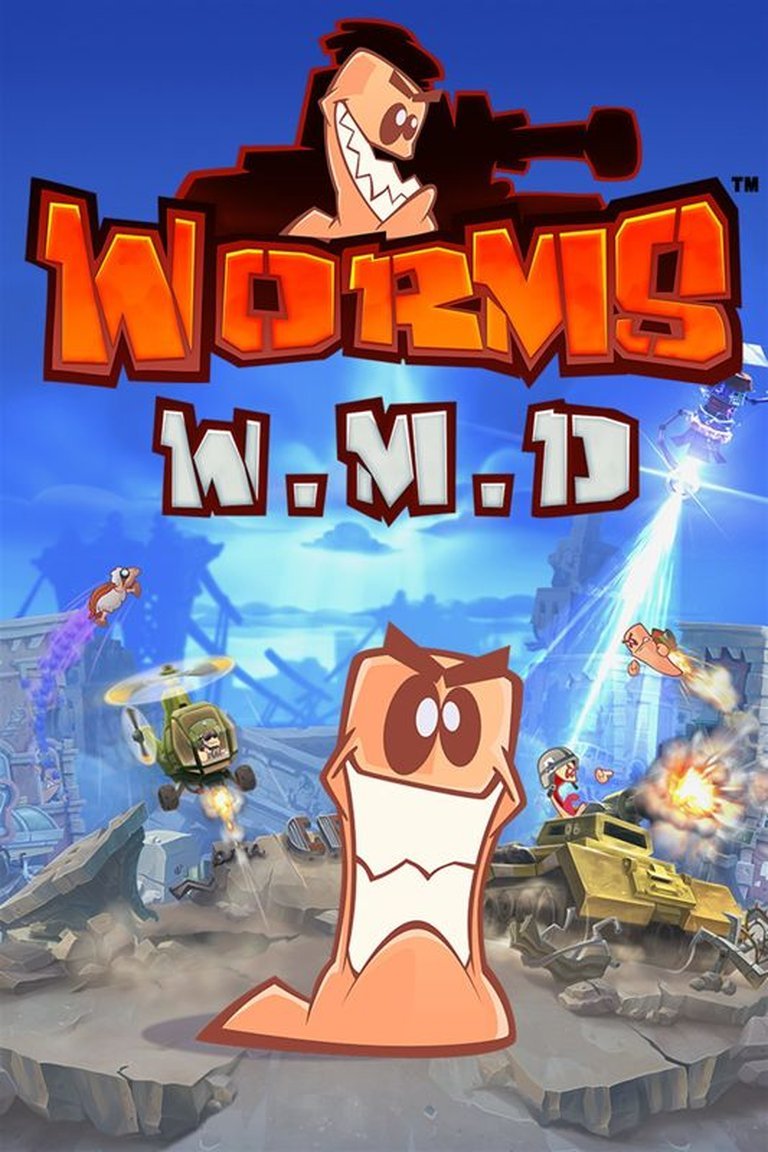
Worms W.M.D. is a multiplayer artillery strategy game in the long-running Worms series, returning to classic 2D side-view visuals where teams of worms battle turn-by-turn across destructible, physics-influenced landscapes. New features include worm classes, weapon crafting from special crates, vehicles, stationary turrets, and enterable buildings for shelter or ambushes, supporting up to six players online or locally with over 80 weapons and a 30-level single-player campaign.
Gameplay Videos
Where to Buy Worms W.M.D.
Worms W.M.D. Free Download
Worms W.M.D. Cracks & Fixes
Worms W.M.D. Mods
Worms W.M.D. Guides & Walkthroughs
Worms W.M.D. Reviews & Reception
metacritic.com (75/100): W.M.D. is easily the best game in the Worms series in several years.
opencritic.com (78/100): 20 years and countless games later, Team 17 rediscovers some of the old magic for Worms.
imdb.com (80/100): Worms games excel in 2D format and this installment is no exception.
steambase.io (86/100): Very Positive
Worms W.M.D.: Review
Introduction
Imagine a battlefield where pint-sized pink warriors armed with bazookas, banana bombs, and exploding sheep turn physics into pandemonium, all while delivering quips like “Incoming!” and “Oh no!” amid cascades of destructible terrain. This is the chaotic charm of the Worms series, a staple of turn-based artillery mayhem since 1995 that has wormed its way into gaming history through over 30 titles. Worms W.M.D. (2016), the 19th mainline entry, arrives as a triumphant return to form after years of experimental detours into 3D and gimmicky mechanics. Developed and published by Team17, it ditches the half-baked water physics and classes of recent predecessors to embrace the 2D glory of Worms Armageddon—the fan-favorite pinnacle of the franchise. My thesis: Worms W.M.D. masterfully balances nostalgic fidelity with bold innovations like crafting, vehicles, and buildings, delivering the most replayable, hilarious multiplayer experience in the series while etching itself as a modern benchmark for artillery strategy games.
Development History & Context
Team17 Digital Limited, the Wakefield, UK-based studio behind the entire Worms saga since original creator Andy Davidson’s 1995 debut, spearheaded W.M.D. under Creative Director Kevin Carthew, Lead Designer John Eggett, and a 130-person team including Art Director Nicholas Gomersall and Head of Programming David Smethurst. Responding to fan outcry that Armageddon (1999) remained unmatched, Team17 rebuilt the engine from Armageddon‘s source code, ensuring identical physics—arcane projectile trajectories, wind-influenced grenades, and terrain deformation that fans cherished. This was no mere remaster; technological constraints of the mid-2010s (e.g., cross-platform parity on PS4, Xbox One, PC, and later Switch) demanded a fresh 2D hand-drawn aesthetic using FMOD for audio, supporting up to 6 teams of 8 worms in online/offline play.
Released August 23, 2016, amid a landscape dominated by battle royales (PlayerUnknown’s Battlegrounds nascent rise) and MOBAs, W.M.D. bucked trends by doubling down on couch co-op and hot-seat multiplayer. The 2010s Worms entries like Battlegrounds (2014) and Clan Wars (2013) had faltered with unpolished 2.5D shifts and dynamic water, alienating purists. Team17’s vision—teased via punny trailers decoding “W.M.D.” as “Weapons of Mass Destruction” or “Worms Must Die”—was a “return to roots” with calculated evolutions: vehicles, crafting, and buildings. Pre-order All-Stars Pack (later free DLC) crossed over with Rocket League, Goat Simulator, and Team Fortress 2, boosting hype. Ports followed: Switch (2017, ideal for portable chaos), Stadia (2022), and mobile (Mobilize, 2023). Budget-priced at $29.99, it thrived commercially on Steam/GOG sales, proving timeless multiplayer endures in an online-only era.
Narrative & Thematic Deep Dive
Worms has never pretended at profundity; its “narrative” is anarchic comedy wrapped in mock-war satire. W.M.D. continues this with a threadbare single-player campaign of 30 levels (plus challenges and All-Stars missions), framed as absurd worm skirmishes across post-apocalyptic terrains. No overarching plot—just escalating absurdity: storm beaches in “War of the Worms” (a Normandy-inspired remake), siege pyramids in “Mount-A-Strike,” or outwit pun-named foes like “Bill Ding” (building), “Hugh Midd” (humid), or “Notorious W.M.D.” from “Bad Rappers.”
Characters are customizable squads of 8 worms per team, themed via names (e.g., “Comrades Inc.” with “Sutcha Ripov,” “Blowya Soxov”). Voiced via speechbanks—classic yelps (“Leeeeerooy Jenkins!”) or thematic packs (Glorious Mother Russia‘s faux-Cyrillic)—they embody slapstick carnage. Dialogue is pure Worms wit: delayed screams post-explosion, victory dances, and gravestones like “Well That’s Me Dead.”
Themes revel in absurd militarism—worms piloting mechs amid “Weapons of Mass Destruction” puns satirize war’s futility through farce. Chaos vs. Strategy pits physics mastery against RNG (wind, crates), underscoring fragility. Nostalgia as Warfare nods Armageddon missions, blending reverence with evolution. Minimalist yet thematically rich, it mocks epic narratives, prioritizing emergent hilarity: a Super Flatulence Sheep gassing a squad or a tank salvo dooming your own team.
Gameplay Mechanics & Systems
At its core, W.M.D. refines the eternal loop: turn-based artillery annihilation on destructible 2D landscapes. Control a worm (or vehicle), aim/fire within a timer, watch physics unfold—projectiles bank off walls, terrain crumbles, worms plummet to watery doom. Up to 6 players (local/online/hot-seat, 2-6 online) command 8-worm teams; last team standing wins.
Combat shines with 80+ weapons: classics (Holy Hand Grenade, Concrete Donkey, Ninja Rope) mix with newcomers (Dodgy Phone Battery’s chain lightning, O.M.G. Strike’s kill-sat, Unwanted Present). Innovations elevate depth:
– Crafting: Out-of-turn synthesis from ingredient crates (e.g., dismantle Bazooka for parts; craft Super Banana Bomb or Gas Greenade). Anti-frustration gem for multiplayer marathons.
– Vehicles/Turrets: Enter tanks (salvo cannons), helicopters (gatling guns), mechs (charged slams), or static turrets (flamethrowers, snipers). Vulnerable to damage, they enable ambushes but risk friendly fire.
– Buildings: Enter for cover/surprise attacks, echoing Worms Forts.
Progression unlocks via campaign/challenges (e.g., gold-star puzzles targeting “tough” worms), feeding customization (hats, voices, dances from All-Stars crossovers). UI is functional but flawed—clunky menus, camera snaps post-shot (frustrating for result-watching), Switch controls lock movement/aim (awkward). Single-player AI is competent but no Armageddon match; multiplayer thrives on chaos.
Flaws: No robust map editor (weaker than forebears), absent legacy voices/weapons (e.g., Ferrets), occasional frame drops/load times. Yet balanced innovations—vehicles aid mobility without dominating—make it the deepest Worms yet.
| Mechanic | Innovation Level | Impact |
|---|---|---|
| Crafting | High (out-of-turn) | Strategic prep |
| Vehicles | Revolutionary | Mobility/ambush shifts |
| Buildings | Moderate | Tactical cover |
| Physics | Faithful (Armageddon) | Timeless feel |
World-Building, Art & Sound
Settings evoke post-apocalyptic whimsy: Rainforest jungles with Mayincatec ruins, Russian Motherland’s faux-Cyrillic billboards (“ЯIFLES”), barren Outback wastelands. Freely destructible terrains (groups: Jetpack, randomly generated) foster emergent chaos—caves form mid-match, islands erode.
Visuals: Hand-drawn 2D art (Lead Artist Christopher Black) is a leap—vibrant, transparent effects, redesigned worms (beady eyes, spiky teeth for menace). Terrains pop with detail (vines, hazardous flowers); animations (fear-waddles, victory struts) ooze personality. Switch port shines portable.
Sound: Oliver Wood’s FMOD score mixes jaunty orchestration with explosive SFX—satisfying “blorps” into water, sheep bleats. Speechbanks deliver comedic timing (delayed panic), though some miss Armageddon‘s polish. Atmosphere: Tense wind-whistles build to cathartic booms, amplifying multiplayer hysteria.
These elements immerse in cartoon carnage, where beauty underscores brutality.
Reception & Legacy
Critically, W.M.D. earned “generally positive” acclaim: MobyScore 7.8 (#3,726/27K), Metacritic 76-83, OpenCritic 78 (73% recommend). Highs: Defunct Games (91%, “Armageddon sequel”), TechRaptor/PlayStation Lifestyle (90%, “best since 1999”), GameSpot (80%, “incredibly fun”). Praised return-to-2D, crafting/vehicles, multiplayer joy; Switch version lauded for portability (Nintendo Insider 90%). Lows: Single-player “half-hearted” (4Players 79%), controls/UI niggles (Nintendo Life 70%), lack of originality (Destructoid 70%).
Commercially solid—Steam Very Positive (86%, 13K+ reviews), frequent sales ($5). Reputation evolved: Initial “safe sequel” to “definitive modern Worms” post-Switch/mobile. Influences: Precedes Worms Rumble (2020 battle royale), inspires destructible terrain in Forts. Team17 alumni credits overlap Overcooked!, Yooka-Laylee. Legacy: Revitalized franchise, proving 2D artillery endures; Switch physical (Super Rare Games) collector’s item.
Conclusion
Worms W.M.D. distills 20+ years of annelid anarchy into its purest, most evolved form—Armageddon‘s soul with vehicles, crafting, and buildings breathing fresh chaos. Multiplayer marathons of laughter and rage eclipse single-player’s puzzles, while art/sound polish nostalgic whimsy. Minor UI/camera flaws pale against infinite replayability. Verdict: A masterpiece of the genre (9/10), securing Worms‘ history as artillery royalty. Essential for fans; gateway for newcomers—grab friends, craft doom, and let physics reign. Team17: Mission accomplished.