
- Release Year: 2024
- Platforms: Windows
- Publisher: Frost Giant Studios, Inc.
- Developer: Frost Giant Studios, Inc.
- Genre: Strategy, Tactics
- Perspective: Diagonal-down
- Game Mode: Online Co-op, Online PVP, Single-player
- Gameplay: characters control, Multiple units, Point and select, Real-time strategy (RTS)
- Setting: Futuristic, Sci-fi
- Average Score: 74/100
Description
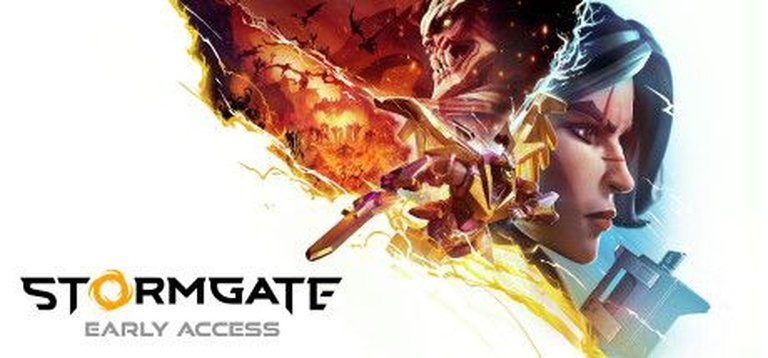
Stormgate is a sci-fi real-time strategy game set in a futuristic universe, where players engage in intense base-building and tactical battles across a ravaged Earth and beyond, as depicted in its ‘Ashes of Earth’ campaign. Featuring diagonal-down perspective, free camera movement, competitive multiplayer over the internet, co-op modes with unique heroes, and classic RTS mechanics refined for modern play, it offers free access with optional monetization.
Gameplay Videos
Where to Buy Stormgate
PC
Stormgate Guides & Walkthroughs
Stormgate Reviews & Reception
ign.com : this RTS combines the familiar and the fresh.
gamesradar.com : A little messy and a little too complicated
metacritic.com (74/100): Mixed or Average
opencritic.com (75/100): combining the familiar and the fresh into a satisfying RTS experience.
Stormgate: Review
Introduction
Imagine the electric tension of a StarCraft II countdown timer ticking down, your workers scrambling for resources as an unseen opponent masses on the horizon—now infuse that with demonic hordes clashing against angelic armadas on a shattered Earth. Stormgate, crafted by Frost Giant Studios’ ex-Blizzard veterans, arrives as a bold spiritual successor to RTS titans like StarCraft and Warcraft III, blending sci-fi grit with fantasy flair in a free-to-play package. Born from a desire to evolve the genre for modern audiences while honoring its roots, it promises approachable multiplayer, heroic co-op, and episodic campaigns. Yet, amid overhyped promises and a rocky launch, Stormgate emerges as a tantalizing but flawed revival: a tactically chewy core wrapped in unfinished ambition, destined to thrill RTS diehards but struggle to forge a new legacy.
Development History & Context
Frost Giant Studios, founded in 2020 by Tim Morten (StarCraft II: Legacy of the Void production lead) and Tim Campbell (Warcraft III: The Frozen Throne campaign designer), assembled a team of Blizzard alumni to resurrect RTS amid a genre drought. With inspirations split evenly between StarCraft, Warcraft, and fresh ideas (25% each, per lead designer Kevin Dong), they opted to evolve proven mechanics rather than reinvent them, drawing feedback from pros and opting for accessibility over complexity.
Securing $35 million pre-Kickstarter (from Riot, Bitkraft, Kakao, etc.), they hit $2.4 million on Kickstarter in 2023—framed as merch/collector funding despite full backing claims that later sparked drama. Development began circa 2020 on Unreal Engine 5 augmented by proprietary SnowPlay for rollback netcode and global matchmaking, supporting 1,300+ units. Extensive testing (pre-alpha “Apocalypse,” alphas like “Baneling,” betas “Devastator” to “Frigate”) refined 1v1 first, with Steam Next Fest demos building hype.
The 2022 reveal trailer wowed, but early cartoony art drew “too mobile-like” backlash, prompting a 2024 overhaul under new art director Allen Dilling toward “stylized realism” akin to StarCraft‘s grit. Early Access launched July 30, 2024 (paid preview), free August 13, exiting EA August 5, 2025—at “Version 0.6” per some devs, with 1v1/campaign “1.0-ready” but co-op/modes “in development.” Monetization (campaign chapters, co-op heroes, cosmetics) fueled post-EA survival amid funding woes, equity crowdfunding ($1.2M via StartEngine), and scandals like alleged fake Steam reviews. In a post-StarCraft II landscape craving fresh RTS, Stormgate faced sky-high expectations but burned through ~$43M on a 48-person team, custom cinematics ($650K reveal), and merch ambitions, culminating in tepid peaks (5K concurrent) and layoffs looming.
Narrative & Thematic Deep Dive
Stormgate‘s science-fantasy saga unfolds in the 22nd-century “post-post-apocalypse,” centuries after celestials and infernals ravaged Earth via ancient “Stormgates”—containment devices like polar artifacts sealing demonic hordes. Shades-of-gray factions clash: humanity’s Vanguard clings to robotic defiance; Infernal Host demons invade relentlessly; Celestial Armada angels wield arcane tech with enigmatic motives. Themes of survival, betrayal, and moral ambiguity echo Blizzard’s epics, but with MCU-inspired flexibility for evolving lore (characters defect, die, dynamics shift).
The Vanguard’s “Ashes of Earth” (12 missions, ~10 hours) centers Amara Nassar, a vengeance-driven commander orphaned by the gate’s unleashing. Flashbacks reveal scientist Clive Cullin’s deal with a “dark entity” (curing wife Marilyn via artifacts), sabotage by traitor Lilla, and Cullin’s humanity-abandoning activation—leaving Amara hating infernals, tutored by Barclay (“Siege”). Heroes like Ryker, Tara, Sun, and Thronos (weapon-trapped manipulator) weave revenge, possession, and redemption. Speculative arcs hint Amara’s infernal/celestial transformations, confronting Cullin/Julian souls, destroying gates for humanity’s fragile hope.
Dialogue mixes gritty optimism with MCU quips, penned by Chris Metzen/Micky Neilson (with Marv Wolfman input), but Early Access drafts felt “low-rent”—rushed cinematics, flat delivery (Amara’s “one-take” vibes), familiar tropes (haunted badass vs. demons). Reworks darkened the tone, adding deck-building (Raptor 1 upgrades/items), but Celestial context lags, hobbling faction empathy. Optimistic amid ruin, it probes hubris (Cullin’s pact) and gray alliances, yet lacks depth—Amara’s arc archetypal, world reactive to player lore drops. Future chapters (Infernal/Celestial) promise expansion, but current narrative prioritizes gameplay hooks over profound character studies.
Gameplay Mechanics & Systems
Stormgate‘s core loop—harvest luminite/therium, build bases, produce armies—honors RTS orthodoxy with innovations for approachability. Matches (~15-30 mins) emphasize macro/micro balance: lower SC2 lethality (TTK between StarCraft 1/WC3) grants reaction time; no unit cap (supply 300, faction-varying medians); auto control-grouping; grid UI/quick queues/BuddyBot macro aid. Rollback netcode ensures stutter-free global play; fog of war/creeps/points-of-interest add map drama.
Factions shine asymmetrically:
– Vanguard (Humans): Mech/infantry/air focus; veterancy rewards micro (preserve promoted units like Lancers/Atlas); naval viable.
– Infernal Host: Swarm/bulky demons; shroud buffs territory; reworked sans Animus bar (spells via buildings), emphasizing expansion.
– Celestial Armada: Mobile Arcships/morph cores; power management clearer post-rework.
Modes:
– 1v1 Ranked: Hero-free ladder; Stormgates summon rewards/battles (replaces divisive creeps); GM leaderboards.
– 3v3 PvP/3vE Co-op: Heroes (Maloc, Auralanna); mutators; casual/team focus.
– Campaign: Mission twists (night/dawn, weather, neutrals); items/briefings.
– Editor: Integrated for maps/mods (terrain, triggers pending).
Flaws: Slow pacing risks blob-fights; UI info overload; pathing/input drops. Monetization gates content (heroes ~$10, campaigns $25 bundle), but no P2W. Strengths: Custom hotkeys, replays, tournaments foster depth/esports dreams.
World-Building, Art & Sound
Post-apocalyptic Earth—ruined cities, deserts, vaults, swamps—pulses via biomes (Deadlands, flooded ruins), dynamic weather (tornados, monsoons), day/night (unit lights), water (pathing blocks). Points-of-interest narrate lore (Earth’s fall); blood toggle adds grit. Lore via shorts/novels planned; optimistic tone amid desolation evokes hope.
Art evolved from “cartoony/Overwatch-Diablo” to darker StarCraft-like stylized realism—Vanguard grounded, Infernals hellish, Celestials sleek (overhaul pending). UE5 delivers readability (unit clarity), but chunky models/UI bloat persist; cinematics shine pre-rush.
Sound: Responsive SFX (unit clashes, spells); ambient storms underscore apocalypse. Voicework improved but uneven (campaign reads flat); OST evokes Blizzard nostalgia sans standout tracks. Elements immerse via cohesion—weather alters fights, visuals aid tactics—but polish lags, diluting atmosphere.
Reception & Legacy
Launch polarized: MobyGames 6.4/10 (59% critics); IGN 7→8/10 (promising multiplayer, reworked campaign); GamesRadar unscored (“messy, referential”); Gameliner 30% (“alpha-like”). Positives: Multiplayer “tactically chewy,” approachable QoL, editor potential. Critiques: Bland campaign/story, divisive art/pricing, “SC1.5″ sameness, slow/boring fights, scandals (fake reviews, funding fibs—”fully funded to EA”).
Player counts cratered (5K peak→200 concurrent); Metacritic 74 critics/4.4 users. Drama—Kickstarter “lies,” Indiegogo/equity flops, astroturfing—eroded trust; CEO Morten admitted market woes on LinkedIn. Influences: Revived RTS buzz (Tempest Rising), but commercially flopped, risking shutdown (servers = no offline). Legacy: Niche esports spark, modding hope, but warns indies—hype kills without identity/polish/traction.
Conclusion
Stormgate masterfully recaptures RTS magic—veterancy micro, faction asymmetry, editor vitality—while easing entry via QoL and rollback, but stumbles on pacing, polish, narrative depth, and identity crisis amid Blizzard shadows. A $43M passion project underdelivered commercially, its “next-gen” dreams curtailed by missteps and market cruelty. For genre faithful, it’s a free 1v1 gem worth queuing; newcomers may balk at complexity/monetization. Not history’s pinnacle like StarCraft, but a resilient contender—7.5/10. Play the multiplayer; watch for mods. Frost Giant’s grit endures, even if Stormgate‘s storm fades.