
- Release Year: 2022
- Platforms: Atari VCS, Evercade, iiRcade, Linux, Nintendo Switch, Windows
- Publisher: Blaze Entertainment Ltd., Flynns Arcade, pixel games SARL-S
- Developer: pixel games SARL-S
- Genre: Action
- Perspective: Side view
- Game Mode: Single-player
- Gameplay: Arcade, Platform
- Setting: Fantasy
- Average Score: 83/100
Description
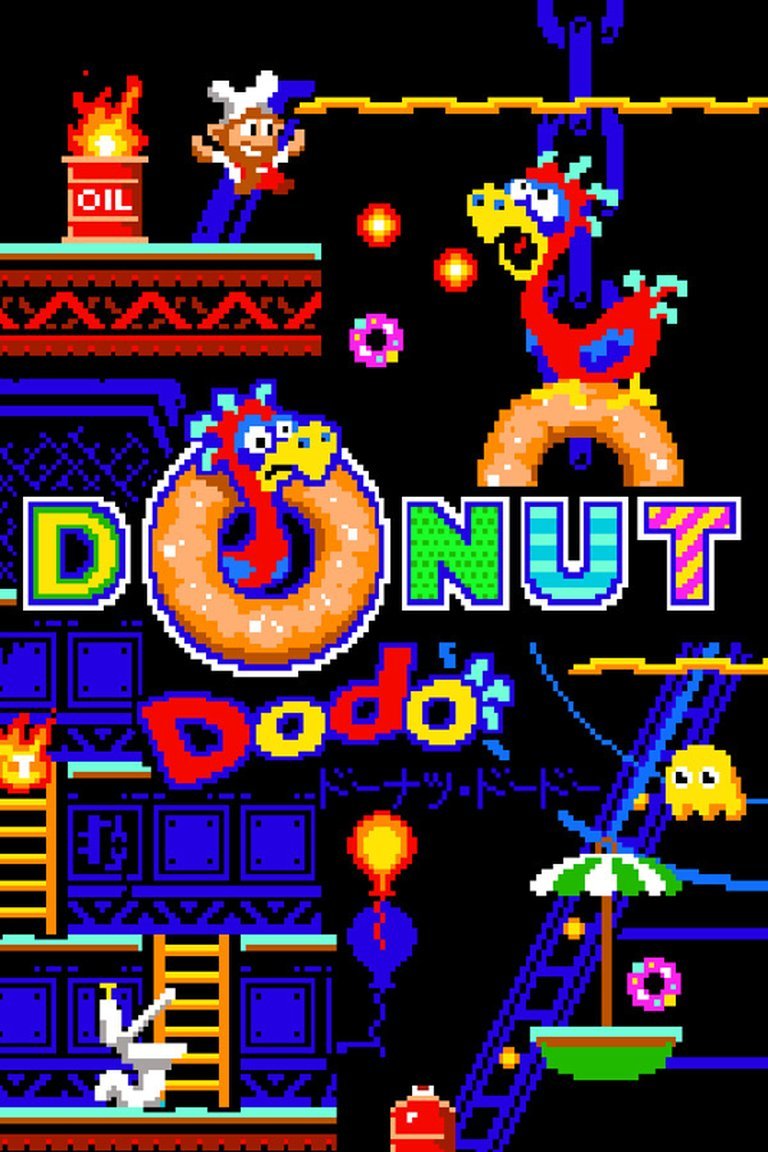
Donut Dodo is a retro-inspired arcade platformer set in a whimsical fantasy world inhabited by birds, featuring side-view fixed/flip-screen gameplay where players navigate chaotic levels filled with absurd hazards like chasing toilets, Pac-Man-esque fruit bonuses, and relentless action, all while competing for high scores on online leaderboards with authentic 80s arcade visuals, chiptune music, and bezel art.
Gameplay Videos
Where to Buy Donut Dodo
Donut Dodo Guides & Walkthroughs
Donut Dodo Reviews & Reception
metacritic.com (78/100): Donut Dodo feels like finding a forgotten ’80s arcade game, right down to the screen ratio and plucky chiptune soundtrack.
switchscores.com (82/100): Ranked #626 on the all-time Top Rated Switch 1 games, with 7 reviews and an average score of 8.21.
ladiesgamers.com : Donut Dodo is a 2D arcade gem that will tickle the nostalgia for old arcade fans.
theswitcheffect.net (90/100): Donut Dodo is probably one of my favorite retro arcade throwbacks I’ve played in quite some time.
Donut Dodo: Review
Introduction
Imagine stumbling upon a dusty arcade cabinet in a forgotten corner of a dimly lit venue, its screen flickering to life with pixel-perfect sprites of a grinning baker dodging rogue toilets and fire-spitting dodos—Donut Dodo feels exactly like that mythical lost classic from 1983, yet it’s a 2022 triumph that proves the single-screen platformer genre isn’t extinct, just waiting for a solo visionary to resurrect it. Developed by Luxembourg-based pixel games SARL-S, this bite-sized arcade homage has captivated players across platforms from Steam to Evercade, earning a devoted following for its unyielding challenge and addictive high-score chase. Donut Dodo isn’t mere nostalgia bait; it’s a masterclass in arcade design, synthesizing the chaotic joy of Donkey Kong, Burger Time, and Bomb Jack into a fresh, punishing loop that demands mastery. My thesis: in an era dominated by sprawling open-world epics, Donut Dodo reaffirms the enduring power of concise, skill-honing arcade experiences, standing as one of the finest modern retro platformers and a blueprint for indie revivalism.
Development History & Context
pixel games SARL-S, founded and solely operated by Sebastian Kostka, embodies the bedroom programmer ethos of the 1980s, with Kostka’s journey tracing gaming’s evolution from ZX Spectrum type-ins to AAA polish and back to indie purity. A child of the early ’80s, Kostka cut his teeth programming BASIC games on a black-and-white TV-tied Spectrum, later joining Ubisoft in the mid-’90s as a 3D animator on titles like Rayman 2: The Great Escape and Tonic Trouble. Disillusioned by AAA bloat, he took a decade-long hiatus for film work before smartphones reignited his passion for compact, impactful indie titles. Donut Dodo emerged from prototypes blending ladders, flashing collectibles, and a “silly but affectionate” dodo antagonist, built in Godot for modern fluidity while adhering to 1980s constraints: 16-color palettes, fixed-screen ratios, and no continues.
Released June 3, 2022, on Windows via Steam ($5.99), it arrived amid a retro resurgence—indies like Shovel Knight and Cuphead had popularized pixel art, but true arcade single-screens were rare outside beat-’em-ups or shmups. The 2022 landscape favored sprawling roguelites and live-service giants, yet Donut Dodo‘s launch coincided with platforms like Nintendo Switch craving quick-session pickups and hardware like Evercade/iiRcade/Atari VCS hungry for authentic retroux. Publishers Flynn’s Arcade (Switch), Blaze (Evercade), and exA-Arcadia (arcade Donut Dodo Do!) amplified its reach, with ports to Switch (Dec 2022), Evercade (2023), and Linux. Kostka’s vision—timeless “easy to learn, hard to master” loops with modern telegraphs (e.g., exclamation marks for spawns)—sidestepped emulation pitfalls, creating a game that feels like a 1983 cabinet unearthed today, complete with chiptune by CosmicGem (Sean Bialo).
Narrative & Thematic Deep Dive
Donut Dodo‘s “plot” is pure arcade minimalism: Baker Billy Burns, a perpetually cheerful chef with an unshakeable grin, pursues the strabismic Big Bad Donut Dodo, who pilfers donuts from Billy’s factory alongside minions Sniffy (rat), Stinky (rogue toilet), and Winky (frog). No dialogue, no exposition—just cheeky interstitial cutscenes of the dodo snatching the giant donut post-level, fleeing to the next screen. This loop culminates in a parody ending: “Congraturation! This story is happy end,” riffing on Ghosts ‘n Goblins and Ghostbusters, with the defeated dodo sporting circling birdies.
Thematically, it’s a whimsical Level Ate fantasy skewering arcade absurdity: a No OSHA Compliance construction site with flaming oil drums, a haunted lair with bedsheet ghosts, and Candy Store Crush amid spikes and Ferris wheels. Themes of gluttony (donut obsession), extinction irony (fire-breathing dodo), and triumphant persistence shine through Billy’s indefatigable smile amid Animate Inanimate Objects like toilets and fireballs. Characters are archetypal—Dodo as goofy Donkey Kong proxy, minions as predictable foes—yet elevated by personality: Stinky’s ladder-climbing pursuit evokes Jet Set Willy‘s rogue toilets, a nod to Kostka’s European homebrew roots. Subtle depth emerges in loops: second runs introduce ghosts defying patterns, emphasizing adaptation. It’s not narrative-heavy, but its thematic purity—greed vs. reclamation in a chaotic factory—mirrors Pac-Man‘s maze munch or Burger Time‘s food frenzy, proving brevity breeds memorability.
Gameplay Mechanics & Systems
At its core, Donut Dodo is an obstacle-course avoider: traverse five single-screen stages (plus Breakout-esque bonus), collect all donuts, then snag the giant one guarded by Dodo. Wrap-around sides demand 360° awareness; ladders/ropes (climbable à la Donkey Kong Jr.) enable verticality, with precise jumps dodging Collision Damage foes. No combat—pure evasion of patterns: rats patrol platforms, oil drums spawn fireballs, spikes lurk below.
Innovation lies in risk/reward scoring, echoing Bomb Jack: grab any donut (25 pts), but flashing ones yield 150+ via combos (multipliers build with chains, randomized per run). Prioritize flashes for 15k-point extra lives (every 10k in some schemes, but here frequent/modest for balance), enabling loops without continues. UI is bezel-framed authenticity: hearts for lives, 3-initial leaderboards (defaulted to “PAC”,”MAN”, etc., shouting out influences). Modern aids—pause-restart, screen shake/flash toggles, telegraphed spawns—prevent frustration, fostering “in the zone” flow.
Progression: Stage 1 tutorials via deadly trap (fall, collect, die); complexity ramps—Stage 2’s crane-swinging donut, Stage 3’s Ferris wheel, Stage 4’s candy chaos. Loops add pickups/enemies (ghosts!). Flaws? Pre-set layouts lack randomness (speedrun-friendly but replay-predictable); no 2P in home versions (exclusive to arcade). Yet systems synergize flawlessly: combos force zigzags, lives tie to strategy, yielding emergent mastery.
| Mechanic | Classic Influence | Modern Twist |
|---|---|---|
| Donut Collection | Pac-Man dots | Flashing combos (Bomb Jack-style) |
| Ladders/Ropes | Donkey Kong/Jr. | Auto-climb, no camping |
| Enemies | Popeye Bluto (toilet) | Predictable patterns + telegraphs |
| Bonus Stage | Breakout | Pumpkin-bounce chef for flashing donuts |
| Lives/Scoring | Every 10k/15k pts | Leaderboards encourage preservation |
World-Building, Art & Sound
Donut Dodo‘s fantasy bakery-gone-mad spans themed screens: Funhouse (rats/toilets), Construction Chaos (oil drums/crane), Carnival (Ferris wheel), Candy Store (sweets/spikes), Dodo Lair (ghosts/doors). Atmosphere builds tension via fixed screens’ claustrophobia, hazards like Spikes of Doom and Breath Weapon fireballs creating bedlam.
Visuals nail retroux: 16-color palette, pixel-perfect sprites (Billy’s rotations, Dodo’s wall-eyed blinks), bezel art with tips. Smooth animations belie era limits, with nods like Jet Set Willy toilets and Pac-Man fruits. Sound design elevates: CosmicGem’s upbeat chiptunes pulse frantic energy—boss motifs evoke arcades’ quarter-munch urgency. SFX (boings, zaps) crisp, syncing with telegraphs for instinctive play. Together, they immerse in ’80s whimsy, modern polish ensuring accessibility without diluting peril.
Reception & Legacy
Critically, Donut Dodo soared: MobyGames 7.9/10 (82% critics from 15 reviews, Switch #280/2k+), Metacritic 78 Switch (TouchArcade 80: “small, sweet confection”). Outlets praised addictiveness (Indie Gamer Chick: “one of the best indies ever,” climbing her leaderboard), value (£3.99-£4.99), and homage (Retro Gamer 91: “tops your best score night after night”). Players averaged 4.2/5, lauding “tight controls, no cheap deaths.”
Commercially modest but cult-hit: Steam/GOG sales, physical Switch/Evercade carts (Indie Heroes 3), bundles. Reputation evolved from “cute retro” to “masterpiece”—Games from the Black Hole: “modern classic”; Indie Gamer Chick ranked #6/306 approved indies. Influence: Spawned arcade Donut Dodo Do! (2P, new level/modes via exA-Arcadia), inspired Kostka’s Cash Cow DX/Loony Landers. Pioneered Godot-on-Evercade, boosting “New Arcade” trend amid retronaut nostalgia.
Conclusion
Donut Dodo distills arcade essence—precision platforming, combo chases, pattern mastery—into five perfected screens, blending ’80s absurdity with 2020s finesse for endless replay. Sebastian Kostka’s solo triumph transcends homage, revitalizing a genre for all ages (even toddlers giggle at cutscenes). Flaws like static layouts pale against its compulsion; at sub-$10, it’s essential. Verdict: A landmark in video game history, securing Donut Dodo‘s cabinet beside Donkey Kong—essential for retro fans, revelatory for newcomers, and a defiant roar that classic arcade lives. Score: 9.5/10