
- Release Year: 2023
- Platforms: Nintendo Switch, PlayStation 4, PlayStation 5, Windows, Xbox One, Xbox Series
- Publisher: Angry Mob Games SRL
- Developer: Angry Mob Games SRL
- Genre: Action
- Perspective: Side view
- Game Mode: Single-player
- Gameplay: Metroidvania, Platform, Roguelike
- Setting: Futuristic, Sci-fi
- Average Score: 77/100
Description
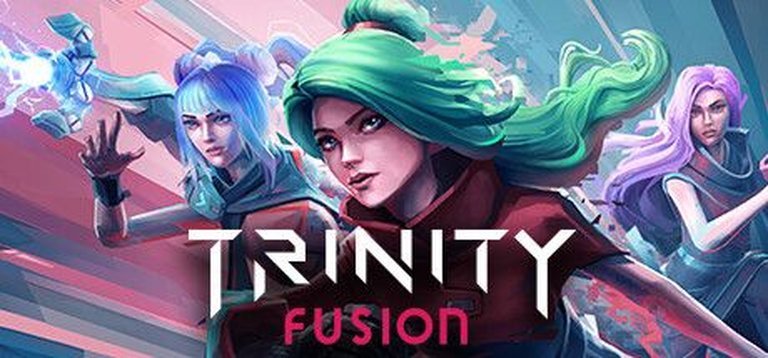
Trinity Fusion is a sci-fi futuristic side-view 2D scrolling action platformer that masterfully blends Metroidvania exploration with roguelike procedural generation and replayability. Players control female protagonists capable of fusing characters for unique ability combinations, navigating challenging levels filled with upgrades, combat, and dynamic layouts to deliver an addictive loop of progression and high-stakes platforming.
Gameplay Videos
Where to Buy Trinity Fusion
Trinity Fusion Free Download
Trinity Fusion Cracks & Fixes
Trinity Fusion Guides & Walkthroughs
Trinity Fusion Reviews & Reception
metacritic.com (75/100): Trinity Fusion is a good action platformer with a nice dimension hopping angle. It’s well worth playing.
opencritic.com (77/100): Trinity Fusion may not be the most original game, but it’s good looking, exciting to play and features enough new ideas to earn its place at a crowded table.
gameslushpile.com (80/100): Trinity Fusion is a stellar game, fun, absorbing and inviting.
Trinity Fusion Cheats & Codes
Steam
Open the game and navigate to the main menu. Look for the “Redeem Code” or similar option, typically found under the Settings or Extras tab. Enter the code into the designated field. Press the “Redeem” or “Submit” button.
| Code | Effect |
|---|---|
| FUSIONGOLD2024 | Unlocks 1,000 gold coins and a rare weapon skin |
| DAILYBOOST | Grants 500 XP and a health potion |
| NEWYEARGIFT | Offers a legendary item chest and 300 energy points |
Trinity Fusion: Review
Introduction
In an era where the roguelite genre has exploded into a multiverse of its own—thanks to trailblazers like Dead Cells and Hades—Trinity Fusion emerges as a bold indie contender, daring to weave parallel realities into its pixel-perfect platforming chaos. Developed by Romania-based Angry Mob Games, this 2.5D action-roguelite isn’t just another “die and retry” loop; it’s a symphony of fused identities, where you command three alternate versions of protagonist Maya across crumbling sci-fi dimensions. As a game historian chronicling the evolution of Metroidvanias into roguelite hybrids, I see Trinity Fusion as a microcosm of 2023’s indie renaissance: accessible yet punishing, innovative yet familiar. My thesis? While it masterfully blends fluid combat and multiversal mechanics to deliver addictive runs, its procedural repetition and modest scope prevent it from ascending the pantheon, cementing it instead as a worthy successor in the post-Dead Cells lineage.
Development History & Context
Angry Mob Games, a small indie studio with roots in competitive fighters like Brawlout (2018), entered the roguelite arena with Trinity Fusion‘s Early Access launch on Steam in April 2023. Led by a team leveraging Unity engine expertise and FMOD audio middleware, their vision crystallized around a “rogue-lite journey through the multiverse,” drawing from their fighting game pedigree to craft responsive, combo-driven combat. Full release arrived December 15, 2023, across PC, PlayStation 4/5, Xbox One/Series X|S, with Nintendo Switch following in August 2024—timed perfectly amid the roguelite boom.
The 2023 gaming landscape was saturated: Hades II teased godlike progression, Dead Cells expansions dominated sales, and multiverse fatigue loomed post-Spider-Man: Across the Spider-Verse. Tech constraints were minimal on Unity, enabling seamless 2.5D procedural generation from hand-crafted rooms, but Early Access feedback drove key evolutions—doubling content size, overhauling Amplifiers (mid-run buffs), adding Endless Mode, and refining status effects for “weighty yet responsive” feel. Collaborating with sci-fi novelist Ada Hoffmann infused narrative depth, while post-launch updates like ANOMALY WARP (2024) addressed progression gripes. No era-defining budget hurdles here; this was agile indie development, iterating toward polish in a market rewarding “one more run” compulsion over AAA spectacle.
Narrative & Thematic Deep Dive
Trinity Fusion‘s plot unfolds across a dying multiverse engineered by hubristic humanity: Prime (hub Citadel) fragments into Underworld (feral mutants in desolate caves), Overworld (rebellious machines in endless forges), and Hyperworld (post-human Ewer in sleek sky cities). You embody Maya, a Prime survivor whose telepathic link activates three parallel selves—Altara (Underworld gadgeteer, pragmatic survivor), Kera (Overworld brawler, stoic engineer), and Naira (Hyperworld sharpshooter, enigmatic wall-jumper)—tasked with realigning Harmonisers to collapse realities back into stability.
Characters and Dialogue: Each variant shines through hub banter and lore logs, revealing personalities: Altara’s gritty resolve contrasts Naira’s aloof precision and Kera’s raw fury. Dialogue is sparse but punchy—serviceable sci-fi quips like “If they die now, they won’t actually die” justify roguelite deaths—yet feels disjointed amid procedural runs. Fusion stations literally merge models and abilities, symbolizing unity, with voiced lines evolving post-story (e.g., “We’ve saved the multiverse… now what?”).
Themes: At its core, Trinity Fusion probes identity fragmentation and hubris: humanity’s “custom-crafted multiverse” mirrors real-world AI/quantum anxieties, with Ewer as transhumanist critique. Roguelite structure amplifies existential loops—endless death as “progress”—culminating in a final boss revealing Maya’s variants as sacrificial echoes. Critics note the story’s “drip-fed intrigue” (Checkpoint Gaming) falters in cohesion, feeling “messy” (Drejzer’s blog) without curated paths. Yet, for a genre prioritizing mechanics, it elevates beyond set-dressing, rewarding lore hunters with environmental storytelling in amalgamated biomes.
Gameplay Mechanics & Systems
Trinity Fusion‘s core loop—20-30 minute runs through procedural levels, enemy hordes, and bosses—hybrids Metroidvania exploration with roguelite risk-reward, starting in one universe but hopping via In-Between pocket realms.
Core Loops and Combat: Direct control shines: melee primaries (interchangeable combos varying speed/reach) fuel energy for secondaries—Altara’s “wacky elemental” arsenal (bouncing discs, frost sprays), Kera’s heavy melee, Naira’s guns (pistol to bazooka). Traversal tools (dash/i-frames, double-jump, character specifics like Naira’s wall-jump or Altara’s clunky drone) enable fluid platforming. Combat demands mastery: dodge enemy patterns, chain air-dashes into backstabs, parry shields. Fusion unlocks dual kits (e.g., Naira’s guns + Altara’s magic), birthing synergies like “untouchable death-from-above.” UI is clean—teleport stations map branches, energy bars intuitive—but HUD feels “mobile-like” (TheGeek).
Progression and Systems: Dual currencies (Orbs/Chips) fund Hub permanents (Combat/Psionic upgrades: parry, rally, resurrect) and run-start points, combating frustration. Amplifiers stack for Synergies (e.g., HP buffs), but discourage wild experimentation. Hyper/Survivor modes ease newcomers (damage reduction post-death), Hardcore adds formations. Flaws: Slow rare-currency grind (dozens of runs for revives), floaty melee, repetitive foes (~60 types, world-clustered). Innovations like mid-run universe swaps and Endless Mode elevate replayability, echoing Hades‘ boon depth minus narrative flair.
| Mechanic | Strengths | Weaknesses |
|---|---|---|
| Combat | Responsive combos, fusion synergies | Floaty animations, shield enemy frustration |
| Traversal | Grapple/teleport variety | Drone clunkiness |
| Progression | Permanent unlocks, mode variety | Grind-heavy rares, Amplifier min-maxing |
| UI/Controls | Teleporters, Steam Deck optimized | Minor DualSense rumble issues |
World-Building, Art & Sound
Three biomes distinguish universes: Underworld’s organic horrors (caves, mutants), Overworld’s industrial grind (forges, robots), Hyperworld’s neon dystopia (sky cities, Ewer). Procedural assembly from custom rooms yields linear paths with branches, In-Between as glitchy challenges—evocative but repetitive (“bleak” per Nextgenplayer).
Visuals: 2.5D anime-inspired art pops—vivacious animations, fused models “grow on you” (Drejzer)—but lacks flair: “generic sci-fi” (Gazettely), plastic NPCs. Distinct palettes (bio-green, rusty-red, cyber-blue) build atmosphere, enhanced by updates.
Sound: FMOD-driven synth score fits “dark sci-fi” without memorability (“there,” per Drejzer). Crisp effects (clangs, explosions) amplify combat weight; voice acting stiff but functional. Overall, functional immersion supports kinetic action without transcendence.
Reception & Legacy
MobyGames: 7.5/10 (#7,019/27K), 76% critics (29 reviews)—90s from Try Hard Guides/Finger Guns for “originality,” 60s from GamingBolt for “mediocre execution.” Steam: Very Positive (87%, 619 reviews). Metacritic: 80 (PC), 75 (PS5). Commercial: $5.99-$19.99, modest sales but Steam Deck verified.
Launch praised fluidity (“enjoyable rogue-lite,” TheSixthAxis), accessibility, but critiqued repetition/boss scarcity (5 total, “monotonous,” TheGeek). Reputation evolved positively via updates (1.5.1+), Switch port solid despite loads. Influence nascent—reinforces roguelite accessibility (Hyper mode like Hades), fusion as build-crafting hook—but no seismic shift; echoes in 2024 hybrids like Kingdoms of the Dump. As historian, it’s a 2023 footnote: solidifies indie roguelites’ dominance, bridging Dead Cells precision to multiversal experimentation.
Conclusion
Trinity Fusion fuses roguelite staples—procedural peril, meta-progression—with multiverse flair, delivering responsive combat, clever fusions, and approachable modes that hook for “one more run.” Yet, repetition, grind, and unremarkable story cap its heights, paling beside genre titans. In video game history, it earns a respectable niche: Angry Mob’s finest, a 8/10 gateway for newcomers, enduring testament to indies thriving in roguelite’s infinite loops. Play it—save the multiverse, one fusion at a time. Final Verdict: 8/10 – Essential for roguelite fans, recommended for platformer enthusiasts.