
- Release Year: 2024
- Platforms: Windows
- Publisher: PixelManta
- Developer: PixelManta
- Genre: Adventure
- Perspective: 3rd-person (Other)
- Game Mode: Single-player
- Gameplay: RPG elements
- Setting: Deserted Island, Fantasy, Tropical Island
- Average Score: 64/100
Description
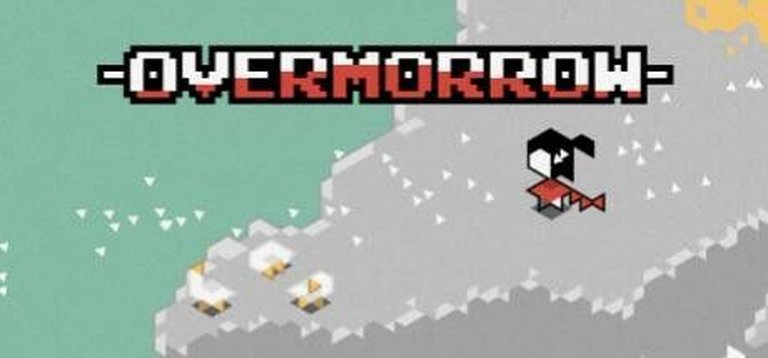
Overmorrow is a serene, nonviolent exploration adventure set on a mysterious tropical island, where players collect runes to perform more actions per day, uncovering unique art, secrets, and big-picture puzzles in a fixed-camera 2D world with a distinctive visual style. Resting replenishes runes but advances the narrative through 30 in-game days, after which the save is deleted, revealing layers of a peculiar metanarrative blending fantasy, detective mystery, and RPG elements.
Gameplay Videos
Where to Buy Overmorrow
PC
Overmorrow Free Download
Overmorrow Guides & Walkthroughs
Overmorrow Reviews & Reception
metacritic.com (50/100): Overmorrow has its share of satisfying eureka moments and is a compelling concept… but be prepared for moments of frustration along the way.
nintendolife.com : manages to be philosophically interesting, is evocatively written, visually distinct, and lovingly crafted. Yet, the notion of re-playing it is a tall order, and therein lies the unfortunate problem.
opencritic.com (50/100): Overmorrow has its share of satisfying eureka moments and is a compelling concept. While there is a genuine purity of intent behind its development, it would benefit greatly from more fine-tuning and playtesting.
steambase.io (93/100): Overmorrow has earned a Player Score of 93 / 100. This score is calculated from 29 total reviews which give it a rating of Positive.
Overmorrow: Review
Introduction
Imagine washing ashore on a sun-drenched, enigmatic island, armed with nothing but curiosity and a ticking clock that counts down not just your progress, but your very save file—erased after 30 in-game days, forcing a confrontation with impermanence. Overmorrow, the 2024 debut from solo developer PixelManta, thrusts players into this serene yet existential loop, blending unguided exploration with a metanarrative that toys with reality itself. Released amid a surge of introspective indies like Outer Wilds and Tunic, it carves a niche as a nonviolent meditation on time, discovery, and deletion. Yet, for all its philosophical ambition and artistic flair, Overmorrow stumbles under cryptic design, technical bugs, and a core mechanic that demands repetition without commensurate reward. This review argues that while Overmorrow heralds a bold voice in indie adventure gaming, its execution elevates concept over cohesion, marking it as a flawed gem with untapped potential.
Development History & Context
PixelManta, a one-person studio led by an anonymous creator (as per typical indie anonymity on platforms like Steam and itch.io), birthed Overmorrow from a 2022 Kickstarter campaign promising a “minimalist exploratory adventure with a thirty-day in-game time limit.” Funded successfully, it leveraged Unity’s accessible engine to deliver a PC release on February 16, 2024, via Steam at $19.99, followed by a Nintendo Switch port on May 17, 2024. This timeline reflects the post-pandemic indie boom, where tools like Unity democratized development, enabling solo devs to rival AAA polish in niche genres.
The early 2020s gaming landscape was ripe for Overmorrow‘s emergence: exploration-driven titles like Outer Wilds (2019) and A Short Hike (2019) popularized knowledge-retention loops without traditional saves, while time-manipulators such as The Legend of Zelda: Majora’s Mask (2000) and Minit (2018) normalized permadeath as metaphor. Technological constraints were minimal—requiring just 2GB RAM and 200MB storage—but PixelManta’s vision pushed boundaries with a fixed-camera 2D scroller in isometric/top-down hybrid perspective, evoking Fez (2012) puzzles amid a tropical/deserted island fantasy setting. No multiplayer, no violence; instead, a detective/mystery narrative via RPG elements, aligning with the era’s shift toward “cozy” yet cerebral indies (Unpacking, Spiritfarer). Pre-release demos and trailers (e.g., Kickstarter announcement) built hype around its “peculiar metanarrative,” but launch woes—bugs blocking completion—exposed the perils of solo dev iteration without extensive QA.
Narrative & Thematic Deep Dive
Overmorrow‘s story unfolds as a detective/mystery layered with meta-fictional intrigue, where players awaken on a mysterious island bereft of direction or abilities. Tidbits emerge organically: points of interest reveal lore fragments, runes unlock environmental manipulation, and a day-counter narrates existential dread. The plot pivots on unraveling the island’s secrets—hints of time loops, illusory progression, and “things rarely as they seem”—culminating in multiple endings tied to rune collection and day management. Choices matter nonlinearly; thorough exploration yields deeper insights, but exhaustion forces rest, advancing the calendar toward deletion.
Thematically, it’s a memento mori masterpiece-in-embryo. The 30-day wipe symbolizes mortality, echoing Outer Wilds‘ cosmic ephemerality and Majora’s Mask‘ moonfall urgency. Graveyard headstones materialize daily, prompting reflection on the departed; resting at campfires whispers narrative progression laced with melancholy. Dialogue is sparse—narration-driven, evocative prose like “experience the illusion of time travel and confront the complexities of destiny” (Adventure Gamers promo)—but potent, blending fantasy isolation with meta-commentary on save-scumming culture. Characters are abstract: a presumed female protagonist (tagged on Steam), enigmatic fauna (foxes, squirrels, crabs via forums), and environmental storytellers (stone crocodiles, poisonous forests). Subtext probes permanence versus transience—runes as fleeting agency, deletion as rebirth—yet opacity frustrates. Steam discussions reveal player theories on “magic crystals” (16 total?) and time-reversals (e.g., Day 27 to 26 skips), suggesting a puzzle-box plot rewarding iteration. Flaws abound: bugs truncate endings, and unguided ambiguity borders on narrative neglect, diluting its philosophical punch.
Gameplay Mechanics & Systems
At its core, Overmorrow loops around rune-limited actions in a serene, nonviolent world. Start with minimal spells (fire? water? air? earth?—tied to A/B/X/Y buttons, per controls); discover 16+ “magic crystals” to expand daily capacity, enabling deeper delves. No time limit per day—only rune depletion triggers rest/campfire, advancing narrative and spawning headstones. Puzzles demand “big-picture solving”: manipulate environments (e.g., freeze water, ignite vines, converse with animals via magic) across fixed screens brimming with secrets. Exploration is unguided, 3rd-person direct control in 2D scrolling/isometric views, fostering eureka via trial-error.
Core Loops:
– Discovery Phase: Roam beaches, forests, dungeons; interact for runes, lore.
– Puzzle Execution: Hold shoulder + face button for spells; cryptic (e.g., wrong element wastes day).
– Rest & Reset: Campfire replenishes but ticks clock; deaths (lava, jellyfish, black holes) cost full days.
Progression shines in rune scaling—more actions unlock areas (mushroom forests, stone crocs)—with RPG elements via ability trees. UI is minimalist: day counter looms, rune HUD sparse; no map exacerbates backtracking. Innovations like nonlinear paths and knowledge carryover (no true permadeath beyond wipe) intrigue, but flaws dominate:
– Cryptic Signposting: Early barriers (e.g., mushroom death zones) lack hints; button-spell mismatches confuse.
– Technical Hiccups: Launch bugs (stuck screens post-Day 0, fox crashes, map vanishes, clipping) block completion; Switch cropping/frame drops noted.
– Repetition Fatigue: 1-4 hour runs demand replays; one day lost to misinput feels punitive sans checkpoints.
Steam forums buzz with “missing crystals” hunts and skips (Day 25?), underscoring opaque design. Multiple endings incentivize mastery, but friction—brute-forcing exploits, no guidance—undermines serenity.
World-Building, Art & Sound
The island is a tranquil tropical/deserted fantasia: beaches yield to poisonous groves, lava dungeons, abstract biomes (jellyfish voids, fox glades). Every screen boasts “unique art and curious secrets,” fostering intimate discovery amid fantasy isolation. World-building thrives via environmental storytelling—runes as ancient magic, graveyards as memento—evoking a living, reactive ecosystem where progression alters landscapes (e.g., headstones accrue).
Visuals dazzle with a “triangular mosaic” stylized 2D aesthetic: colorful, abstract pixels form lush palettes, distinct from pixel art peers. Fixed cameras frame tableaux like storybook vignettes, enhancing serenity; Steam Deck verifies playability. Atmosphere captivates—relaxing Nonlinear Open World tagged aptly—yet abstraction muddles interactables (e.g., mushroom navigation).
Jim Guthrie’s soundtrack (of Sword & Sworcery fame) elevates: looping, ethereal melodies build tension (discordant forest cues), though repetition grates in puzzle stalls. Sound design—ambient waves, spell whooshes—is immersive but choppy (abrupt cuts). Collectively, they forge a hypnotic, philosophical haze, where visuals/audios underscore themes of fleeting beauty.
Reception & Legacy
Launch reception split hairs: Steam boasts 87-93% positive (16-29 reviews), praising “unique indie experience” and puzzles; curators and tags (Atmospheric, Puzzle, Relaxing) affirm cozy appeal. MobyGames/Adventure Gamers list specs sans scores; Metacritic/OpenCritic TBD (Nintendo Life’s lone 5/10 drags Switch to middling).
Critically, Nintendo Life lambasted bugs (campaign-unfinishable at 1.0.0), frustration (unguided trials, day-loss deaths), and gimmickry (“novelty fades”), scoring 5/10 despite “satisfying eureka” and art. Forums echo: Steam Deck cropping, hard locks, crystal hunts. Commercially modest—solo indie, $19.99—yet demo/Kickstarter buzzed; Switch port expanded reach.
Legacy? Too nascent for seismic impact, but it nods to indie evolution: save-deletion as mortality mechanic influences permadeath discourse (Returnal, Hades). PixelManta’s purity inspires (Guthrie collab), akin to Proteus (2013) ambiance-first pioneers. Patches could elevate it to cult status among Outer Wilds fans; unresolved, it warns of solo-dev pitfalls in a QA-light era. Influences future “deletion adventures,” cementing exploration’s philosophical frontier.
Conclusion
Overmorrow tantalizes with its rune-fueled odyssey across a mosaic isle, where Jim Guthrie’s score and meta-wipe probe time’s tyranny amid serene secrets. PixelManta’s vision—nonviolent, nonlinear mystery—innovates boldly, echoing indie greats while carving a mosaic niche. Yet, cryptic puzzles, launch bugs, and repetitive setbacks mar execution, transforming potential poetry into prose of frustration. Post-patch, it earns a tentative 7.5/10—a promising debut demanding polish to claim historical heft. For patient explorers embracing deletion’s dance, it’s a fleeting triumph; for the clock-conscious, a cautionary pixel. In gaming’s vast archive, Overmorrow whispers: savor the days, lest they vanish.