
- Release Year: 2011
- Platforms: Windows
- Publisher: S.A.D. Software Vertriebs- und Produktions GmbH
- Developer: Vast Studios Inc.
- Genre: Adventure
- Perspective: 1st-person
- Game Mode: Single-player
- Gameplay: Hidden object, Mini-games, Puzzle elements
- Setting: Europe, Medieval
Description
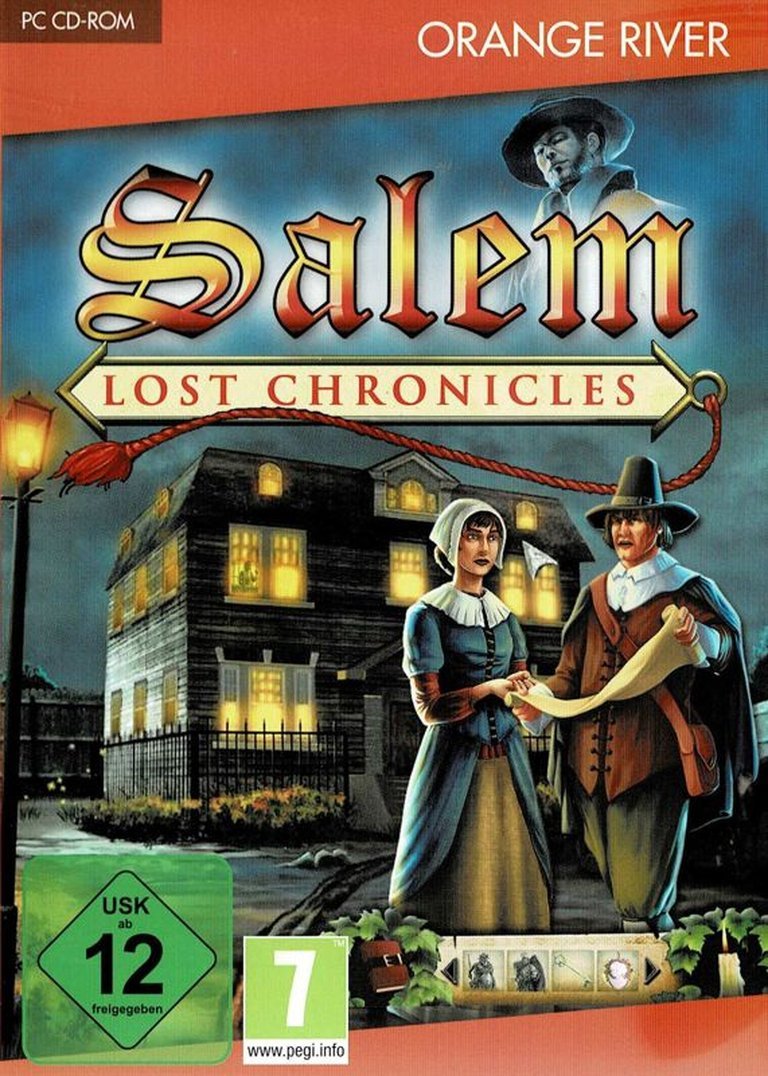
Lost Chronicles: Salem is a first-person hidden object adventure game set in the town of Salem during the 1692 witch trials, where the player, accused of witchcraft, must save their mother and escape amidst the hysteria. Featuring puzzle elements, mini-games, and a journal with a map and familiars to collect, players navigate cornfields, cellars, and other locations while gathering fireflies for unlimited hints and solving randomized hidden object scenes.
Gameplay Videos
Lost Chronicles: Salem Guides & Walkthroughs
Lost Chronicles: Salem Reviews & Reception
gamezebo.com : Lost Chronicles: Salem is one game you’ll be happy to get lost in.
Lost Chronicles: Salem: Review
Introduction
In the shadowed annals of 1692 Salem, where paranoia ignited the infamous Witch Trials, a young girl’s desperate quest to save her accused mother unfolds amid flames, familiars, and fanaticism—a tale as timeless as it is tragic. Lost Chronicles: Salem, released in late 2010 by Vast Studios, emerges from the casual gaming boom as an obscure gem in the hidden object adventure genre, blending pulse-pounding puzzles with National Geographic-backed historical insight. Though overshadowed by flashier contemporaries, this point-and-click odyssey earns its place in video game history as a poignant, educational tribute to one of America’s darkest chapters. My thesis: Lost Chronicles: Salem masterfully fuses accessible gameplay with thematic depth, redeeming the hidden object formula through innovative mechanics and unflinching historical reflection, making it a must-play for history enthusiasts and casual adventurers alike.
Development History & Context
Vast Studios Inc., a modest developer specializing in narrative-driven casual titles, crafted Lost Chronicles: Salem during the zenith of the early 2010s hidden object game (HOG) explosion on platforms like Big Fish Games. Released digitally on December 5, 2010 (with a European CD-ROM version via S.A.D. Software Vertriebs- und Produktions GmbH in June 2011), it targeted Windows PCs amid a saturated market dominated by Big Fish’s trial-and-purchase model. The studio’s vision, as gleaned from promotional materials and developer portfolios, was ambitious: transform the rote HOG formula into an “enthralling storyline full of deep and engaging characters,” drawing from real events supplied by National Geographic resources.
Technological constraints of the era—Pentium 3 processors, 512 MB RAM, DirectX 8—kept visuals grounded in fixed/flip-screen 2D illustrated realism using frameworks like Cocos2D, prioritizing atmospheric hand-crafted scenes over AAA polish. The gaming landscape was casual-heavy, with HOGs like Mystery Case Files series ruling download charts, but Salem stood out via its National Geographic collaboration, featuring over 14 real historical figures (e.g., Tituba, Reverend Samuel Parris) and bonus content previewing sequels like Lost Chronicles: Fall of Caesar. As part of the Lost Chronicles series, it reflected Vast’s intent to serialize historical mysteries, navigating economic pressures (post-2008 recession favoring cheap digital buys) and PEGI 7 rating to appeal broadly. Yet, limited marketing left it under the radar, collected by just one tracked player on MobyGames—a testament to its niche fate in an era before Steam’s casual renaissance.
Narrative & Thematic Deep Dive
Lost Chronicles: Salem weaves a linear, four-chapter epic rooted in the 1692 Salem hysteria, where economic strife, religious zealotry, and political maneuvering fueled over 200 accusations and 20 executions. You embody an unnamed young girl whose mother is seized during a fiery mob attack on their farmstead home, thrusting you into a web of Puritan paranoia. The plot unfolds across Salem’s environs—cornfields, prison, commons, burying grounds, village tavern, Parris household—culminating in exposing Thomas Putnam as a land-grabbing schemer exploiting the trials, a fictional twist on his historical role amplifying themes of greed amid fear.
Characters blend fact and fiction with scholarly precision, courtesy of Nat Geo: Tituba (enslaved woman central to accusations) aids from prison with beads and carvings; Betty Parris (Reverend’s afflicted daughter) reveals secrets; Judge Samuel Sewall demands deeds and models; Bridget Bishop falls victim to a rock-throwing mob. Dialogue is sparse but purposeful, delivered via cutscenes and interactions, emphasizing terse Puritan exchanges that heighten tension. The journal—your narrative compass—delineates fact from fiction, e.g., noting Putnam’s game portrayal as a “greedy real estate magnate” versus his real-life fearful piety.
Thematically, the game dissects paranoia and mob mentality, with familiars (animal spirits) symbolizing superstition’s chokehold; historical accountability, via encyclopedia entries on real trials; and familial resilience, as you wield the mother’s heirloom dream-catcher against spectral threats. Subtle motifs like interrupted HOS (mobs bursting in) mirror trial unpredictability, while rune puzzles evoke forbidden witchcraft. Critiques note the anti-climactic finale—your escape sans broader resolutions—but this fidelity to history’s ambiguity elevates it, transforming pulp adventure into sobering reflection.
Gameplay Mechanics & Systems
At its core, Lost Chronicles: Salem refines the HOG loop with first-person point-and-select navigation, inventory at screen bottom, and an omnipresent journal for map, tasks, clues, and familiars tracker. Chapters span ~3 hours, blending hidden object scenes (randomized lists yielding tools like scythes, keys, runes), mini-games, and light adventure.
HO scenes are “never before seen interrupted” variants—e.g., fire forcing early exits—demanding efficiency amid chaos, with sparkling areas yielding inventory staples (CELLAR KEY, SAPPHIRE GEM). Inventory puzzles encourage backtracking: sharpen a DULL KNIFE on a pump stone, craft a CART WHEEL from broken spokes, or align gems/runes in ring rotations and path-tracing (drag firefly lines between AIR/FIRE/WATER RUNES without crossing).
Familiars mechanic innovates brilliantly: 10+ animals (birds, foxes, squirrels, owls) block paths; banish via heirloom timing mini-game (sync clicks as stones light), reducing hint recharge by 1 second each (unlimited hints via firefly jar). Puzzles dazzle in variety:
- Reflex/Chase: Firefly-path evasion from pursuers in cornfields.
- Manipulation: Pry stones with knives, bellows-toad reveals, wardrobe item-clearing (numerical order).
- Logic: Vice/virtue disc rotations (match symbols per journal), Sudoku-esque scroll sums, tile-sliders (chest crest, cabinet tiles).
- Exploration: Map highlights goals, tasks detail objectives.
UI shines—scrollable inventory, profile options, full/windowed modes—but flaws emerge: repetitive backtracking (e.g., 7x down to scarecrow), occasional pixel-hunting, and skippable puzzles mitigate frustration. Overall, systems cohere into taut loops, elevating HOGs beyond list-scanning.
| Mechanic | Strengths | Weaknesses |
|---|---|---|
| HOS | Randomized, contextual rewards | Occasional clutter |
| Puzzles | Varied (timing, logic, paths) | Some trial-and-error |
| Familiars | Speeds hints, thematic tie-in | Repetitive reflex |
| Journal/Map | Intuitive progression | Linear, no branching |
World-Building, Art & Sound
Salem’s recreation pulses with eerie authenticity: firelit farmhouses yield to fog-shrouded burying grounds, prison shadows loom over commons gazebos, village taverns buzz with suspicion. Fixed-screen visuals in illustrated realism—hand-painted scenes of thatched roofs, gnarled trees, flickering candles—evoke 1692 grit, with zoomable close-ups enhancing immersion. Nat Geo facts annotate locations (e.g., Parris home as hysteria epicenter), grounding fantasy in topography.
Atmosphere thrives on subtle horror: rustling hay hides raccoons, circling beavers block ponds, mobs hurl rocks through windows. Art direction favors moody palettes—ochres, umbers, crimson flames—contrasting pastoral fields with grave desolation, fostering paranoia.
Sound design, though undocumented extensively, complements via presumed ambient Puritan hymns, crackling fires, animal skitters, and terse voiceovers (inferred from cutscenes). Mini-game cues (stone glows, rune hums) provide tactile feedback, while a understated score amplifies dread without overwhelming. These elements synergize, transforming static screens into a living witch-hunt tableau.
Reception & Legacy
Launch reception was tepid yet positive in casual circles: Gamezebo’s Brandy Shaul awarded 80/100, lauding “great balance of history and HOG” and journal depth, critiquing brevity and abrupt end. No Metacritic aggregate (tbd), MobyGames lacks scores/reviews, VGChartz tracks zero owners—indicative of Big Fish’s walled garden obscurity. Commercial viability leaned on trials, with Nat Geo branding aiding education-market appeal.
Legacy endures as a cult footnote: first Lost Chronicles entry, spawning Fall of Caesar (2011) and inspiring Salem titles (Midnight Mysteries, Nancy Drew: Midnight in Salem, Town of Salem). It pioneered HOG-historical hybrids, influencing edutainment like The Oregon Trail revivals, while familiars anticipated mechanic evolution in Grim Legends. Rediscovered via walkthroughs (Big Fish, prpldva’s annotated guide), it preserves trials lore amid modern Salem-themed multiplayer (Town of Salem 2). In HOG historiography, it’s a bridge from 2000s lists to narrative depth.
Conclusion
Lost Chronicles: Salem distills the Witch Trials’ terror into a compact, compelling HOG triumph—exhaustive exploration, clever familiars, Nat Geo rigor redeeming genre tropes. Flaws like length and linearity pale against its atmospheric world, varied puzzles, and thematic heft. As a historian, I verdict it essential: an 8.5/10 artifact securing Vast Studios’ niche in casual canon, urging rediscovery amid Salem’s pop-culture resurgence. Play it, ponder the past, and banish your own familiars of obscurity.