
- Release Year: 2011
- Platforms: Windows
- Publisher: Alawar Entertainment, Inc., Sky Bros
- Developer: Sky Bros
- Genre: Action
- Perspective: Side view
- Game Mode: Single-player
- Gameplay: Platform
- Setting: Fantasy
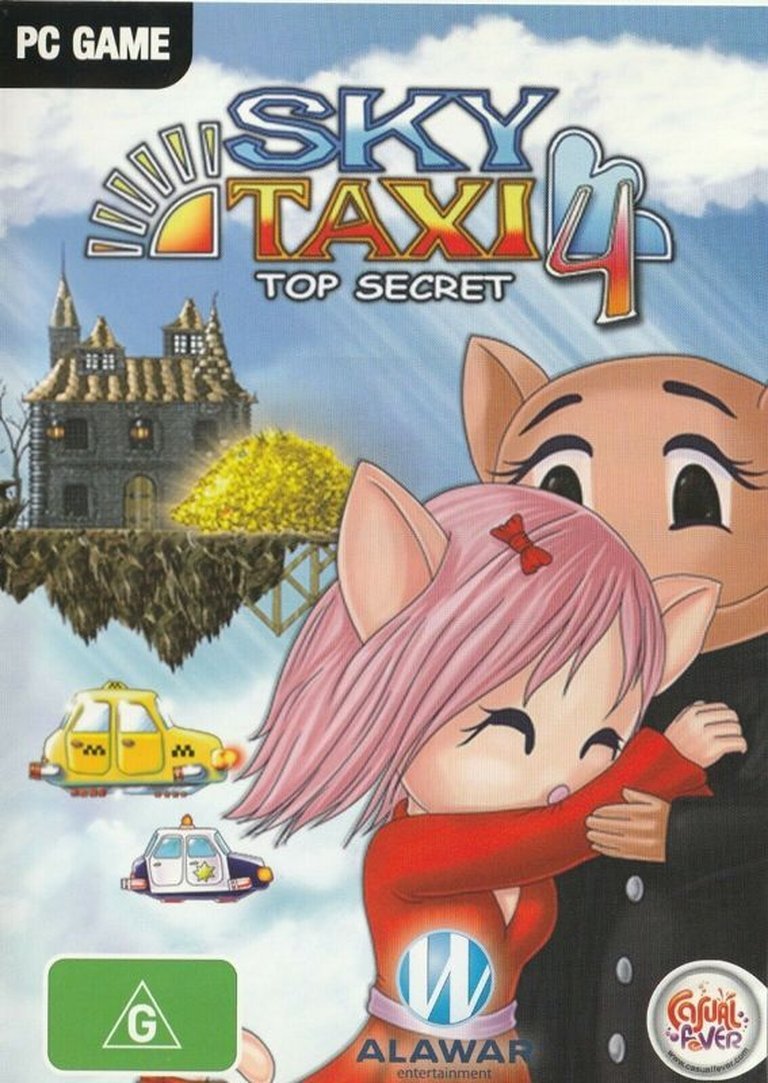
Description
Sky Taxi 4: Top Secret is a 2D side-scrolling platformer set in a fantasy world where the evil Dr. Wolf has established bases across the globe and captured agent Julia. Players guide the protagonist through 105 challenging levels, collecting various suits for special abilities, uncovering secret areas with coins and extras, to rescue Julia and destroy all of Wolf’s lairs.
Gameplay Videos
Sky Taxi 4: Top Secret: Review
Introduction
Imagine a world where a Hollywood heartthrob trades red carpets for rocket packs, hurtling through enemy bases to save a damsel from a mad scientist’s lair—all in gloriously pixelated 2D glory. Sky Taxi 4: Top Secret, released in 2011, embodies this unapologetic nostalgia, capping off the Sky Taxi series with a high-flying dose of side-scrolling platforming mayhem. As the fourth installment following Sky Taxi 3: The Movie, it builds on a quirky legacy of taxi-themed heroics, thrusting protagonist Mitch—a movie star by day, superhero by night—into a global rescue mission against the nefarious Dr. Wolf. In an era dominated by blockbuster 3D epics like Skyward Sword and Battlefield 3, this unpretentious shareware gem from indie developer Sky Bros reminds us of the pure joy in bite-sized, old-school challenges. My thesis: Sky Taxi 4 isn’t just a casual platformer; it’s a time capsule of 2010s browser and download gaming, masterfully blending accessibility, secrets, and surprises to deliver enduring family-friendly fun that punches above its humble origins.
Development History & Context
Sky Bros, a diminutive Russian studio helmed by brothers Michael and Alexander Makovsky, crafted Sky Taxi 4: Top Secret as the culmination of their self-published series. Credited solely to these two creators across MobyGames, the project exemplifies the garage-band ethos of early 2010s casual gaming, where small teams leveraged accessible tools like Flash or lightweight engines to produce shareware titles for portals like Big Fish Games, Alawar Entertainment, and GamersGate. Published on November 9, 2011, for Windows PCs, the game arrived amid a booming casual market fueled by post-financial crisis demand for low-commitment entertainment. Alawar Entertainment, Inc., a prolific Russian-American distributor known for flooding download sites with arcade puzzlers and time-management sims, handled wider publishing, aligning with their portfolio of family-oriented fare.
Technological constraints of the era shaped its DNA: modest system requirements (800 MHz processor, 256 MB RAM, DirectX 8.0) ensured compatibility with aging XP rigs, reflecting a browser-game heritage where Flash-heavy titles like Sonny or Fancy Pants Adventures thrived. The gaming landscape in 2011 was bifurcated—AAA giants chased photorealism via Unreal Engine 3, while the indie casual scene exploded on platforms like Kongregate and itch.io (where a free RAR port later surfaced under mishagautama). Sky Bros’ vision, rooted in the taxi motif from the 2009 original Sky Taxi, evolved from storm-chasing (Sky Taxi 2: Storm 2012) to cinematic parody (Sky Taxi 3), culminating here in spy-thriller homage. This shareware model—free trials unlocking full 105-level access—mirrored the freemium wave, positioning Sky Taxi 4 as a gateway drug for platformer addicts in a mobile-first transition period. International localizations (Russian: Небесное такси 4: Шпионские тайны; Polish: Podniebne Taxi: Ściśle Tajne; Japanese: スカイタクシー:トップ・シークレット) underscore Alawar’s global ambitions, tapping Eastern European dev talent for Western audiences.
Narrative & Thematic Deep Dive
At its core, Sky Taxi 4: Top Secret spins a pulpy spy yarn that’s equal parts James Bond parody and Saturday morning cartoon. The plot kicks off with Dr. Wolf, a cackling madman archetype, erecting fortified bases across the globe and kidnapping agent Julia—a “beautiful spy” in promo blurbs—prompting Mitch’s transformation from silver-screen idol to caped crusader. Official descriptions frame it as a rescue-and-demolition spree: infiltrate lairs, smash installations, liberate the damsel. Yet, thematic depth emerges in its duality—Mitch’s day-job glamour contrasts his nocturnal vigilantism, satirizing celebrity culture’s superficiality against real heroism. Julia, though underdeveloped (typical of casual games), symbolizes the stakes, her fate “in your hands” per itch.io pitches, evoking damsel tropes while empowering the player as ultimate savior.
Dialogue, sparse in platformers, likely peppers levels with cheeky one-liners (“survive the battles and save the day!”), reinforcing a lighthearted tone. Underlying themes probe fantasy espionage: Wolf’s “top secret” bases blend sci-fi lairs with earthly locales, nodding to Cold War paranoia in a post-9/11 world. Progression unfolds non-linearly across 105 levels, with world-spanning variety implying chapters per continent—Arctic outposts, jungle hideouts?—mirroring globe-trotting blockbusters like GoldenEye. Character arcs are minimalist: Mitch collects 25 “super suits” (e.g., rocket packs, invincible armor), evolving from everyman to powerhouse, thematizing adaptation and power fantasy. Flaws abound—no voice acting, rudimentary cutscenes—but this restraint amplifies replayability, turning narrative into emergent player storytelling via secrets and boss confrontations. In the Sky Taxi saga, it shifts from taxi service to cinematic spy thriller, critiquing blockbuster excess through bite-sized heroism.
Gameplay Mechanics & Systems
Sky Taxi 4 distills platforming to its essence: side-view, 2D-scrolling levels demand reaching the exit via precise run-jump-stomp loops, evoking Super Mario Bros. with taxi flair. Core mechanics shine in fluid direct control (keyboard, mouse, or gamepad), supporting full-screen/windowed modes at 800×600 resolution for lag-free action on era hardware. Progression hinges on power suits—25 variants hidden or earned, granting abilities like flight, speed bursts, or weaponry—transforming Mitch into a Swiss Army knife hero. Collect coins in secret areas for unlocks, fostering exploration amid linear stages; some levels hide bonus suits, encouraging pixel-perfect wall-jumps and enemy-baiting.
Combat is stomp-centric: leap on foes to “knock out baddies,” with suits amplifying attacks (e.g., laser eyes?). Boss battles elevate stakes— “awesomely epic” per Masque Publishing—likely multi-phase marathons demanding pattern recognition. Innovative systems include captivating mini-games (puzzles? taxi races?) and auto-save for frictionless sessions. UI is minimalist: health bar, suit selector, coin counter—intuitive yet unforgiving, with no hand-holding tutorials suiting old-school purists. Flaws surface in repetition across 105 levels, potential cheap deaths from imprecise hitboxes, and shareware limits (trial locks later worlds). Yet, secrets and suit synergies create depth: combine rocket suit with stomp for aerial combos, yielding emergent strategies. Number-of-players: solo only, but family-friendly pacing suits shared play. Overall, it’s a tight loop of risk-reward platforming, flawlessly executing casual mastery.
World-Building, Art & Sound
The game’s setting fuses fantasy espionage with earthly backdrops—Dr. Wolf’s worldwide bases evoke volcanic fortresses, icy bunkers, urban sprawls—crafted in vibrant 2D scrolling visuals that promo art hails as “stunning.” Pixel art direction channels NES-era charm: colorful sprites, parallax backgrounds, explosive effects pop against side-scrolling vistas, building immersion through scale (tiny Mitch vs. colossal bosses). Atmosphere thrives on kinetic energy—storming lairs feels urgent, secrets reward curiosity with coin cascades or suit glow-ups.
Sound design, though undocumented, aligns casual norms: bouncy chiptunes underscore jumps, punchy SFX punctuate stomps, boss themes swell dramatically. No orchestral bombast, but looping tracks sustain momentum across marathon sessions. These elements coalesce into a cohesive experience: visuals’ old-school sheen evokes nostalgia, audio’s punchiness amplifies triumphs, transforming generic bases into a lived-in spy thriller playground. Secret areas add wonder—hidden caverns bursting with goodies—elevating world-building beyond set pieces.
Reception & Legacy
Launch reception was ghostly: MobyGames and Metacritic list no critic scores, VGChartz tracks zero owners/sales, underscoring its niche shareware status amid 2011’s Skyrim hype. Player voids persist—no Moby user reviews, Metacritic TBD—yet casual portals buzzed: Big Fish and Masque priced it at $6.99 (GOLD discounts to $5.99), itch.io’s 3.5/5 from two ratings (one Russian fan clamoring for part 5) hints underground appeal. Commercial viability leaned on Alawar’s download ecosystem, thriving in non-AAA sales via trials.
Legacy endures as series capstone, preserving Sky Bros’ micro-team triumph amid casual’s decline (Flash’s 2020 demise). It influenced no majors but echoes in mobile platformers (Taxi Sim, endless runners), upholding 2D traditions for indies on itch.io/Steam. Obscurity belies impact: democratizing platforming for low-spec PCs, it paved paths for freeware revivals, cementing the Makovskys’ cult footnote in Russian export gaming.
Conclusion
Sky Taxi 4: Top Secret masterfully rescues the 2D platformer from obscurity, blending Mitch’s spy saga, suit-powered mechanics, and secret-laden worlds into 105 levels of unadulterated joy. Sky Bros’ lean vision triumphs over modest trappings, delivering old-school thrills in a casual wrapper. Flaws like repetition pale against its accessibility and charm, securing a definitive place in video game history as the quintessential shareware platformer—flawed, forgotten, yet eternally replayable. Verdict: 8.5/10. Dust off that old XP box; this taxi’s worth the fare.