
- Release Year: 2022
- Platforms: Windows
- Publisher: Flying Squirrel Entertainment
- Developer: Flying Squirrel Entertainment
- Genre: Action
- Perspective: 1st-person
- Game Mode: Online PVP
- Gameplay: Shooter
- Setting: North America
- Average Score: 72/100
Description
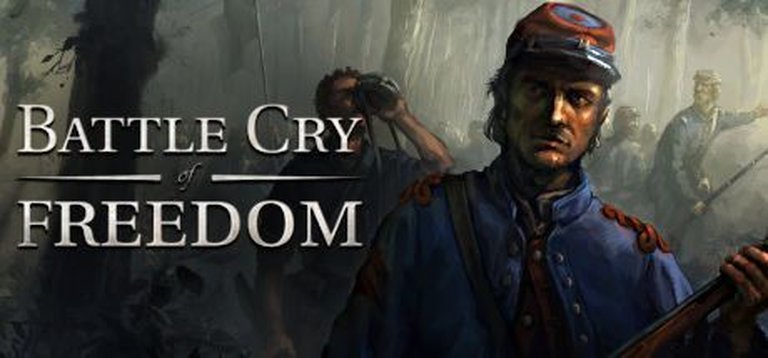
Battle Cry of Freedom is a multiplayer first- and third-person shooter set during the American Civil War, where players can join massive battles as Union or Confederate forces in 19th-century North America. Developed by Flying Squirrel Entertainment, it emphasizes realistic combat with authentic weapons, uniforms, slow reloads, and tactical teamwork across sprawling battlefields, delivering a historically faithful reenactment experience.
Gameplay Videos
Where to Buy Battle Cry of Freedom
PC
Battle Cry of Freedom Guides & Walkthroughs
Battle Cry of Freedom Reviews & Reception
metacritic.com : a solid game that will be enjoyed by many.
keengamer.com : craft another immersive experience.
steambase.io (72/100): Mostly Positive.
jumpdashroll.com : the overall experience of Battle Cry of Freedom is genuinely remarkable.
Battle Cry of Freedom: Review
Introduction
Imagine charging across a fog-shrouded Gettysburg-inspired field, musket smoke choking the air, as 400 fellow players unleash a volley that shatters fences and felled trees—welcome to Battle Cry of Freedom, a multiplayer war simulator that thrusts you into the heart of the American Civil War’s bloodiest clashes. Developed by the tiny but passionate Flying Squirrel Entertainment, this 2022 release isn’t just a game; it’s a digital reenactment, born from modding roots and living-history fervor. As a game historian, I see it as a bold evolution of musket-era multiplayer titles like Mount & Blade: Warband‘s Napoleonic Wars, prioritizing brutal realism over arcade thrills. My thesis: Battle Cry of Freedom masterfully captures the chaotic, unforgiving essence of 19th-century warfare, offering unparalleled immersion for history enthusiasts, but its niche appeal, technical rough edges, and dwindling player base relegate it to cult status rather than mainstream triumph.
Development History & Context
Flying Squirrel Entertainment, a four-person European studio, emerged from the modding scene that revolutionized multiplayer warfare gaming. Founders honed their craft on Mount & Blade: Warband‘s “Napoleonic Wars” DLC and “Mount & Musket” mod, channeling reenactment passion—team members participate in European living-history events—into standalone titles. After nearly a decade of development, Battle Cry of Freedom launched on March 1, 2022, via Steam, built on Unity for Windows (with Linux compatibility via Proton). Priced at $10 (often discounted to $1-3), it targeted a post-Holdfast: Nations at War landscape craving authentic Civil War sims, amid a multiplayer boom dominated by battle royales like PUBG and tactical shooters like Squad.
Technological constraints shaped its ambition: Unity enabled massive 500-player battles (up to 800 bots in Commander mode) on 2×2 km maps, but early access-era optimization struggles persisted at launch. The 1861-1865 American Civil War setting—America’s deadliest conflict, with over 600,000 casualties from outdated line tactics clashing with rifled muskets—fit perfectly into a gaming era rediscovering historical sims (War of Rights, Beyond The Wire). Flying Squirrel’s vision was uncompromising: no compromises on cosmetics like uniforms or drill animations (sourced from Casey’s Infantry Tactics and Hardee’s manuals), blending simulation with exhilarating gameplay. Post-launch roadmaps promised maps, events, and refinements, fostering a regiment (clan) culture with weekly line battles, echoing modding communities’ organized chaos.
Narrative & Thematic Deep Dive
Battle Cry of Freedom eschews a linear storyline for emergent multiplayer narratives, where players script history’s replay. You enlist as Union or Confederate, re-fighting engagements like Antietam or Shiloh across handcrafted maps (14+ at launch, 50+ by late 2022) or procedural arenas. “Engagements” structure drama: dynamic objectives (hold positions, destroy artillery, capture forts) vary by faction, with regiments spawning cohesively for squad-based tales of glory or slaughter. Themes pulse with historical weight—the futility of massed charges against modernized firepower, disease-ravaged camps (implied via respawns), and brother-against-brother fratricide.
Characters emerge from deep customization: blend generals’ likenesses (Burnside’s whiskers, Custer’s locks), tweak socks-to-sabers from thousands of accurate pieces. No voiced protagonists, but proximity voice chat births raw dialogue—coordinated “Rebel Yells,” taunts mid-melee, or impromptu roleplay (bands in taverns, surgeon triage). Themes explore war’s humanity: morale-boosting musicians play Yankee Doodle (recorded by 2nd South Carolina String Band, U.S. Military Band); engineers bridge chasms amid thunder; surgeons heal in the fray. Yet darkness lurks—community toxicity (racial slurs in Confederate chats) mirrors the era’s slavery divide, underscoring reenactment’s double-edged sword. It’s not plot-driven but thematically profound: war as communal frenzy, where individual agency dissolves into tactical cunning, rewarding patience over heroism.
Gameplay Mechanics & Systems
Core loops revolve around realism-fueled brutality: first/third-person shooter with direct control, emphasizing volleys, charges, and survival. Infantry dominates—load rifled muskets (120+ weapons: smoothbores, carbines, pistols), fire once (physics simulate wind, humidity, gravity), then 20-second reloads behind cover. Bayonet charges trigger directional melee (Mount & Blade-inspired: thrust, slash, block), fluid yet mastery-demanding. Classes diversify:
- Infantry: Line soldiers, sharpshooters (long-range picks), flag-bearers (morale icons), musicians (rally tunes).
- Artillery: 20 pieces (Parrott Rifles to mortars), ammo variety (canister, fused shells); crew coordination for barrages.
- Specialists: Engineers (barricades, kegs, bridges), surgeons (heal allies).
Commander Battles let players lead AI companies (800 bots/server), issuing orders in tactical overviews. UI is sparse—no tutorial, trial-and-error reigns (e.g., axe swings need directional facing)—but intuitive for vets. Innovations shine: fully destructible environs (punch walls, topple trees via artillery); dynamic weather (fog obscures, wind curves shots); zone-of-control spawns; map editor (4,000+ props, auto-downloads). Flaws abound: clunky animations, performance dips (even above specs), stagnant artillery play. Regiment system and admin tools (120+ settings) enable line battles, but low population (20-200 concurrent) hampers queues. Proximity chat fosters chaos—hear enemy plans—but invites griefing.
| Mechanic | Strengths | Weaknesses |
|---|---|---|
| Combat Loop | Realistic ballistics, melee depth | Slow reloads feel punishing solo |
| Classes/Roles | Roleplay variety, teamwork essential | Artillery dull, specialists undercooked |
| Modes | 500-player scales, bot commanders | Multiplayer-only, empty servers |
| Customization | Exhaustive historical options | Overwhelms newcomers |
Progression? Level-less—unlock via play, regiments for persistence.
World-Building, Art & Sound
North America’s war-torn expanse feels alive: 14+ faithful battlefields (Gettysburg, Antietam), procedural maps, destructible to oblivion (bridges crumble, forts breach). Dynamic time/weather—lightning snaps trees, rain slicks ironsights—alters tactics organically. Visuals prioritize readability over spectacle: clean Unity models, accurate uniforms (every stitch period-correct), animations from drill manuals (Present Arms, Trail Arms). Performance-stable at medium settings, but dated (echoes 2012 mods), with jank like stiff melee.
Sound design immerses: cannon whumps, musket cracks, warcries; 57 tracks (String Band folk, military marches) evoke era, though bouncy menus clash with gore (jarring tonal whiplash). Musicians’ live instruments boost morale; voice chat adds humanity—overhear foes’ panic. Atmosphere peaks in volleys: smoke veils fields, debris flies, creating reenactment verisimilitude. It contributes profoundly: not beauty, but visceral presence, making every charge pulse with historical gravity.
Reception & Legacy
Launch reception was solid but polarized: MobyGames 83% (Hooked Gamers 86%: “historical experience done very well”; Jump Dash Roll 80%: “future of gaming” via battles/chat), Metacritic/user TBD (3 critics ~77 avg.), Steam 72% Mostly Positive (2.4k reviews). Praises: immersion, scale, accuracy. Critiques: no tutorial, performance, toxicity, low players (75k est. sales, peaks 853 concurrent, now ~20). Niche hit for Civil War buffs, but player drought killed momentum—servers empty sans friends/clans.
Legacy endures as Napoleonic Wars heir, influencing sims (War of Rights) with its scale/physics. Community thrives via Discord events (Saturday campaigns, Monday lines), map editor fostering creativity. Post-2022 roadmaps added 40+ maps, but waning support cements cult status. It proves small teams can rival AAA ambition, inspiring moddable warfare titles amid battle royale fatigue.
Conclusion
Battle Cry of Freedom is a triumph of passion over polish—a sprawling Civil War canvas where hundreds clash in authentic fury, from bayonet melees to artillery sieges, all underpinned by meticulous history. Its mechanics demand teamwork, its world breathes era grit, delivering highs unmatched in immersion. Yet low population, tech hiccups, and community shadows dim its shine, making it a niche gem for reenactors and mod vets. In video game history, it carves a vital niche: not revolutionary like Mount & Blade, but a definitive Civil War multiplayer sim. Verdict: 8/10—essential for history sim fans; wait for sales otherwise. Its battle cry echoes faintly, but gloriously.