
- Release Year: 1994
- Platforms: Arcade, iPhone, PlayStation 3, SEGA Saturn, Windows, Xbox 360, Xbox One
- Publisher: SEGA Enterprises Ltd., SEGA Europe Ltd., SEGA of America, Inc.
- Developer: AM R&D Dept. #2
- Genre: Action
- Perspective: 3rd-person (Other)
- Game Mode: LAN, Online PVP, Single-player
- Gameplay: Fighting
- Setting: Martial arts
Description
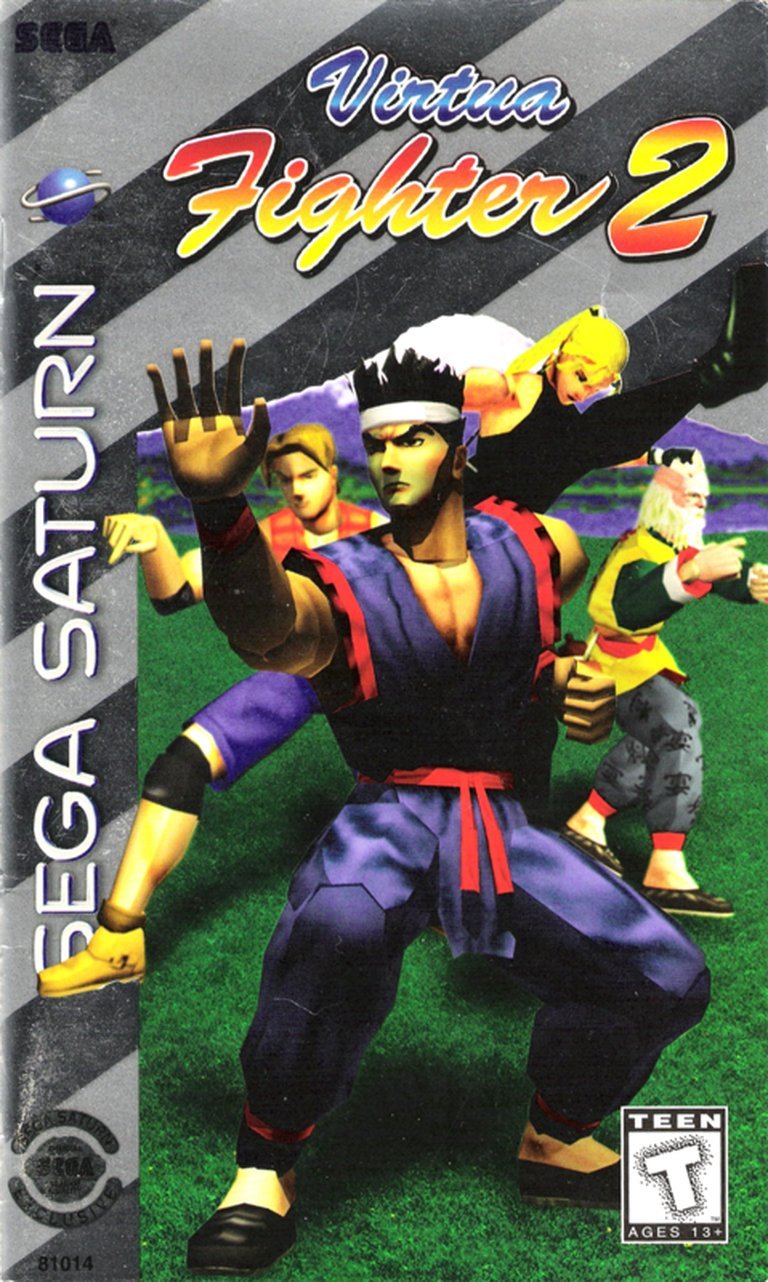
Virtua Fighter 2 is a groundbreaking 3D fighting game set one year after the inaugural World Fighting Tournament, where returning champions like Akira, Jacky, Sarah, and Lau join newcomers Shun-di, the drunken Kung-Fu master, and Lion Rafale, fighting for freedom, each showcasing unique martial arts styles from Pai’s lightning-fast strikes to Jeffry’s powerful slams in realistic, ring-based battles emphasizing combos, strategy, and skill.
Gameplay Videos
Virtua Fighter 2 Free Download
Virtua Fighter 2 Cracks & Fixes
Virtua Fighter 2 Patches & Updates
Virtua Fighter 2 Guides & Walkthroughs
Virtua Fighter 2 Reviews & Reception
fightersgeneration.com : The sequel to Sega’s groundbreaking 3D fighting game, Virtua Fighter 2 managed to raise the bar in terms of both visuals and gameplay.
retroarcadememories.wordpress.com : Virtua Fighter 2 stands as a masterclass in 3D fighting game design.
gamesreviews2010.com : Virtua Fighter 2 is a timeless classic that revolutionized the fighting game genre.
Virtua Fighter 2 Cheats & Codes
PC
Edit VCOP2.INI in the game installation directory. Under [Game Setting], add Extra=2 to enable Special and Cheat options (accessed via F6 during game). Character codes at Fighter Select Screen.
| Code | Effect |
|---|---|
| Extra=2 | Enables Special and Cheat options in Mode Settings (F6) |
| Highlight Akira then Down, Up, Right, Left, A | Play as Dural |
| Down, Up, Right, Guard/Kick, Left | Play as Silver Dural |
| Down, Up, Left, Guard/Kick, Right | Play as Gold Dural |
| Hold Up then A or C | Alternate costumes |
Sega Saturn
Codes at Fighter/Character Select Screen unless otherwise noted.
| Code | Effect |
|---|---|
| Down, Up, Right, A + Left | Fight as Dural |
| Down, Up, Left, A + Left | Fight as Gold Dural |
| Up, A + C | Alternative costume colours |
| Hold Down + A + B + C (during replay) | Slow motion replay |
| Hold A, B, or C (during replay) | Replay taunts |
| Hold A + B + C + X + Y + Z (during opening demonstration) | View credits |
| Hold L or R + Left or Right | Configure controller |
| Pause then X + Y + Z | Full pause screen (removes text) |
| Up x12, Start (title screen), Options then R, R | Options Plus menu |
Nintendo Wii (Virtual Console)
Codes at relevant screens.
| Code | Effect |
|---|---|
| Options screen: highlight Exit, tap Left | Hidden options |
| Down, Up, Right, A + Left (Character Selection Screen) | Extra Character Selection Time (99 seconds) |
| Hold B (highlight player 1 life in Options), until No Damage, Start | No Damage |
| Hold Up + A or C (select character) | Different Costumes |
| Hold Down + A, C, or Start (select character) | Different Costumes |
| Highlight Akira (P1) or Jacky (P2), Left + Right (D-Pad, repeat a few times) | Play as Dural |
Virtua Fighter 2: Review
Introduction
In the annals of video game history, few titles have shattered technological barriers and redefined genres quite like Virtua Fighter 2. Released in arcades in November 1994 by Sega’s legendary AM2 team under the visionary Yu Suzuki, this sequel to the groundbreaking 1993 original arrived like a thunderclap, delivering silky-smooth 60fps polygonal combat on the bespoke Model 2 hardware. What began as a modest experiment in 3D fighting evolved into a cultural phenomenon—a “thinking man’s beat ’em up” that prized precision, realism, and martial arts authenticity over flashy projectiles and supernatural gimmicks. Its thesis is simple yet profound: Virtua Fighter 2 isn’t just a game; it’s the blueprint for modern 3D fighters, proving that technical mastery and strategic depth could eclipse spectacle, cementing its status as a cornerstone of arcade and console gaming.
Development History & Context
Sega AM2, Sega’s R&D Department No. 2, was the beating heart of innovation in the mid-1990s arcade scene, and Virtua Fighter 2 exemplified their audacious ambition. Directed and produced by Yu Suzuki—whose resume already boasted hits like Out Run and After Burner—the game was spearheaded by main programmer Toru Ikebuchi and designer Kazuhiro Izaki. Development took roughly one year, a blistering pace driven by the need to leapfrog competitors like Namco’s Tekken.
The original Virtua Fighter (1993) on Model 1 hardware was revolutionary but visually stark—flat-shaded polygons without textures. For the sequel, Suzuki demanded texture-mapped characters, necessitating the all-new Model 2 arcade board. A pivotal moment came when AM2 invested $2 million (equivalent to about $4.4 million today) in a military-grade texture-mapping processor from Lockheed Martin, originally designed for flight simulators. AM2 reverse-engineered it into a cost-effective gaming chip, enabling high-resolution (up to 708×480), flicker-free visuals at 60fps—a feat unmatched in arcades.
Motion capture technology, borrowed from medical and military applications, captured over 1,200 motion patterns (up from 700 in VF1), including head tracking for lifelike animations. Four new characters were prototyped, but only two—Shun Di and Lion Rafale—made the cut. The 1994-1995 gaming landscape was dominated by 2D kings like Street Fighter II and early 3D experiments, but VF2’s realism clashed with the era’s arcade flash. Ports faced hurdles: the Saturn version, split across AM2 sub-teams juggling Virtua Cop and Daytona USA, required compression tricks and the Sega Graphics Library (SGL) OS to hit near-arcade perfection at 60fps, despite polygon reductions and parallax backgrounds.
Narrative & Thematic Deep Dive
Virtua Fighter 2 eschews cinematic bombast—no FMV intros, no voiced dialogue, no elaborate endings beyond static CG portraits. Its storytelling is minimalist, conveyed through manual lore and character bios, emphasizing personal stakes in a shadowy global tournament. One year after VF1, veterans Akira Yuki (seeking self-mastery via Hakkyoku-ken), Wolf Hawkfield (wrestler chasing glory), Pai Chan (avenging her father’s disappearance with agile kung fu), Jeffry McWild (sumo grappler hunting ancient scrolls), Kage-Maru (ninja honoring family), Jacky and Sarah Bryant (Jeet Kune Do siblings post-car crash recovery), and defending champ Lau Chan reunite. Newcomers Shun Di (elderly drunken fist master proving his vitality) and Lion Rafale (French heir fighting for freedom from his industrialist father) add layers of redemption and rebellion.
Thematically, VF2 probes authenticity versus artifice. Fighters embody real martial arts—Akira’s star-shaped strikes, Lion’s praying mantis style—eschewing fireballs for grounded technique. Underlying this is the J6 syndicate’s machinations: they orchestrate the World Fighting Tournament to data-mine moves for perfecting Dural, their cyborg boss (unplayable in arcades, but unlockable in ports). Dural symbolizes cold, synthesized perfection, contrasting the human flaws and passions of the roster. Shun Di’s “old geezer” defiance critiques ageism; Lion’s plight explores class rebellion. Endings are sparse—a “congratulations” screen or brief FMV—mirroring the series’ focus on emergent stories through mastery, not scripted drama. This restraint amplifies themes of discipline, where victory feels earned, not narrated.
Gameplay Mechanics & Systems
VF2’s core loop is a masterclass in elegance: select from 10 (later 12 with unlocks) fighters, battle through arcade mode’s escalating AI gauntlet, or dive into VS, Team Battle (5v5 tag matches), Ranking (style analysis post-fight), Expert (AI adapts to your habits via saves), or Watch (replay/theater mode). UI is spartan—clean menus, rink-size tweaks (tiny sumo platforms to 82m expanses), infinite health for training—prioritizing play over fluff.
Combat deploys a 3-button scheme (Punch, Guard, Kick) + 8-way stick, yielding 500+ new moves per character (over 1,000 total). No quarter-circles; inputs are intuitive directional + button (e.g., forward+Punch for Akira’s dash uppercut). Realism reigns: “Floating” jumps nullify air juggles, forcing ground-focused footsies. Health drains quickly, rewarding ring-outs and punishes overcommitment. Counters, throws (G+P simultaneously, wiggle to escape), and axis turns (sidestepping in 3D space, Shun/Lion excel) exploit positioning. Combos chain 4-5 hits (e.g., Sarah’s double punch > somersault), but recovery frames demand timing—button-mashing fails against savvy foes.
Progression shines in Expert/Ranking: AI learns counters, analyzes offense/defense ratios. Ports add VF2.1 tweaks (balanced Dural playable), modem/TCP/IP netplay (PC), and replays. Flaws? Steep curve alienates casuals; no tournament mode. Yet, this depth—frame-perfect execution, matchup knowledge—earns its “chess-like” moniker.
World-Building, Art & Sound
VF2’s “world” is eight arenas: Tokyo docks, European rooftops, Chinese temples—evocative backdrops with particle effects (falling leaves), reflective floors, and selective scaling. No sprawling lore, but stages immerse via peril: edges invite ring-outs, hazards add peril. Atmosphere builds tension—crowd cheers swell post-combo, impacts thud with weight.
Visuals dazzle: texture-mapped polys (Saturn: 16 colors/polygon vs. arcade’s 1), motion-captured fluidity (choreographed by Shin Kimura), 60fps lockstep. Saturn compromises textures/backgrounds for speed, but high-res mode shines. Sound supports: Takenobu Mitsuyoshi/Takayuki Nakamura/Akiko Hashimoto’s pulsing techno-jazz (Redbook CD on PC), sharp SFX (crisp hits, grunts), muffled voices (Saturn critique). No bombast—subtle crowd murmurs heighten realism, making victories visceral.
These elements forge intimacy: fights feel like clandestine duels, visuals/auditory feedback rewarding mastery.
Reception & Legacy
Arcade launch crushed: Japan’s #1 earner 1995-1996, 40,000+ cabinets sold worldwide (Sega’s best-seller ever). Critics raved—CVG: “greatest arcade game ever”; 93% average. Saturn port (1995 JP/NA/EU) was a killer app: 1.7M Japan sales (Sega’s top Saturn title), 500K+ US bundles with Daytona/Virtua Cop. MobyGames: 92% critics (Saturn #1), 8.7/10; player reviews hail “superior control,” “gem of 32-bit era.” Awards: Gamest Game of Year/Best Graphics; Game Players GOTY/Best Saturn/Fighting/Graphics.
PC (1997) excelled (81% critics, netplay hailed), but iOS/Genesis ports flopped (40-44%). Legacy? VF2 birthed 3D fighters’ golden age—influencing Tekken 2/3, Soulcalibur, even wrestling sims (Wolf’s moves). Saturn exclusivity boosted hardware; ports to PS3/360 (2012) preserved it. Retrospectives (IGN/GamesRadar: top Saturn/arcade) laud aging grace. It spawned schools in Japan, TV promos, and endures in evo/PS2 compilations—a genre titan.
Conclusion
Virtua Fighter 2 transcends its era, distilling fighting games to pure essence: skill, strategy, spectacle through subtlety. Its innovations—Model 2 tech, motion capture, realistic depth—paved 3D’s highway, while flaws (accessibility, sparse narrative) humanize it. As arcade pinnacle and Saturn savior, it claims eternal place in history: not just essential, but foundational. Score: 9.5/10—a timeless triumph demanding respect. Play it, master it, honor it.