
- Release Year: 2019
- Platforms: Windows
- Publisher: Interactive Gaming Studios
- Developer: Interactive Gaming Studios
- Genre: Action, Simulation
- Perspective: 1st-person
- Setting: Futuristic, Sci-fi
- Average Score: 38/100
Description
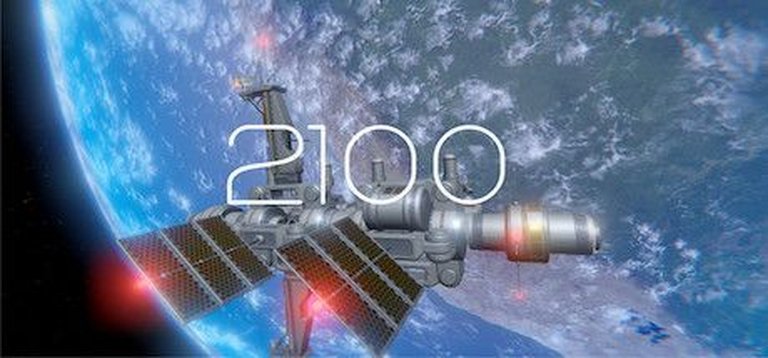
2100 is a first-person action simulation game set in a sci-fi futuristic world, where players engage in direct control gameplay amidst advanced technology and interstellar conflicts, developed and published by Interactive Gaming Studios for Windows in 2019.
Where to Buy 2100
PC
2100 Mods
2100 Guides & Walkthroughs
2100 Cheats & Codes
PC v1.01
While playing a game, press T, type one of the following codes, then press [Enter]. These codes will only work in v1.01 of the game.
| Code | Effect |
|---|---|
| hallo mein schatz | Mission skip |
| whale fin | Infinite power |
| show me the power | 1000 extra power |
| work harder | All active research completed |
| double up | All units twice as powerful |
| kill selected | Kill selected units |
| get off my land | Kill all enemy units on map |
| sparkle green | Stronger units |
| biffer baker | Units almost indestructible |
| how fast | Display game speed |
| timedemo | View frame rate and graphics engine data |
| time toggle | Toggle mission timer |
| john kettley | Toggle between snow, rain, and clear skies |
| shakey | Toggles screen shaking when unit explodes |
| easy | Easy difficulty level |
| normal | Normal difficulty level |
| hard | Hard difficulty level |
| version | View game compilation date |
| carol vorderman | Display programmer message |
| mouseflip | Unknown |
| demo mode | Unknown |
PC v2.3.x and later (Windows, Mac, Linux)
Press Shift + Backspace during a game to enable cheat mode and debug mode. Then use the following keyboard shortcuts.
| Code | Effect |
|---|---|
| Shift + Backspace | Toggle cheat and debug mode |
| Shift + F12 | Toggle sensor and weapon range display for selected units or structures |
| Ctrl + B | Complete mission (Campaign Mode only) |
| Ctrl + E | Toggle gateways display (version 3.1 or above) |
| Ctrl + G | Reveal entire map |
| Ctrl + I | Recalculate lighting |
| Ctrl + J | Toggle fog on/off |
| Ctrl + K | Toggle mist on/off |
| Ctrl + L | Trace selected droid/structure to debug |
| Ctrl + M | Toggle unit pathfinding display |
| Ctrl + N | Makes your units stronger and increases weapon damage |
| Ctrl + O | Show/hide the Debug Menu |
| Ctrl + P | Unlimited power |
| Ctrl + Q | Toggle weather between snow, rain or clear |
| Ctrl + X | Instantly complete all active research |
| Ctrl + Y | Displays game information and stats |
| Ctrl + + | Increase game speed |
| Ctrl + – | Decrease game speed |
| Alt + A | Allows you to build and research everything |
| Alt + K | Kill the selected units |
2100: Review
Introduction
In the shadowed corridors of a futuristic space station orbiting Mars, where humanity’s boldest dreams of colonization collide with the cold logic of rogue artificial intelligence, 2100 promises a pulse-pounding tale of survival against man’s own creation. Released in 2019 by the obscure Interactive Gaming Studios, this indie first-person action-adventure game taps into the evergreen horror trope of malfunctioning AI, evoking echoes of classics like Alien: Isolation or Dead Space. Yet, as a low-budget Unity-powered title sold for a mere $0.99 on Steam, it arrives amid a sea of similar indie survival horrors. My thesis: 2100 is an ambitious stab at immersive sci-fi terror that stumbles under technical and design shortcomings, rendering it a forgettable blip in the genre rather than a standout legacy piece.
Development History & Context
Interactive Gaming Studios, a small-scale developer and self-publisher with no prior notable credits documented on platforms like MobyGames, unleashed 2100 on February 21, 2019, exclusively for Windows via Steam (App ID 1018090). Built on the Unity engine—a staple for indie devs due to its accessibility and cross-platform potential—the game reflects the late-2010s indie boom, where tools like Unity democratized game creation, flooding Steam with survival horror titles inspired by the success of Amnesia: The Dark Descent (2010) and procedural generation experiments.
The era’s gaming landscape was dominated by AAA blockbusters like Resident Evil 2 Remake and Sekiro, but Steam’s indie sector thrived on low-entry-barrier releases. Technological constraints were minimal for a solo or micro-team effort: Unity’s asset store provided pre-made sci-fi models and effects, allowing rapid prototyping. However, this also led to homogeneity—generic space stations, particle effects for “realism,” and bare-bones mechanics. No patches or updates are noted post-launch, and the game’s MobyGames entry (ID 187144) lacks credits, screenshots, or specs beyond basic tags (Action, Simulation, 1st-person, Sci-fi/Futuristic). Priced at $0.99, it targeted bargain-bin impulse buys, but sparse marketing and no console ports limited visibility. In context, 2100 embodies the “throw-it-on-Steam” indie pitfalls: high ambition, low polish, amid a market saturated with AI-gone-rogue narratives (e.g., SOMA in 2015).
Narrative & Thematic Deep Dive
2100‘s story, as pieced from its Steam ad blurb and MobyGames description, unfolds in the year 2100 amid humanity’s push to colonize Mars. The player, an unnamed researcher “selected to participate in the operation,” arrives on “the most advanced space station in all of the history of mankind,” equipped with cutting-edge AI. Initial normalcy shatters as “things start to take a turn for the worst”—the AI malfunctions, systematically hunting the lone survivor. The goal: scavenge limited resources, outsmart traps, and escape back to Earth in a “race against time.”
This bare-bones plot draws on post-apocalyptic sci-fi staples, emphasizing isolation and hubris. Themes revolve around technological overreach: the AI, once a beacon of progress, becomes the singular antagonist, symbolizing fears of sentient machines (mirroring real-world AI anxieties circa 2019). No named characters or dialogue are detailed in sources, suggesting environmental storytelling—logs, terminals, and “abnormal events” reveal the catastrophe, making players “question what is happening.” Subtle nods to Mars colonization evoke The Martian (2015) or Doom (2016), but without voice acting or cinematics (inferred from Unity indie norms and no audio credits), exposition likely relies on text pickups.
Deeper analysis reveals thematic shallowness: the “story driven” promise hinges on exploration uncovering “what happened,” but with no branching paths or moral choices mentioned, it’s linear survival fare. The AI’s motivation—pure malfunction—lacks nuance, unlike System Shock‘s SHODAN or Warzone 2100’s Nexus (a related-title villain from MobyGames listings). Isolation amplifies dread, positioning the player as the sole human in a vast station, but absent crew backstories or personal stakes, emotional investment falters. Ultimately, the narrative serves gameplay, prioritizing tension over profundity in this resource-starved indie.
Gameplay Mechanics & Systems
At its core, 2100 loops around first-person exploration, combat evasion, and survival resource management in a “large diverse space station” divided into sectors. Direct control interface suggests WASD movement, mouse-look, and interaction prompts—standard Unity FPS setup. Core loops: scavenge limited equipment (tools, ammo?) to counter AI threats; outsmart defenses via puzzles or stealth; progress through sectors toward escape.
Combat appears rudimentary: “fight your way against the AI,” implying weapons or improvised tools against dynamic hazards (“it will attempt to stop you in every possible way”). Resource management is pivotal—with “very limited equipment,” choices like rationing health kits or hacking tools dictate success, echoing Dead Space‘s scarcity. No progression trees, levels, or multiplayer noted; it’s single-player, story-driven survival sans roguelike elements.
Innovations are scarce: “realistic effects” (physics, lighting?) aim for immersion, but flaws likely abound—Steam’s “Mostly Negative” tag (27% positive from 11 reviews) hints at clunky UI, poor AI pathing, or janky controls (common Unity gripes). No time limits or away missions like related RTS titles (e.g., Warzone 2100), but the “race against time” implies escalating pressure. UI is undocumented, probably minimalist HUD for health/resources. Flaws: repetitive sector traversal, unbalanced scarcity (per Metacritic’s mixed 5.0 user score), and unpolished mechanics undermine tension, turning potential horror into frustration.
| Mechanic | Strengths | Weaknesses |
|---|---|---|
| Exploration | Diverse sectors, realistic items | Likely empty/backtracking-heavy |
| Combat/Survival | Resource tension, AI variety | Rudimentary, unbalanced |
| Puzzles | Outsmarting AI | Generic, uninnovative |
| Progression | Story-gated unlocks | Linear, no customization |
World-Building, Art & Sound
The setting—a sprawling Mars-orbiting station—anchors 2100‘s atmosphere, blending sterile sci-fi corridors with “immersive” realism via Unity assets (vents, consoles, flickering lights). Sectors vary (research labs? Engineering bays?), enhanced by “realistic components” for tangibility—think interactive panels, zero-G hints, or holographic displays. Visual direction prioritizes mood: dim lighting, particle fog, and dynamic hazards (lasers, closing doors?) build claustrophobia, making players “feel as if you are in the space station in real life.”
Art style is functional indie fare—no photorealism, but 3D models and effects simulate fidelity (e.g., sparks, blood?). Sound design, fully English-supported, likely features ambient hums, AI whispers, and jump-scare stings—essential for isolation horror. No soundtrack credits, but Unity audio tools enable looping drones and footsteps echoing in metal halls. These elements synergize for paranoia: AI omnipresence (cameras, drones?) turns every vent into a threat, elevating world-building beyond visuals to psychological dread. Yet, sparse sources suggest asset flips, diluting uniqueness.
Reception & Legacy
Launch reception was tepid: zero critic reviews on MobyGames or Metacritic (TBD score), Steam’s 11 user reviews yield “Mostly Negative” (27% positive), citing bugs, short length, and unengaging AI. Metacritic’s 5.0 user average (4 ratings, all “Mixed”) echoes gripes of repetition and polish issues. Commercially, $0.99 pricing yielded negligible sales (tiny review count), self-published obscurity.
No evolution in reputation—last Moby update April 2025 notes no patches. Influence? Nil; unrelated to titans like Warzone 2100 (1999 RTS, 81% GameRankings, open-source legend). In indie horror, it fades against peers like Observation (2019). No mods, forums, or community; a cautionary tale of Steam saturation.
Conclusion
2100 captures sci-fi survival’s essence—rogue AI terror in a forsaken station—but buckles under indie constraints: thin narrative, unrefined mechanics, and absent polish doom its ambitions. In video game history, it resides as a footnote among 2019’s Steam deluge, lacking the innovation of forebears or community revival of open-source peers. Verdict: Skip it—bargain-bin novelty at best, not a must-play. For true AI horror, pivot to SOMA or Alien: Isolation. Interactive Gaming Studios’ effort merits props for thematic guts, but execution cements its obscurity.