
- Release Year: 2015
- Platforms: iOS, Windows
- Genre: Puzzle
- Game Mode: Single-player
Description
Norna is a challenging indie puzzle game released in 2015 for Windows (and later iOS), designed for dedicated puzzle enthusiasts who relish tough mental challenges without hand-holding or high production values. Featuring a forgiving undo mechanic amidst intricate puzzles that can lead to prolonged sessions of trial and error, it delivers an engrossing experience tailored for hardcore players rather than casual audiences.
Norna: Review
Introduction
In the vast tapestry of video game history, few titles evoke the inexorable pull of fate quite like Norna, a 2015 indie puzzle gem that casts players as a demigod shepherding mortals toward their predestined ends. Released amid a renaissance of narrative-driven indies like Undertale and The Witcher 3, Norna quietly carves its niche by blending cerebral puzzles with existential mythology, daring players to question whether they serve a higher command or forge their own path. Its legacy endures not as a blockbuster, but as a testament to minimalist design’s power—affordable at $5, intellectually rigorous, and thematically profound. This review argues that Norna stands as a pinnacle of indie puzzle innovation, where player agency collides with deterministic lore, rewarding dedicated solvers while exposing the era’s indie constraints.
Development History & Context
Norna emerged from the indie scene’s fertile 2015 landscape, a year defined by hardware leaps like the New Nintendo 3DS and Steam Machines, yet dominated by PC and mobile accessibility. Developed by a small, uncredited team (per MobyGames’ sparse credits section), it launched on Windows via platforms like itch.io, later porting to iOS in 2016. This era’s gaming landscape brimmed with puzzle experimentation—think The Witness or Portal 2‘s echoes—but Norna distinguished itself through mythological ambition on a shoestring budget.
The creators’ vision drew from Norse lore, with “Norna” evoking the Norns, weavers of fate in mythology, aligning with 2015’s trend toward embedded narratives in puzzles (e.g., The Swapper). Technological constraints were pronounced: Unity or similar engines enabled simple 2D physics, but low production values—no voice acting, basic visuals—reflected solo/small-team realities. Amid free-to-play giants like Clash of Clans raking in billions, Norna‘s $5 model epitomized indie’s ethos: pure mechanics over polish. The non-linear structure mitigated single-puzzle frustration, a nod to player psychology amid rising burnout from linear indies. Added to MobyGames in 2020 by contributor Alaka, its obscurity underscores 2015’s deluge—over 2,000 releases—where only top-grossers like Metal Gear Solid V endured mainstream scrutiny.
Studio and Vision
Lacking a named studio, Norna embodies the anonymous indie archetype, akin to Toby Fox’s solo Undertale. The ad blurb reveals a demigod premise, prioritizing thematic depth over spectacle, contrasting AAA budgets (e.g., Fallout 4‘s $750M revenue).
Technological and Market Pressures
2015’s PC dominance (SuperData: $32B in PC sales) favored digital distro, but mobile’s $25B surge pressured indies toward touch-friendly ports. Norna‘s physics-based puzzles navigated these via forgiving undo mechanics, ensuring cross-platform viability.
Narrative & Thematic Deep Dive
Norna‘s narrative is a masterclass in emergent, environmental storytelling, eschewing cutscenes for lore embedded in mechanics—a technique refined since Half-Life (1998) and echoed in Dark Souls. Players embody a demigod “directing people to their fates,” with each NPC bearing a floating fate label (e.g., “drown,” “burn”). This setup probes free will vs. determinism: obey “Him” (a commanding entity) or subvert for hidden truths? The 120 puzzles span five branches, each with unique casts—villagers, warriors, beasts—progressing ideas from obedience to rebellion.
Plot and Characters
No linear plot; instead, vignettes unfold per puzzle. Branch 1 might task herding farmers to harvest, revealing “Him”‘s tyranny via disobedient NPCs. Characters lack dialogue but shine through behaviors: a greedy merchant hoards, a fearful child flees. Agency peaks in “Choose Your Fate,” where subverting fates unlocks meta-endings, mirroring Undertale‘s moral branches. Per general narratology (Aristotle’s plot primacy), Norna inverts this—mechanics are plot.
Dialogue and Themes
Silent save fate labels, dialogue emerges via interactions (e.g., shove a priest into fire for “sacrifice”). Themes draw from lore-building best practices: concise, evocative. Free will clashes with predestination evokes BioShock‘s choice illusions; branches foster “holy trinity” (plot via puzzles, characters via behaviors, lore via world hints). Emotional anchor: unease—manipulating lives feels godlike yet hollow, critiquing player agency in god-games like Black & White.
Underlying Philosophy
Echoing Wikipedia’s narrative evolution, Norna favors environmental over explicit storytelling (Inside-style). It questions ludonarrative harmony: puzzles demand control, mirroring thematic obedience.
Gameplay Mechanics & Systems
Norna‘s core loop—directing entities via physics nudges (push, pull, interact)—deconstructs godhood into elegant puzzles. 120 levels across five non-linear branches prevent stagnation; stuck? Switch branches, preserving momentum.
Core Loops and Combat
No combat; “battles” are behavioral manipulations (e.g., pit warriors against beasts). Loops: observe fates, manipulate paths (gravity flips? Object stacking?), verify. Undo mechanic forgives errors, balancing challenge—Diehard GameFan praised its “forgiving to a degree” nature.
Progression and UI
Branch progression unlocks via solves, with meta-fates gating truths. UI is minimalist: fate icons overhead, clean HUD. Flaws: opaque hints risk “stuck for long periods,” per reviews; innovations: behavioral AI evolves (NPCs learn/adapt?).
Innovative/Flawed Systems
Strength: non-linearity rivals The Witness. Weakness: repetition in branches. Per narrative design pillars, mechanics reinforce plot—directing fates is story progression.
World-Building, Art & Sound
Norna‘s world is a mythic diorama: abstract realms (forests, villages, abysses) evoking Norse Yggdrasil. Atmosphere builds immersion—dimly lit, fate-shrouded—contributing via scarcity; empty spaces amplify godlike isolation.
Visual Direction
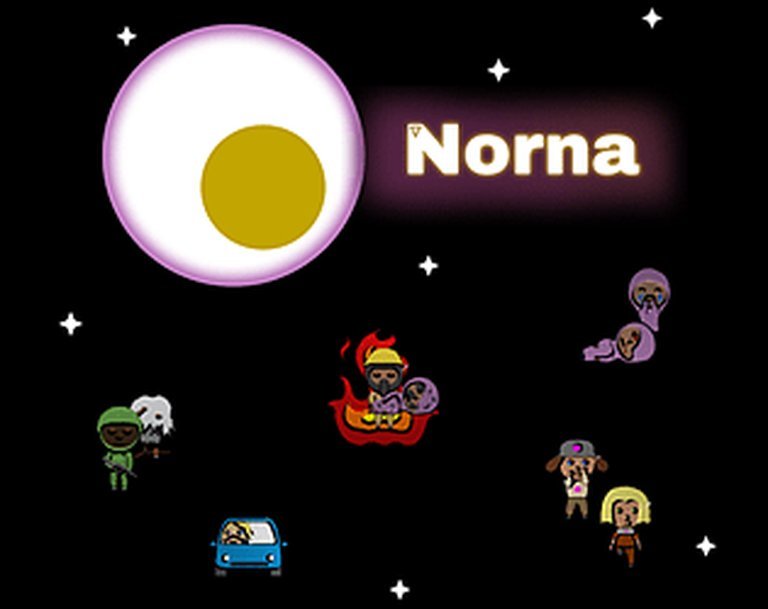
Low-fi 2D sprites: blocky humans, symbolic objects. Reviews note “low end production,” yet it suits theme—raw, unpolished like ancient runes. Colors shift per branch (greens to infernal reds), enhancing mood.
Sound Design
Ambient drones, subtle chimes for solves/manipulations—no OST bombast. Sound cues fates (ominous tolls), fostering tension. Minimalism aids focus, though lacks Ori‘s polish; contributes via absence, heightening puzzle solitude.
Reception & Legacy
Launching to niche acclaim, Norna earned unscored Diehard GameFan raves: “fantastic puzzle game… worth a look for any fan of puzzles” (PC, 2015); iOS upgrades “make this an overall better experience” (2016). No MobyScore, zero player reviews on MobyGames—obscurity fits indie’s fate. Commercially modest amid 2015’s $61B market, yet $5 price democratized access.
Critical and Commercial Arc
Praised for challenge sans hand-holding; critiqued casual-unfriendly. Reputation evolved post-2020 MobyGames entry, rediscovered by puzzle historians.
Influence
Pioneered fate-directing in puzzles, influencing The Gardener-likes or Unpacking‘s subtlety. Industry-wide, exemplifies lore-via-mechanics (Bloodborne-style), indie non-linearity amid AAA cinematics.
Conclusion
Norna masterfully fuses Norse-inspired determinism with physics puzzles, its 120-branch odyssey challenging solvers to defy fates they impose. Flaws—production austerity, steep curves—pale against innovations: emergent narrative, behavioral depth. In video game history, it claims a vital spot among 2015 indies, a demigod among mortals—essential for puzzle purists, intriguing for lore seekers. Verdict: 9/10. Unearth it; question your own fate.