
- Release Year: 2022
- Platforms: Android, iPad, iPhone, Nintendo Switch, PlayStation 4, PlayStation 5, Windows
- Publisher: Happy Juice Interactive LLC, Joystick Ventures, Snapbreak Games AB
- Developer: Happy Juice Interactive LLC
- Genre: Adventure
- Perspective: 3rd-person (Other)
- Game Mode: Single-player
- Gameplay: Graphic adventure, Mini-games, Puzzle elements
- Average Score: 79/100
Description
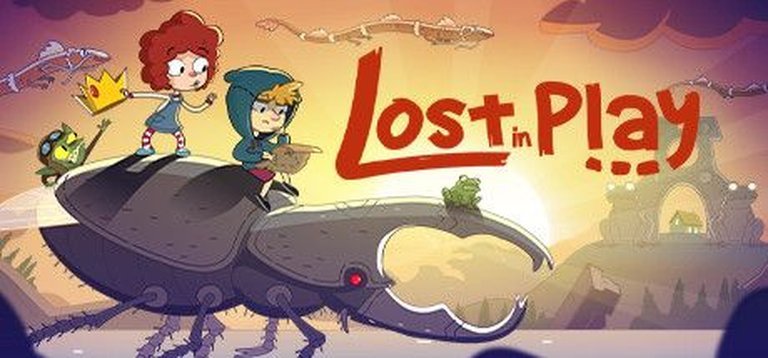
Lost in Play is a hand-drawn graphic adventure game where a young girl and her little brother become lost in a whimsical world of their imagination, requiring players to solve intricate puzzles, engage in fun mini-games, and unravel a detective/mystery narrative to guide them back home, all presented in a stunning third-person point-and-select perspective.
Gameplay Videos
Where to Buy Lost in Play
Lost in Play Free Download
Lost in Play Guides & Walkthroughs
Lost in Play Reviews & Reception
opencritic.com (85/100): Lost in Play is a charming and amazing point-and-click puzzler that will make you feel like a kid again.
metacritic.com (84/100): Lost in Play is an aptly titled point-and-click game that’s wrapped nicely with gorgeous animations and a lovely story.
rockpapershotgun.com : Lost In Play is a gorgeous point and click puzzler that instantly charms with its vibrant cartoon visuals.
nodegamers.com (70/100): Lost in Play was an incredible experience, which served as a beautiful reminder to my own childhood and my wild imagination.
geekyhobbies.com : Lost in Play takes you to a charming fantastical world filled with good puzzles.
Lost in Play: Review
Introduction
Imagine slipping into the boundless playground of a child’s mind, where a backyard frog becomes a sword-wielding hero and a neighborhood park morphs into an ocean abyss teeming with pirate seagulls. Lost in Play (2022), the debut title from Tel Aviv-based Happy Juice Games, isn’t just a game—it’s a vibrant portal to that forgotten wonder, blending point-and-click adventure mastery with hand-drawn animation that rivals Saturday morning cartoons. Released amid a post-pandemic indie boom craving wholesome escapism, this puzzle-driven odyssey follows siblings Toto and Gal on a fantastical quest home, evoking classics like Machinarium while carving its own niche in family-friendly gaming. My thesis: Lost in Play stands as a triumphant modern heir to the adventure genre’s golden age, proving that brevity, accessibility, and unbridled imagination can yield enduring joy without compromising depth or charm.
Development History & Context
Happy Juice Games, founded by programmers and animators Yuval Markovich, Oren Rubin, and Alon Simon, emerged from Israel’s vibrant indie scene to craft their first project over three and a half grueling years. Markovich, a veteran from mobile studio Nitako Games who self-taught English via ’80s text adventures, handled core coding on Unity, leveraging middleware like Obi for physics, Rewired for input, and FMOD for audio. Rubin and Simon, alumni of 2018’s The Office Quest, infused their TV/film animation expertise, drawing Toto and Gal directly from Rubin’s children to authentically capture sibling dynamics.
Development began modestly in 2019 as a self-funded prototype, initially pegged at six months but ballooning amid COVID-19 hurdles. Early publisher talks fizzled, prompting social media hustling that caught Justin Berenbaum’s eye at Xsolla. This led to Joystick Ventures’ formation (Xsolla + Nazca venture capital), funding expansion to 118 credits—including writers Tal Goldberg, Chen Ashkenazi, and Guy Harlap; composers Alon Kaplan and Naor Hazan; and voice actors Jonathan and Eliana Magon. The vision: sidestep rigid narratives for “sibling make-believe,” inspired by Gravity Falls, Hilda, Over the Garden Wall, and childhood media like 3000 Leagues in Search of Mother. Technological constraints were minimal on Unity, but the team prioritized 2D hand-crafted visuals over AAA scope, targeting accessibility amid 2022’s indie surge (Stray, Cult of the Lamb). Launching August 10 on Windows, Switch, and macOS (later iOS/Android via Snapbreak in 2023, PS4/5 in 2024, Apple Arcade as Lost in Play+ in 2025), it navigated a market hungry for feel-good puzzles post-Zelda: Breath of the Wild‘s open-world dominance.
Narrative & Thematic Deep Dive
Lost in Play‘s plot unfolds across 15 loosely connected episodes, a deliberate rejection of linear hero’s journeys to mimic kids’ improvisational play. Bored sister Gal rouses lazy brother Toto for outdoor fun, but a portal flings them into dreamscapes blending real suburbia (messy bedrooms, pigeon-feeding grannies) with fantasy (goblin villages, whale bellies, stork skies). The first act explores outward whimsy—escaping horned beasts, frog alliances, ocean depths—while the second follows a map home before nightfall, introducing conflict like sibling spats that briefly desaturate the world, grounding reverie in reality.
Characters shine through silence: no comprehensible dialogue, just endearing gibberish (voiced by the Magons), gestures, and icons. Toto’s sleepy mischief contrasts Gal’s bold energy, echoing Mabel Pines’ exuberance; quirky NPCs like rubber-duck-obsessed goblins, tea-partying toads, and heavy-metal sheep steal scenes via expressive animations. Recurring motifs—frogs, goblins, magic crowns—tie vignettes without cohesion, reinforcing themes of imagination’s chaos. Core motifs probe childhood’s duality: boundless creativity vs. frustration (added post-prototype to avoid “too cute” vibes), nostalgia vs. growth, play as rebellion against bedtime. Sibling rivalry peaks mid-game, with real-world bickering piercing fantasy, culminating in unity. It’s a detective/mystery narrative visually conveyed, rewarding curiosity over exposition—predictable yet heartfelt, evoking Inside or Limbo‘s wordless poetry but uplifting, not grim.
Gameplay Mechanics & Systems
Core loops epitomize refined point-and-select adventure: free-movement 3rd-person exploration (gamepad optimal over mouse/keyboard), item collection via proximity hotspots, and puzzle resolution sans inventory combos. Control one sibling (swap rarely), gather clues/objects (e.g., can opener for frog’s tinned flies), trade/use them contextually. Innovation lies in visual telegraphing—NPCs gesture needs (pictorial symbols)—eliminating parser pitfalls of yore. Puzzles blend environmental logic (sequence actions, environmental cues) with 30+ mini-games: card battles vs. goblins, checkers against imps, crab-clicking vs. seagulls, airship assembly, sheep-herding mazes, light-beam routing. Variety prevents repetition, integrating narratively (e.g., goblin rebellion via cards).
No combat/progression trees; “advancement” is episodic gating. UI excels: top-screen open inventory, info button recaps mechanics, unlimited hint system (progressive clues, puzzle-specific), instant resets. Flaws? Some puzzles obtuse (illogical solutions, non-intuitive cards sans tutorial), grid movement fiddly on Switch, length (4-7 hours) exposes repetition (sliding puzzles). Yet accessibility shines—hints preserve immersion, no dead-ends—making it family-viable, though kids may need adult aid for trickier bits like strategic AI foes.
World-Building, Art & Sound
Settings masterfully blur mundane-to-magic: home/park warps into enchanted forests, oceanic ruins, desert orc isles, cavern depths—15 vignettes (some montaged) evoking folklore whimsy. Atmosphere thrives on contrast: vibrant fantasies desaturate during fights, camera shakes for scares, montages for epic treks (lava jumps, giant-toe plucks glimpsed, not played).
Art direction—hand-drawn 2D cartoon stylings by Rubin/Simon/Yam—is peerless: lush, fluid animations (e.g., derpy chickens, expressive fails) feel interactive Looney Tunes. Colors pop (neon goblins, azure seas), details delight (living rooms as boss arenas). Sound design complements: Hazan/Kaplan’s whimsical score (playful flutes, orchestral swells) fits visuals; gibberish vocals/noises (grunts, laughs) universalize humor; FMOD-driven effects (squelches, boings) amplify absurdity. Collectively, they immerse like a “playable cartoon,” fostering childlike awe.
Reception & Legacy
Critically, Lost in Play soared: MobyGames 8.1/10 (85% critics), Metacritic 82-84, OpenCritic 85 (93% recommend). Nintendo Life (9/10) hailed “cerebral gaming, effervescent entertainment”; Rock Paper Shotgun praised “gorgeous puzzler”; Pocket Gamer (5/5) its “imagination wonder.” Minor gripes: brevity, puzzle spikes (too easy/kid-unfriendly). Player scores: 4.2/5 (Moby), 8.1 user Metacritic. Commercially solid indie—Steam/GOG $19.99, PS $19.99, mobile free-to-start—collected by 49 Moby users, steelbook Switch editions rare ($60+).
Legacy evolves: 2022 IndieCade Developer Choice win, DevGAMM Best Indie/Visuals; 2023 D.I.C.E. Family nom, Apple Best iPad; 2024 Apple Design Innovation. Influences post-Unravel whimsy, prefiguring Chicory‘s creativity; inspires family adventures amid Pikmin 4‘s puzzle revival. As COVID-era balm, it cements Happy Juice’s boundary-pushing animation adventures.
Conclusion
Lost in Play distills adventure gaming’s essence—puzzles, wonder, brevity—into a 4-7 hour masterpiece of imagination, where art elevates simple mechanics and silence speaks volumes. Minor flaws (length, puzzle variance) pale against its charm, accessibility, and emotional resonance, a family gem evoking childhood’s magic sans darkness. In video game history, it claims a hallowed spot: not revolutionary like Myst, but a definitive, joyous evolution—essential for all ages, warranting sequels. Verdict: 9.2/10. Play it; rediscover your inner child.