
- Release Year: 2016
- Platforms: PlayStation 4, Windows, Xbox One
- Publisher: Koch Media GmbH
- Genre: Compilation
- Game Mode: Single-player
- Average Score: 57/100
Description
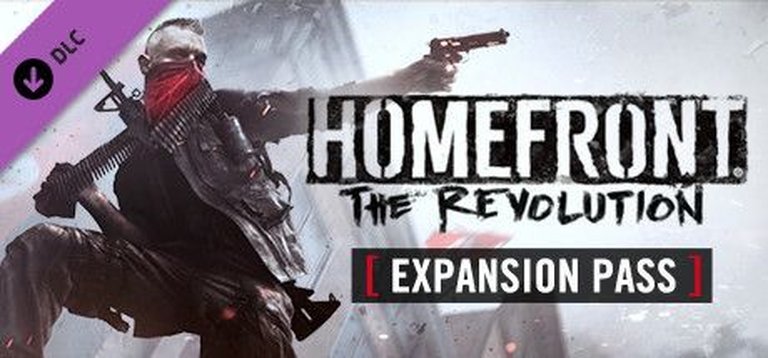
The Homefront: The Revolution – Expansion Pass is a DLC compilation for the dystopian FPS game Homefront: The Revolution, providing access to three single-player expansions—The Voice of Freedom, Aftermath, and Beyond the Walls—that extend the resistance campaign against occupying North Korean forces in an alternate future United States. It also includes exclusive bonuses for the online co-operative Resistance Mode, such as weekly Supply Line crates and new starting character backgrounds like ATF Agent, G-Man, and U.S. Marshall.
Where to Buy Homefront: The Revolution – Expansion Pass
PC
Homefront: The Revolution – Expansion Pass Reviews & Reception
metacritic.com (54/100): Mixed or Average
ign.com : nearly every one of them comes with a big fat ‘but.’ While initially engaging, the stealth and shooter gameplay quickly becomes tedious, the story is terrible
pcgamer.com : Homefront: The Revolution feels slapdash, and after the initial fun of learning its systems, drab repetition reveals obvious exploits.
imdb.com (60/100): It is not a masterpiece. It is not awful, but it is fun. Would recommend.
Homefront: The Revolution – Expansion Pass: Review
Introduction
Imagine a near-future America where the Stars and Stripes fly only in hidden bunkers, replaced by the crimson banners of a technologically ascendant North Korea—then picture three bite-sized campaigns that dare to deliver the revolution the base game promised but fumbled. Homefront: The Revolution – Expansion Pass, released on May 17, 2016, for Windows, PlayStation 4, and Xbox One, bundles The Voice of Freedom, Aftermath, and Beyond the Walls, alongside now-defunct Resistance Mode perks like weekly supply crates and exclusive character backgrounds. Born from the ashes of THQ’s bankruptcy and Crytek’s turmoil, this pass arrives as a sequel’s DLC lifeline to a 2011 cult hit (Homefront) that envisioned Asian invasion on U.S. soil. Yet, in an era dominated by polished open-world juggernauts like Far Cry 4 and The Division, it stands as a bittersweet artifact: flawed, brief, and buggy, but a narrative redemption arc that elevates a troubled franchise, proving even revolutions can spark from embers.
Development History & Context
The Homefront: The Revolution saga reads like a thriller of corporate intrigue, mirroring its dystopian premise. Originally greenlit by THQ post-2011’s Homefront (a linear FPS by Kaos Studios), the sequel shifted to Crytek UK after THQ’s 2012 bankruptcy auction. Crytek acquired the IP for $544,218, envisioning an open-world reimagining powered by CryEngine (later CryEngine 4). Director Hasit Zala’s vision: guerrilla warfare in a relatable Philadelphia, blending Half-Life 2‘s resistance vibe with Far Cry-style liberation. But financial woes struck—unpaid wages, staff exodus (including Zala temporarily), and low morale plagued Crytek UK by mid-2014.
Enter Deep Silver (Koch Media), who scooped the IP in July 2014, handing reins to newborn Dambuster Studios in Nottingham. All Crytek UK staff transferred under UK law, but reboots, publisher liquidation echoes, and tech constraints (CryEngine’s optimization struggles on consoles) delayed launch from 2015 to May 2016. The Expansion Pass, announced at release, promised “several hours” of single-player DLC complementing the 30-hour base campaign, plus co-op bonuses—reflecting 2016’s live-service push amid Destiny and Rainbow Six: Siege. Gaming’s landscape? Post-GTA V open-world fever, but buggy launches (No Man’s Sky loomed) highlighted risks for mid-tier studios like Dambuster (ex-Free Radical alumni). Tech-wise, 1080p/30fps targets strained PS4/Xbox One, yielding frame drops; PC fared better but stuttered. Zala’s “Word from the Game Director” credits hail a “small team” triumph over adversity, yet patches couldn’t fully mask the scars.
Narrative & Thematic Deep Dive
Where the base game’s mute Ethan Brady stumbles through a Far Cry clone with silent-protagonist clichés (echoing Half-Life 2‘s divisive pauses), the Expansion Pass ignites with voiced leads and tighter plotting, dissecting resistance’s moral quagmire. The Voice of Freedom (September 2016) prequels as Benjamin “The Voice of Freedom” Walker infiltrates Philadelphia, battling KPA and gangs to rescue Brady—flipping the base’s opener for raw, linear urgency. Dialogue crackles: Walker’s broadcasts rally via charisma, contrasting KPA’s propaganda.
Aftermath (November 2016) post-dates the base finale, tasking Brady (now voiced, banishing mute awkwardness) with assassinating a broken Walker, only to uncover torture-fueled betrayal. Themes deepen—pacifism vs. violence (Dr. Burnett’s arc echoes), collaborator treachery (James Crawford’s double-agent flip)—culminating in a helicopter escape amid civilian executions. Beyond the Walls (2017), the capstone, thrusts survivors into rural desolation post-national Resistance crush. Brady aids NATO engineer Lisa Burnel launching an EMP missile from a silo, sacrificing amid KPA assault; Parrish’s finale speech ignites true uprising. Jack Parrish’s everyman heart, Dana Moore’s ruthless fire, and themes of escalation (nerve gas reprisals mirroring real insurgencies) probe freedom’s cost. Dialogue evolves: fluent, suggestion-inclusive cinematics fix base gripes, blending Metro-esque grit with alt-history satire (North Korea’s “Silicon River” tech dominance via 1970s floods toppling Kim Il-sung). Flaws persist—clichéd twists (Sudden Betrayal™)—but collectively, ~3 hours forge closure, humanizing archetypes in a franchise begging for eloquence.
| Expansion | Timeline | Key Plot Beats | Thematic Core |
|---|---|---|---|
| Voice of Freedom | Prelude | Walker’s infiltration, gang/KPA fights | Charisma as weapon |
| Aftermath | Post-base | Assassinate/rescue broken Walker | Betrayal’s toll |
| Beyond the Walls | Sequel | NATO EMP silo, rural last stand | Sacrifice for spark |
Gameplay Mechanics & Systems
Ditching base open-world sprawl for linear polish, the Pass refines guerrilla loops: scavenge-craft-assault, but punchier. Core: district raids sans repetitive “liberate X outpost” grind—RC cars bomb patrols, pneumatic pistols silent-snipe, Goliaths rampage. Weapon modding shines: hot-swap assault rifles to grenade launchers mid-firefight, animations fluid (rifle-to-LMG tears). Progression? Base perks carry over, but voiced missions add RP depth—no more NPCs ignoring your mute Brady.
UI streamlines: radial menus for gadgets (hacking minis, distractions), intuitive but cluttered Resistance Mode integration (perks like ATF Agent buggy—often non-functional). Combat: tense, Metro-lite—fragile player vs. fingerprint-locked KPA arms demands guerrilla smarts. Flaws: short (~1hr each), linear chokepoints frustrate (Voice ramps brutally), bugs (CTD on co-op creation, defunct crates). Resistance bonuses? “Supply Line” (RIP), “Right Kind of School” unlocks underwhelm. Innovative: voiced protag integrates player agency (suggestions mid-cinematic). Verdict: elevated base flaws, but brevity bites—quality over quantity for SP fans.
World-Building, Art & Sound
Philadelphia’s husk—Green (KPA elite), Yellow (ghettos), Red (rubble)—expands rural in Beyond: fog-shrouded villages, silo bowels evoke Metro 2033‘s post-apoc hush. Art: CryEngine’s moody palettes (neon KPA signs piercing rain) build oppression; districts evolve (riots spawn dynamically). Visuals: competent 2016 mid-tier—detailed rubble, but pop-in/textures stutter (PC Titan struggles at 1080p). Atmosphere peaks in DLC: Voice‘s gang dens pulse menace, Walls‘ church hauntingly serene pre-assault.
Sound: Graeme Norgate’s score swells revolutionary (guitar riffs over dirge drones); Winifred Phillips adds tension. Foley pops—headshot “bwah!”, Goliath stomps. Dialogue: base yelling fixed—voiced Brady flows naturally. Contributions? Immersive alt-history (APEX backdoors, airships gas cities), but repetition dulls without base’s scale.
Reception & Legacy
Launch: MobyGames n/a (1 player 4/5); Steam mixed (67%, 110 reviews)—praised story polish/linear variety, slammed shortness/value (“3hrs?”), bugs. Base game tanked (Metacritic PC 54, consoles <50; sales 1.2M, €33M by 2018), dubbed “buggy Far Cry clone.” DLCs redeemed: Steam threads hail “conclusion worth sale” ($3 keys), “more polished, voiced protag fixes mute idiocy.” Evolution: Patches stabilized, 2025 users laud “underrated” post-bugs; free trial + PS4 Pro boost helped. Influence? Minimal—echoes in alt-history FPS (The Day Before flop nods?), TimeSplitters 2 Easter egg nods Free Radical roots. Commercially: Bundles like Freedom Fighter Edition sold cheap ($2.24 Steam). Legacy: Cautionary tale of IP handoffs, yet DLCs preserve “what if NK wins?” spark amid 2016’s open-world glut.
Conclusion
Homefront: The Revolution – Expansion Pass distills a turbulent odyssey into ~3 hours of linear redemption: voiced narratives, moral heft, and refined guerrilla thrills eclipse base repetition/bugs, forging closure for Philadelphia’s fight. Amid development hell (THQ-Crytek-Dambuster shuffle), it embodies resilience—flawed (short, buggy co-op), yet engaging for Far Cry/ Metro fans on sale. Not history’s pinnacle, but a gritty footnote: proof revolutions endure, even in DLC form. Verdict: 7/10 – Worth the spark for franchise faithful; a mid-tier gem in gaming’s chaotic annals.