
- Release Year: 2022
- Platforms: Windows
- Publisher: Valkeala Software
- Developer: Mixtor, Valkeala Software
- Genre: Action
- Perspective: Top-down
- Game Mode: Single-player
- Gameplay: Aviation, Flight, Shooter, Vehicular
- Setting: Futuristic, Sci-fi
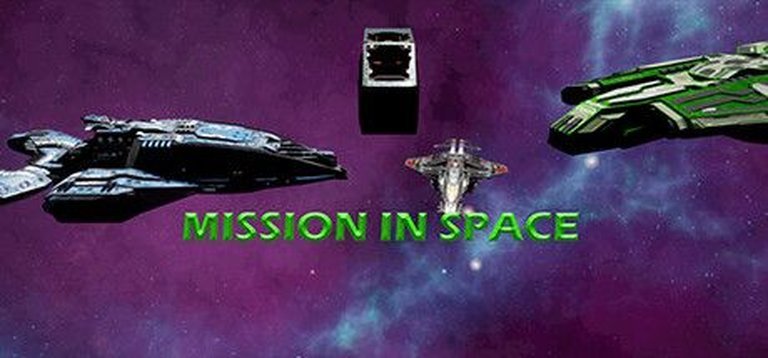
Description
Mission In Space is a sci-fi action shooter developed by Valkeala Software and Mixtor, released in 2022 for Windows, featuring top-down 2D scrolling gameplay focused on vehicular flight and aviation combat in a futuristic setting, where players pilot ships through intense space missions battling enemies in classic arcade-style action.
Where to Buy Mission In Space
PC
Mission In Space: Review
Introduction
In an era dominated by sprawling space epics like No Man’s Sky and ambitious RPGs such as the upcoming Exodus, Mission In Space emerges as a defiant throwback—a pixel-perfect homage to the golden age of 2D shoot ’em ups that defined arcade culture in the late 1970s and 1980s. Released in 2022 by indie developer Valkeala Software and co-creator Mixtor, this top-down space shooter distills the essence of classics like Asteroids, Galaxian, and Space Invaders into six concise levels of frantic action. Amid a gaming landscape bloated with procedural universes and narrative-driven odysseys (Astroneer, Stellaris), Mission In Space reminds us of the pure joy in mastering tight controls, dodging bullet hell, and toppling colossal bosses. My thesis: While lacking the depth or innovation of modern peers, Mission In Space excels as an accessible, achievement-driven retro shooter that captures the addictive simplicity of its forebears, earning its place as a budget-friendly gem for shmup enthusiasts and newcomers alike.
Development History & Context
Valkeala Software, led by Finnish developer Tero Lunkka, operates in the indie space with a portfolio of straightforward action titles, often blending retro aesthetics with Steam-friendly features like achievements. Mission In Space credits Mixtor as a co-developer, suggesting a small-team collaboration typical of post-2020 indie devs leveraging accessible engines like Unreal (as hinted in Steam listings). Released on October 20, 2022, for Windows via Steam at a modest $0.49–$4.99, it arrived during a renaissance of space games—Kerbal Space Program 2, Starfield, and Dune: Spice Wars were hyped, while retro shooters like Jet Lancer and Danmaku Unlimited 3 (Metacritic 84) kept the genre alive.
The early 2020s gaming landscape was marked by technological leaps: SSD-driven worlds in Exodus, procedural planets in Astroneer, and VR immersion in Elite Dangerous. Yet constraints like indie budgets forced Mission In Space to embrace 2D scrolling visuals and top-down perspective, echoing hardware limits of 1980s arcades (ZX Spectrum’s Space Mission, 1982). Lunkka’s vision appears rooted in preservation—Steam pages urge contributions to MobyGames for “video game history”—amid a market where shmups struggle commercially (no MobyScore, sparse reviews). Developed amid COVID-era remote work, it prioritizes polish over ambition, using DirectX 9 for broad compatibility on low-end rigs (i3, GTX 660 minimum), a nod to accessibility in an age of AAA bloat.
Narrative & Thematic Deep Dive
Mission In Space forgoes elaborate lore for archetypal sci-fi pulp, its “STORY” blurb outlining a silent pilot’s odyssey: pilot a missile-and-rocket-armed ship through enemy-infested voids, asteroid barrages, and boss gauntlets. No voiced protagonists or branching paths here—unlike Mass Effect‘s galaxy-spanning epics or Outer Wilds‘ time-loop mysteries—this is pure kinetic storytelling, where plot unfolds via escalating threats.
Core Plot Structure:
– Levels 1–6: Progressive invasion narrative. Early waves evoke Space Invaders (1978), with foes descending in formations; mid-game introduces shooting enemies, mirroring Galaxian (1979).
– Asteroid Waves: Survival horror in zero-G, thematizing isolation (Asteroids, 1979).
– Boss Fights: Colossal end-level guardians symbolize existential dread, akin to R-Type‘s biomechanical horrors.
Themes draw from space game lineage: humanity’s frontier spirit (Elite, 1984) versus cosmic peril (Star Wars: TIE Fighter). No deep characters or dialogue—your ship is a faceless avatar—but 3-lives-per-level permadeath instills tension, evoking roguelike fatalism (FTL). Subtle motifs of resilience shine in Steam achievements (e.g., boss defeats), rewarding mastery over exposition. In a genre bloated with transhuman epics (Exodus‘ Celestials), its minimalism critiques over-narration, prioritizing player agency in a wordless void.
Gameplay Mechanics & Systems
At its core, Mission In Space is a vehicular flight shooter: top-down 2D scrolling demands pixel-perfect maneuvering. The loop is elegantly simple yet punishing:
Core Loop:
1. Movement & Combat: Thrust, rotate, fire missiles/rockets. Enemies swarm with varied patterns—some static, others homing shooters—forcing evasion.
2. Hazard Management: Asteroid waves require shooting or dodging; collisions drain lives (3 per level).
3. Boss Phases: Multi-stage behemoths demand pattern recognition, resource conservation.
Progression & UI:
– No RPG elements (unlike Everspace 2); power-ups implied via weapons, but fixed arsenal emphasizes skill.
– UI: Clean HUD (health, lives, score) harks to arcades; Steam overlay integrates achievements seamlessly.
– Innovation: Linear 6-level structure avoids procedural bloat (No Man’s Sky), ensuring tight pacing. Flaws: Repetitive waves may frustrate veterans; no co-op or endless mode.
Strengths & Flaws:
| Mechanic | Strength | Flaw |
|---|---|---|
| Controls | Responsive, intuitive (keyboard/joypad) | No customization |
| Difficulty | Fair curve (3 lives/level) | No continues |
| Variety | Enemies, asteroids, bosses | Limited levels |
Compared to Radiant Silvergun (Metacritic 86), it’s less complex but more approachable—perfect for Shmups newcomers.
World-Building, Art & Sound
The sci-fi/futuristic setting is abstract: nebulae-scrolling backdrops evoke infinite space, with asteroid fields and boss arenas as procedural-feeling highlights. No planetary terraforming (Astroneer) or empires (Stellaris)—it’s void-focused, amplifying claustrophobia.
Visuals: 2D scrolling sprites recall low-poly pioneers (Homeworld Remastered). Vibrant enemy palettes pop against starry voids; bosses loom massively, using scale for intimidation. Low-spec optimization yields smooth 60FPS, though lacks modern effects (no ray-tracing).
Sound Design: Retro chiptunes (inferred from genre) pulse with tension—pew-pew lasers, explosive booms, ominous boss themes. SFX contribute to flow state, akin to Freespace 2‘s orchestral swells, but simpler. Atmosphere builds via escalating intensity: serene drifts shatter into chaos, mirroring space’s duality (exploration vs. peril).
These elements forge immersion without excess—pure, unadorned escapism.
Reception & Legacy
Launch reception was muted: No Metacritic/MobyGames scores; Steam’s 4 user reviews mix praise for nostalgia (“classic shmup fun”) with gripes on brevity. Priced at $0.49 sales-wise (Steam charts), it flew under radar amid 2022 giants (Elden Ring, 96 Metacritic).
Critically absent (first on MobyGames reviews), it echoes indies like Last Space Mission (2020). Legacy: Niche preservation piece, influencing micro-shmups in Steam’s indie surge. Influences future retro revivals (Capcom Fighting Collection, 2022); Steam achievements foster replayability. In history, it joins Spacewar! (1962) lineage—humble amid titans (Starfield), but vital for genre vitality.
Conclusion
Mission In Space is no revolutionary odyssey like Outer Wilds or empire-builder like Distant Worlds, but a masterful microcosm of shmup purity: six levels of dodge, shoot, survive. Valkeala’s indie craft shines in responsive mechanics, retro charm, and unpretentious design, flaws (repetition, brevity) forgiven by its $0.49 accessibility. In video game history, it secures a foothold as 2022’s unsung arcade revival—essential for shmup fans, a gateway for casuals. Verdict: 8/10—a stellar budget blast, proving classics endure in pixel form. Play it, master it, preserve it.