
- Release Year: 2015
- Platforms: Linux, Macintosh, Windows
- Publisher: Surprise Attack Pty Ltd
- Developer: Thoughtshelter Games, LLC
- Genre: Strategy, Tactics
- Perspective: Diagonal-down
- Game Mode: Single-player
- Gameplay: Turn-based strategy
- Setting: Fantasy
- Average Score: 74/100
Description
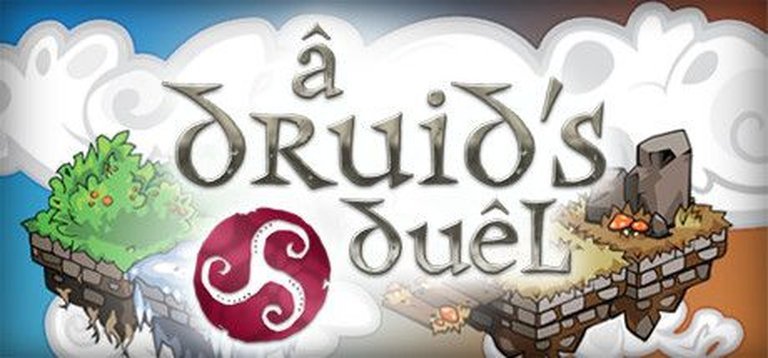
A Druid’s Duel is a turn-based strategy game set in the mystical Realm of Six Seasons, a Celtic-inspired fantasy world where the natural order of seasons has been disrupted. Players command druids who shapeshift into powerful animals like wolves, eagles, bears, and turtles, using mana generated from owned land to summon units, transform them, and dynamically alter the battlefield terrain to outmaneuver opponents and claim victory as the last controller of the board.
Gameplay Videos
Where to Buy A Druid’s Duel
PC
A Druid’s Duel Cracks & Fixes
A Druid’s Duel Guides & Walkthroughs
A Druid’s Duel Reviews & Reception
metacritic.com (70/100): Mixed or Average
steambase.io (74/100): Mostly Positive
cliqist.com : A surprisingly unique, entertaining game.
indiegamereviewer.com (80/100): A Druid’s Duel should be able to hold the attention span of most gamers for a long time.
operationrainfall.com : Challenging as hell, but that’s where the strategy comes in.
A Druid’s Duel: Review
Introduction
Imagine a chessboard where the squares themselves bend to your will—growing under your allies’ feet, crumbling beneath your foes, all while druids shapeshift into rampaging bears or soaring eagles to claim territory in a disrupted Celtic realm. A Druid’s Duel, released in 2015 by indie studio Thoughtshelter Games, isn’t just another turn-based strategy title; it’s a plucky, mischievous dueling ground that distills territorial conquest into pure, addictive nuance. Born from a successful Kickstarter and showcased at PAX East’s Indie MEGABOOTH, this game has carved a quiet legacy among strategy enthusiasts, evoking classics like Advance Wars but with a nature-warping twist. My thesis: A Druid’s Duel stands as a masterful indie exemplar of “easy to learn, impossible to master,” blending elegant mechanics, thematic depth, and replayable chaos into a timeless tactical gem that punches above its weight in video game history.
Development History & Context
Thoughtshelter Games, LLC, a one-man powerhouse led by Kris Szafranski—who single-handedly handled concept, design, and programming—birthed A Druid’s Duel amid the 2014-2015 indie renaissance. Funded via Kickstarter, the project evolved from prototypes shown at PAX East 2014 into a full release on February 25, 2015, across Windows, Mac, and Linux, published by Surprise Attack Pty Ltd. Szafranski’s vision was clear: a “fast-paced turn-based strategy game set in a world of Celtic lore,” emphasizing board manipulation over rote combat, as detailed in dev blogs on IndieDB. Milestones like the “Six Seasons Alpha” (133 levels complete by November 2014) and multiplayer polish (online asynchronous play by December 2014) highlight a scrappy, iterative process.
Built on Unity—then a go-to for indies enabling quick cross-platform deployment—the game navigated 2015’s technological landscape of maturing Steam Greenlight, rising mobile ports (iOS planned but unconfirmed), and hardware like 1080p monitors demanding widescreen support (initially absent, per reviews). The era’s gaming scene buzzed with tactical hits like XCOM: Enemy Unknown (2012) and upcoming Into the Breach (2018), but Druid’s Duel carved a niche in the “territory control” subgenre, akin to Quarter to Three‘s praise for its “chess-like simplicity.” Constraints like a tiny team (art by Laura Davis, Kris Szafranski, Sean MacBean; AI by Jonny Brannum; music by Troy Strand and Topher Pirkl) fostered innovation, with Szafranski’s post-mortem at IGDA Twin Cities (April 2016) dissecting choices in design, architecture, and marketing. In a post-Minecraft indie boom, it embodied solo-dev triumphs, relying on community feedback and Steam for visibility.
Narrative & Thematic Deep Dive
At its heart, A Druid’s Duel unfolds in the “Realm of Six Seasons,” a Celtic-inspired fantasia where nature’s eternal cycle—Summer, Winter, Autumn, Spring, and two mystical kin—has shattered. Bright days bleed into snowstorms, leaves into deluges, signaling tampering by unseen forces. Protagonist Warren, a “young druid fresh from his Esoteric Training,” embodies the hero’s journey, tasked by the Druids of the Esoteric Orders to restore balance by hunting the Six Season Stones across 130+ levels. This single-player campaign, structured as “Six Seasons,” frames episodic duels against AI foes, blending lore drops with tactical puzzles.
Characters shine through four archetypal druids, each a lore-rich vessel:
– Guardian (spear-wielding protector): Loyal land-tenders who wolf-shift for stealthy expansion, symbolizing communal defense.
– Wind Rider (marksman scout): Dauntless loners eagle-soaring for reconnaissance, evoking freedom’s peril.
– Snarlclaw (feral warrior): Bear-raging berserkers, primal fury incarnate.
– Waywalker (mana mystic): Turtle-shelling terrain-shapers, wise manipulators of the land.
Dialogue is sparse—poetic blurbs like “Protector of the Way” or “Feral Skirmisher”—but thematically potent, underscoring harmony vs. chaos. Themes delve deep into Celtic mythology: nature’s fragility (druids as stewards), cyclical balance disrupted by hubris, shapeshifting as shamanic transcendence. Multiplayer strips narrative for pure duels, amplifying themes of mischief and adaptation. Critiques note the story’s lightness—unremarkable per Cliqist—but it serves as atmospheric glue, elevating mechanics into a fable of ecological warfare, where victory means reclaiming the board’s soul.
Gameplay Mechanics & Systems
A Druid’s Duel‘s core loop is a taut territorial tango: own land tiles (marked by color triangles) to generate mana at turn-start, then spend it summoning druids (on owned land), transforming them, or terraforming (create/destroy tiles). Win by monopolizing all land, starving foes of mana. No randomness—pure skill expression via diagonal-down, fixed/flip-screen boards.
Core Loop & Combat: Turns are point-and-click swift: move/attack (one-hit kills any unit), shapeshift (temporary animal boosts), or alter terrain (e.g., erase foe footing). Combat deconstructs to positioning: Guardians (1-space move/attack, wolf: 4-space dash, no attack); Wind Riders (2-range attack, eagle: 6-space fly/snipe); Snarlclaws (melee brute, bear: trample 3 foes); Waywalkers (terrain rites like blocking paths, turtle: impervious shell). Reviews laud “tight” synergy—e.g., eagle-sniping isolates, bears snowball land grabs—yet flaws emerge: AI’s “boneheaded” pacing (Operation Rainfall), undo button purist ire (Indie Game Reviewer).
Progression & UI: Campaign ramps 4 difficulties, unlocking nuances over 130 levels; multiplayer (local/hotseat/online async up to 4P) adds timers (30s+). UI excels: intuitive mouse controls, clear mana/ownership visuals, quick-start guides. Innovations shine in dynamic boards—”looks can be deceiving” (Fandom)—where terrain tricks (e.g., island-hopping eagles) spawn emergent strats. Flaws: no widescreen early (patched?), repetitive AI patterns. Pacing hooks with “just one more turn” (Player 2), mastering months per dev promise.
| Druid Type | Base Abilities | Animal Form | Mana Cost | Strategic Role |
|---|---|---|---|---|
| Guardian | 1-space move/attack (diag.) | Wolf: 4-space move | 10 | Land grabber, pack hunter |
| Wind Rider | 2-range attack, 1-space move | Eagle: 6-space move/attack | Varies | Scout/sniper, expansion |
| Snarlclaw | Melee power | Bear: 3-foe trample, long dash | High | Wrecker, momentum |
| Waywalker | Terrain manipulation | Turtle: Block paths, tank | Low-Med | Control/denial |
World-Building, Art & Sound
The Realm of Six Seasons immerses via vivid, mutable hex-like tiles shifting seasons—snowy eves, autumn bursts—mirroring Celtic cycles. Boards evolve organically: player actions spawn verdant lands or abyssal voids, fostering paranoia (“never let your guard down”). Atmosphere thrives on mischief: druids as nature’s pranksters, bears rampaging like folklore beasts.
Visuals: Hand-drawn, colorful 2D—distinct druids (e.g., Snarlclaw’s ferocity), smooth transforms (minor stutters noted). Fixed perspective evokes board games, Unity’s polish ensuring fluidity. Sound design elevates: Troy Strand/Topher Pirkl’s “professionally-composed soundtrack” (Steam) weaves Celtic strings, evoking taverns and wilds; SFX like eagle screeches, leaf crunches, bear roars sync perfectly, though repetitive (mute option). Collectively, they birth tactile immersion—mana flows feel alive, terraforming visceral—amplifying strategy’s tension.
Reception & Legacy
Launch reception was “mixed or average” (Metacritic 70/100 from 4 critics; Steam 74% Mostly Positive from 112 reviews). Positives dominated: Quarter to Three (80/100) hailed “plucky territory control… rampaging bears”; Digitally Downloaded (70) praised intensity; Player 2 gushed “great… just one more turn.” Unscored nods from Gameplay (Benelux), Player 2. Critiques: SpazioGames (60) called it “peculiar… for chess fans”; Cliqist noted unremarkable story, no widescreen.
Commercially modest ($7.99 Steam/Humble), collected by 13 MobyGames users, but legacy endures. Post-launch updates (multiplayer tweaks) sustained community; Szafranski’s IGDA talk reflected on paths taken. Influence: Prefigures terrain-fluid TBS like Endless Legend expansions, inspires indie duels (e.g., similar Unity tactics). Reputation evolved to cult status—ranked low (13k+ IndieDB) but cherished for purity amid 2020s bloat. No ports materialized (iOS teased), yet it endures as indie history’s underdog, influencing async multiplayer norms.
Conclusion
A Druid’s Duel masterfully synthesizes Celtic myth, terrain trickery, and druidic duality into a strategy opus that’s deceptively profound. Kris Szafranski’s solo vision triumphs over constraints, delivering 130+ levels of brain-melting duels, multiplayer mischief, and atmospheric allure that outshines its flaws. In video game history, it claims a vital niche: the indie beacon proving small teams can rival giants in tactical elegance. Verdict: Essential for strategy faithful—buy it, master it, and restore the Six Seasons. 9/10.