
- Release Year: 2023
- Platforms: Linux, Macintosh, Windows
- Publisher: McLeodGaming
- Developer: McLeodGaming
- Genre: Action
- Perspective: Side view
- Gameplay: Beat ’em up, brawler, Fighting, Platform
- Average Score: 71/100
Description
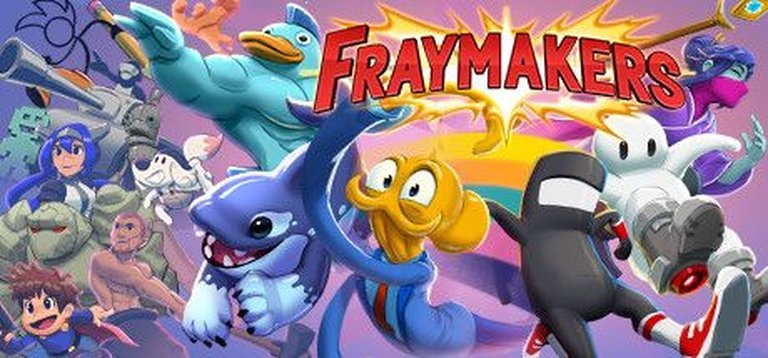
Fraymakers is a platform fighting game developed by McLeodGaming, featuring a roster of crossover characters from popular indie titles like Octodad, Downwell, Rivals of Aether, Slay the Spire, Ittle Dew, the Bit.Trip series, and A Hat in Time, battling across stages drawn from these games’ universes. Players can summon NPC assists from additional indie games such as Machinarium, CrossCode, and Ape Out, with support for custom content via the FrayTools editor, all in a Super Smash Bros.-inspired multiplayer format released in early access on PC platforms.
Gameplay Videos
Where to Buy Fraymakers
PC
Fraymakers Patches & Updates
Fraymakers Mods
Fraymakers Guides & Walkthroughs
Fraymakers Reviews & Reception
steambase.io (77/100): Mostly Positive (77/100 from 1,403 reviews)
store.steampowered.com (79/100): Mostly Positive (79% of 1,119 reviews)
theowluc.com : Expectations are exceeded in every microscopic detail of the game.
vaporlens.app (58/100): Mixed reviews: excellent gameplay but incomplete early access.
Fraymakers: Review
Introduction
In an era dominated by behemoths like Super Smash Bros. Ultimate, where corporate icons clash in meticulously polished arenas, Fraymakers emerges as a defiant underdog—a vibrant tribute to indie gaming’s golden age. Developed by McLeodGaming, the studio behind the fan-favorite Super Smash Flash 2, and their collaborative Team Fray, this platform fighter burst onto Steam in Early Access on January 18, 2023, after a wildly successful Kickstarter that shattered its $46,000 goal, raising over $364,922 from nearly 10,000 backers. What begins as a familiar brawler—percent-based damage, stage knockouts, and combo-heavy frenzy—quickly reveals its soul: a crossover extravaganza of indie darlings like Octodad, Commander Video from BIT.TRIP, and Hat Kid from A Hat in Time. My thesis? Fraymakers isn’t just another Smash clone; it’s a moddable love letter to indie creativity, poised to redefine community-driven fighters if it fulfills its ambitious roadmap, though its Early Access growing pains remind us that even the most promising frays start frayed at the edges.
Development History & Context
Fraymakers traces its roots to 2018, born from the ashes of Adobe Flash’s impending demise. Gregory McLeod, director of Super Smash Flash 2 (SSF2), recognized the need for a sustainable evolution beyond Flash’s obsolescence by 2020. Assembling Team Fray—co-founded with James Hadden, alongside SSF2 veterans like programmers Ramsey Kaid and Mass, animator Max Silverman, and announcer Kira Buckland—McLeod pivoted to a custom Haxe-based engine powered by Heaps, emphasizing rollback netcode from day one for buttery online play.
Public teasers began in 2020 under the codename “McLeodGaming Next,” culminating in the November 18 Kickstarter launch. Stretch goals unlocked a bounty: nine playable characters (up from six), 50 assists, eight extra stages, Nintendo Switch support (hit at $235,000), alternative soundtracks from OC ReMix and FamilyJules, and the crowning jewel, FrayTools—a free, cross-platform editor for custom fighters, stages, assists, and modes. Delays plagued progress: Early Access slipped from 2022 to January 2023 after tester builds in August 2022 exposed performance hiccups, controller woes, and licensing hurdles with indie studios. Post-launch updates (e.g., v0.8 in September 2025 adding Hat Kid) reflect iterative polish, with a full release eyed for late 2025 or early 2026, including Switch port and DLC.
Contextually, Fraymakers arrived amid a platform fighter renaissance (Rivals of Aether, Slap City, MultiVersus), but carved a niche by licensing indie crossovers—Octodad’s floppy chaos, Welltaro’s gunboots—while sidestepping legal pitfalls that doomed fan games. Technological constraints like Heaps’ lightweight footprint enabled modding via Steam Workshop and GitHub plugins, but early bugs (memory leaks, input lag) underscored small-team strains against giants like Nintendo.
Narrative & Thematic Deep Dive
Traditional narrative? Absent. Fraymakers thrives as a pure-competitive arena, eschewing campaigns for versus lobbies, training dummies, and Fraybets (AI betting battles). Yet, its “story” unfolds through thematic resonance: a panoramic homage to indiedom’s underdogs. Playables embody archetypes—Welltaro’s roguelike descent (Downwell), The Watcher’s stance-shifting meditation (Slay the Spire), Orcane’s watery trickery (Rivals of Aether)—weaving a meta-tale of pixelated rebellion. Assists amplify this: Crewmate/Impostor from Among Us sabotages with stabs or hitstun buffs; Josef (Machinarium) stretches skyward; Peppino (Pizza Tower) suplexes foes.
Dialogue is sparse—announcer quips, victory poses—but themes pulse vividly: community as creator. FrayTools democratizes authorship, letting players script Haxe-like behaviors, import sprites, and timeline 80+ animations per custom fighter. This mirrors indie’s ethos—accessible tools birthing endless content—echoing SSF2‘s mod scene. Underlying motifs include chaos in collaboration (indie mashups fostering emergent rivalries) and evolution through iteration (Kickstarter backer surveys shaping balance). No hero’s journey, but a collective epic where players author the fray, critiquing modern fighters’ static rosters. Flaws? Early Access’ incomplete arcs (e.g., unfinished sprites pre-v0.6) dilute immersion, but post-Hat Kid updates hint at a fuller tapestry.
Gameplay Mechanics & Systems
At its core, Fraymakers deconstructs the platform fighter loop with surgical precision. Damage accrues as percentages, escalating knockback toward blast-zone ring-outs; stocks or timers dictate victory. Movement shines: double jumps, short hops, omnidirectional airdashes (cancelable into aerials), wavedashing, and teching (fast-falling to negate lag). Defensive layers—directional shields (grab-vulnerable), parries (shield + special for punishes), spot/roll/air dodges, ledge options (jump/roll/attack)—reward adaptation.
Core Loop:
– Offense: Neutral attacks chain pokes; tilts/smash for pokes/power; four specials (neutral/down/side/up) for zoning/recovery. Grabs yield directional throws. Meter from damage fuels assists (1-2 uses/stock), spawning indie allies for bursts (e.g., Gunman Clive’s bullet spray, Captain Viridian’s gravity flip).
– Progression: No RPG trees; mastery via Training Mode (hitboxes, frame data, programmable dummies, DI simulation). Modifiers (size/speed tweaks, random assists) spice casual play.
– UI/Online: Clean HUD (damage, stocks, meter); rollback netcode ensures 60 FPS responsiveness, cross-platform lobbies. Local co-op mandates gamepads (keyboard for P1).
Innovations: Stance systems (Watcher’s Calm/Wrath/Divinity via Mantra stacks, blending jumps/heals/speed/damage); ammo management (Welltaro’s gunboots); clutching (Fishbunjin’s momentum-reversing smashes). Flaws persist—early netcode stutters, assist overuse, small roster (7 playables)—but v0.8+ patches (crawling, stamina mode) refine depth. FrayTools elevates it: Sprite entities, collision bodies, hscript AI yield Workshop wonders, from Shovel Knight customs to experimental modes.
| Mechanic | Strengths | Weaknesses |
|---|---|---|
| Movement | Fluid airdashes, cancels | Controller quirks early on |
| Combat | 80+ animations/character, parry depth | Assist cooldowns feel restrictive |
| Modes | Training excellence, Workshop infinity | Light single-player (targets mode WIP) |
| Online | Rollback gold standard | Peer-to-peer lag spikes |
World-Building, Art & Sound
No singular world—arenas collage indie universes. Stages (6 core): Stratostar’s rhythmic trampolines (BIT.TRIP), Backyard’s knockable furniture (Octodad), Subcon Forest’s Snatcher hazards (A Hat in Time). Multi-tiered layouts, toggleable hazards (e.g., Merchant Port’s water jets) foster chaos, contributing atmospheric variety without overwhelming.
Visuals: Pixel art perfection—crisp 2D scrolling, fluid 80-frame movesets (e.g., Hat Kid’s umbrella spins). Palette swaps, dynamic effects (rainbow trails on Commander Video) evoke nostalgia. Atmosphere? Frenetic joy, indie’s quirky charm amplified by crossovers.
Sound: OC ReMix/FamilyJules remixes pulse with energy—BIT.TRIP‘s chiptune frenzy, Slay the Spire‘s ethereal stabs. SFX snap (tentacle flops, gunboot blasts); Buckland’s announcer adds gravitas. Immersive synergy: beats sync jumps, impacts thud satisfyingly, forging “epic battle arena” hype.
Reception & Legacy
Launch peaked at 2,333 concurrents, ~66,000 sales (Steam est.), Mostly Positive (77-79%, 1,400+ reviews). Praises: “Tight controls, mod potential” (PC Gamer, GamesRadar+); rollback lauded over Smash. Critiques: Bugs, sparse roster (“incomplete” per The Outer Haven), netcode tweaks needed.
Community thrives—Discord, Workshop floods customs; PAX demos (e.g., 2025 Hat Kid) build hype. Influence? Revives indie fighters post-Rivals; FrayTools inspires modding (plugins for other engines). Legacy: Potential Smash rival on Switch, celebrating indies amid corporatization. Evolving rep—from rocky EA to “promising” via updates.
Conclusion
Fraymakers masterfully blends Smash familiarity with indie soul, its moddable heart ensuring longevity. Exhaustive mechanics, crossover charm, and dev responsiveness cement its place, but fuller rosters/modes are vital. Verdict: 8.5/10—A must-watch evolutionary step in platform fighters, essential for modders and indie fans; wait for 1.0 if purity demands polish. In gaming history, it etches as the crowd-sourced fray that could fray the establishment.