
- Release Year: 2020
- Platforms: iPad, iPhone, Linux, Macintosh, Nintendo Switch, PlayStation 4, PlayStation 5, tvOS, Windows
- Publisher: Draknek Limited
- Developer: Draknek Limited
- Genre: Puzzle
- Perspective: Diagonal-down
- Game Mode: Single-player
- Gameplay: Exploration, Puzzle-solving
- Setting: Fantasy
- Average Score: 88/100
Description
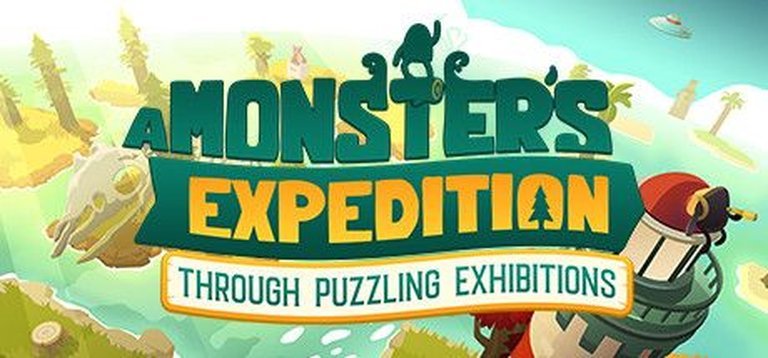
A Monster’s Expedition Through Puzzling Exhibitions is a charming fantasy puzzle game where players control a curious monster exploring an abandoned museum filled with interactive exhibits. Featuring diagonal-down 2D scrolling visuals and direct control mechanics, it challenges players to solve environmental puzzles through clever object manipulation, striking a balance between accessibility and escalating difficulty while delivering quirky humor and seamless mechanic introductions without tutorials.
Gameplay Videos
A Monster’s Expedition Through Puzzling Exhibitions Guides & Walkthroughs
A Monster’s Expedition Through Puzzling Exhibitions Reviews & Reception
mygamingdiaries.com : a game that combines clever puzzles with a sense of calm, light humor, and pure charm.
metacritic.com (92/100): one of the best games I’ve played this year on the system.
opencritic.com (85/100): Draknek masters a genre with a game of little touches, big challenge, and giant heart.
gamecritics.com : Monster’s Expedition does a masterful job of teaching you how to play it.
A Monster’s Expedition Through Puzzling Exhibitions: Review
Introduction
Imagine stumbling upon a vast archipelago of tiny islands, each a fragmented relic of a long-lost human world, interpreted through the wide-eyed wonder of a curious monster. This is the serene yet profoundly clever premise of A Monster’s Expedition Through Puzzling Exhibitions, a 2020 indie puzzle gem that transforms the rigid constraints of Sokoban-style block-pushing into a liberating open-world odyssey. Developed by the small but visionary team at Draknek & Friends, the game builds on the studio’s legacy of elegant puzzlers like A Good Snowman Is Hard to Build (2015) and Cosmic Express (2017), but pushes boundaries with its nonlinear exploration and meditative tone. As a professional game journalist and historian, I’ve analyzed countless titles, yet this one stands out for its masterful blend of accessibility, humor, and intellectual depth. My thesis: A Monster’s Expedition is a landmark in puzzle game design, proving that simplicity can foster profound discovery, and it deserves a permanent place among the genre’s elite for redefining how puzzles can evoke joy without frustration.
Development History & Context
Draknek & Friends, founded by indie puzzle maestro Alan Hazelden (aka Draknek), emerged from the fertile ground of early 2010s browser-based puzzle experiments. Hazelden’s open-source PuzzleScript engine (2013) democratized puzzle prototyping, influencing hits like Baba Is You. A Monster’s Expedition originated as a PuzzleScript prototype but evolved into a full Unity production over three grueling years, reflecting the studio’s ambition to merge open-world freedom with precise puzzle logic—a risky pivot from their linear predecessors.
The core team was a tight-knit ensemble: Hazelden as creative director and lead designer; Benjamin Davis as lead programmer and co-original designer (handling log animations); art director Adam deGrandis for the whimsical visuals; Eli Rainsberry for dynamic audio; Philippa Warr for narrative flair; and producer Syrenne McNulty orchestrating the effort. Additional contributors like level designer Jamie Perconti and QA from Plastic Fern Studios polished the 213-person credit list (including thanks). Technological constraints were minimal—Unity’s flexibility enabled seamless cross-platform ports—but the era’s indie landscape shaped its meditative focus. Released amid 2020’s pandemic lockdowns, it launched on Windows and Apple Arcade (iOS/macOS) on September 10, capitalizing on the service’s puzzle-friendly audience. Linux followed in November, Nintendo Switch in August 2021 (with “The Museum Update” expanding content), and PS4/PS5 in May 2022.
The 2020 gaming scene was dominated by sprawling blockbusters (Cyberpunk 2077, The Last of Us Part II), but indies thrived on itch.io, Steam, and Apple Arcade. Puzzle games like Witness (2016) and Baba Is You (2019) emphasized experimentation, yet few dared true openness. Draknek’s vision—early prototypes leaned adventure-heavy but refined into puzzle primacy—addressed player burnout from linear frustration, aligning with a rising demand for “cozy” games like Unpacking. Priced at $6.99 on Steam, it eschewed microtransactions, embodying indie purity amid rising AAA bloat.
Narrative & Thematic Deep Dive
A Monster’s Expedition eschews traditional plotting for emergent storytelling, casting players as a returning protagonist from A Good Snowman Is Hard to Build: a rotund, spindly-limbed monster backpacker exploring “Human Englandland,” a post-human museum scattered across foggy islands. No voiced characters or branching dialogues exist; instead, narrative unfolds through 100+ exhibits—everyday artifacts like zoetropes (“earliest known perfectly looping GIF format”) or mundane objects reimagined with monstrous naivety. Written by Philippa Warr and edited by Laura Michet (with sensitivity reader Helen Gould), these plaques blend whimsy, satire, and archaeology parody, poking fun at human absurdity while humanizing the monsters’ curiosity.
Themes center on perspective and discovery: monsters speculate wildly on relics (e.g., a coffee stand as a ritual site), mirroring real-world ethnography’s flaws and inviting players to question assumptions. This post-human lens evokes quiet melancholy—humanity’s extinction implied but unspoken—contrasting cozy vibes with subtle existentialism. Exploration reveals “expert insights” laced with rumor and hearsay, underscoring knowledge’s fragility. No overt plot progression; completion stems from unveiling the map via postboxes (fast-travel hubs). Subtle environmental storytelling ties biomes (lush forests to arid expanses) to exhibit clusters, evolving from primitive tools to futuristic oddities, symbolizing civilizational arcs. Dialogue-free yet verbose via text, it masterfully uses humor for emotional resonance, making each “aha” puzzle solve feel like uncovering lost lore. Flaws? Rare repetitive plaques late-game, but overall, it’s a thematic triumph, transforming puzzles into philosophical expeditions.
Gameplay Mechanics & Systems
At its core, A Monster’s Expedition is a Sokoban evolution: a 2D grid-based puzzler where players knock trees into directional logs (small: roll/flip; large: roll-only) to forge bridges/rafts across water gaps. Logs momentum-roll until obstructed, demanding foresight—polarity matters for bridges (entry direction locks traversal). Rafts (multi-log clusters) float bidirectionally but require push-off rocks. Controls are minimalist: four-directional direct control (walk-into interactions), undo (last move), reset (island), with autosave per action. No combat, HUD minimalism enhances immersion—fog shrouds unsolved paths.
Core Loop: Nonlinear archipelago (hundreds of islands, visually biome-segmented) encourages branching paths. No hand-holding: experiment to connect islets, unlocking postboxes for teleportation. Progression feels organic—mechanics layer subtly (e.g., rafts mid-game)—teaching via constraint (e.g., single-tree islands as tutorials). UI shines: clean map overlay, hint system (post-unlock), remappable controls. Innovations include multi-island puzzles (late-game log-chaining) and open-world agency—stuck? Wander elsewhere, mitigating frustration. Character “progression” is map mastery; no levels/stats.
Flaws surface in scale: aimless sprawl risks arbitrary difficulty (early access to hard islands), minor spikes (per Edge/PC Gamer), and repetition if binged. Yet undo/reset fosters “mental applause” (Rock, Paper, Shotgun), balancing challenge/accessibility. Bite-sized islands suit sessions (5-15 mins), yielding 8-16 hours for 100% (more for purists). Compared to Stephen’s Sausage Roll‘s brutality, it’s forgiving genius.
World-Building, Art & Sound
The world is a breathtaking outdoor museum: foggy, pastel-hued islands evoking a sunny April morning (Rock, Paper, Shotgun), divided into biomes (verdant starters to snowy peaks) without mechanical gates. Fog dynamically reveals progress, postboxes as Victorian relics add whimsy. Exhibits integrate seamlessly—human junk amid nature—building immersion via alien archaeology.
Adam deGrandis’ 2D scrolling art (diagonal-down perspective) is minimalist perfection: soft colors, fluid animations (logs tumbling satisfyingly), scalable for ports (Switch touch controls excel). Atmosphere radiates calm—gentle trots, sit-down idles, nap-on-launch—countering puzzle tension.
Eli Rainsberry’s FMOD-powered soundscape is revolutionary: dynamic, action-synced score (tree-fells thump harmoniously, rolls evoke waves), no cues needed. British humor infuses plaques (Pocket Gamer), crafting “life-affirming” warmth (Edge). Collectively, they forge meditative escapism, portable bliss on Switch.
Reception & Legacy
Launch reception was rapturous: MobyGames 81% critics (7 reviews), Metacritic Switch 92/100 (“universal acclaim”), OpenCritic 85/100 (100% recommend). Praises dominated: “airtight” puzzles (Nintendo World Report 10/10), relaxing structure (Eurogamer “Essential”), humor (Pocket Gamer 4/5). Critiques: aimlessness (Good Game: Spawn Point 3/5), spikes (Push Square 8/10). Player scores: 4.7/5 MobyGames, 7.5/10 Metacritic. Commercially modest (22 MobyGames collectors), but culturally seismic—2020 “best of” lists (Kotaku, PC Gamer, New Yorker); IGF 2021 honorable mention (Seumas McNally), finalist (Design/Audio); Golden Joystick/Apple Design noms.
Reputation endures: Switch version lauded for portability (TouchArcade 5/5), Museum Update boosted replayability. Influence ripples—echoed in Bonfire Peaks, Patrick’s Parabox (shared credits)—pioneering open-puzzle hybrids amid cozy indie wave (Unpacking, Spiritfarer). No direct sequels, but Hazelden’s oeuvre cements Draknek’s puzzle dynasty.
Conclusion
A Monster’s Expedition Through Puzzling Exhibitions distills puzzle mastery into joyous exploration, its log-rolling epiphanies rivaling The Witness‘ revelations with unpretentious charm. From Draknek’s visionary pivot to its lasting IGF glow, it transcends indie constraints, influencing a generation toward accessible nonlinearity. Amid puzzle history—from Sokoban (1982) to modern indies—it’s a definitive modern classic: relaxing yet rigorous, humorous yet profound. Verdict: Essential masterpiece (9.5/10)—play it, ponder humanity through monstrous eyes, and rediscover gaming’s simple wonders. Its place? Eternal in the pantheon of thoughtful, heartwarming design.