
- Release Year: 2004
- Platforms: Windows
- Publisher: dtp entertainment AG
- Developer: Péndulo Studios, S.L.
- Genre: Adventure
- Perspective: 3rd-person (Other)
- Game Mode: Single-player
- Gameplay: Puzzle elements
- Average Score: 77/100
Description
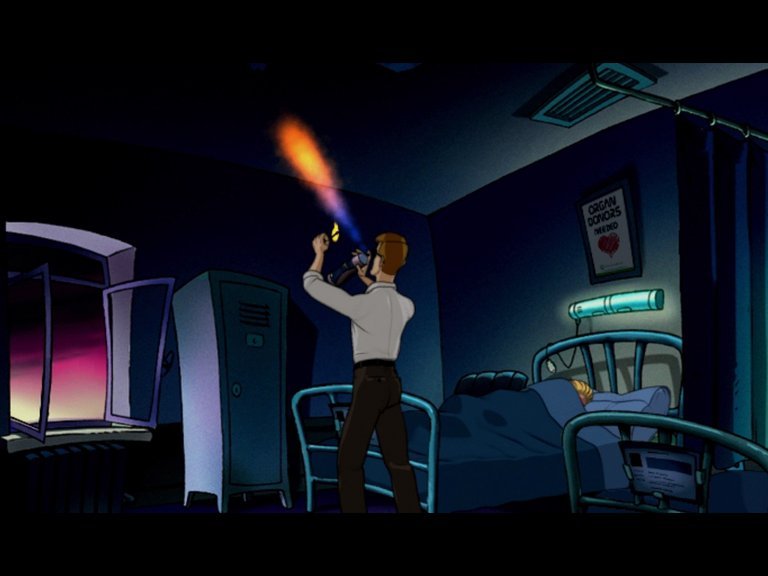
Runaway: A Road Adventure – Special Edition is an enhanced re-release of the classic 2001 graphic adventure game, featuring higher-resolution cutscenes, extended dialogues, bonus content like a making-of video, outtakes, soundtrack, hint book, and trailers. Players control Brian Basco, an American college student who unwittingly saves Gina Timmins, a murder witness targeted by the New York Mafia, sparking a cross-country road trip across the United States filled with puzzle-solving, item collection, NPC interactions, and evasion of hitmen while uncovering clues about a mysterious crucifix.
Runaway: A Road Adventure – Special Edition Reviews & Reception
metacritic.com (74/100): Mixed or Average
gamepressure.com (77/100): Mostly Positive
Runaway: A Road Adventure – Special Edition: Review
Introduction
Imagine a bespectacled physics nerd, barreling down New York streets toward academic glory, only to slam the brakes on a femme fatale’s frantic escape from Mafia hitmen—thus igniting a cross-country odyssey of puzzles, deception, and drag queens. This is the hook of Runaway: A Road Adventure, Pendulo Studios’ 2001 point-and-click gem, now polished in its 2004 Special Edition. Born from Spain’s nascent game scene amid the decline of traditional adventures, Runaway revitalized the genre with its blend of LucasArts-inspired whimsy and road-movie grit. As a historian of interactive storytelling, I argue this edition cements its legacy: not just a nostalgic artifact, but a flawed masterpiece that proved European adventures could thrive globally, influencing a trilogy and beyond despite polarizing puzzles.
Development History & Context
Pendulo Studios, founded by Rafael Latiegui, Ramón Hernáez, and Felipe Gómez Pinilla, emerged from Spain’s post-1990s industry slump. Fresh off 1997’s comedic Hollywood Monsters, the team pivoted in 1998 toward a “more adult” thriller inspired by Pulp Fiction and Raising Arizona. Initial sketches evoked a linear road trip across America’s iconic landscapes, ditching Hollywood Monsters‘ nonlinearity for structured chapters. Latiegui’s New Mexico/Arizona photos shaped the palette, prioritizing global appeal over Spanish locales.
Development spanned three turbulent years on an upgraded Hollywood Monsters engine supporting 1024×768 resolution and full-scene anti-aliasing. A core team of nine—bolstered by freelancers like composer David García-Morales—faced Spain’s talent shortage; autodidacts dominated as pros fled abroad. Starting with hand-drawn 2D, animation woes (slow cels, off-model art) forced a mid-1999 switch to pre-rendered 3D characters with toon shading, mimicking comics like El Víbora. This hybrid—3D models rendered to sprites with real-time lighting—delayed release from early 2000, exacerbated by bugs and Dinamic Multimedia’s dot-com-fueled bankruptcy in September 2001.
Pendulo downsized, sued for rights, and secured deals: DTP in Germany (2002), Focus Home in France (2003), Tri Synergy in North America. The Special Edition, published by DTP in 2004, arrived amid sequels’ buzz, adding HD cutscenes, extended dialogues, a making-of doc, outtakes, soundtrack CD, hint book, and trailers—transforming a buggy launch into a definitive package for 1024×768-era PCs.
In the early 2000s landscape—dominated by FPS and RTS—adventures waned post-LucasArts/Sierra. Runaway bucked this via viral European anticipation, proving small studios could innovate visually while nodding to classics like Monkey Island.
Narrative & Thematic Deep Dive
Runaway‘s plot unfolds in six chapters, a taut road movie where Brian Basco—shy UC Berkeley-bound physicist—hits lounge singer (later revealed stripper) Gina Timmins fleeing Sandretti Mafia thugs Gustav and Feodor. Gina’s crucifix, gifted by her “dying father,” hides $20M stolen by Johnny “The Indian,” her lover and turncoat gangster. Twists abound: Gina’s lies (no father; Johnny’s neck snapped accidentally), Johnny’s matricide for a biometric bank key (preserved finger), and supernatural hints (Hopi spirit-chief, alien beams, séances).
Key Characters:
– Brian Basco: Evolves from nerdy everyman to resourceful hero, meta-commenting on “player control.”
– Gina Timmins: Manipulative Ms. Fanservice (Jennifer Connelly-inspired), blending vulnerability and deceit.
– Gustav & Feodor: Eyepatch-wearing brutes, comic yet lethal.
– Ensemble Cast: Drag queens (ex-military Carla pilots chopper), hacker Sushi Douglas, gentle giant Oscar, stoner Rutger, UFO nut Joshua—each quirky, film-referenced (Priscilla, Queen of the Desert; Close Encounters).
Themes probe deception (Gina’s Unreliable Expositor arc), redemption (Oscar’s atonement), and Americana mysticism (Hopi crypts vs. Mafia greed). Humor tempers drama—lipstick ammo, drugged guards—yielding a +18 Spanish rating for violence, language, and sensuality. Extended Special Edition dialogues deepen banter, elevating a pulp yarn to character-driven satire on fate, identity, and “road to self-discovery.”
Gameplay Mechanics & Systems
Classic point-and-click: context-sensitive cursor (magnifier for examine, hand for use, speech for talk) navigates 100+ scenes. Linear progression mandates puzzle chains; no death, but Brian refuses items pre-plot relevance—coining “Runaway Syndrome” (repeated hotspot clicks, pixel hunts). Inventory combines (e.g., freezer-chilled battery for voltage boost) demand physics knowledge; dialogue trees hint sparingly.
Core Loops:
– Exploration/Pixel Hunting: Scan for hidden gems (e.g., hard seeds need fire-heated knife).
– Puzzles: Logical yet obtuse (e.g., drag queens’ bus escape; frame-up via voice splicing). No timers/actions.
– UI: Intuitive subscreen inventory; panoramic camera, adaptive MIP Music.
Flaws: Linear order frustrates (examine hotspots multiply); Special Edition’s hint book mitigates. Strengths: Satisfying escalation, no filler—8-10 hours of brain-teasing sans repetition.
| Mechanic | Innovation | Flaw |
|---|---|---|
| Cursor Contexts | Fluid LucasArts homage | Pixel hunts obscure items |
| Item Logic | Real-world physics (e.g., metallurgy) | Linear refusal system |
| Dialogues | Humorous hints | Limited trees |
World-Building, Art & Sound
America’s underbelly shines: NYC hospitals, Chicago museums, Arizona ghost towns (Douglasville), Hopi mesas. Atmosphere blends noir tension with quirky Americana—abandoned mines, shaman huts, hacker lairs—evoking Raising Arizona‘s absurdity.
Visuals: 2D hand-painted backgrounds (Latiegui’s photos) pair pre-rendered 3D cel-shaded sprites for comic-book pop. HD Special Edition cutscenes fix original pixelation; real-time lighting adds depth. 50+ characters animate stiffly (Spanish animator scarcity), but expressive faces charm.
Sound: García-Morales’ 24+ tracks (MIP adaptive engine) suit locales—jazzy urban, tribal deserts. Liquor’s Cranberries-esque theme songs filmic; voice acting (German/French dubs stellar) amplifies humor. Special Edition’s soundtrack CD preserves this jewel.
Elements synergize: Toon visuals lighten violence; music underscores chases, building immersion in a vibrant, deceptive U.S. tapestry.
Reception & Legacy
Spain hailed it (Micromanía 90%; GameLive PC “new classic”), but Dinamic’s fall capped domestic sales at ~9k. Europe exploded: Germany (PC Action 86%, #9 charts, 60k sold); France (#3 GfK, Digital Awards winner). U.S. mixed (Metacritic 74; PC Gamer panned puzzles). Special Edition averaged 82% (PC Games 83%: “high-res videos shine”).
By 2006, 600k European units; trilogy hit 1.5M by 2010. Revived adventures (DTP pivoted genres); Pendulo’s breakthrough—Spain’s longest-running studio. Legacy: Sequels (Runaway 2 2006, Twist of Fate 2009), iOS port (2013), “Runaway Syndrome” critique. Polarizing yet enduring—best Spanish adventure lists (IGN España, HobbyConsolas).
Conclusion
Runaway: A Road Adventure – Special Edition masterfully fuses road-movie thrills, visual innovation, and puzzle pedigree, flaws like obtuse hunts notwithstanding. It salvaged Pendulo from bankruptcy, reenergized adventures, and etched Spain into global gaming. For genre fans, it’s essential—a 9/10 testament to perseverance, forever chasing horizons with Brian and Gina. Play it: history awaits.