
- Release Year: 2020
- Platforms: Windows
- Genre: Adventure
- Perspective: 1st-person
- Game Mode: Single-player
- Gameplay: Graphic adventure, Puzzle elements
- Average Score: 76/100
Description
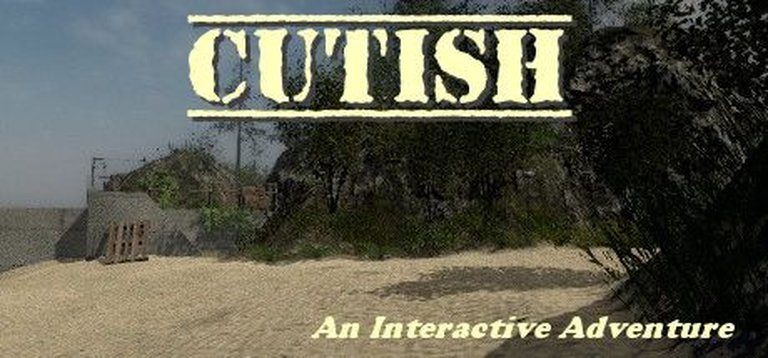
Cutish is a Myst-like first-person adventure game set on the enigmatic Cutish Island, where players explore a real-time 3D environment, solving varied puzzles of moderate difficulty to unravel the logical progression of the story and the captivating history of its former inhabitants.
Where to Buy Cutish
PC
Cutish Guides & Walkthroughs
Cutish Reviews & Reception
metacritic.com (70/100): Once you have mastered the interface and worked your way through some design issues, Cutish will treat you to a fun if challenging experience that will definitely scratch your Myst-style game itch.
adventuregamers.com : If you are a fan of similar first-person puzzlers, you will almost certainly enjoy playing Cutish, which does an excellent job of capturing the spirit of Cyan’s classic and its ilk.
Cutish: Review
Introduction
Imagine washing ashore on a volcanic island shrouded in mystery, where the distant rumble of lava flows mingles with the crash of waves, and every rusted door hides a code etched by long-gone inhabitants. Cutish, a 2020 indie gem from solo developer DUBUS Alain (under the moniker stigmamax), channels the solitary introspection and cerebral satisfaction of Myst—the 1993 landmark that redefined puzzle adventures. Stranded after a plane crash, players unravel the secrets of Cutish Island, piecing together a tale of abandonment through environmental clues and logic-defying riddles. While it stumbles on modern polish, Cutish triumphs as a loving homage to pre-rendered 3D puzzlers, delivering 6-8 hours of methodical discovery that scratches the itch for any fan of isolated, brain-teasing exploration. Its thesis? In an era of bombastic blockbusters, this unpretentious Myst-like proves that logical puzzles and atmospheric immersion remain timeless cornerstones of adventure gaming.
Development History & Context
Cutish emerged from the passion of a single creator, DUBUS Alain, a French developer whose love affair with Myst began in 1994. Self-publishing via Steam and itch.io, Alain built the game in Unity, a choice that enabled real-time 3D visuals on modest hardware (minimum: Athlon X4 860, 8GB RAM). Released on January 28, 2020, for Windows, it arrived amid a resurgence of indie walking simulators and puzzle adventures like The Witness (2016) and Obduction (2016, Cyan Worlds’ spiritual Myst successor). The early 2020s indie scene favored atmospheric, low-violence experiences—tags like “Atmospheric,” “Walking Simulator,” and “Relaxing” dominate Steam user labels—positioning Cutish perfectly for niche appeal.
Development was iterative and community-driven. Alain frequently updated the game (up to version 2.2.8 by mid-2020), relocating items, tweaking codes, and adding puzzles like crate-opening mechanics or new gate locks. Walkthrough authors like Dick Leeuw and Louis Koot documented these shifts, noting changes such as crowbar placement in ruins or oil lamp cave codes (e.g., 172). This hands-on approach mirrored Myst‘s era of technological constraints—no online multiplayer or procedural generation, just handcrafted logic amid hardware limits like DirectX 11. Steam forums reveal Alain’s responsiveness; one player queried a missing key post-update, prompting dev tests. Priced at $5.99 with a free demo, Cutish bypassed traditional publishing hurdles, thriving in the post-Gone Home wave of narrative-driven indies. Yet, AZERTY-keyboard origins (QDZS movement) highlight solo-dev quirks, unoptimized for global QWERTY audiences.
Narrative & Thematic Deep Dive
Cutish‘s story unfolds not through cutscenes or dialogue, but via fragmented environmental storytelling—a hallmark of Myst-likes. You awaken on Cutish Island’s beach, plane wreckage visible offshore, amnesia clouding your origins. Exploration reveals a 1970s secret facility: underground bunkers humming with residual energy, radioactive waste spewing into a tailings pond, and anti-radar towers dotting the volcanic landscape. Journals in a survivor’s hut and facility logs piece together the lore: the island, chosen for isolation amid lava flows, housed a covert operation involving diamond extraction, geothermal power, and radar evasion. Inhabitants like Martin Gale (died at 38), Medith Khaman (41), Roby Ney (31), and Sam Hovar (39)—their grave ages key to puzzles—perished mysteriously, leaving behind codes, schematics, and newspapers hinting at industrial espionage or experiment gone awry.
Thematically, Cutish explores abandonment and human hubris. The facility’s decay—rusted crates, flickering lamps, swarming wasps—contrasts engineered precision, evoking Lovecraftian isolation without overt horror. Puzzles like decoding pylon numbers (colored digits: yellow 4, etc.) or hut cipher boxes (sliding bars for L/R codes like L241235 → PK841S) symbolize reclaiming forgotten knowledge. Easter eggs amplify this: Myst books play thematic music, nodding to inspirational legacy. Narrative progression is linear yet organic—unlock magnetic gates via camera-room terminals, collect “chips” forming words for late-game riddles. No voice acting or branching paths; instead, subtle details like 1950s pinups or choir-backed Bible verses add flavor. Critiques note its “paper-thin” plot, but this restraint enhances immersion: you’re an archaeologist of the recent past, themes of persistence mirroring puzzle-solving persistence.
Gameplay Mechanics & Systems
At its core, Cutish is a pure graphic adventure: 1st-person exploration punctuated by inventory-light puzzles. No combat or survival meters—just direct mouse control in real-time 3D, with QDZS movement demanding adaptation (no remapping). No hotspots; click everything—walls, crates, pipes—for feedback (e.g., “Need a key” or artist credits). Inventory auto-collects (crowbar, matches, screwdriver) and auto-uses contextually, streamlining but occasionally confusing (a “flare” is a metal pin).
Core Loops revolve around code-hunting and decoding:
– Magnetic Gates: 6-character ciphers (e.g., R402431 → 4MLMX2 via hut slider) unlock via Cameras terminal.
– 4-Digit Doors: Reset each revisit (repetitive flaw), derived from math (grave ages reduced: 3+8=11→2, etc., yielding 6132) or counts (pylons, bollards).
– Item Chains: Matches burn wasps; crowbar opens crates; pickaxe mines 7 diamonds in elevator shaft.
Progression spans island zones:
| Zone | Key Puzzles | Items Gained |
|---|---|---|
| Beach/Ruins | Stone discs (5A-4B-2C), Bible code (9613) | Crowbar, crank, matches |
| Cameras/Hut | Slider decoder, computer inputs | Keys, papers |
| Maintenance/Extraction | Tank levels, voltage (from logs), gear detents | Wrench, indicator light, diamonds |
| Storage/Well | Winch code, battery puzzle | Telescope, valve |
| Dock/Garage | Rebus crates (object counts), boat fuel | Ignition key, escape |
Backtracking is heavy—huts for decoding, Cameras for gates—but logical, with 20+ puzzles escalating from simple rotations to timed sequences (gear buttons, boat doors). UI is sparse: no map, F12 quits (Steam screenshot conflict), autosave on quit only (risky). Flaws include pixel-hunting, weather-obscured clues (wait out rain), and update-induced inconsistencies (e.g., missing papers under files). Yet innovations shine: swimming sequences, elevator rides, train cart with battery. Playtime: 6-8 hours, demanding note-taking for rewarding “aha!” moments.
World-Building, Art & Sound
Cutish Island is a masterclass in compact world-building: a seemingly small volcanic atoll expands via unlocks into beaches, caves, bunkers, and docks. Lava cascades to steam vents, pylons pierce skies, facilities evoke Cold War secrecy—geothermal plants, extraction wells, steam stations. Weather cycles (sun/rain/thunder) dynamically alter visibility, forcing patience; wildlife (birds, rats) animates the ecosystem.
Visuals: Crisp Unity-rendered 3D with illustrated realism—swaying grass, rippling water, flowing lava. Subterranean contrast surface openness: dim Maintenance tunnels vs. panoramic tower roofs. Dynamic time/weather enhances immersion, though low-poly models show indie limits.
Sound: Kai Engel’s orchestral score (used with permission) loops fittingly—choirs for journals, tense strings for bunkers. Ambients excel: surf, birds, crackling energy. Footsteps jar (clunky wood), but overall, audio builds eerie solitude, amplifying puzzle tension.
These elements forge a cohesive atmosphere of desolation, where every creak hints at history, drawing players deeper.
Reception & Legacy
Launched quietly, Cutish garnered a 70% critic score (Adventure Gamers’ 3.5/5: “Fun if challenging… scratches Myst itch,” praising puzzles/exploration, docking interface). Steam’s 79% Mostly Positive (39 reviews) echoes this—players laud logic, immersion; detractors note controls, repetition. MobyGames lists one 70% review; Metacritic pending more. Frequent updates (e.g., toolbox codes like 728) engaged fans, per forums/walkthroughs.
Legacy-wise, Cutish carves a niche in Myst-likes, influencing micro-indies amid The Talos Principle‘s shadow. Its solo-dev tenacity—demo, $5.99 accessibility—exemplifies 2020s puzzle revival, akin to Duskwood. No major awards, but Steam tags (79% positive) ensure cult status for puzzle purists. Evolving reputation: from buggy launch to refined via patches, solidifying as “hidden gem.”
Conclusion
Cutish is a triumphant indie tribute to Myst‘s golden age—expansive yet intimate, challenging yet fair, with puzzles that reward deduction over guesswork. Rough edges (controls, UI, repetition) temper its shine, but stellar exploration, inventive riddles, and haunting island cement its value. In video game history, it claims a worthy spot among Myst-clones: not revolutionary, but a definitive, budget-friendly escape for 2020s adventurers. Verdict: 8/10 – Highly recommended for puzzle aficionados; a modern echo of cyan worlds’ legacy. Play it, notebook in hand, and let Cutish Island consume you.