
- Release Year: 2016
- Platforms: Windows
- Publisher: Fatshark AB
- Developer: Fatshark AB
- Genre: Compilation
- Average Score: 35/100
Description
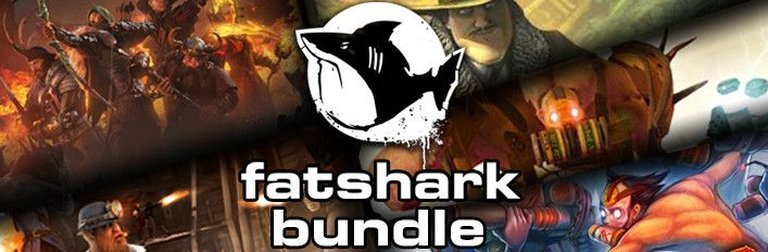
Fatshark Bundle is a 2016 Windows compilation from Swedish developer Fatshark AB, gathering their diverse early titles including the Wild West multiplayer shooter Lead and Gold: Gangs of the Wild West, the quirky puzzle-platformer Hamilton’s Great Adventure with its Retro Fever DLC, the post-apocalyptic RPG Krater Collector’s Edition plus Mayhem MK13 DLC, the arena battler Bloodsports.TV, and the co-op action-horror Warhammer: The End Times – Vermintide base game alongside its Collector’s Edition, Drachenfels, and Schluesselschloss DLCs.
Fatshark Bundle Reviews & Reception
reddit.com : The game is unfinished. Fatshark is ignoring it’s customers. The cash shop is predatory.
steamcommunity.com (35/100): You released half a game with a real money shop without an early access tag… you deserve a 35% review score
Fatshark Bundle: Review
Introduction
In the annals of indie game development, few bundles serve as such a vivid time capsule as the Fatshark Bundle, released in 2016 on Windows by the upstart Swedish studio Fatshark AB. This digital compilation—self-published via Steam—packages nine titles (including DLC expansions) spanning the studio’s formative years from 2010 to 2016, offering a front-row seat to Fatshark’s evolution from subcontracting underdogs to co-op multiplayer pioneers. Amid the rise of Steam bundles as value propositions for overlooked gems, this collection hooks with its sheer ambition: a Wild West shooter, a steampunk puzzler, a post-apocalyptic RPG, a dystopian MOBA, and the breakout Warhammer horde-slayer that put Fatshark on the map. Yet, for all its historical heft, the bundle reveals a studio still honing its craft. My thesis: Fatshark Bundle is less a polished greatest-hits album and more an essential archival trove, illuminating a developer’s scrappy ascent in an era when co-op PvE was exploding, even if its uneven execution underscores the risks of bundling ambition with inconsistency.
Development History & Context
Fatshark AB emerged in 2008 from the ashes of Northplay Studios, a subcontracting outfit founded in 2003 by Martin Wahlund, Rikard Blomberg, Joakim Wahlström, and Johan Jonker. Northplay cut its teeth on Swedish AAA support—contributing to GRIN’s projects and DICE’s Mirror’s Edge (2008)—amid Stockholm’s burgeoning game scene, where studios like DICE and Avalanche dominated but indies scraped by on ports and tools. Rebranding as Fatshark marked a pivot to originals, fueled by co-founding the Bitsquid engine (sold to Autodesk in 2014 for crucial funding). The 2010s gaming landscape was Steam’s golden age: digital distribution democratized releases, multiplayer shooters like Team Fortress 2 and Left 4 Dead (2008) popularized class-based co-op, and Paradox Interactive (early Fatshark partner) championed niche historical sims.
The bundle’s contents reflect this era’s constraints and opportunities. Lead and Gold: Gangs of the Wild West (2010, PC/PS3) was Fatshark’s debut, a third-person shooter partnering with Paradox, built on early Bitsquid prototypes amid Xbox 360/PS3 parity demands that strained small teams (Fatshark had ~10-15 staff). Hamilton’s Great Adventure (2011, PC/PS3/Android) experimented with mobile-friendly physics puzzles, dodging high-fidelity 3D for 2D accessibility. Krater (2012, PC) self-published amid procedural generation hype (Diablo-likes rising), blending RPG and RTS on limited hardware—PC Gamer noted its “valiant” ambition despite unpolished AI. Bloodsports.TV (2015, PC) tapped free-to-play MOBA fever (Dota 2, League), with cosmetic microtransactions testing live-service viability. Crowning it: Warhammer: End Times – Vermintide (2015, PC; 2016 consoles), licensing Games Workshop IP post-Left 4 Dead clones, hitting 500k sales by 2016 via refined Bitsquid (now Stingray) for horde sims.
Technological limits—pre-Unreal 4 dominance, CPU-bound multiplayer sync—forced innovations like class synergies over spectacle. Fatshark’s ~50 staff by 2015 navigated Tencent’s 2019 minority stake (later majority in 2021), but the bundle captures pre-acquisition grit: bootstrapped via Bitsquid cash, targeting PC-first amid console port economics.
Narrative & Thematic Deep Dive
Diversity defines the bundle’s storytelling, a mosaic of Fatshark’s genre-hopping before settling on Warhammer co-op. Absent a unifying plot, themes coalesce around underdogs vs. overwhelming odds, echoing the studio’s own hustle.
Lead and Gold forgoes single-player for emergent Western tales: gangs clash in 5v5 modes, themes of frontier lawlessness via classes (Gunslinger, Trapper) evoking Red Dead-lite moral ambiguity—dialogue sparse, but radio chatter sells gritty revenge yarns. Hamilton’s Great Adventure shifts to whimsical steampunk narrative: inventor Hamilton and robot Fuzzle scavenge junk in episodic levels, dialogue bubbly (“Outsmart the enemies!”), themes of ingenuity triumphing over industrial foes, with Retro Fever DLC adding pixel-art nostalgia critiquing progress.
Krater‘s post-apocalyptic Sweden shines deepest: a “gold rush” in underground craters pits squads against mutants, narrative branching via faction recruitment (e.g., Junkers vs. Scrappers), evolving NPC personalities via procedural quests explore survivalism, class warfare, and hubris—PC Gamer praised its “valiant” lore, though repetitive quests dilute satire. Bloodsports.TV satirizes gladiatorial spectacle: animal champions battle in TV-broadcast arenas, themes of corporate exploitation via dystopian announcer banter (“Tune in for the carnage!”), clan progression adding loyalty arcs.
Vermintide elevates to Warhammer Fantasy’s grimdark End Times: five heroes (e.g., tanky Bardin, agile Kerillian) defend Ubersreik from Skaven hordes, plot unfolds via radio chatter and environmental lore—DLCs like Drachenfels (Schluesselschloss) deepen vampire cults, themes of fragile alliances amid apocalypse. Dialogue crackles (“Ratmen everywhere!”), characters’ banter reveals backstories (Victor Saltzpyre’s zealotry), DLCs (Collector’s Edition, Drachenfels) layering dread. Collectively, narratives prioritize atmosphere over cinematics, themes of camaraderie in chaos foreshadowing Fatshark’s Darktide (2022), though multiplayer focus leaves solos feeling threadbare.
Gameplay Mechanics & Systems
Fatshark’s loops evolve from chaotic multiplayer to synergistic co-op, bundle-wide UI clean but dated (Steam Overlay era).
Lead and Gold‘s core: 5v5 modes (Deathmatch, Conquest) reward team synergies (shared ammo), classes fluid but balanced poorly—Metacritic 70 lauds pace, faults matchmaking. Progression: unlocks via XP.
Hamilton‘s physics puzzles shine: 70+ levels demand junk-chaining contraptions, timing enemy dodges; Retro DLC remixes in 8-bit. UI intuitive, progression linear—charming but shallow (Metacritic 74-77).
Krater‘s hybrid RPG/RTS: recruit squads, craft junk-gear, delve procedural dungeons (4-player co-op), permadeath risks tactical depth; flaws: repetitive AI, grindy quests (Metacritic 52). UI clunky, loot tiers drive replay.
Bloodsports.TV‘s MOBA-lite: 5v5 animal brawls, asymmetric abilities, waves/bosses; free-to-play cosmetics, clan systems add persistence—innovative but retention-weak (mixed reviews).
Vermintide pinnacle: 4-player PvE horde-slaying, hero careers (melee-focused, stamina/block/push), loot rarities (common-exotic), talents/objectives (escort, purge). DLCs expand careers/levels; UI stellar (loadouts, commissary), director AI scales dynamically—Metacritic 79, “Left 4 Dead with swords.” Flaws: launch bugs, but patches iterated.
Innovations: synergy meters (Lead/Gold), procedural depth (Krater), AI director (Vermintide). Flaws: balance woes, solo viability low—bundle exposes growing pains.
World-Building, Art & Sound
Settings eclectic, art pragmatic (Bitsquid efficiency), sound visceral.
Lead and Gold: Dusty frontiers, cel-shaded West—functional models, twangy banjos/gunfire punchy.
Hamilton: Steampunk whimsy, hand-drawn 2D vibrant; chiptune score, Fuzzle’s squeaks endearing.
Krater: Cratered Sweden’s mutant underbelly, top-down grit—procedural variety, ambient hums/drips immerse.
Bloodsports.TV: Neon arenas, cartoon animals—spectator cams stylize, announcer hype/rock OST energetic.
Vermintide: Ubersreik’s gothic decay, dynamic gore/lighting—detailed (Skaven hordes), Mikael Karlsson’s orchestral score (chants, clashes) iconic. DLCs (Drachenfels) add haunted manors. Contributions: Fatshark’s melee physics craft tension, sounds telegraph threats (rat squeaks), visuals scale hordes masterfully—bundle’s peak immersion.
Reception & Legacy
MobyGames lists no reviews—obscure bundle, no Metacritic aggregate. Individuals: Lead and Gold (70, “fast-paced fun”); Hamilton (74-77, “charming”); Krater (52, “innovative mess”); Bloodsports.TV (69, niche); Vermintide (77-79 PC/console, 500k sales). Launch: modest Steam sales amid 2016 bundle fatigue (BioWare, Amanita peers). Evolved: Vermintide’s success (1M+ sold) retroactively boosts; Fatshark’s Tencent era (Vermintide 2 82, Darktide 74 post-patches) cements legacy.
Influence: Pioneered melee co-op hordes pre-Deep Rock Galactic, refined PvE director for live-service (Darktide 3.6M sold). Industry: Validated Swedish indies self-pub, inspired Warhammer wave (Maneater echoes). Bundle preserves “pre-Tide” experiments, influencing Tencent’s portfolio (Riot, etc.).
Conclusion
Fatshark Bundle endures as a flawed yet fascinating chronicle of a studio’s odyssey—from Northplay subcontracts to Vermintide breakout—encapsulating 2010s indiedom’s multiplayer pivot amid Steam’s deluge. Its highs (Vermintide‘s addictive slashes, Krater‘s ambition) outweigh lows (balance hiccups, dated UIs), offering ~100+ hours for historians. In video game history, it’s a B-tier artifact: essential for Fatshark completists, skippable for casuals, but undeniably pivotal in birthing a co-op dynasty. Verdict: 7.5/10—a scrappy testament to persistence, best sampled for its Warhammer crown jewel. Play it to honor the grind.