
- Release Year: 2019
- Platforms: Windows
- Publisher: Bmc Studio
- Developer: Bmc Studio
- Genre: Adventure
- Perspective: Not specified
- Game Mode: Single-player
- Average Score: 20/100
Description
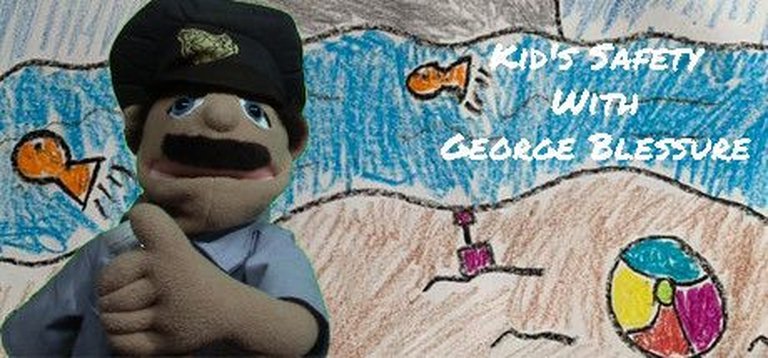
In ‘Kid’s Safety with George Blessure’, an ordinary cop named George Blessure transforms into a Safety Teacher in this interactive full-motion video (FMV) adventure game, blending comedy and horror to teach players safety lessons across various situations through menu-driven choices. Released in 2019 by Bmc Studio using the TyranoBuilder engine, it features YouTuber NateIsLame and carries a warning that it is not appropriate for children.
Gameplay Videos
Kid’s Safety with George Blessure Reviews & Reception
metacritic.com (20/100): Kid’s Safety With George Blessure had the bare minimum of effort put into its design. Its incredibly short runtime is already far too long for what it sets out to do.
opencritic.com (20/100): Kid’s Safety With George Blessure had the bare minimum of effort put into its design. Its incredibly short runtime is already far too long for what it sets out to do.
Kid’s Safety with George Blessure: Review
Introduction
Imagine a video game that promises to teach children vital safety lessons through the earnest guidance of a bumbling cop-turned-educator, only to slap a disclaimer across its title screen declaring “This game is not appropriate for children.” Released in 2019 amid a booming indie scene flooded with ironic memes and asset-flip experiments, Kid’s Safety with George Blessure stands as a bizarre artifact—a full-motion video (FMV) “interactive movie” that masquerades as educational software while reveling in its own absurdity. Developed and published by the enigmatic Bmc Studio, this title has languished in obscurity, with scant documentation and a single scathing critic review defining its slim public footprint. As a game historian, I argue that Kid’s Safety with George Blessure is less a forgotten gem and more a quintessential example of late-2010s Steam sludge: a low-effort curiosity whose unintentional comedy and technical minimalism make it a prime candidate for “so-bad-it’s-good” cult status, deserving rediscovery by connoisseurs of digital detritus.
Development History & Context
Bmc Studio, the sole developer and publisher behind Kid’s Safety with George Blessure, emerged in the late 2010s as a purveyor of hyper-niche, meme-infused indie titles on Steam. With a portfolio including absurdities like Sanic the Hawtdawg: Da Movie – Da Game 2.1: Electric Boogaloo 2.2 Version 4 – The Squeakquel: VHS Edition – Directors Cut: Special Edition – The Musical & Knackles, Dabman: When the Haters Dab Back, and Aidsmoji: The Forbidden Fruit, the studio embodies the era’s “quantity over quality” ethos. These games, often built with free or low-cost tools like TyranoBuilder—a drag-and-drop engine primarily for visual novels—prioritized viral absurdity over polish, capitalizing on Steam’s open floodgates post-Greenlight era.
Launched on July 23, 2019 (with some sources listing July 24), Kid’s Safety arrived during a pivotal shift in indie gaming. The platform was awash with FMV revivals (Her Story, Telling Lies) and educational parodies, but also plagued by asset flips and joke releases. Technological constraints were minimal: TyranoBuilder enabled quick FMV integration via menu-driven choices, bypassing complex 3D engines. Bmc Studio’s vision, per the Steam blurb, was ostensibly didactic—”George Blessure will help you learn how to always be safe no matters the situation”—yet undercut by the not-for-kids warning and a “Featuring NateIsLame!” credit (likely a YouTuber or streamer for ironic promo). In a landscape dominated by polished indies like Hades or Disco Elysium, this game’s barebones production reflected the democratizing (and diluting) power of accessible tools, positioning it as a relic of Steam’s wild west.
Narrative & Thematic Deep Dive
At its core, Kid’s Safety with George Blessure unfolds as a pseudo-educational interactive movie starring George Blessure, “an ordinary cop who turns into a Safety Teacher.” The plot, gleaned from the official ad blurb and sparse metadata, revolves around George’s transformation from law enforcer to pint-sized pedagogue, dispensing safety wisdom through branching video scenarios. Dialogue promises folksy, error-ridden gems like “no matters the situation,” evoking ’90s edutainment like Safety Monkey or Kid’s Typing, but twisted with Comedy and Horror narrative tags.
Plot Breakdown: The story likely progresses via linear FMV clips punctuated by menu choices, simulating “safety simulations.” George confronts everyday perils—crossing streets, stranger danger, fire safety?—with over-the-top reactions. The horror element suggests jump scares or grim “what if” outcomes (e.g., a child ignoring advice meets a cartoonish demise), while comedy arises from Blessure’s deadpan delivery and low-rent acting. No full script exists in public records, but the “not appropriate for children” caveat implies subversive undertones: perhaps Blessure’s lessons veer into dark humor, like exaggerated punishments or adult-oriented “safety” (e.g., ironic drug warnings).
Characters: George Blessure anchors the tale as a hapless everyman—stiff posture, earnest monologues—embodying failed authority. “NateIsLame,” billed as a feature, may appear as a chaotic foil, amplifying the meme vibe. Kid protagonists (implied but unseen in metadata) serve as blank slates for player identification.
Themes: Safety as salvation clashes with ironic detachment. It parodies edutainment’s moralizing (echoing PSAs from Traffic Safety or Smart Kid’s Gameclub) while critiquing performative education. Horror infuses dread into mundanity, thematizing vulnerability; comedy undercuts it via incompetence. Ultimately, it’s a meta-commentary on gaming’s educational failures—promising fun learning but delivering existential farce.
Gameplay Mechanics & Systems
As an FMV Adventure with “Menu structures” interface, Kid’s Safety epitomizes point-and-click minimalism. Core loop: Watch pre-rendered video of George lecturing or demonstrating, select from 2-4 menu options (e.g., “Listen to George” vs. “Ignore and Die”), branch to new clips. No inventory, progression, or failure states beyond humorous “bad ends.”
Core Loops: Safety scenarios form vignettes—e.g., “Stranger Danger”: Choose “Run” (good) or “Talk” (horror clip). Repetition reinforces lessons, but brevity (critic calls runtime “incredibly short”) undermines depth.
Combat & Progression: Absent. “Progression” is narrative gating via correct choices, unlocking “certificates” or endings.
UI/UX: TyranoBuilder’s default menus—static buttons over video—feel clunky, with probable misspellings and low-res assets. Innovative? Quick-scene skips for replays. Flaws: No autosave, opaque branching, input lag per implied reviews.
Innovations/Flaws: Innovates nil; it’s a visual novel skin on safety PSAs. Flaws abound: Bare-minimum effort yields unresponsive controls, recycled assets, and a loop that’s “far too long” for its substance (Gamers Heroes).
World-Building, Art & Sound
The “world” is a non-space: George’s Safety Classroom, generic streets, hazard sets—stock FMV backdrops evoking public access TV. Atmosphere blends uncanny valley horror (stilted actors) with laughable production values, fostering ironic dread.
Visual Direction: FMV art shines (unintentionally) in lo-fi charm—grainy webcam footage, green-screen glitches, Blessure’s unblinking stare. Colors: Washed-out primaries mimic kids’ media; horror via shaky cam, red flashes.
Sound Design: Diegetic cop chatter, cheesy synth stings for choices, Blessure’s monotone voiceover. No OST; sound effects (boings, screams) are public domain. It amplifies absurdity—muffled audio enhances alienation, making “learning” oppressively banal.
These elements coalesce into a hypnotic anti-experience: visuals/sound weaponize amateurism, turning safety into surreal performance art.
Reception & Legacy
Launch reception was nonexistent—MobyGames lists no score/reviews; Steam discussions are barren save a dev-pinned YouTube link (inactive?). Metacritic/OpenCritic aggregate one review: Gamers Heroes’ 20/100 (2/10), lambasting “bare minimum effort” and protracted shortness. No user scores; it’s unrated oblivion.
Commercially: Steam App 1117770 sold negligibly, per analytics voids. Reputation evolved minimally—added to MobyGames in 2020 by “BOIADEIRO ERRANTE,” it persists as a “Most Wanted” stub. Influence? Negligible on industry; echoes in FMV niches (No Safety, 2018) or Bmc’s oeuvre. Legacy: Archival curiosity, ripe for Let’s Plays (YouTube channel hints at this). In gaming history, it exemplifies Steam’s indie underbelly, prefiguring 2020s cleanup efforts.
Conclusion
Kid’s Safety with George Blessure is a fleeting blip: a TyranoBuilder fever dream where safety instruction devolves into meme-horror. Its narrative irony, threadbare mechanics, and anti-production values cohere into accidental satire, but lack execution condemns it. Verdict: 2/10—skip unless you’re excavating Steam’s graveyard. In video game history, it claims a footnote as peak “shovelware chic,” a warning against unchecked digital democracy. Rediscover at your peril; George Blessure’s lessons stick, but not as intended.