
- Release Year: 2006
- Platforms: Windows
- Publisher: Atari, Inc.
- Genre: Compilation
- Game Mode: LAN, Online Co-op, Single-player
- Setting: Fantasy
- Average Score: 100/100
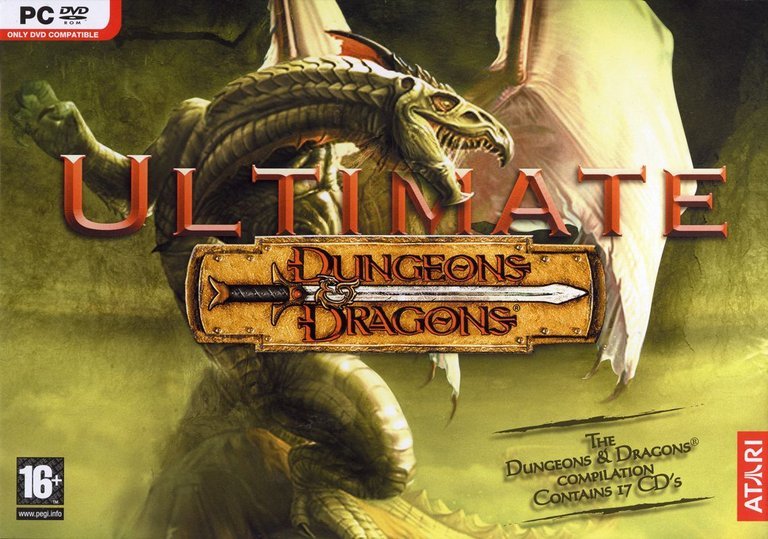
Description
Ultimate Dungeons & Dragons is a massive 2006 Windows compilation by Atari, bundling 13 classic CD-ROM and DVD-ROM RPGs officially licensed from the Dungeons & Dragons and Advanced Dungeons & Dragons tabletop games, including the Baldur’s Gate series, Icewind Dale series, Neverwinter Nights expansions, Dragonshard, Demon Stone, and The Temple of Elemental Evil, offering epic fantasy adventures across iconic settings like the Forgotten Realms and Greyhawk with support for single-player, LAN, and online multiplayer.
Ultimate Dungeons & Dragons: Review
Introduction
Imagine a single treasure chest brimming with the essence of Dungeons & Dragons—the tabletop RPG that birthed modern fantasy gaming—unlocked for your PC in 2006. Ultimate Dungeons & Dragons, published by Atari, Inc., isn’t just a compilation; it’s a monumental anthology spanning 13 CDs and 4 DVDs, packing 13 landmark titles from the golden age of D&D-licensed video games. From BioWare’s epic Baldur’s Gate saga to Black Isle Studios’ icy Icewind Dale series, Obsidian’s toolset-driven Neverwinter Nights, and outliers like the RTS Dragonshard and action-RPG Demon Stone, this collection encapsulates two decades of CRPG innovation. Its legacy? A defiant stand against digital obsolescence, preserving games that codified party-based tactics, moral ambiguity, and sprawling Forgotten Realms lore. My thesis: Ultimate Dungeons & Dragons is the definitive time capsule of D&D’s video game zenith, an indispensable artifact for historians and players alike, offering unmatched depth despite its physical-media quirks.
Development History & Context
Released on November 24, 2006, for Windows, Ultimate Dungeons & Dragons emerged from Atari’s (formerly Infogrames/Hasbro Interactive) stewardship of the D&D license, acquired amid turbulent licensing wars. TSR’s 1987 pact with Strategic Simulations, Inc. (SSI) birthed the Gold Box era, but by 1994, licenses fragmented. Interplay snagged Forgotten Realms and Planescape rights, birthing Black Isle and BioWare’s Infinity Engine masterpieces like Baldur’s Gate (1998). Wizards of the Coast’s 1997 TSR buyout, followed by Hasbro’s 1999 acquisition, funneled rights to Hasbro Interactive—sold to Infogrames in 2001 for $100 million—paving Atari’s path.
This compilation curates peak-era gems amid Interplay’s 2003 collapse (shuttering Black Isle) and Atari’s pivot to repackaging hits. Core developers included:
– BioWare: Baldur’s Gate trilogy (Infinity Engine, AD&D 2nd Edition), Neverwinter Nights trilogy (Aurora Engine, D&D 3rd Edition).
– Black Isle Studios: Icewind Dale series (Infinity Engine).
– Troika Games: Temple of Elemental Evil (3.5 Edition turn-based purity).
– Liquid Entertainment: Dragonshard (Eberron RTS hybrid).
– Stormfront Studios: Demon Stone (action-RPG).
Technological constraints? Early Infinity titles battled 2D sprite limits on 1990s PCs, while Aurora embraced 3D. The 2006 gaming landscape—dominated by WoW MMOs and console shifts—saw compilations like this as value propositions amid piracy woes and aging hardware. Atari’s vision: a “ultimate” bundle capitalizing on nostalgia, multiplayer LAN/Internet support (up to 100+ players in Neverwinter Nights), and no-frills installation on CD/DVD-ROM. PEGI 16 rating nods to gore and themes, targeting veteran RPG fans in a post-Warcraft III RTS boom.
Narrative & Thematic Deep Dive
Ultimate Dungeons & Dragons weaves a tapestry of Forgotten Realms dominance (11/13 games), with Greyhawk (Temple) and Eberron (Dragonshard) detours, exploring heroism’s cost, divine intrigue, and moral grayness.
-
Baldur’s Gate Saga (Baldur’s Gate, Tales of the Sword Coast, Shadows of Amn, Throne of Bhaal): Protagonist (Gorion’s Ward) unravels Bhaalspawn heritage amid Sarevok’s iron crisis, Irenicus’ soul-theft, and Melisan’s abyssal plot. Themes: fate vs. free will, betrayal (Imoen’s kinship), epic scope from Candlekeep to Throne of Bhaal. Expansions add naval intrigue and god-slaying climaxes; dialogue trees branch profoundly, echoing AD&D’s roleplay.
-
Icewind Dale Series (Icewind Dale, Heart of Winter, Icewind Dale II): Combat-forward tales of Kuldahar’s crystalline evil, barbarian shaman Hjollder’s tribal wars, and Targos’ goblin horde. Less loquacious, more survivalist—environmental peril and undead apocalypse dominate, with Trials of the Luremaster as bonus dungeon fodder.
-
Neverwinter Nights Trilogy (Neverwinter Nights, Shadows of Undrentide, Hordes of the Underdark): Plague-ravaged Neverwinter (Wailing Death), Drogan’s artifact heist, Halaster’s Undermountain horrors. Modular storytelling shines; redemption arcs (Aribeth’s fall) and toolset-enabled fan tales extend canon.
-
Outliers: Temple of Elemental Evil adapts Greyhawk’s iconic module—factional temple cults, elemental chaos. Demon Stone (R.A. Salvatore-penned) pits fighter Rannek, sorcerer Illius, rogue Zhai against warlords. Dragonshard narrates Heart of Siberys’ elemental wars across Eberron’s surface/underdark skies.
Collectively, narratives probe D&D’s core: player agency in multiversal threats, blending lore fidelity (Elminster cameos) with video game pacing. Flaws? Repetition in BG/Icewind tropes, but thematic cohesion cements Forgotten Realms as gaming’s fantasy bedrock.
Gameplay Mechanics & Systems
This anthology’s genius lies in mechanical diversity, from RTwP to turn-based, showcasing D&D evolutions.
| Game/Engine | Core Loop | Combat | Progression | Innovations/Flaws |
|---|---|---|---|---|
| Baldur’s Gate Series (Infinity) | Party exploration, quest hubs | RTwP (pause for tactics) | Race/class kits, dual-classing, spells | Pause mastery; clunky AI pathing |
| Icewind Dale Series (Infinity) | Dungeon crawls, survival | RTwP, spell synergies | Feats/items, Heart of Winter barbs | Combat focus; shallow NPCs |
| Neverwinter Nights (Aurora) | Modular campaigns, multiplayer | RTwP, hirelings | 3E prestige classes (to lvl 40) | Toolset for infinite content; dated 3D jank |
| Temple of Elemental Evil | Hex-crawl, faction reps | Turn-based grid (3.5E pure) | Spot/sneak skills, torch mgmt | Rules fidelity; buggy launch (patched) |
| Dragonshard | RTS/resource lanes | Hybrid (ground/air/unit) | Hero units level | Eberron flair; micro-intensive |
| Demon Stone | Cinematic co-op action | Combo chains, switches | Skill trees | Console-y; shallow solo |
UI varies: Infinity’s radial menus excel; Aurora’s third-person shines multiplayer. Progression honors D&D—ability scores, THAC0 echoes, mana-as-spells. Multiplayer (LAN/Internet) fosters co-op parties. Flaws: Era-specific bugs (fixed via patches), no modern widescreen native. Strengths: Depth rewards min-maxers; NWN‘s toolset births endless mods.
World-Building, Art & Sound
Primarily Forgotten Realms (Sword Coast, Icewind Dale), with Greyhawk’s elemental temples and Eberron’s dragonshard rifts. Atmospheres evoke D&D: Foggy moors, undead-haunted crypts, planar pools. Visuals evolve—Infinity’s pre-rendered 2D backdrops (lush forests, gothic spires) to Aurora’s 3D (dynamic shadows, particle FX). Demon Stone‘s cel-shaded flair pops; Dragonshard‘s multi-plane maps innovate.
Sound design immerses: Iconic scores (BG‘s lute motifs, Icewind‘s howling winds) by Michael Hoenisch/Jeremy Soule. Voice acting (BG2‘s Kevin Michael Richardson as Korgan) adds personality; ambient echoes (dripping caves) heighten dread. Contributions? Unrivaled immersion—art/sounds make Faerûn tangible, influencing Warcraft aesthetics and Dragon Age narratives.
Reception & Legacy
Individual titles shone: Baldur’s Gate II (95%+ Metacritic), Planescape: Torment (hailed philosophical pinnacle), Neverwinter Nights (toolset revolutionized modding). The compilation? Obscure—no Metacritic aggregate, MobyGames’ lone 5/5 player score, unranked. Commercial? Niche success for collectors; 9-10 owners logged.
Legacy: Cemented CRPG standards—RTwP became genre staple (Dragon Age, Pathfinder). NWN toolset inspired Neverwinter Nights 2, fan modules. Influenced Baldur’s Gate 3 (Larian nods Infinity roots), Divinity: Original Sin. In D&D canon (4,816+ wiki entries), it preserved lore amid licensing flux. Evolved rep: Retro darlings via GOG/Steam ports, Enhanced Editions; comp’s physical heft now collector’s holy grail.
Conclusion
Ultimate Dungeons & Dragons transcends its 2006 origins—a sprawling, flawed-yet-brilliant vault of CRPG history, blending narrative epics, mechanical revolutions, and D&D fidelity into 100s of replayable hours. Amid modern remasters, it endures as raw artifact, demanding CD-swapping patience but rewarding with unadulterated classics. Verdict: Essential 9.5/10—the pantheon of D&D gaming, securing its eternal place in video game Valhalla. Hunt a copy; roll initiative.