
- Release Year: 2000
- Platforms: Windows
- Publisher: Electronic Arts, Inc.
- Developer: Bullfrog Productions, Ltd.
- Genre: Simulation
- Perspective: 1st-person, Diagonal-down
- Game Mode: Single-player
- Gameplay: Business simulation, Managerial
- Setting: Amusement park
- Average Score: 82/100
Description
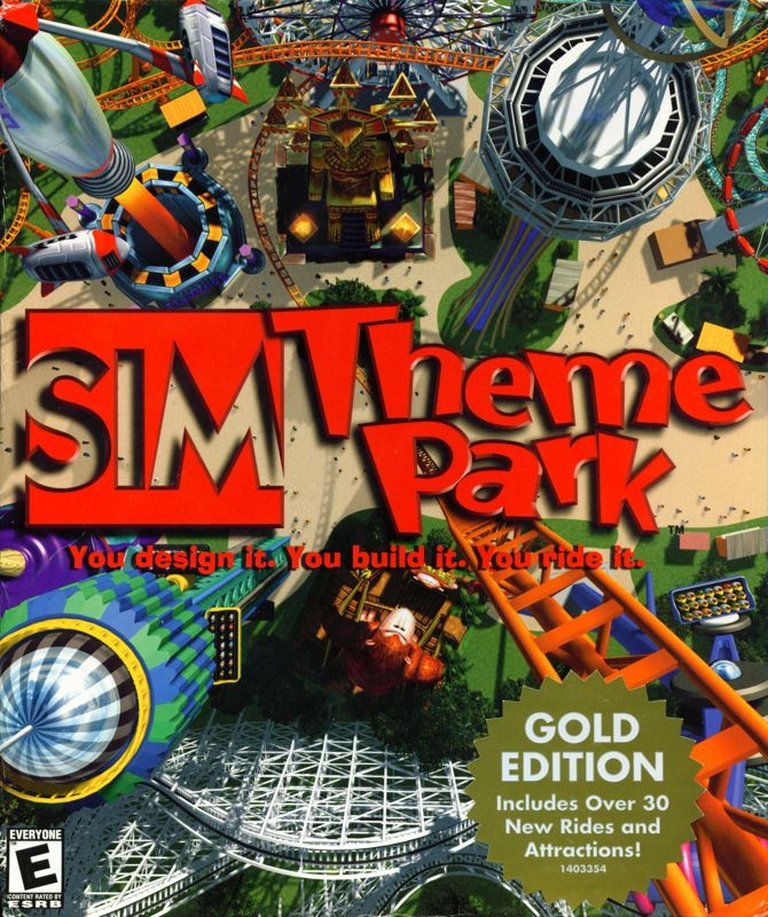
Sim Theme Park (Gold Edition) is an enhanced management simulation game where players design, build, and operate their own amusement parks, handling all business aspects such as staffing with mechanics, cleaners, entertainers, guards, and scientists, ride construction and upgrades, pricing, and expansions to maximize profits while keeping visitors happy. Released in 2000 for Windows by Bullfrog Productions and Electronic Arts, this Gold version includes all original content plus extra rides and attractions, allowing players to tour their parks in first-person perspective and experience the rides themselves.
Gameplay Videos
Sim Theme Park (Gold Edition) Free Download
Sim Theme Park (Gold Edition) Patches & Updates
Sim Theme Park (Gold Edition) Guides & Walkthroughs
Sim Theme Park (Gold Edition) Reviews & Reception
mobygames.com (76/100): Not up to Bullfrog’s usual standard.
myabandonware.com (88/100): It measures up quite well.
gamerevolution.com : While offering some very cool new twists on the genre, this game eventually falls prey to its own limitations.
retro-replay.com : Sim Theme Park Gold Edition offers immersive thrills for both aspiring entrepreneurs and seasoned simulation veterans.
Sim Theme Park (Gold Edition) Cheats & Codes
PC
Enter ‘Horza’ as your nickname when starting a new game to enable some keyboard shortcuts. Hold SHIFT and type ‘allparklands’ on the island selection screen. Hold LEFT SHIFT + LEFT CONTROL + LEFT ALT during gameplay.
| Code | Effect |
|---|---|
| Shift + Z | Makes all features available |
| Ctrl + Z | Makes all rides and attractions available |
| Alt + Z | Makes all shops available |
| Ctrl + C | Increases your funds |
| Hold SHIFT and type allparklands | Unlocks all islands on the island selection screen |
| Hold LEFT SHIFT + LEFT CONTROL + LEFT ALT | An airplane, bus, or boat with more visitors will arrive |
Sim Theme Park (Gold Edition): Review
Introduction
Imagine stepping into the chaotic heart of an amusement park—not as a wide-eyed guest, but as the omnipotent architect behind the screams, the cotton candy lines, and the precarious balance of profit and pandemonium. Released in 2000, Sim Theme Park (Gold Edition) expands on Bullfrog Productions’ 1999 hit Sim Theme Park (aka Theme Park World outside North America), bundling the core game with a trove of bonus rides and attractions originally gated behind a now-defunct online service. As a sequel to the groundbreaking 1994 Theme Park, it builds a legacy of managerial mischief, transforming pixelated park-building into a 3D playground where you craft dreams (and occasional disasters). This Gold Edition polishes the formula with extra content, cementing its status as a nostalgic pinnacle of the genre. My thesis: While it trades rigid objectives for sandbox freedom and immersive first-person thrills, Sim Theme Park (Gold Edition) endures as Bullfrog’s most joyful swansong—a creative triumph that prioritizes player ingenuity over micromanagement drudgery, influencing park sims for decades despite interface quirks and fleeting online ambitions.
Development History & Context
Bullfrog Productions, the visionary UK studio behind Populous, Dungeon Keeper, and the original Theme Park, spearheaded this project amid the late-90s sim boom. Founded by Peter Molyneux and Les Edgar, Bullfrog was renowned for innovative AI and god-game mechanics, but Theme Park (1994) had already captured hearts with its blend of whimsy and tycoon ruthlessness. By 1999, personnel clamored for an update: players craved rideable coasters, and Bullfrog aimed to leverage emerging 3D tech without demanding accelerator cards. Producer Jeff Gamon emphasized openness over the series’ prior objective-heavy structure, responding to critiques of repetitiveness in Theme Park and spin-offs like Theme Hospital.
Development drew from Populous: The Beginning‘s engine but scrapped it for a custom 3D one, enabling free-roaming cameras and behavioral AI programmed by Ben Board. Artists (initially 12-strong, led by Darran Thomas before his departure to found Lost Toys) crafted themed assets, while ex-Mindscape devs bolstered the team post-Theme Resort‘s cancellation. Constraints included no-strike mechanics (deemed “confusing”) and simplified supply chains. North America’s rebranding to Sim Theme Park—part of EA’s Maxis “Sim” line despite no Maxis involvement—targeted broader appeal, as Bullfrog GM Bruce McMillan noted the series’ European/Asian strength.
The 2000 Gold Edition arrived amid fierce competition from RollerCoaster Tycoon (1999), which outsold it but lacked rideability. Gaming’s landscape featured 3D transitions (Quake III, Unreal Tournament) and sims like SimCity 3000, but console ports (PlayStation, PS2 as Theme Park Roller Coaster) and Mac support via Feral Interactive expanded reach. Patches (up to v2.0) fixed bugs, and Theme Park World Online pioneered park-sharing with votes, chats, and Platinum Tickets—shut down years later, its content migrated to Gold. Bullfrog’s EA absorption loomed, making this a pre-merger high note.
Narrative & Thematic Deep Dive
Sim Theme Park (Gold Edition) eschews traditional plotting for emergent storytelling, where “narrative” emerges from managerial triumphs and follies. No scripted plot or characters exist; instead, you’re an anonymous tycoon inheriting empty plots in four themed worlds: Lost Kingdom (Mesozoic/Aztec apes), Wonderland (fairy-tale whimsy), Halloween World (spooky brains and ghosts), and Space Zone (futuristic hardest-mode). Progression hinges on Golden Tickets—earned via milestones like peak happiness (80%+), visitor surges (2,000+), or profits (£500k/year)—redeemable for special rides or Golden Keys unlocking new worlds every third ticket.
The advisor (voiced by Lewis MacLeod in UK releases, a chattering hat-sporting blob) serves as de facto narrator, dispensing tutorials, alerts (“Litter crisis!”), and sass (“Brilliant!”). Dialogue loops (“Your staff need rest!”) grate but humanize the sim, echoing Bullfrog’s humorous touchstones like Dungeon Keeper‘s taunts. Themes probe capitalism’s carnival mirror: balance greed (hike burger fat for profits?) with empathy (train staff, build breaks?). Guests’ thought bubbles reveal psyches—hunger, nausea, joy—crafting vignettes of family outings gone awry or viral coasters sparking booms. Online’s ghost (pre-shutdown) evoked community tales, sharing postcard parks. Gold’s extras amplify ambition, thematizing expansionism. Ultimately, it’s a fable of creation: your park’s “plot” arcs from barren dirt to legend, sans cutscenes, through player agency.
Gameplay Mechanics & Systems
At its core, Sim Theme Park (Gold Edition) loops build-test-manage-repeat. Start with loans/land buys, lay paths (click-to-connect, infinitely superior to RCT‘s tiles), plop rides/shops/scenery. Staff (mechanics fix breakdowns; handymen/cleaners combat litter/vandalism; entertainers boost moods; guards deter crime; scientists research 100+ items) demand training (£1k-£10k efficiency jumps) and staffrooms. Customize endlessly: rename “Dino-Bouncer,” tweak speeds/capacity/excitement, set shop fats/prices/qualities. Track-builders (coasters, flumes, rapids) shine—drag supports, bank/loops/jumps—yielding physics-lite thrills (no crashes, but nausea ratings matter).
UI innovates with context-sensitive “laptop” menus (Circle on PS for admin), hotkeys, and maps/hotspots for litter/vandalism/enjoyment. Happiness meters/thought bubbles guide tweaks; Instant Action mode skips grind with pre-builts/auto-research. Gold adds ~20 rides (e.g., online unlocks), extending progression. Flaws: no ride rotation (brackets/[ work blueprints), menu-reentry for multiples, invisible PS cursor, advisor spam. No combat, but “challenges” (e.g., sell 1k fries) spice loops. First-person camcorder (4 tickets) lets you ride/test—dizzy spins, coaster G-forces—pausing simulation for immersion (frustrating mid-ride alerts). Progression feels sandboxy: sporadic tickets lack transparency, but Gold’s extras fuel replay. Minigames (PS races/puzzles) pad ports. Depth falters post-research; no stocks/competitors like Theme Park, but AI queuing/behaviors (Board’s pride) feel alive.
World-Building, Art & Sound
Four worlds masterfully evoke atmosphere: Lost Kingdom‘s jungles host dino-bouncers; Halloween‘s fog-shrouded brains pulse; Wonderland sparkles fairy-like; Space Zone gleams neon-futuristic. Free camera/diagonal-down/1st-person perspectives build immersion—zoom from god-view to guest POV, paths weaving mazes amid bins/toilets/speakers/cameras. Polygonal rides animate vibrantly (gyrating spinners, puffing trains), 2D sprites scale poorly up-close (PS critique), but colorful palettes and effects (night lights, steam) charm.
James Hannigan’s score (BAFTA-winning sound) fits themes—upbeat brass for Lost Kingdom, eerie synths for Halloween—looping unobtrusively. SFX amplify: coaster clacks, crowd cheers, advisor quips. Gold’s extras blend seamlessly, extras like bouncy brains enhancing whimsy. Era constraints (software rendering) limit fidelity, but “cosy” vibrancy ages well, fostering “hypnotic appeal” (Next Generation). Atmosphere thrives on emergence: packed queues signal success, breakdowns chaos.
Reception & Legacy
Launch reception mixed-positive: PC GameRankings 77%, IGN 8.4/10 (“clear, concise, fun”), GameSpot 8/10 (PS2), but PC Zone 70% (annoying advisor, tame rides), Game Revolution 2.5/5 (repetitive). Critics lauded visuals/sound/rideability (Computer Gaming World Editors’ Choice), panned UI/goallessness vs. RCT. Commercially, ~1.4M US units by 2001 (#8 PC 2000), ELSPA Platinum (300k+ UK). PS2 won GameSpot’s Best Sim; BAFTA Sound 2000.
Reputation evolved nostalgically—abandonware fixes thrive (dgVoodoo, patches)—as RCT dominated, but rideability inspired Planet Coaster, Parkitect. Online pioneer’s loss lamented (ModDB notes MMORPG-like sharing). Pre-SimCoaster (2001), it marked Bullfrog’s peak before EA folded them (2004). Influences: AI behaviors, first-person sims (Two Point Hospital). Gold preserves online legacy, boosting fan preservation (r/simthemepark).
Conclusion
Sim Theme Park (Gold Edition) distills Bullfrog’s magic: addictive building, humorous AI, boundary-pushing immersion via rideable creations and themed worlds. Innovations like camcorder mode and contextual UI outshine flaws—advisor nags, sparse goals, rotation woes—delivering ~40-hour sandbox joy amplified by Gold extras. Not RCT‘s realism king, but its creative heart endures, a testament to late-90s ambition amid 3D dawn. Definitive verdict: Essential for sim historians (9/10), a joyful relic securing Bullfrog’s tycoon throne in video game history—fire up a VM, grab those tickets, and build eternal.