
- Release Year: 2018
- Platforms: Macintosh, Windows
- Publisher: Big Fish Games, Inc
- Developer: Elephant Games AR LLC
- Genre: Puzzle
- Game Mode: Single-player
- Gameplay: Hidden object
- Setting: Hotel
Description
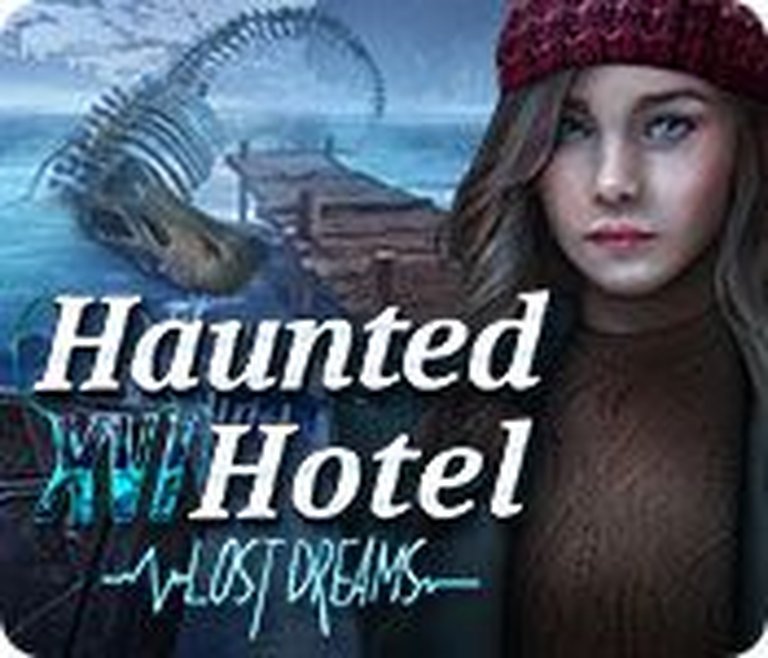
In Haunted Hotel XVI: Lost Dreams, Mark and Jane Stuart’s idyllic vacation in the Swiss Alps turns nightmarish when their train crashes, orchestrated by the desperate Dr. John Schneider. Awakening in spirit form within Schneider’s eerie hotel, Mark desperately searches for his wife while unraveling the doctor’s plan to revive his comatose children, Alice and Tony, by siphoning the life force of survivors kept alive in mystical Alpine water tanks.
Gameplay Videos
Haunted Hotel XVI: Lost Dreams Guides & Walkthroughs
Haunted Hotel XVI: Lost Dreams Reviews & Reception
bdstudiogames.com : All in all I highly recommend this game.
Haunted Hotel XVI: Lost Dreams Cheats & Codes
Mobile
Step 1: Visit the homepage Haunted Hotel 16: Lost Dreams. Step 2: Find the place where you can enter the gift code Haunted Hotel 16: Lost Dreams. Step 3: Type in the gift code Haunted Hotel 16: Lost Dreams.
| Code | Effect |
|---|---|
| 31F11 | 100 diamonds |
| 25EAA | 500 Gold |
| 2ED4C | 50 Diamonds |
| D36E | 150 Diamonds |
| 26044 | 500 Gold |
| 106CE | 50 Diamonds |
| 1E800 | 100 Diamonds |
| 25AFE | 500 Coins |
| 2BF93 | 50 Diamonds |
| CE3A | 100 Diamonds |
| A45D | gold item |
| 5D43 | scarce item |
Haunted Hotel XVI: Lost Dreams: Review
Introduction
Imagine awakening in a fog-shrouded hotel room after a catastrophic train derailment in the Swiss Alps, your spouse vanished, and the line between nightmare and reality dissolving like mist under moonlight. This is the gripping hook of Haunted Hotel XVI: Lost Dreams, the sixteenth chapter in Elephant Games’ enduring Haunted Hotel saga—a series that has haunted the hidden-object puzzle adventure (HOPA) genre since 2008. Born from the casual gaming boom pioneered by Big Fish Games, the franchise has evolved from simple point-and-click chills to intricate tales of spectral intrigue, amassing over 20 entries by blending supernatural horror with meticulous puzzle-solving. Lost Dreams stands as a pinnacle of mid-series refinement: a self-contained psychological thriller that masterfully blurs delusion and dread, proving the formula’s timeless appeal in an era dominated by AAA blockbusters. My thesis? This installment isn’t just another hotel haunting; it’s a poignant meditation on grief, sacrifice, and the human cost of playing god, elevated by Elephant Games’ signature artistry into a must-play for HOPA aficionados.
Development History & Context
Elephant Games AR LLC, a Belarusian studio founded in the early 2010s, took the reins of the Haunted Hotel series from its originator, Specialbit Studios, starting with the fifth entry (Eclipse in 2013). By 2018, when Lost Dreams launched on April 6 for Windows (and shortly after for Macintosh) via publisher Big Fish Games, Elephant had honed a reputation for prolific output—churning out multiple titles annually in interconnected universes like Grim Tales, Mystery Trackers, and Haunted Hotel. The game’s development reflects the casual gaming landscape of the late 2010s: Big Fish’s dominance in downloadable PC/Mac adventures, where HOPA titles thrived on short demos, Collector’s Editions (CEs), and replayable extras to hook subscribers.
Technological constraints were minimal, targeting low-spec systems (Pentium 3 1.0 GHz, 1024 MB RAM, DirectX 9), ensuring accessibility for the series’ core demographic—casual players seeking relaxing yet eerie escapes. The vision, per official blurbs, centered on a “mind-bending” narrative probing reality vs. delusion, diverging from prior entries’ ghostly killers or cursed lineages toward sci-fi horror with life-force transference. Released amid a saturated HOPA market (competitors like Artifex Mundi flooded Steam and Big Fish), Lost Dreams leaned into the series’ hotel motif—a “Group: Setting: Hotel” staple on MobyGames—while standing alone (one of only three Haunted Hotel games with zero series crossovers, per Grim Tales Wiki). No credits are detailed on MobyGames, but voice work (e.g., Jane Stuart by Maya Tuttle, known from other Elephant titles) suggests a small, efficient team prioritizing polish over innovation. In context, it arrived post-The Evil Inside (2017) and pre-Beyond the Page (2019), sustaining momentum in a genre facing mobile encroachment.
Narrative & Thematic Deep Dive
Lost Dreams unfolds as a taut psychological descent, synthesizing domestic bliss with Faustian horror. Protagonist Mark Stuart and wife Jane are vacationing in the Swiss Alps when their train—photographed mid-scenic bliss—crashes, orchestrated by the enigmatic Dr. John Schneider. Awakening in an unfamiliar hotel room, Mark navigates in “spirit form,” his body submerged in life-sustaining Alpine water tanks alongside Jane’s. Schneider, a grieving widower whose children Alice and Tony linger in comas post-accident, reveals his mad science: siphoning survivors’ life force via the miraculous water to revive them. Mark’s astral odyssey spans hotel depths—from shadowy shores to mountainous workshops—unearthing Schneider’s desperation.
Key Characters:
– Mark Stuart: Everyman hero, voiced with raw panic; his arc from disoriented spouse to reluctant collaborator embodies reluctant heroism.
– Jane Stuart: Damsel with agency, linked to Alice; her figurine and ring serve as emotional talismans.
– Dr. John Schneider: Tragic antagonist, a “brilliant scientist and hotelier” whose paternal love twists into ethical abyss.
– Alice and Tony Schneider: Comatose catalysts, humanizing the villainy; bonus chapter spotlights Alice’s prophetic dreams.
Dialogue is sparse but evocative—clipped, urgent exchanges via Schneider’s monologues underscore moral ambiguity: “If we work together, everyone survives.” Themes probe grief’s alchemy (Schneider’s loss birthing monstrosity), reality’s fragility (spirit exploration blurs corporeal bounds), and sacrificial ethics (whose life for whose?). The bonus chapter extends this, with Mark and Jane revisiting Schneider’s Hotel; Alice’s nightmares summon a Mystery Trackers Agent Black (who perishes heroically), teasing multiverse ties while resolving Tony’s abduction. Uniquely standalone (no prior Haunted Hotel nods), it critiques parental obsession, echoing Frankenstein amid Alpine isolation. Pacing builds via chapters (Hotel Room to Park Entrance), culminating in revelatory confrontations—narrative depth rare in HOPAs, rivaling Grim Tales for emotional heft.
Gameplay Mechanics & Systems
Core loop: Explore hand-drawn scenes, collect inventory (e.g., CANE, OIL CAN, JACK), solve HOPs (hidden-object puzzles), and tackle mini-puzzles amid linear progression. No combat; tension arises from environmental hazards (insects, locks, ice).
Deconstruction:
– Exploration & Inventory: Point-and-click navigation (e.g., Chapter 1: Hotel Room yields 3/3 HOTEL SYMBOLS for sequence puzzles like L-O-N-M-J-K). Items combine intuitively (JACK BASE + SPRING + KNOB + HALF = JACK).
– HOPs: Varied, non-random in guide; list-based or interactive (e.g., paired figurines, sentence keywords). Skippable, with mini-game alternatives—accessible for casuals.
– Mini-Puzzles: Innovative yet straightforward: symbol-matching (5 pairs), tile rotations (ring puzzles with arrows), lever sequences (e.g., Move (C-B)-(D-C)). Walkthrough details 20+ replayables in CE, from bridge adjusters to crystal placements.
– Progression: No leveling; morphing objects/achievements (18 in CE) encourage replays. UI sparkles for interactables, journal tracks tasks—intuitive, with map for fast-travel.
– Innovations/Flaws: Spirit-form mechanic implies astral puzzles (e.g., ventilation parts, fan blades); bonus content shines (souvenirs, strategy guide). Flaws: Repetitive fetch-quests (e.g., repeated keys/tools), short demo (42 minutes per reviews), easy puzzles (“no brain power,” per BDStudio). CE extras (15 morphs, 9 concept arts, 11 soundtracks) extend value.
Pacing falters in tool-heavy mid-game but peaks in thematic puzzles (e.g., Schneider’s monogram).
World-Building, Art & Sound
Nestled in Schneider’s ominous Alpine hotel—echoing series tradition yet isolated—the world evokes Swiss chalet dread: snowy shores, frozen mountains, subterranean workshops, eerie parks. Atmosphere masterstrokes: fog-veiled peaks, bioluminescent tanks, spirit-veiled corridors foster paranoia.
Visuals: Elephant’s “beautifully hand-drawn” hallmark—vibrant yet sinister (bright colors, per reviews), with period-true items (wind-up clowns, gramophones). Illustrated realism shines in HOPs; CE wallpapers/concept art reveal meticulous detail.
Sound: Fitting, non-booming score (11 tracks); voices “age-appropriate with emotion” (Maya Tuttle’s Jane adds pathos). Eerie ambiences—creaking floors, howling winds—immerse without overwhelming, perfect for relaxation.
Collectively, they forge a cohesive delusion: hotel as liminal purgatory, amplifying themes.
Reception & Legacy
Launch reception: No MobyScore/Metacritic (tbd); MobyGames notes zero critic/player reviews, underscoring HOPA’s niche status. Big Fish forums/BDStudio praise: “Excellent… must-have” for graphics/story; “easy but enjoyable” puzzles suit relaxers. Commercial: Strong in Big Fish ecosystem (CE sales via extras), but obscure elsewhere—no mainstream buzz amid 2018’s God of War dominance.
Legacy evolves positively: Fandom docs trivia (standalone rarity); series lists (RGamerReview, HOGS Wiki) affirm endurance (20+ titles by 2021). Influences: Bolstered Elephant’s multiverse (Detectives United revisits hotel); HOPA peers mimic CE model. Cult status grows via walkthroughs (Big Fish, prpldva); no industry shaker, but preserves genre purity amid free-to-play shifts.
Conclusion
Haunted Hotel XVI: Lost Dreams distills two decades of HOPA evolution into a haunting gem: Schneider’s grief-fueled gambit delivers thematic punch, Elephant’s art/sound envelops, and accessible mechanics invite all. Flaws like repetition pale against standalone brilliance and CE depth. Verdict: Essential for series completists, a 8.5/10 historical footnote cementing Haunted Hotel as casual horror royalty—timelessly chilling, eternally welcoming. Play it; check in, but never check out.