
- Release Year: 2020
- Platforms: Nintendo Switch, PlayStation 4, Windows, Xbox One
- Publisher: CGA Studio Ltd., Repixel8 Ltd
- Developer: Repixel8 Ltd
- Genre: Driving, Racing
- Perspective: 1st-person / Behind view
- Game Mode: Single-player
- Gameplay: Automobile, Direct control, Track racing
- Average Score: 76/100
Description
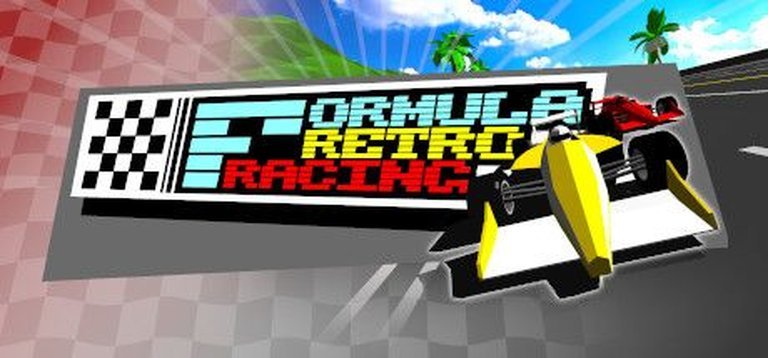
Formula Retro Racing is a retro-inspired arcade racing game that evokes the spirit of early 1990s classics like Sega’s Virtua Racing, featuring high-speed formula car races across eight diverse tracks with authentic pixelated graphics, nostalgic sound design, and direct-control handling from behind or first-person perspectives. Players battle challenging AI opponents in demanding races, supported by global leaderboards for competitive replayability, though it lacks a full championship mode.
Gameplay Videos
Where to Buy Formula Retro Racing
PC
Formula Retro Racing Guides & Walkthroughs
Formula Retro Racing Reviews & Reception
metacritic.com (76/100): As if Sega made a sequel to Virtua Racing: Formula Retro Racing has a few minor problems, but overall offers a lot of racing fun nonetheless.
forbes.com : ‘Formula Retro Racing’ Is A Wonderful Love Letter To 90s Racers
fingerguns.net : A pastiche of arcade racers from the 90’s, Formula Retro Racing doesn’t quite do enough to deserve a victory lap.
littlebitsofgaming.com : Formula Retro Racing is as basic a racer as you can get with fast-paced, frantic action.
twobeardgaming.wordpress.com : Imitation is the sincerest form of flattery that mediocrity can pay to greatness.
Formula Retro Racing: Review
Introduction
Imagine slotting a quarter into a dusty arcade cabinet in 1992, the glow of low-poly polygons flickering to life as engines roar and chiptune beats pulse through the air—Virtua Racing wasn’t just a game; it was a revolution that defined polygonal racing. Fast-forward nearly three decades, and Formula Retro Racing emerges as a pixel-perfect love letter to that era, crafted by a solo indie visionary amid a 2020 surge of nostalgic racers. Developed by Andrew Jeffreys under Repixel8, this unassuming title doesn’t reinvent the wheel but polishes it to a high-gloss shine, delivering addictive, quarter-munching thrills on modern hardware. My thesis: While Formula Retro Racing masterfully recaptures the raw, unfiltered joy of early ’90s arcade racers, its bare-bones design and AI quirks limit it to a niche triumph—a flawless emulation for retro purists, but a fleeting sprint rather than a marathon classic.
Development History & Context
Repixel8 Ltd, spearheaded by British developer Andrew Jeffreys, is the quintessential one-man indie operation with deep roots in retro gaming. Jeffreys honed his craft creating homebrew titles for relics like the Atari 2600 and Sega Genesis, releasing both freeware and paid indie games on Xbox One and PC before Formula Retro Racing. Published and developed solely by Repixel8 (with CGA Studio Ltd assisting on some ports), the game launched on May 14, 2020, for Windows via Steam at a budget $1.49–$11.99 price point, later expanding to Xbox One (2020), PlayStation 4 (2021), and Nintendo Switch (2022). Built on the Unity engine, it sidesteps modern graphical excess for deliberate low-poly fidelity, running at 60fps in HD/4K on capable hardware like Xbox One X.
The vision was unambiguous: emulate Virtua Racing‘s arcade purity without apology. Jeffreys drew from ’90s constraints—limited polygons, flat-shaded models, textureless tracks—to evoke rose-tinted nostalgia, enhancing them with modern tweaks like improved physics and destructible cars. Released amid the COVID-19 lockdowns, it tapped into a gaming landscape craving escapism, coinciding with retro racers like Horizon Chase Turbo (2018) and Hotshot Racing (2020). These titles revived arcade speed on current-gen consoles, but Formula Retro Racing stood apart as a hyper-focused homage, prioritizing authenticity over innovation. Technological limits of the era (e.g., Sega’s Model 1 hardware struggling at 30fps) are flipped here into strengths—fluid framerates and crisp visuals honor the past while mocking its shortcomings. No massive team or budget; Jeffreys iterated post-launch based on feedback, adding split-screen multiplayer and leaderboards, culminating in a 2023 sequel, Formula Retro Racing: World Tour. In an industry bloated with live-service racers like F1 2020, this was punk-rock minimalism: prove one dev could outpace Sega’s legacy.
Narrative & Thematic Deep Dive
Formula Retro Racing forgoes traditional narrative entirely, embodying the arcade ethos where story is superfluous—your “plot” is a high-score chase against the clock and AI pack. No characters, no dialogue, no cutscenes; protagonists are anonymous low-poly F1-style cars (differentiated only by color schemes, evoking ’90s McLaren liveries). This void is thematic genius: it thematizes pure escapism, stripping racing to its primal core—speed, risk, repetition. Themes emerge implicitly through progression: unlocking tracks via skill points mirrors arcade “skill licenses,” symbolizing mastery over mechanical chaos.
Deeper still, it interrogates nostalgia’s double edge. Tracks homage real-world icons (e.g., Monaco’s hairpin sectors) and Virtua Racing‘s forests/mountains, but rough edges—like erratic AI “trolls”—recreate the frustration of coin-hungry cabinets. No heroic arcs; failure (explosive crashes) reinforces humility, while victory laps evoke triumphant vendor yells. In a post-F1 2020 era of driver ratings and team management, this anti-narrative rebels against sim complexity, championing arcade anonymity and immediacy. Subtle motifs of progression amid repetition shine in Eliminator mode, where AI accelerates per lap, theming survival-of-the-fastest Darwinism. Flawed? Yes, but thematically cohesive: a meditation on gaming’s golden age, where the “story” was your bruised ego demanding “one more go.”
Gameplay Mechanics & Systems
At its heart, Formula Retro Racing loops around checkpoint arcade racing: select a track (8 total, 5 unlocked initially), difficulty (Easy/Medium/Expert), and mode, then burn rubber from the back of a 20-car grid. Core loop—accelerate, draft (slipstreaming boosts speed), brake sparingly, hit checkpoints for time extensions, avoid walls/rough terrain—is taut and responsive, with snappier handling than Virtua Racing (cars clock ~45mph slower but feel faster via refined physics). No drifting; grip-focused racing demands precision, punishing off-track judder and collisions that fill a damage meter, culminating in spectacular polygonal explosions and respawns.
Modes deconstruct brilliantly:
– Arcade: Time-trial laps (often 8, critiqued as bloated), forgiving on Easy (no crashes), brutal on Expert (tiny extensions, chaos physics).
– Eliminator: Progressive escalation—AI speeds up per lap, stay top-10 or get axed; lap 30 finale tests endurance.
– Grand Prix: Multi-race series for points, supports 4-player split-screen (added post-launch).
– Free Practice: Pure lap honing.
Progression is lightweight: earn points from placements/difficulties to unlock tracks/licenses, gating content arcade-style. UI mimics ’90s HUD—position, timer, speedo, minimap—but flaws abound: obtrusive “TIME EXTENDED!” overlays spam screens, reverse cam rotates awkwardly, drafting glitches (sudden slowdowns post-slipstream). No online multiplayer (leaderboards only on Xbox), no car upgrades/variety (colors-only customization), and AI is the Achilles’ heel—erratic, kamikaze blocking (they pinball you off-track unscathed), illogical paths turning overtakes into demolition derbies. Innovations like destructible cars add spectacle, but absent depth (no replays, limited modes) caps replayability at 2–4 hours for completionists. Flawed systems (unbalanced extensions, long races) evoke era authenticity, yet frustrate modern players—addictive for short bursts, exhausting for marathons.
World-Building, Art & Sound
The “world” is a vibrant low-poly diorama: 8 tracks span ovals, beaches, forests, cities, and Monaco homage, bounded by barriers and slowdown gravel—evoking Virtua Racing‘s invisible walls. Atmosphere thrives on retro verisimilitude: flat-shaded polygons pop in HD/4K, sparks fly over bumps, crashes erupt in sepia shards. Visual direction nails ’90s arcade glow—crisp, colorful, unlived-in (urban tracks feel sterile), fostering hypnotic speed immersion. Perspectives (1st-person, behind-view) enhance flow, though UI clutter disrupts.
Sound design amplifies nostalgia: chiptune/synth soundtrack (repetitive, C64-esque bangers) loops infectiously, evoking cabinet urgency—turn it off for engine whines, but SFX drown under music. Crashes boom satisfyingly, but whiney in-cockpit audio grates. Collectively, these forge an arcade time machine: visuals/sounds immerse in ’90s purity, heightening tension via minimalism—distant crowds hum, wind howls—making every lap a sensory sprint.
Reception & Legacy
Critically, Formula Retro Racing earned solid-if-mixed marks: MobyGames 67% (3 critics), Metacritic 76/100 (Xbox, “Generally Favorable”). Highs from 4Players.de (82%: “Virtua Racing 2 what-if”), Forbes (“wonderful love letter,” Top 10 Indie 2020), Xbox Tavern (100%); lows from Video Chums/Nintendo Life (60%: AI woes, Switch performance dips). Players averaged 3/5 (limited reviews), praising addiction but lamenting content drought. Commercially modest—budget price aided sales, 4 MobyGames collectors—but spawned World Tour (2023, Switch/PC/Xbox), expanding formula.
Reputation evolved positively via patches (split-screen, leaderboards), cementing cult status among retro fans. Influence? Niche but potent: fueled indie retro-racer boom (Hotshot Racing echoed it), proving solo devs could homage Sega credibly. No industry shaker like Virtua Racing, but preserves arcade DNA amid sim dominance (F1 2020‘s My Team mode contrasts sharply). Legacy: a benchmark for faithful emulation, inspiring brevity in bloated times.
Conclusion
Formula Retro Racing distills early ’90s arcade racing to its exhilarating essence—low-poly thrills, checkpoint frenzy, nostalgic hooks—via Jeffreys’ masterful solo craft. Strengths (fluid physics, addictive loops, visual fidelity) outshine flaws (AI trolls, sparse content, UI spam), delivering $10 bliss for Virtua Racing diehards or quick-fix seekers. Yet its unyielding minimalism—sans narrative depth, multiplayer heft, or evolution—relegates it to curiosity, not canon. In video game history, it claims a worthy footnote: a triumphant emulation securing Repixel8’s retro niche, ideal for ’90s pilgrims but skippable for depth-cravers. Verdict: 8/10—Pole position for homage, pit lane for ambition. Rev it up if nostalgia calls; otherwise, chase modern grids.