
- Release Year: 2015
- Platforms: PlayStation 3, PlayStation 4, Windows, Xbox 360, Xbox One
- Publisher: ak tronic Software & Services GmbH, Konami Digital Entertainment Co., Ltd.
- Developer: Kojima Productions Co., Ltd.
- Genre: Action
- Perspective: Third-person
- Game Mode: Online PVP, Single-player
- Gameplay: Off-roading, Open World, Sandbox, Shooter, Stealth, Tank, Truck
- Setting: Asia, Cold War
- Average Score: 96/100
Description
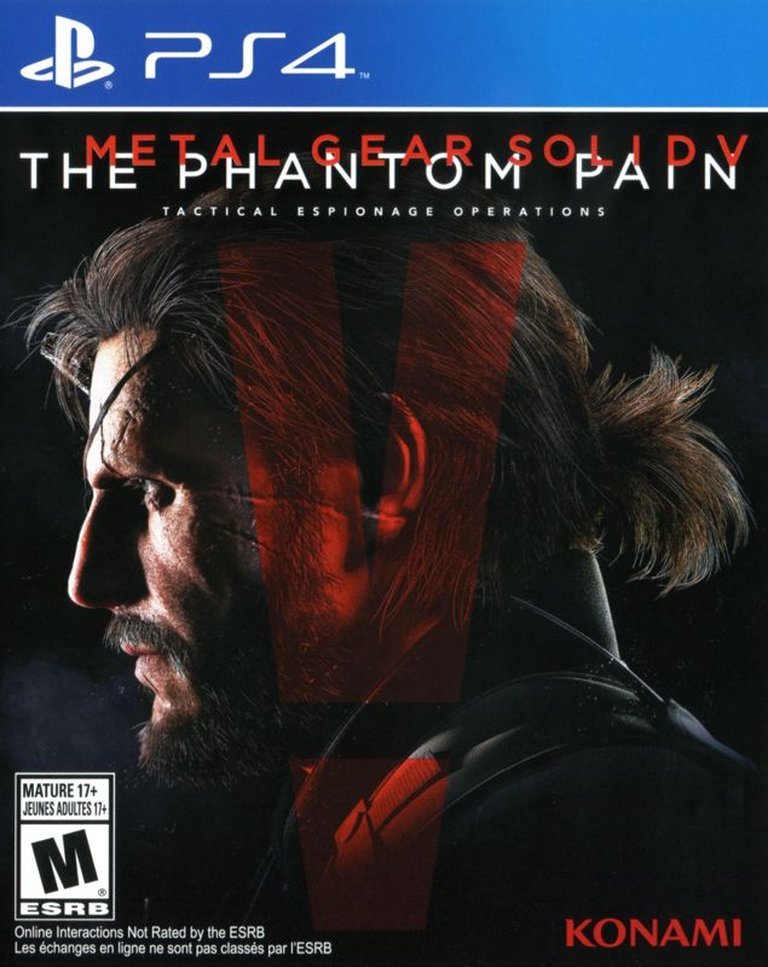
Metal Gear Solid V: The Phantom Pain is a stealth-focused third-person action game set in 1984 during the Cold War era, where players control Punished ‘Venom’ Snake, who awakens from a coma in a Cyprus hospital and seeks revenge against the Cipher organization led by Skull Face across vast open-world environments in Afghanistan and the Angola-Zaire border. Teaming up with Ocelot and Kazuhira Miller, Snake establishes and expands Mother Base, recruiting soldiers via Fulton extractions, managing resources, and utilizing advanced stealth mechanics, weather effects, and base-building to dismantle enemy forces.
Gameplay Videos
Where to Buy Metal Gear Solid V: The Phantom Pain
PC
Metal Gear Solid V: The Phantom Pain Free Download
Metal Gear Solid V: The Phantom Pain Cracks & Fixes
Metal Gear Solid V: The Phantom Pain Patches & Updates
Metal Gear Solid V: The Phantom Pain Mods
Metal Gear Solid V: The Phantom Pain Guides & Walkthroughs
Metal Gear Solid V: The Phantom Pain Reviews & Reception
metacritic.com (93/100): Great, ambitious, funny and spontaneous, Metal Gear Solid V: The Phantom Pain will surely teach a thing or two to every developer in modern gaming.
ign.com : It is, unquestionably, my favorite Metal Gear to play.
imdb.com (100/100): Metal Gear Solid V: The Phantom Pain is easily the BEST stealth oriented game to date, and the most game-play choices of any game in existence!
bigredbarrel.com : MGSV is the first to truly excel in this area. The controls are tight, precise and intuitive.
vg247.com : Another theme is that the game is excellent.
Metal Gear Solid V: The Phantom Pain Cheats & Codes
PC, PS4, Xbox One
To activate cheats, press the ` key to open the cheat console and type the desired cheat code. The console will close and the cheat will activate.
| Code | Effect |
|---|---|
| GUN-555-0150 | Gives you an infinite weapon |
| GUN-555-0100 | Gives you infinite ammo |
| GUN-555-0200 | Gives you infinite equipment |
| GUN-555-0300 | Gives you an unlimited amount of game time |
| GUN-555-0400 | Gives you an unlimited amount of money |
PS4
In the main menu, press the “Start” button then the specified button.
| Code | Effect |
|---|---|
| Start, X | Unlock all characters |
| Start, Triangle | Get free weapons and equipment |
| Start, Square | Get resources faster |
| Start, Circle | Unlock all levels |
| Start, L1 | Activate Survival Mode |
| Start, R1 | Unlock all missions |
Metal Gear Solid V: The Phantom Pain: Review
Introduction
Imagine awakening from a nine-year coma, your body scarred by shrapnel shaped like a skull, thrust into a world of endless sand-swept dunes and war-torn outposts where every shadow hides a Soviet patrol. This is the visceral hook of Metal Gear Solid V: The Phantom Pain (MGSV: TPP), Hideo Kojima’s audacious swan song to the Metal Gear franchise—a series that redefined stealth gaming since 1987. As the ninth mainline entry and direct sequel to the prologue Ground Zeroes, MGSV: TPP bridges the prequel gap to the original Metal Gear, chronicling Punished “Venom” Snake’s vengeful odyssey in 1984 amid the Soviet-Afghan War and Angolan Civil War. Its legacy looms large: built on the revolutionary Fox Engine, it shattered conventions with unprecedented player freedom in a sprawling open world. Yet, whispers of cut content and corporate strife shadow its brilliance. My thesis: MGSV: TPP stands as the pinnacle of stealth-action design, a technical marvel that empowers emergent storytelling through mechanical depth, even as its narrative fractures under the weight of real-world drama, cementing it as both Kojima’s magnum opus and a poignant requiem for an era.
Development History & Context
Kojima Productions, founded by Hideo Kojima in 2005, spearheaded MGSV: TPP under Konami’s publishing umbrella, marking Kojima’s final Metal Gear project amid escalating tensions. Development began covertly around 2012, teased via the enigmatic “The Phantom Pain” trailer at the 2012 Spike Video Game Awards—initially masquerading as a Moby Dick Studio production to gauge unbiased Fox Engine reactions. Unveiled at GDC 2013 as Metal Gear Solid V, it split into Ground Zeroes (a 2014 prologue) and TPP proper, leveraging the in-house Fox Engine for photorealistic open worlds unbound by prior linear constraints.
Kojima’s vision evolved from Peace Walker‘s base-building roots, aiming for “unrestricted freedom” in mission approaches—flying helicopters directly into outposts or smuggling explosives via patrols. Technological feats included real-time day/night cycles, dynamic weather (sandstorms muting footsteps, rain obscuring visibility), and adaptive AI that counters player habits (e.g., helmets after frequent headshots). The 2015 landscape was ripe: post-GTA V and amid The Witcher 3‘s open-world boom, TPP arrived on PS3/PS4, Xbox 360/One, and PC (September 1, 2015), targeting high-end hardware. Yet, constraints loomed—Konami’s restructuring axed Kojima’s name from packaging, fueling rumors of rushed deadlines. Over $80 million poured into a 1,016-person credit list (Kojima directing/writing, Yoji Shinkawa art directing, Kiefer Sutherland voicing Snake), birthing 50+ missions but datamined ghosts like “Mission 51: Kingdom of the Flies.” Microtransactions for FOB acceleration and Metal Gear Online’s delay (October 2015) stirred pay-to-win fears, though Konami clarified they sped progression, not gated it. This era’s corporate rift—Kojima’s firing post-launch—mirrored TPP’s themes of betrayal, transforming development into a meta-narrative of phantom pains.
Narrative & Thematic Deep Dive
MGSV: TPP’s plot unfolds in two chapters across Afghanistan’s arid sprawl and Angola-Zaire’s lush jungles, canonically bridging Ground Zeroes (1975 MSF destruction) and Metal Gear (1995). Venom Snake awakens in a Cyprus hospital, prosthetic arm throbbing with “phantom pain,” rescued by Ishmael (real Big Boss) from Cipher assassin Quiet and fiery Man on Fire (Volgin). Reuniting with Ocelot (Troy Baker) and Kazuhira Miller (Robin Atkin Downes), Snake rebuilds Diamond Dogs on Mother Base, hunting XOF commander Skull Face (James Horan)—a parasite-wielding zealot weaponizing language as a cultural eradicator via vocal cord parasites and Sahelanthropus Metal Gear.
Key characters propel the intrigue: Venom Snake (Kiefer Sutherland/Akio Ōtsuka), a stoic body double via hypnotherapy/plastic surgery, embodies player agency—his minimal dialogue (“won’t really speak much”) mirrors Mad Max-esque silence, actions defining his legend. Skull Face rants against Cipher’s (Zero’s) Anglo-hegemony, his disfigurement fueling nuclear proliferation via child psychic “Third Child” and Eli (young Solid Snake clone). Quiet (Stefanie Joosten), the mute sniper with supernatural camouflage, sacrifices speech to avert outbreaks, her bikini a divisive plot-justified survival tale. Allies like Code Talker (Navajo parasite expert), Huey Emmerich (exiled traitor), and buddies (D-Dog, D-Horse) flesh out cassette tapes revealing MSF’s fall.
Thematically, “phantom pain” permeates: Snake’s lingering wounds symbolize war’s indelible scars, revenge’s futility (epidemics cull Diamond Dogs), and identity’s illusion (player as decoy). Shorter cutscenes (vs. prior epics) integrate via radio logs, exploring Cold War proxy horrors, nuclear deterrence, and cultural erasure. Chapter 2’s repeats unlock closure—the twist recontextualizes revenge as Big Boss’s Outer Heaven ploy—but datamined Mission 51 (Eli/Sahelanthropus rematch) and “Chapter 3: Peace” hint at incompleteness, rushed by Konami pressures. Dialogue shines in subtlety (Ocelot’s loyalty flip, Miller’s rage), yet some find it “aimless,” prioritizing player tales over scripted bombast. A daring deconstruction: war as sandbox chaos, legend forged in absence.
Gameplay Mechanics & Systems
MGSV: TPP revolutionizes stealth-action with a seamless loop of infiltration, extraction, and escalation. Core: third-person sandbox traversal—crawl, sprint, climb sheer cliffs, ride D-Horse, or commandeering jeeps/tanks/motorcycles. Missions (29 main + 150+ side-ops) emphasize ! detection avoidance: binoculars mark patrols, intel app scouts, CQC interrogations yield data. Stealth shines via Fulton balloons airlifting soldiers/vehicles/animals/sheep (!), non-lethal tranqs/tasers, decoys, and Reflex Mode (bullet-time dodge). Combat fluidly scales—lethal suppressors, rocket launchers, airstrikes—but rewards ghosting (S-ranks via no kills/alerts).
Innovations abound: Mother Base as RPG hub—recruit via Fulton (abilities like anti-sandstorm), assign to R&D/Support/Intel/Base Ops for GMP income, tech unlocks (drone arm, wormhole grenades). Buddies evolve: D-Dog sniffs/marks, Quiet snipes from afar (bonding via touch/minigames), D-Walker mechs for run-gun. Adaptive systems dazzle—night raids prompt NVGs/flares; sabotage radars opens LZs. UI minimal: iDroid radial menu pauses for maps/logs, Seiko watch tracks time (Phantom Cigar fast-forwards).
Flaws emerge: Chapter 2’s 19 repeats for final missions feel grindy (“farming simulator”), FOB invasions disrupt solos (call friends, but intrusive), microtransactions accelerate (coins/staff). Metal Gear Online (16-player modes) and FOB PvP add longevity, but server woes plagued launch. Bosses (Sahelanthropus, Skulls, Quiet) innovate (weather tactics, supply-drop cheese), yet lack prior spectacle. Verdict: deepest stealth loop ever—every detail purposeful, emergent chaos trumping rails.
| Mechanic | Strengths | Weaknesses |
|---|---|---|
| Stealth | Adaptive AI, weather interplay, multiple entries | Skull encounters frustrating |
| Base Building | Deep progression, smartphone app | Late-game GMP grind |
| Buddies | Synergistic utility, bonding depth | Quiet recruitment divisive |
| Multiplayer | FOB invasions tense | Paywalls perceived, bugs |
World-Building, Art & Sound
Twin maps—Afghanistan’s vast deserts (rocky peaks, outposts) and Central Africa’s wetlands (oil rigs, ruins)—breathe via Fox Engine’s fidelity: volumetric sand/rain, destructible AA guns rippling maps, wildlife (wolves fleeing storms). Scale vast (200x Ground Zeroes), yet intimate—overhear banter on communism/capitalism, tapes wax on Salt II. Atmosphere immersive: day/night alters patrols (sleeping guards), sandstorms cloak Fultons.
Visuals stun—Yoji Shinkawa’s mechs (Sahelanthropus’ simian menace), Snake’s grizzled scars, D-Dog’s eyepatch charm. 60fps fluidity, Pixar-level animations (horse hides Snake). Sound design masterful: Wwise engine for directional footsteps/muffled rain, cassette tapes (licensed 80s tracks like A-ha’s “Take on Me,” Metal Gear classics) via helicopter/iDroid. Ludvig Forssell/Justin Burnett’s OST (haunting horns, industrial dread) won awards; radio chatter evolves (trauma logs post-outbreaks).
Elements synergize: weather masks noise, cycles enable reroutes, destruction cascades (base sabotage alerts regions). A living canvas elevating espionage to poetry.
Reception & Legacy
Launch acclaim was thunderous—MobyGames 8.4/10 (92% critics, #37 PS4/#23 Xbox One), Metacritic 93-95/100. IGN/GameSpot/Giant Bomb awarded 10/10: “best stealth game ever” (GamesRadar+), “redefines open-world” (Giant Bomb). Praise flooded gameplay (“every detail purposeful”—IGN), freedom (“tactical toybox”—Time), Fox Engine (“beautiful”—Destructoid). Critics lauded evolution from linear roots, adaptive AI, base depth. Sales soared: 6M shipped by Dec 2015, UK’s biggest Metal Gear launch (+37% vs. MGS2).
Yet divisions: story “incomplete/rushed” (Kotaku), repeats “padding” (PC Gamer), Quiet “oversexualized” (Polygon). Konami-Kojima feud amplified “unfinished” narrative (cut Mission 51, Chapter 3 datamined). Player scores averaged 3.7/5 on Moby, citing farming/repetition but praising sandbox. Legacy endures: GOTY noms (The Game Awards Action/Adventure win), DICE Adventure GOTY, influential (stealth sandboxes like Hitman 2016 owe debts). Post-Kojima, Metal Gear stagnated; TPP’s Definitive Experience (2016, +Ground Zeroes/DLC) bundled all, but no director’s cut. A bittersweet zenith—Kojima’s vision warped by suits, yet eternally replayable.
Conclusion
Metal Gear Solid V: The Phantom Pain masterfully fuses open-world ambition with stealth purity, its Fox Engine playground birthing infinite player legends amid war’s grim poetry. From Fultoning goats to Sahelanthropus showdowns, mechanics empower genius; narrative’s phantom limbs—cut content, repeats—evoke its own themes of loss. Development drama (Kojima’s exit, Konami cuts) mirrors Snake’s deception, rendering TPP a fractured triumph. Definitive verdict: the greatest stealth game in history, a 10/10 masterpiece flawed into immortality, demanding play for its emergent highs eclipse scripted lows. In video game canon, it reigns as Kojima’s defiant phantom—aching, unfinished, unparalleled.