
- Release Year: 2015
- Platforms: Blacknut, Gloud, Macintosh, Windows
- Publisher: Anuman Interactive SA
- Developer: Artefacts Studio S.A.S.
- Genre: Action, Driving, Racing
- Perspective: Behind view
- Game Mode: Single-player
- Gameplay: Track racing
- Setting: Fantasy
- Average Score: 62/100
Description
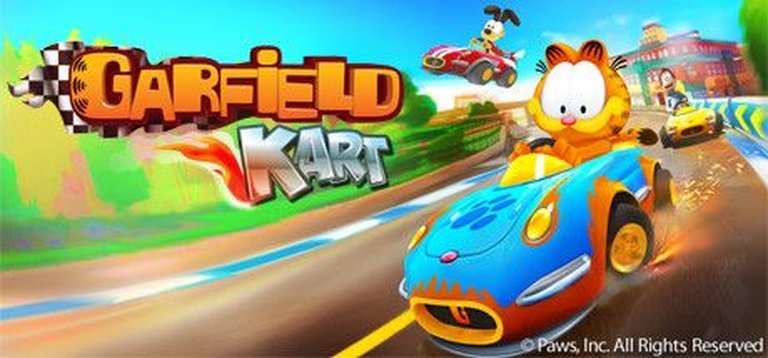
Garfield Kart is a fantasy kart racing game featuring the iconic lazy cat Garfield and his friends from the beloved comic strip, who compete in high-speed behind-the-view track races using customizable go-karts. Developed by Artefacts Studio and published by Anuman Interactive, it combines direct control driving action with vehicular combat elements in a licensed title released in 2015 for Windows and other platforms.
Gameplay Videos
Where to Buy Garfield Kart
PC
Garfield Kart Free Download
Garfield Kart Patches & Updates
Garfield Kart Mods
Garfield Kart Guides & Walkthroughs
Garfield Kart Reviews & Reception
metacritic.com (80/100): Overall, Garfield Kart is good fun.
reddit.com : Furious Racing still has problems of its own.
steambase.io (88/100): Very Positive
opencritic.com (20/100): taking a bad six-year-old game, making it even worse to play
Garfield Kart: Review
Introduction
Imagine a world where the lasagna-loving, Monday-hating tabby cat from Jim Davis’s iconic comic strip trades his recliner for a go-kart, hurtling through fantastical tracks littered with exploding diamonds and bewitched perfumes. Garfield Kart (2015 PC release, originally 2013 on mobile and 3DS) isn’t just a licensed cash-in—it’s a chaotic symphony of mediocrity elevated to cult legend by internet absurdity. Developed by the modest French studio Artefacts Studio and published by Anuman Interactive, this kart racer arrived in a post-Mario Kart 8 landscape dominated by polished giants, yet carved its niche through sheer meme-fueled irony. My thesis: Garfield Kart is a technically flawed but culturally triumphant artifact, proving that in gaming history, viral absurdity can outpace quality, birthing a legacy of sequels and subcultures that mocks the very medium it inhabits.
Development History & Context
Artefacts Studio S.A.S., a small French outfit known for licensed tie-ins like Agatha Christie: The ABC Murders and The Dungeon of Naheulbeuk, spearheaded Garfield Kart under the watchful eye of Garfield creator Jim Davis as executive producer. Credits reveal a lean team of 53, led by CEO Bruno Chabanel, Production Director Olivier Gaudino, and Artistic Director Jean-Marie Godeau, with key roles like Lead Game and Level Designer Freddy Bonisoli and Lead Programmer Jérôme Piernot. Powered by the Unity engine—a choice reflecting mid-2010s indie accessibility amid rising mobile ports—the game targeted budget-conscious families and Garfield fans.
Released October 16, 2015, on Windows (following 2013 mobile/3DS versions), it navigated a kart racing scene overshadowed by Nintendo’s Mario Kart 8 (2014) and its Wii U Deluxe follow-up. Technological constraints were evident: Unity’s limitations shone in choppy physics and frame drops, exacerbated by direct control schemes optimized for keyboard over controllers (though partial controller support exists). Publisher Anuman (later rebranded under Microids) envisioned a “free-for-all” racer capitalizing on The Garfield Show’s cel-shaded aesthetic, but budget realities yielded 16 tracks, 8 characters, and beta online multiplayer—ambitious yet unpolished. In an era of free-to-play mobile racers and AAA blockbusters, Garfield Kart positioned itself as accessible shovelware, retailing at $4.99 on Steam, now often sub-$2 during sales.
Studio Vision and Era Constraints
Artefacts’ vision, per Steam descriptions, emphasized “crazy attacks and defenses” like lasagna shields and pie projectiles, blending Garfield’s slothful humor with combat-racing tropes. However, 2015’s hardware (e.g., mid-range PCs struggling with Unity optimizations) amplified flaws like endless load times and glitches, as noted in patientgamers Reddit critiques. The gaming landscape favored irony: Steam’s review bombing culture was budding, priming Garfield Kart for meme ascension amid a glut of licensed flops.
Narrative & Thematic Deep Dive
Garfield Kart boasts no overt plot—it’s a plotless racer where characters duel for supremacy across cups like Lasagna, Pizza, Hamburger, and the unlockable Ice Cream. Yet, its “narrative” emerges from Garfield lore: the lazy cat (playable from start) races housemates like Jon Arbuckle, dim-witted Odie, flirtatious Arlene, cutesy Nermal, vet Liz, and rodent foes Harry and Squeak. Unlocked via progression, they embody comic archetypes—Garfield’s gluttony, Jon’s haplessness—without dialogue beyond grunts and victory quips.
Meme-Forged “Lore” and Themes
True depth lies in fan-fabricated absurdity, birthing a rich, satirical metanarrative. Steam discussions query “How did Garfield & Friends find the go-karts?” while Reddit’s r/teenagers posits a conspiracy: Garfield enslaved on African boats (unlocked via Konami code), encountering cloned Hitlers, Stalin’s secrets, and Epstein paradoxes, culminating in a Yugoslavia-time-war linking Garfield Kart to COVID-19. r/garfieldkart’s “backstory” epic—Jon forcing Garfield to race for lasagna, mega-karts, C4 explosions, and Vito’s (mysterious Italian?) miracle lasagna—mirrors creepypasta grandeur. Themes? Capitalist coercion (racing for unlocks/coins), existential absurdity (Garfield’s eternal Monday grind), and anti-hero triumph (fat cat defies odds). Dialogue is absent, but power-ups narrate chaos: lasagna heals (gluttony reward), pillows stun (laziness weaponized). This player-driven lore critiques licensed gaming’s emptiness, transforming shallowness into profound irony.
Gameplay Mechanics & Systems
Core loop: Race 16 3D tracks (Garfield’s neighborhood to misty docks/oasis/manor) in behind-view perspective, collecting bonuses from item boxes for combat-racing mayhem. Modes include Grand Prix (cup-based progression), Single Race, Time Trial, and Daily Challenges for customization coins. Difficulties (50cc easy, 150cc brutal) gate content—Lasagna Cup free, others coin-unlocked.
Core Loops and Combat
Direct control handles acceleration, braking, drifting (minimal), and item use. Power-ups innovate Garfield-style: Lasagna (health regen/shield), Exploding Diamonds/Pies (homing projectiles), Magic Wand/Pillow (stuns), Bewitching Perfume (confusion), Flying Saucers (abductions). Combat is “no-holds-barred,” but flaws abound: unbalanced AI spams items, wonky physics (gliding ramps, jagged-road launches), and glitches (floor falls, controller menus). UI is sparse—minimalist menus, stat previews for character/hood/accessory tweaks—affecting speed/handling. Progression: Unlock characters/cups via wins; daily challenges yield hoods (e.g., Elasto-Hat). Online beta (Windows-only) peaked low (~200 players), now dead.
Innovations and Flaws
Innovations? Thematic items and customization depth (spoiler upgrades via time trials). Flaws dominate: Stiff handling, poor counterplay (springs beat most), coin-paywalls (mitigated in sequels). Steam users praise irony (“Garfielding time”), but critics decry “dreadful” execution—3/10 Nintendo Life called it “unbalanced blandness.”
World-Building, Art & Sound
Settings fuse fantasy Garfield-verse: suburban hoods, supermarkets, farms, docks—stunning 3D per promo, but low-poly Unity renders feel dated. Atmosphere evokes chaotic cartoons: vibrant colors, dynamic weather (rain in memes), but glitches shatter immersion.
Visuals: Cel-shaded models (Garfield’s bulk jiggles) suit The Garfield Show, customizable karts add personality. Tracks shine—oasis loops, manor haunts—but repetition drags.
Sound: Muffled engine roars, cartoon boings, Garfield-esque grumbles. No standout OST; bonuses trigger lasagna slurps/pie splats, enhancing whimsy. Overall, elements amplify fun in bursts, undermined by tech woes—contributing a “so-bad-it’s-good” vibe fueling memes.
Reception & Legacy
Launch reception split: Critics panned it—Nintendo Life (3/10: “horribly unbalanced”), Hardcore Gamer (1.5/5: “dreadful”), Metacritic tbd/mixed. MobyGames players averaged 3.3/5 (5 ratings); Steam exploded to 88% Very Positive (14k+ reviews), mostly ironic (“best racing game 10/10,” “summon devil via throat-singing”). Commercial? Budget Steam hit, now $1.24, collected by 100+ Moby users.
Evolving Reputation and Influence
Meme status (KnowYourMeme since 2016) birthed creepypastas, propelled sequels: Garfield Kart: Furious Racing (2019 remake, mixed reviews—2/10 Nintendo Life: “even worse”), Garfield Kart 2: All You Can Drift (2025, Eden Games). Influenced ironic gaming (e.g., Steam review culture), Garfield licensees, kart combat genre. Legacy: Proves memes immortalize mediocrity, inspiring Microids’ persistence amid flops.
Conclusion
Garfield Kart endures not for mechanics—flawed physics, sparse narrative, budget visuals—but as a meme monument, where fan lore eclipses developer intent. Artefacts delivered a serviceable Mario Kart clone twisted by Garfield’s sloth; players alchemized it into conspiracy epics. In history, it joins cult oddities like Big Rigs, a testament to community over craft. Verdict: 7/10—play for laughs, not laps; essential for meme historians, skippable for racers. Its place? A chaotic footnote proving irony wins Grand Prix.